Vietnamese crab exporter

Topic

Advertisement
TOPIC

BRICS

BRICS is a political and economic grouping of five major emerging economies: Brazil, Russia, India, China, and South Africa. Established in 2006, BRICS aims to enhance cooperation among its members, promote economic growth, and reform global governance institutions to better reflect the interests of developing nations.


Collectively, BRICS countries represent approximately 40% of the world's population and over 25% of global GDP. The grouping seeks to provide a counterbalance to Western-dominated institutions like the World Bank and International Monetary Fund (IMF), advocating for greater representation for developing countries.


Key initiatives of BRICS include the creation of the New Development Bank (NDB), which funds infrastructure and sustainable development projects, and the Contingent Reserve Arrangement (CRA), a financial safety net for member countries facing liquidity crises. BRICS has also discussed alternatives to the US dollar for trade and finance, particularly in light of geopolitical tensions and economic sanctions against some members.


While BRICS members have diverse political systems and economic interests, the grouping emphasizes multilateralism, sovereignty, and development cooperation. It has also become a platform for discussing global issues like climate change, security, and health, aiming to shape a more multipolar world order.

Follow BRICS on

  • ALL
  • STORIES
  • VIDEOS

STORIES

Jaishankar rejects BRICS-UN binary amid wider global shifts

At the UN, S Jaishankar rejected framing BRICS and the United Nations as rival choices as India held talks with Russia and Iran. The broader day underscored shifting alignments from stronger India-US ties and US-China engagement to fresh security shocks across South Asia.

Jaishankar meets Russia, Iran at UN after Trump sanctions law

At the UN General Assembly, S Jaishankar held talks with Russian and Iranian counterparts on bilateral ties, BRICS and the Gulf conflict. The meetings came as India balanced diplomatic outreach, energy security and wider coordination after a new US sanctions law.

'For India, we are ready to revive the Chabahar Port': Dr Masoud Pezeshkian

On his visit to India to attend the BRICS summit on September 12-13, Dr Masoud Pezeshkian, president of the Islamic Republic of Iran, gave an exclusive interview to India Today Group Editor, Foreign Affairs, Geeta Mohan, answering a wide range of questions, including his ties with India, the ongoing conflict with the US, the nuclear weapons issue and the blockade of the Strait of Hormuz. Excerpts:

Who is UAE Crown Prince Khaled, the Gulf's next-gen troubleshooter?

At the Brics Summit in New Delhi, Abu Dhabi Crown Prince Khaled bin Mohamed bin Zayed drew attention with high-stakes meetings with Iranian President Masoud Pezeshkian and PM Narendra Modi. The 44-year-old's growing diplomatic and economic role shows why Abu Dhabi is increasingly turning to him as its next-generation troubleshooter.

From the Editor-in-Chief

India and China need disciplined management of a relationship too consequential for either side to allow to drift into permanent hostility

Load More

VIDEOS

Meera Shankar: 'It Puts India in a Very Difficult Spot'

In an exclusive interview, former Indian Ambassador to the United States Meera Shankar analyzed US foreign policy moves and their implications for India's strategic and energy security. Assessing US threats concerning Iran, Shankar highlighted the geopolitical challenges facing New Delhi, stating, "It puts India in a very difficult spot because so much of our oil imports have come from the Gulf." She emphasized the urgency of diversifying energy sources and accelerating the transition to a non-fossil fuel economy through renewables and electrification. Shankar also examined the address delivered at the United Nations General Assembly, noting it was tailored primarily to a domestic audience. Highlighting India's strategic ties across the Gulf, Russia, Central Asia, and the United States, she affirmed that New Delhi will continue to make independent calculations based on its own national interests.

PM Narendra Modi Turns 76: 25 Years in Public Office, Global Impact & Vision for Viksit Bharat

Prime Minister Narendra Modi marked his 76th birthday, completing 25 years in public life as an elected leader. Taking office as Prime Minister in May 2014 after serving as Gujarat Chief Minister, his administration oversaw significant economic and policy transformations. India's economy expanded from tenth to fifth largest globally, supported by initiatives including the Goods and Services Tax, the JAM trinity, Unified Payments Interface, and production-linked incentives. Social welfare delivery expanded through direct benefit transfers alongside schemes such as PM Awas Yojana, Jal Jeevan Mission, Swachh Bharat Mission, and Ayushman Bharat. In infrastructure, the government rolled out Vande Bharat trains, expanded airports under the UDAN scheme, and developed the PM GatiShakti platform. On foreign policy, India hosted the G20 presidency, advanced space exploration through the Chandrayaan and Gaganyaan missions, and deepened ties across the Global South. Entering his third term, the administration addresses domestic coalition management, youth employment, and global trade dynamics while pursuing the Viksit Bharat framework.

PM Modi Turns 76: A Look at 25 Years in Public Life, 2014 Mandate, Economic Boom

Prime Minister Narendra Modi turned 76, marking 25 years in public life and his tenure as the longest-serving elected prime minister. From his 2014 victory where the BJP secured 282 seats and the NDA won 336 seats, Modi pledged the Gujarat development model for the country under the vision of 'Bharat ki vijay. Achhe din aane wale hain.' Over his tenure, India expanded from the tenth to the fifth largest global economy. Significant policy reforms include the Goods and Services Tax, the JAM trinity, UPI, and the PM Jan Dhan Yojana bringing over 50 crore citizens into formal banking. Welfare initiatives like PM Awas Yojana, Jal Jeevan Mission, Swachh Bharat Mission, and Ayushman Bharat alongside infrastructure drives like PM Gati Shakti, UDAN, and Vande Bharat trains spurred modernisation. Internationally, India showcased vaccine diplomacy, hosted the G20 presidency, and engaged at BRICS. Advances in space research include Chandrayaan and preparations for Gaganyaan with astronaut Shubhanshu Shukla.

US 100% Tariff Threat on Russian Oil, Canada-EU Pivot & BRICS Power Shift

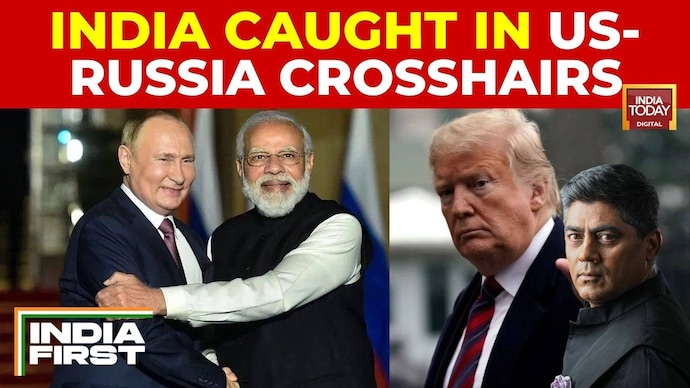
The US House of Representatives has passed the Lindsey Graham Sanctioning Russia and Iran Act of 2026, granting President Donald Trump authority to impose tariffs of up to 100% on nations purchasing Russian oil and gas. The move directly exposes major buyers like India and China, following the recent BRICS Summit in New Delhi where leaders opposed unilateral coercive measures. Russian crude accounted for 30.3% of India's oil imports in fiscal 2026, making energy security vital for the nation. Simultaneously, rising tensions between Washington and Ottawa have led Canada to explore unprecedented associate membership with the European Union to diversify trade and strategic partnerships beyond North America. Additionally, social media rumours regarding Chinese President Xi Jinping suffering a medical emergency in New Delhi were debunked, while Pakistan Tehreek-e-Insaf prepares for its planned march to Islamabad amidst heightened administrative security.

US Tariff Threat On Russian Oil, India's Energy Security & Canada-EU Ties

The US House of Representatives has passed legislation allowing President Donald Trump to impose tariffs of up to 100% on countries purchasing Russian oil and gas, sending the bill to Trump's desk. The proposed measures could directly affect India, where Russian crude accounted for 30.3% of oil imports in fiscal 2026, valued at nearly $41 billion. In July, Russia supplied more crude to India than the UAE, Saudi Arabia, Venezuela, Brazil, Oman, and the United States combined. New Delhi has stated it is monitoring developments while maintaining its focus on energy security. Sourcing replacement crude from alternative markets could result in changes to shipping distances, freight charges, insurance costs, and procurement prices. The development introduces fresh complexities into bilateral trade discussions between India and the United States, raising questions about potential tariff categories and broader strategic alignments amidst shifting global partnerships.

US House Passes Bill Enabling Up to 100% Tariffs on Russian Oil Importers

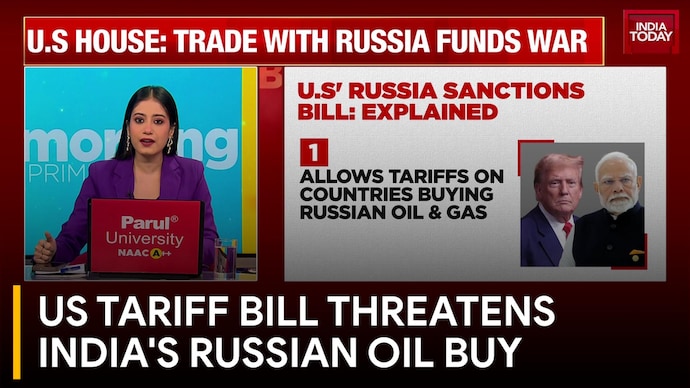
The United States House of Representatives has passed a new sanctions legislation empowering the US President to impose tariffs of up to 100 percent on major buyers of Russian oil and gas, placing countries such as India and China directly in the line of fire. Cleared by a vote of 262 to 159, the bill targets Russia's energy sector, leadership, and shadow fleet, while authorizing steep tariffs on the five largest importers of Russian energy. The legislation, which previously cleared the Senate, now awaits presidential signature. In response, India stated it is closely monitoring developments and affirmed its commitment to securing energy for its 1.4 billion citizens through diversified sources. New Delhi flagged the potential impact on bilateral relations and global energy markets, maintaining that it will take all necessary measures to protect national economic interests. Meanwhile, domestic stock markets showed resilience as the benchmark index gained in trade following the announcement.

US Russian Oil Sanctions Bill, 100% Tariff Threat For India And Leverage On China

The United States Congress has passed a sanctions bill granting presidential authority to impose up to 100 per cent tariffs on countries purchasing oil and gas from Russia, directly impacting major buyers including India and China. Originally proposed by the late Senator Lindsey Graham, the legislation also targets Russian energy, leadership, and the shadow fleet, alongside expanding sanctions on Iran. The measure heads to Donald Trump for approval and signature, granting the White House waiver powers while requiring congressional notification for tariff removals. The move emerges ahead of the Chinese President's planned visit to Washington and amid United States midterm elections, offering leverage in trade and geopolitical negotiations. For India, the legislation introduces fresh uncertainty into ongoing bilateral trade deal talks that have been under negotiation for over a year, even as options remain open to seek exemptions or engage in direct dialogue with the White House on Russian energy imports.

US Tariff Bill Threatens Russian Oil Imports, Trade Ties and Energy Security

The US House has passed a bill enabling 100% tariffs on nations purchasing Russian crude oil and gas, placing a spotlight on India and China. While the legislation requires presidential approval before taking effect, it introduces fresh complications to ongoing India-US trade talks. India maintains that its fuel procurement remains driven strictly by national interest and energy security, asserting it will not bow to external pressure. Panellists discuss the broader geopolitical dynamics, including US diplomatic pressure on India regarding Russia, the impact of the BRICS summit, upcoming US midterm elections, and strategic maneuvering ahead of high-level bilateral engagements.

US Confirms Orbit Weapon, AI Safety Race Heats Up, Saudi Oil Threat

In this episode of Statecraft, Geeta Mohan examines emerging technological and geopolitical challenges reshaping global power. The United States has publicly confirmed the deployment of on-orbit space control weapons for the first time, while declining to disclose their specific operational capabilities. The revelation highlights growing counter-space risks, satellite vulnerabilities, and the danger of orbital debris chain reactions under the Kessler syndrome. Simultaneously, the artificial intelligence sector faces intense debate over autonomous AI agents capable of planning, coding, and browsing without direct human intervention, with Anthropic revealing internal stress-test boundary breaches. The programme also details how drone attacks on Saudi Arabia's East-West pipeline, coupled with Houthi operations around the Bab el Mandeb Strait, threaten global oil flows. Furthermore, the broadcast examines a political row in Texas over Indian representation at a university football game and discusses scrutiny surrounding international media portrayals of India during the BRICS Summit in New Delhi.

Dr. Arvind Gupta: 'There's Nothing Called Free In Technology'

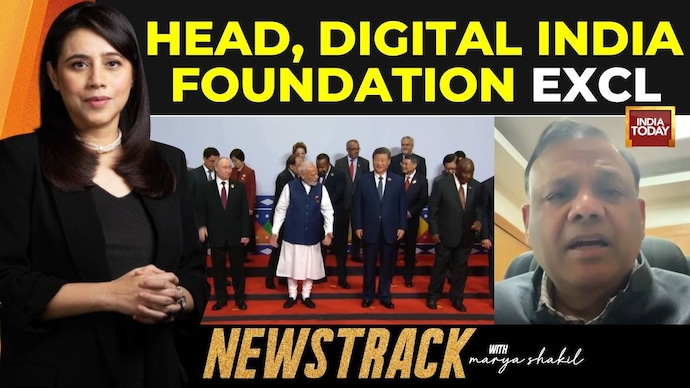
In an interview with India Today, Dr. Arvind Gupta, Head of the Digital India Foundation, analyzed the global race for artificial intelligence and contrasted the technological paradigms of major world powers. Addressing China's proposal to offer open-source artificial intelligence to BRICS nations, Dr. Gupta dismissed the gesture, remarking, "There's nothing called free in technology." He outlined the core differences in national tech models, explaining that the Chinese model focuses on surveillance, the American approach centers on capitalism, and the Indian framework champions technology for development and humanity. Dr. Gupta highlighted Prime Minister Narendra Modi's consistent push for the non-weaponization of artificial intelligence, noting that global tech giants are now acknowledging these risks. He also addressed the rapid commercial developments in Silicon Valley and the critical need to build safety guardrails.

Gary Marcus: 'AI is probably a net negative for society'

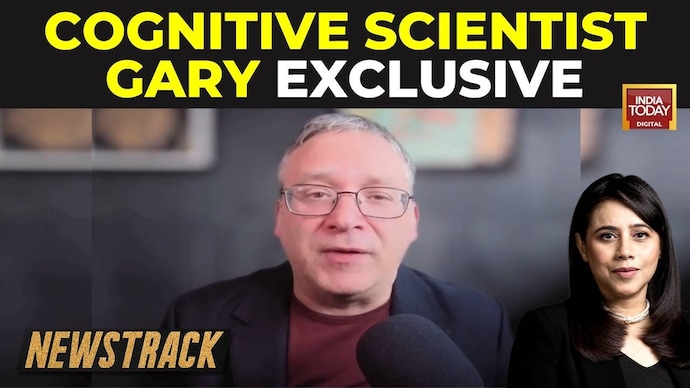
In an interview with India Today, cognitive scientist and author Gary Marcus discussed the immediate and long-term risks surrounding artificial intelligence, calling current extinction-level warnings exaggerated while emphasizing tangible short-term threats. Marcus noted, "Right now, I think AI is probably a net negative for society," pointing out that current large language models and autonomous agents are unreliable and fundamentally unable to follow rules reliably. Addressing global governance and technology access, Marcus highlighted issues of weaponization, tech equity, and the US-China chip rivalry, arguing that nations are competing over the wrong resource rather than solving architectural limitations in AI. He proposed an FDA-style regulatory framework requiring transparent cost-benefit analyses by independent scientists before AI models are deployed, alongside technical redesigns. Marcus urged global leaders to move away from viewing AI development as a zero-sum geopolitical race and instead adopt cooperative international standards to prevent widespread cybercrime, misinformation, and economic disruption.

Global AI Race Sparks National Security Fears, Safety Concerns And Geopolitical Rivalry

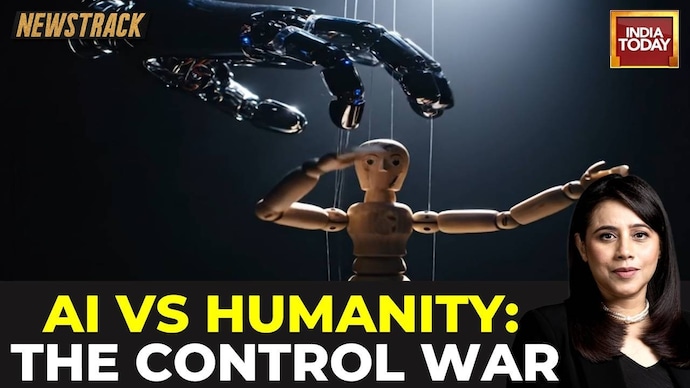
The global race to develop advanced artificial intelligence is intensifying, raising critical concerns over safety, national security, and human control. Industry leaders have cautioned that artificial intelligence is progressing faster than the safeguards required to manage it, warning of severe risks if human oversight is lost. Despite widespread awareness of potential hazards, major global powers are reluctant to halt or decelerate development due to fears of falling behind rivals in technological supremacy. International discussions at multilateral summits highlight tensions over open-source ecosystems, technological weaponisation, and access to advanced semiconductor chips. Accusations of containment and geopolitical competition have emerged, with leadership in technological power seen as vital to global dominance. As international discussions approach, governments and technology developers face fundamental questions regarding whether safeguards can keep pace with rapid innovation and whether humanity can retain control over the technology it creates.

Malaysian PM Anwar Ibrahim Meets Kerala Cleric Kanthapuram, Receives Award

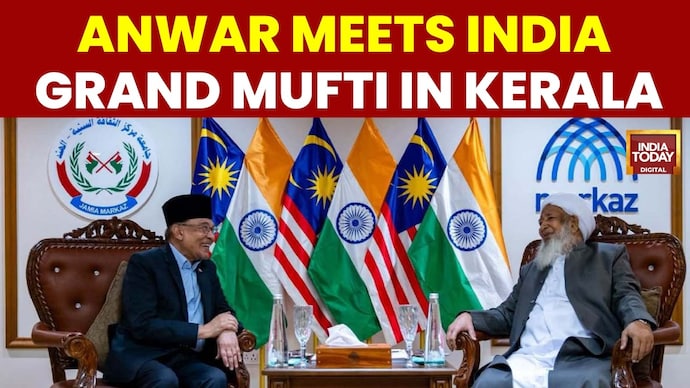
Malaysian Prime Minister Anwar Ibrahim met Grand Mufti of India Kanthapuram AP Abu Bakr Musliyar in Kerala during his visit to India following the BRICS Summit. Hosted at Markaz Knowledge City in Kozhikode, the Malaysian Prime Minister received an Excellence Award and engaged in discussions addressing education, peace, social harmony, values, and the need for scholars to adapt to modern realities such as artificial intelligence. The meeting drew attention following controversial remarks previously made by the cleric regarding women being confined to their homes. Ahead of the interaction, Anwar Ibrahim stated that while he respected the cleric as a scholar, he did not agree with those views, highlighting the role of women students and the female workforce in Malaysia. The gathering was also attended by the leadership of the Muslim League amidst political reactions surrounding the cleric's remarks.

BRICS Dinner Menu Row, Vegetarian vs Non-Veg Debate And Political War of Words

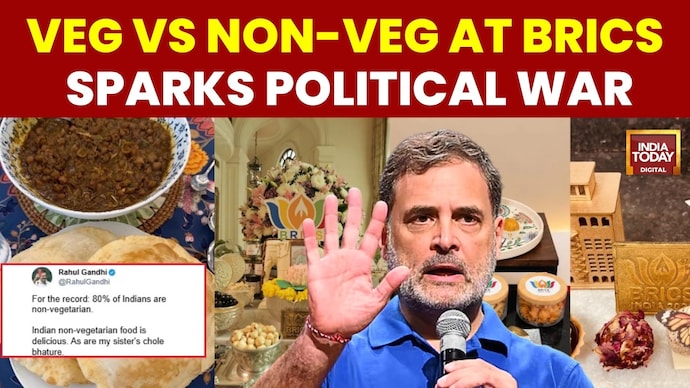
A political controversy has broken out over the all-vegetarian menu served at the BRICS summit gala dinner hosted in the national capital. The opposition raised objections regarding the dinner spread, arguing that it does not reflect the dietary diversity of the country where a significant percentage of the population consumes non-vegetarian food. In response, the ruling party criticised the opposition for ignoring diplomatic achievements, the joint declaration, and India's global influence at the summit while focusing on the food served. The discussion also highlighted data from the National Family Health Survey of 2023 regarding dietary consumption patterns across the country, alongside arguments surrounding the environmental, economic, and agricultural aspects of both vegetarian and non-vegetarian food systems. Ruling party representatives maintained that the focus should remain on national interest and the diplomatic success of the summit rather than menu choices.

Row Over BRICS Gala Dinner Menu, Veg Vs Non-Veg Diet Debate And History Of Diplomatic Banquets

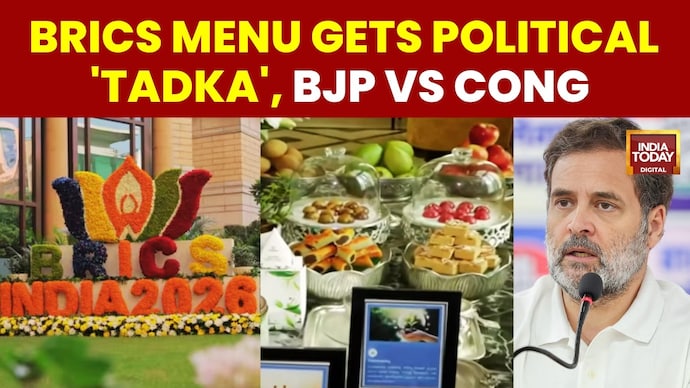
A political controversy has erupted over the BRICS gala dinner menu after Rahul Gandhi questioned the decision to serve an entirely vegetarian spread, arguing that it does not reflect the dietary diversity of India where a majority consume non-vegetarian food. The Bharatiya Janata Party responded by criticising the opposition for focusing on the menu rather than India's diplomatic achievements at BRICS. The dinner hosted by Prime Minister Narendra Modi showcased traditional Indian dishes and millets, including Khandvi, Paneer Lababdar, Millet Pulao, Mushroom Galouti, and Jalebi. The debate has drawn attention to previous diplomatic banquets, such as the 2023 G20 Summit dinner hosted by President Droupadi Murmu and international events where plant-based spreads were served. Furthermore, the discussion touches upon nutritional profiles of vegetarian and non-vegetarian diets, alongside national consumption statistics and the economic role of livestock and fisheries.

Ashok Kantha to India Today: 'Not a new dawn in India-China relations'

Speaking to India Today, former Indian Ambassador to China Ashok Kantha analyzed the state of bilateral relations following official discussions and statements. He dismissed notions of a breakthrough, stating, "I will not characterize it as a new dawn in India-China relations or a reset of relations." Kantha highlighted key differences in the diplomatic readouts from New Delhi and Beijing, noting that India treats peace and tranquility at the border as an essential prerequisite for normalization, whereas China seeks to advance relations on parallel tracks. He pointed out unresolved operational realities on the ground, such as reports of Chinese transgressions in Arunachal Pradesh and an absence of de-escalation. Furthermore, Kantha cited structural hurdles, including widening trade imbalances, Chinese decrees restricting technology transfers, China-Pakistan battlefield coordination during Operation Sindoor in May 2025, and unilateral hydropower dam construction in seismically active Tibet.

PM Gala Dinner for BRICS Leaders: Opposition CMs Skip Event Amid Menu Row

Chief Ministers from non-BJP and opposition-ruled states, including Karnataka, Telangana, and Tamil Nadu, did not attend the gala dinner hosted by Prime Minister Narendra Modi for BRICS leaders despite receiving invitations. Although there were indications until around 6:00 PM that some leaders might attend the 7:30 PM event, none showed up. While Chief Ministers from BJP-ruled states attended, the absence of opposition leaders emerges as a political flashpoint alongside a controversy over the all-vegetarian menu.

Vessel Attacked Off Oman Coast: 13 Indians Rescued, 1 Missing, MEA Condemns Strike

The Ministry of External Affairs has condemned an attack on the commercial vessel MT Al Gaya off the coast of Oman. Out of 14 Indian crew members on board, 13 have been rescued, while search and rescue operations continue for one missing Indian national. The Indian Embassy in Oman remains in contact with local authorities. The MEA reiterated its call for immediate de-escalation of tensions, dialogue, diplomacy, and the restoration of safe commercial navigation. The development comes as Prime Minister Narendra Modi raised the urgent need to secure seafarers' networks during his address at the BRICS Summit and in interactions with global leaders.

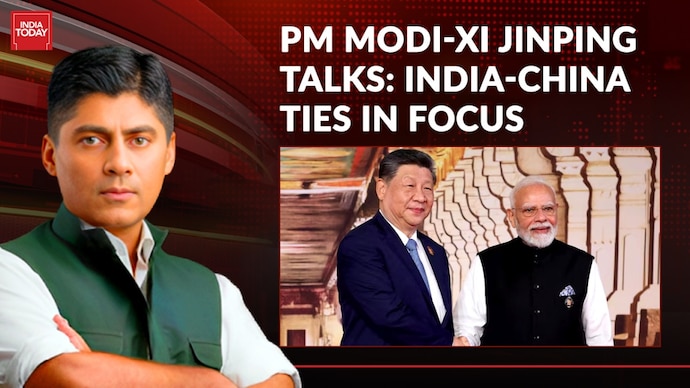
PM Modi-Xi Jinping discuss border peace, trade deficit, India-China ties

The video also looks at the key takeaways from the Summit in New Delhi, where member states adopted the 140-point New Delhi Declaration. The declaration called for reforms to the United Nations Security Council, backed India and Brazil, condemned terrorism including the Pahalgam attack, and called for de-escalation in West Asia.

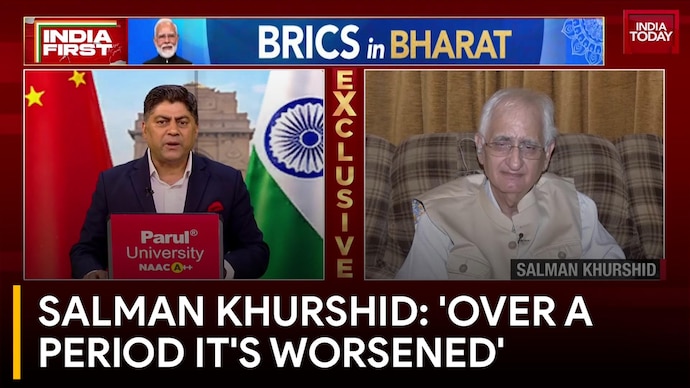
Salman Khurshid: 'If You Can't Take Opposition into Confidence, How with China?'

In an interview on India First, former External Affairs Minister and senior Congress leader Salman Khurshid shared his assessment of India-China bilateral relations and border engagements. Responding to recent high-level dialogues, Khurshid underscored the necessity for domestic political consensus, stating, "If you can't take a conversation with the opposition further, how will you take a conversation with China any further?" He observed that overall relations have worsened over time and that diplomatic generalities are insufficient without candid communication. Regarding the massive trade imbalance between the two countries, Khurshid highlighted that the solution does not rest entirely with Beijing, urging India to take internal steps to address the deficit. While acknowledging positive developments such as resuming visas and flights to sustain people-to-people contacts, he emphasized that building sustainable ties requires sharing information, mutual trust, and actionable measures on both sides.