Vietnamese crab exporter

Topic

Advertisement
TOPIC

By-Election

 A by-election, also known as a bye-election or bypoll, is a special election held to fill a vacant seat in Parliament or a state legislature before the next general election. It is usually held when a sitting member dies, resigns, or is disqualified, leaving the constituency without an elected representative. Unlike a general election, a by-election is conducted only for one or a limited number of vacant seats. In India, by-elections are conducted by the Election Commission of India (ECI) and follow the same election rules and procedures as regular polls.  

  • ALL
  • STORIES
  • VIDEOS

STORIES

Israel election explained: Netanyahu’s fight to survive and what comes next

Israel votes on October 27 in a parliamentary election shaped by the October 7 attack, wars in Gaza and Iran, economic pressure and Benjamin Netanyahu’s political survival. Polls favour his opponents, but Israel’s fractured politics mean the real contest may begin when parties try to build a governing coalition.

Court issues notice to Centre on pleas challenging legal immunity for CEC, ECs

The Supreme Court has issued notice on an ADR plea challenging Section 16 of the 2023 law granting immunity to the Chief Election Commissioner and Election Commissioners for acts performed in official duty. The plea has been tagged with pending petitions, including a separate challenge by Lok Prahari, which is listed for November 16.

Load More

VIDEOS

Markets Eye Samvat Revival, Gold Corrects On Dhanteras, US Election Pushback

Indian equities witnessed volatile movements around Dhanteras as market analysts projected a confirmed uptrend leading into the next Samvat year. Key macroeconomic factors, including cooling crude oil prices, sharp corrections in gold and silver, and stabilizing foreign institutional investor flows, were highlighted as supportive elements for domestic sentiment. Gold prices dropped on the MCX, while silver extended its decline, prompting expectations of a revival in physical and exchange-traded fund demand with long-term compound annual growth forecasts. Meanwhile, retail automobile sales for October logged a notable decline year-on-year across passenger cars and two-wheelers, driven by the elevated base of the previous festive season. On the global front, discussions centered on the impact of the US election mandate, with observations on how congressional leverage through legislative oversight and appropriations could potentially push back against arbitrary tariffs and reshape trade and foreign policy dynamics.

Iran War Fallout: Alan Lichtman & Dr Wael Awad On US Midterms & Trump's Dilemma

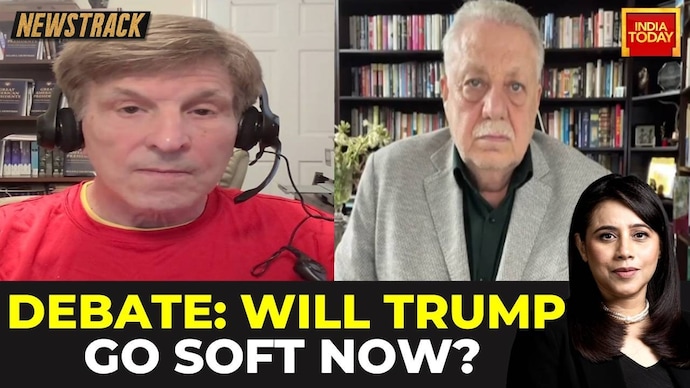
A debate analyses the political fallout of the US midterm elections and the conflict involving Iran. Political analyst Alan Lichtman and West Asia expert Dr Wael Awad evaluate claims by the administration regarding the impact of the war on election losses. Lichtman dismisses attempts to scapegoat Defence Secretary Pete Hegseth, observing: 'Donald Trump has a history of throwing people under the bus to protect his own reputation and his own standing.' He emphasizes that domestic economic challenges, inflation, tariffs, and threats to democracy drove the outcome long before foreign policy developments. Dr Awad assesses the view from Tehran, detailing public apprehension, ongoing talks in Doha, and Iran's diplomatic positions regarding sanctions and the Strait of Hormuz. Both analysts discuss the mounting domestic pressures confronting Donald Trump and Benjamin Netanyahu, assessing whether military escalation or negotiated exits will follow the altered legislative balance in Washington.

Vote Chori Debate: Syed Zafar Islam, Salman Soz, Rajat Sethi

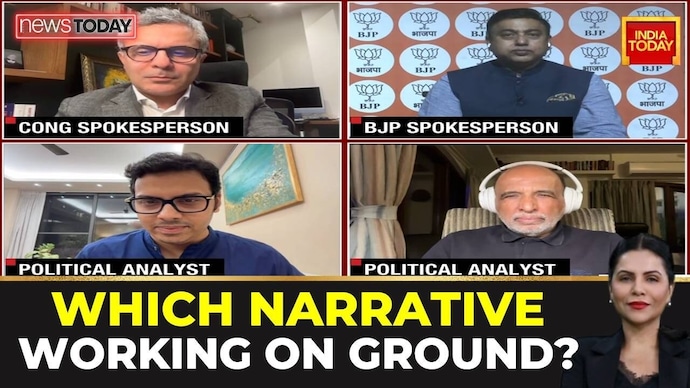
A panel debate moderated by Preeti Choudhry examines the controversy surrounding the Election Commission of India, electoral roll manipulation allegations, and administrative revisions concerning Form 6. Congress spokesperson Salman Soz criticized the poll panel, alleging widespread voter disenfranchisement, pointing to reported institutional dissent, and demanding the resignation of the Chief Election Commissioner. In response, Bharatiya Janata Party national spokesperson Dr. Syed Zafar Islam defended the constitutional body, stating that electoral concerns should be debated inside Parliament rather than through public demonstrations. Political analyst Sanjay Jha called for institutional transparency regarding internal deliberations among election commissioners, while commentator Rajat Sethi highlighted judicial scrutiny at the Supreme Court, voter infiltration issues in border states, and discussions regarding a National Register of Citizens. The discussion centers on poll body accountability, administrative course corrections, and whether the Election Commission should hold direct press conferences to address questions regarding electoral integrity.

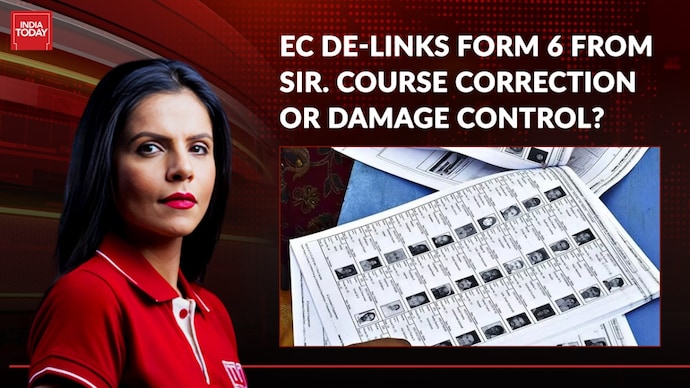
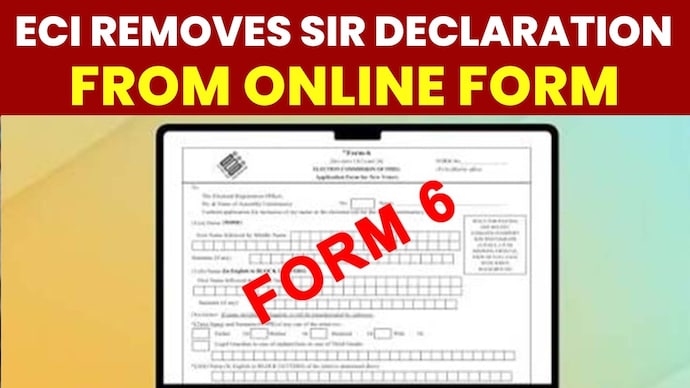
EC Drops SIR Declaration From Form 6 Amid Internal Rift, Shah-Rahul Spar Over Voter List

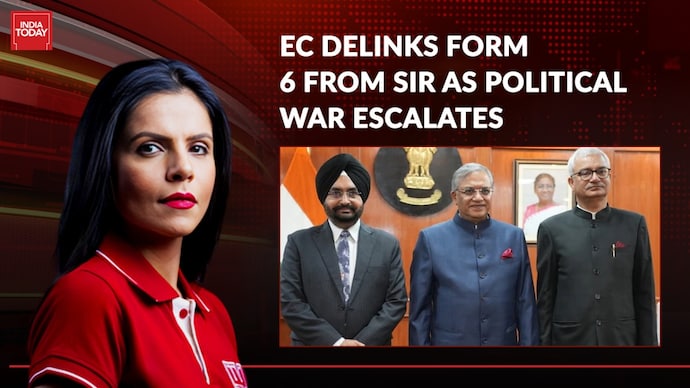
The Election Commission has initiated internal course corrections following dissent flagged by Election Commissioners Sukhbir Singh Sandhu and Vivek Joshi over Chief Election Commissioner Gyanesh Kumar's decisions. The commission removed the Special Intensive Revision (SIR) declaration from online Form 6 across all states, making it a separate document, alongside restoring oversight on foreign visits and IT modules. Meanwhile, the political confrontation over the voter list revision escalated, with Union Home Minister Amit Shah daring Leader of Opposition Rahul Gandhi to a debate in Parliament, while the opposition protested Union Minister Lalan Singh's claim that voter IDs could replace Aadhaar cards for welfare scheme benefits.

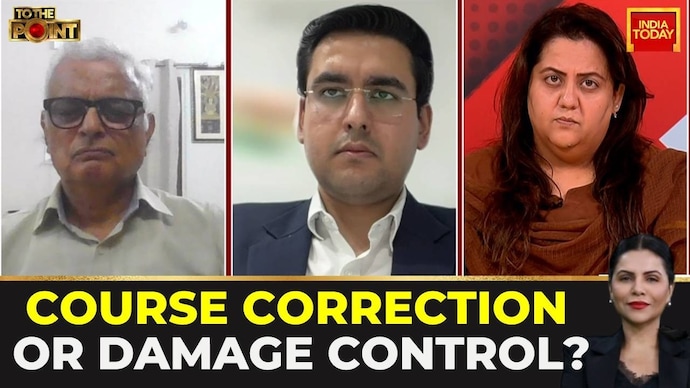
To The Point: OP Rawat, Radhika Khera, Arshdeep Khadial

In this debate on India Today's prime-time show, host Preeti Choudhry leads a discussion on the eight course corrections initiated by the Election Commission of India over five weeks following media reports alleging irregularities in the Special Intensive Revision (SIR) process. Former Chief Election Commissioner OP Rawat describes these actions as merely a 'damage control exercise' and calls on the three election commissioners to hold a joint media conference to address doubts, clarify procedures, and protect the credibility of the institution. Bharatiya Janata Party spokesperson Radhika Khera defends the poll body, asserting that the Election Commission is a responsive and dynamic institution adapting to an electorate exceeding 140 crore. Congress spokesperson Advocate Arshdeep Khadial counters that the repeated rectifications represent admissions of wrongdoing, pointing to protests and court petitions challenging modifications to Form 6 and voter deletions. The panel also debates RTI findings detailing communications sent to the Cabinet Secretary.

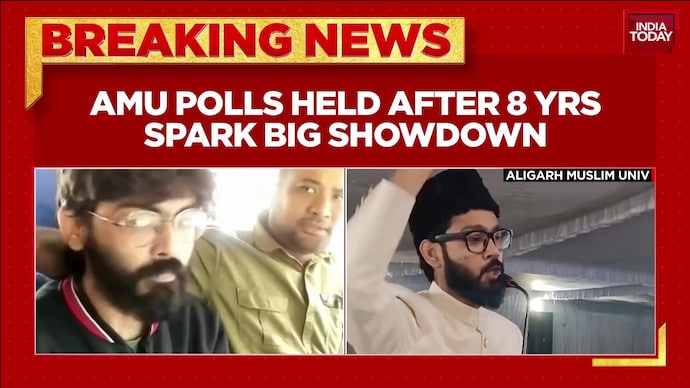
AMU Student Polls: Row Erupts Over Speech Invoking Sharjeel Imam, Gaza & Azam Khan

A controversy has erupted during the Aligarh Muslim University student elections, being organized after an eight-year hiatus following extensive student protests demanding polls similar to Delhi University and Jawaharlal Nehru University. During an election address, presidential candidate and third-year PhD history scholar Noman Ashraf sparked intense debate by raising international and national political issues rather than campus-specific matters like seat shortages, facilities, and academic concerns. The candidate referenced jailed figures Sharjeel Imam and Umar Khalid, questioning labels attached to them before judicial verdicts and court trials conclude. Furthermore, the speech expressed solidarity with the people of Palestine, Gaza, Iran, and Sudan, while also demanding the release of former student and politician Azam Khan. Network reporters noted that the speeches within the university campus have heavily politicized the student elections, evoking strong reactions across student factions and political observers.

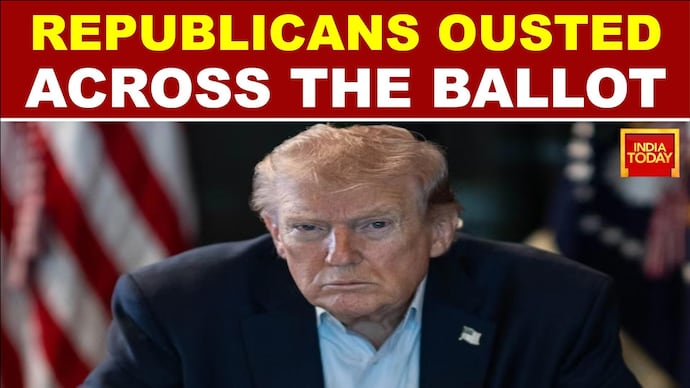
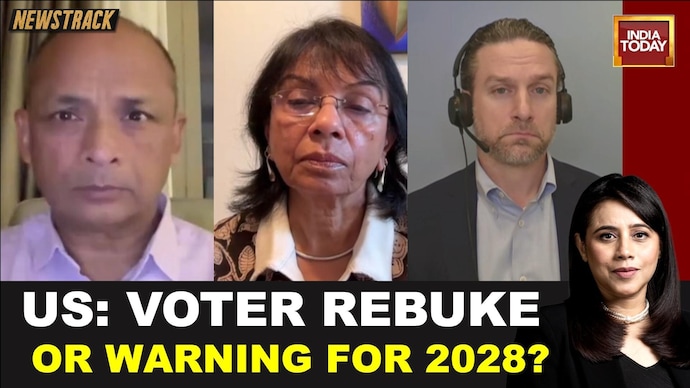
US Midterms: Democrats Win House, Trump Faces Probe Threats As Indian-American Voters Make Mark

Democratic candidates secured sweeping victories across the United States in the midterm elections, regaining control of the House of Representatives by crossing the 218-seat threshold and flipping key seats nationwide. Among the significant upsets was the defeat of Donald Trump-backed Republican ally Vivek Ramaswamy by Democrat Amy Acton in the Ohio gubernatorial race. In response to the election outcomes, President Donald Trump indicated a willingness to work with Democrats while simultaneously warning on social media that he could use his veto powers repeatedly to block Democratic legislation. Discussing the results, Indian American Congressman Shri Thanedar argued that voters delivered a clear verdict against high inflation, unilateral tariff decisions, and foreign military actions. Meanwhile, Republican strategist Puneet Ahluwalia discussed the shifting political choices of the Indian American diaspora, economic concerns, and foreign policy developments. With Democrats preparing to assume control of congressional chambers, lawmakers are gearing up to initiate committee investigations and potential subpoenas targeting the Trump administration.

Election Commission Removes SIR Declaration From Online Form, IT Overhaul & Transparent Rules Push

The Election Commission of India has removed the Special Intensive Revision declaration from its online form everywhere, making it a separate declaration even in states where the exercise is currently underway. The poll body has also introduced fresh measures to ensure transparency, making the circulation of meeting agendas in advance and the issuance of meeting minutes mandatory for all high-level internal discussions. In addition, the functioning of the information technology department has been placed under stricter scrutiny, requiring all proposed IT module changes and server issue resolutions to be vetted by a committee before reaching the Chief Election Commissioner and Election Commissioners. Officials will also require approvals for foreign trips.

Markets Rally on US Polls Boost, SEBI Relaxes KYC Rules, FSSAI Energy Drinks Move

Indian equity benchmarks surged at the opening bell, tracking a sharp tech-led rally in US markets following midterm election results. The Nifty opened higher above the 24,300 mark, supported by gains in banking, financial services, auto, and IT stocks, alongside an easing in crude oil prices and a stronger Indian rupee against the dollar. Bullion prices also saw gains ahead of Dhanteras and Diwali. In regulatory developments, the Securities and Exchange Board of India announced relaxed Know Your Customer norms for Non-Resident Indians, Overseas Citizens of India, and eligible foreign nationals from Financial Action Task Force-compliant nations, enabling completely digital onboarding with video-based verification from 3 December. Meanwhile, the Food Safety and Standards Authority of India accused prominent energy drink brands, including PepsiCo and Monster, of misleading consumers over high levels of caffeine, sugar, and taurine.

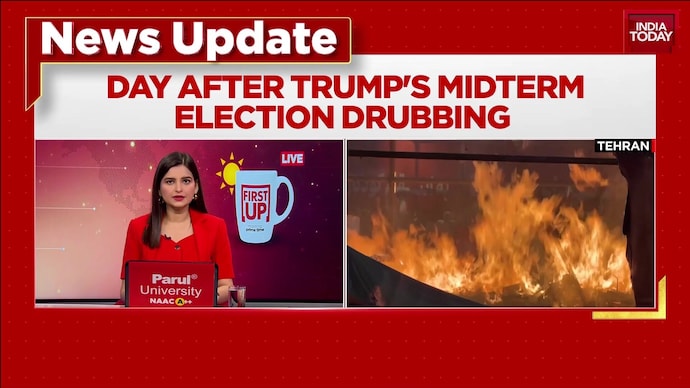
Trump-Vance Banner Burned in Tehran After Republican Midterm Poll Loss

Tehran residents gathered at Enghelab Square on Wednesday evening and burned a large banner depicting US President Donald Trump and Vice President JD Vance following the Republican Party's loss in the midterm elections. The banner also featured Israeli Prime Minister Benjamin Netanyahu and US Special Envoy Steve Witkoff. The demonstration occurred during a state-organised rally commemorating the 1979 US Embassy takeover during the Islamic Revolution. Demonstrators mocked Donald Trump and celebrated the Republican election defeat, stating that the American public opposes war with Iran and affirming support for the mandate delivered by US voters.

US Midterm Results: Is Donald Trump's Presidency Now A Lame Duck? Experts Decode Democratic Surge

In this broadcast, foreign affairs and polling experts analyse the fallout from the US midterm election results. Pramit Pal Chaudhuri, Head of India Practice at Eurasia Group, notes that the Trump administration is 'effectively a lame duck administration now', following significant defeats driven by economic fallout, inflation, and an unpopular war in the Middle East. Strategic expert Seema Sirohi points out that while midterm losses are historically typical for sitting US presidents, widespread public anger over rising energy and fertiliser costs heavily impacted rural America. Alec Tyson of Ipsos explains that polling captured a seismic shift as Democrats outperformed expectations across key Senate and House races, reflecting a widespread voter rejection of administration policies rather than an unconditional embrace of the opposition party. The panel discusses the severe limits on executive governance, looming congressional oversight, and geopolitical ramifications for US foreign policy moving forward.

Democrats Win Congress, Historic Governors Elected as US Midterms Rebuff Trump

The United States midterm elections have resulted in a Democratic victory, flipping control of both the House of Representatives and the Senate and ending Republican majorities across traditional red states including Texas, South Carolina, and Kansas. Major electoral milestones include Keisha Lance Bottoms winning the Georgia gubernatorial race, Abdul El-Sayed securing a Michigan Senate seat, and Amy Acton defeating Vivek Ramaswamy in Ohio, alongside congressional victories for Indian American candidates Suhas Subramanyam, Ro Khanna, and Ami Bera. Driven by voter concerns over escalating cost of living, rising diesel prices, tariff policies, and ongoing conflict with Iran, the election outcome establishes a divided government. In an India Today special broadcast of India First, former diplomats including Arun Kumar Singh examine the ramifications for Donald Trump's administration, potential congressional investigations, subpoenas over foreign and domestic policies, energy market volatility, and defense technology transfers, alongside the strategic trajectory of India-US bilateral relations and trade agreements.

ABVP Delhi University March, Anarchy Row & Counter to Left-Congress

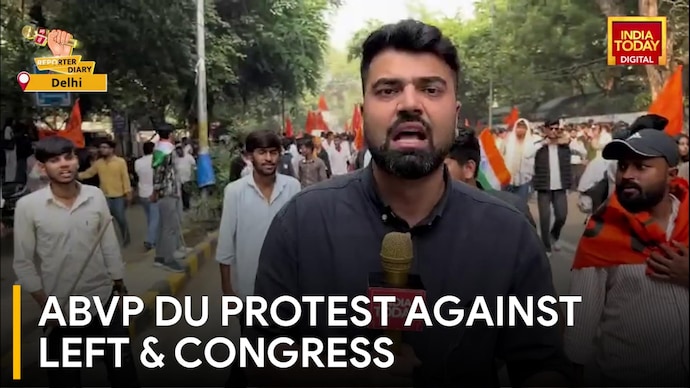
Thousands of Akhil Bharatiya Vidyarthi Parishad members and students gathered at Delhi University to take out a protest march titled 'Arajakta Hatao, Loktantra Bachao' against the Congress Party and left-wing organisations. Carrying placards reading 'Samvidhan ke samman mein ABVP maidan mein', protesters accused opposition and Left parties of spreading anarchy and disrespecting the constitution. The demonstration follows political friction triggered by controversial remarks on regime change by Left student leader Neha Bora, alongside ongoing disputes involving Chief Election Commissioner Ganesh Kumar. Demonstrators accused political opponents of bypassing constitutional norms, while the Bharatiya Janata Party initiated related protest marches across the country.

US Midterms: Ex-Indian Amb Arun Kumar Singh On Trump's Setback, India-US Ties And Strategic Autonomy

In an exclusive interview on an India Today special broadcast, former Indian Ambassador to the United States Arun Kumar Singh analysed the outcome and diplomatic fallout of the US midterm elections. Assessing the substantial gains made by the Democratic Party across both the Senate and the House of Representatives, Singh termed the election result 'a huge setback for President Trump.' He noted that growing domestic discontent over elevated energy and food prices sparked by the protracted conflict with Iran played a decisive role in shaping voter sentiment. Discussing bilateral strategic ties, Singh observed that while the White House retains broad constitutional leeway over foreign policy and trade accords, New Delhi must navigate Washington's policy volatility with caution. He stressed that even as India deepens engagement with America in technology and defence domains, New Delhi should maintain strategic autonomy and diversify external partnerships, pointing out that 'you need to hedge also against the US, even as you deepen the partnership.'

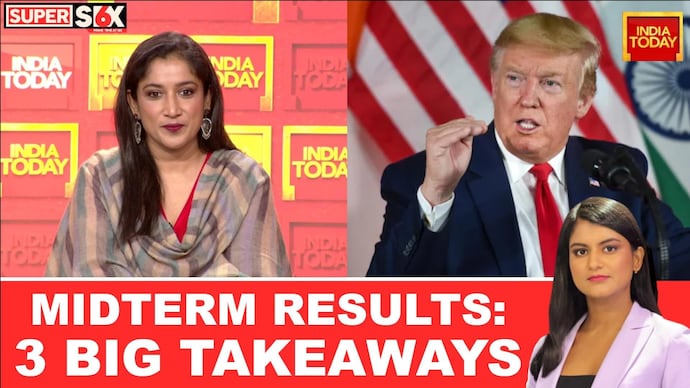
US Midterms: Voters Reject Trump, Geeta Mohan Explains The Three Big Takeaways From Results

An analysis of the United States midterm election results breaks down the major setbacks faced by Donald Trump and the Republican Party. The outcome is described as a direct referendum on Trump rather than an endorsement of Democrats, driven heavily by economic distress, tough tariff policies impacting trading partners like India, and decisions leading to war. Rising gasoline prices, corporatization concerns, and administration rhetoric alienating minority communities, including Indian-Americans over H-1B visas, contributed to historic flips such as Texas rejecting the Republican base. Although red strongholds swung blue, the shift is assessed as a classic midterm protest wave rather than a permanent realignment for future presidential elections.

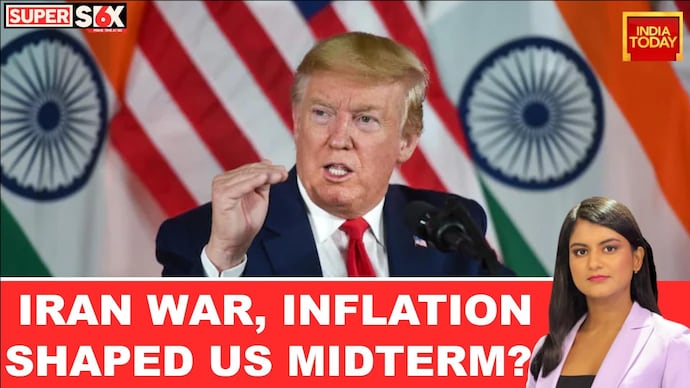
US Midterms: Trump Faces Voter Backlash Over Iran War, Inflation; Indian-Americans Back Democrats

The US midterm election results reflect a massive mandate against Donald Trump's administration, driven by rising fuel prices, domestic inflation, and deep public opposition to the war in Iran. A projected Democratic sweep flipped several traditionally Republican states, securing congressional control that severely limits presidential funding for prolonged military action abroad. The discussion highlights the shifting geopolitical landscape, particularly regarding West Asia strategy, potential diplomatic exits, and bilateral relations between India and the United States. Furthermore, the voting patterns of the Indian-American community emerged as a pivotal factor, with key Democratic candidates winning crucial legislative contests across Florida, Maryland, California, and Virginia, while prominent Republican contenders faced defeat amid voter concerns over immigration, H-1B visas, and rising hate crimes.

BJP Holds 1984 Anti-Sikh Riots Conclave In Punjab As Rahul Gandhi Campaigns

The Bharatiya Janata Party launched a day-long conclave titled 'Wounds of 1984' in Punjab, coinciding with Congress leader Rahul Gandhi's election campaign visit to Sangrur. The event commemorated the 1984 anti-Sikh riots, gathering survivors, victims' families, and legal voices to demand accountability and justice. Accompanied by a photographic exhibition put together by H.S. Phoolka and Aparna Singh, the conclave aimed to educate the younger generation regarding the violence and questioned the Congress party's record on justice. The counter-offensive follows a recent BJP pad yatra held in the national capital to mark the anniversary of the riots. India Today correspondent Kamaljeet Sandhu reported that the BJP is seeking to expand its political footprint in Punjab by challenging both the Congress and the ruling Aam Aadmi Party ahead of elections. Meanwhile, Congress leaders claimed the principal electoral contest in the state remains between the Congress and the Aam Aadmi Party.