From the India Today archives (2025) | Climate chaos: How can India build resilience?
The Nepal flood tragedy once again highlights the rapidly rising frequency of extreme weather events. Are we prepared?

A cloudburst is one of the most devastating weather events linked to the monsoon in India. It refers to an abrupt spell of highly laborious rainfall, concentrated over a gnomish geographic area, in a very short span of time.
According to the India Meteorological Department (IMD), any rainfall of further than 10 cm within an hour across an area of about 10 square kilometers qualifies as a cloudburst. Unlike normal showers, cloudbursts happen when moisture-laden clouds encounter obstacles such as mountains or ridges and are unable to move further. The unfree clouds release their water content rapidly, leading to uncontrolled rain that overwhelms the tropical terrain. Within minutes, streams overflow, rivers swell, and slopes give way to landslides, often catching people off guard.
These events are ordinarily reported in the Himalayan states of Uttarakhand, Himachal Pradesh, and Jammu and Kashmir, where steep valleys magnify their impact. Ladakh, Sikkim, and parts of the Northeast have also witnessed similar incidents in modern years. On the ground, the damage can be catastrophic, flash floods sweeping away houses, blocking highways, soil erosion, and loss of lives. Predicting a cloudburst remains a better challenge for scientists. While radar and satellite systems can warn of heavy rain in advance, pinpointing the direct location and timing is inconceivable delinquent to the small area of impact. Experts believe that climate change and rising temperatures are making cloudbursts further frequent and intense. With the atmosphere holding further moisture than before, the risks during the monsoon are expected to increase, putting defenseless mountain communities at greater danger.
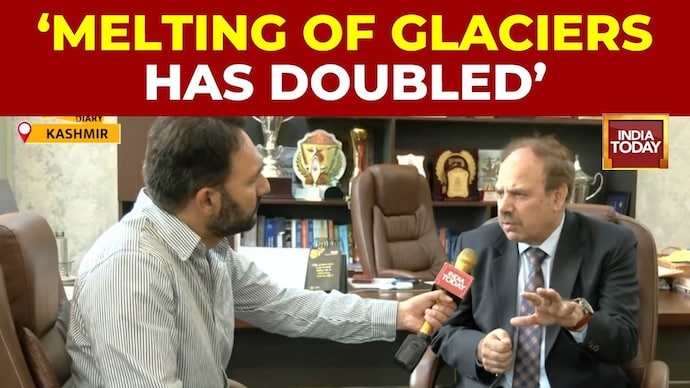
In an interview with India Today, glaciologist and Vice Chancellor Dr Shakil Ahmad Romshoo discussed the growing risks of glacial lake outburst floods (GLOFs) and hanging glacier breaks across the Himalayas following the disaster in Nepal. He noted that temperatures in the Himalayas have risen by 1.2 degrees Celsius over the last century, significantly exceeding the global average increase of 0.8 degrees. Highlighting the accelerated impact on mountain hydrology, Dr Romshoo stated, "Particularly during the last ten years, the melting of these glaciers has almost doubled," which has driven the rapid expansion of glacial lakes in high-risk zones like the Chenab and Zanskar valleys. He stressed that while outbursts cannot be prevented entirely, authorities must deploy operational early warning systems and sensor networks downstream. He further called for strict implementation of river buffer zones, comprehensive environmental reviews of high-altitude hydropower projects, and regulation of mass tourism and pilgrimages to preserve fragile mountain ecosystems.
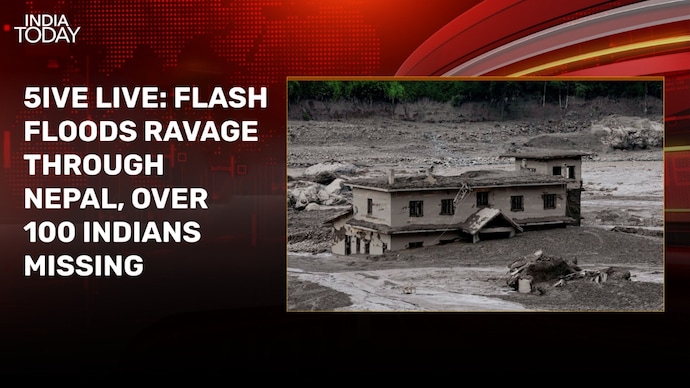
Catastrophic flash floods in Nepal have caused widespread destruction across mountainous districts including Nuwakot, Chitwan, Dhading, and Rasuwa. The flooding damaged 11 hydroelectric power stations and severed regional power and communication networks. Nepalese authorities deployed over 1,000 troops and 15 military helicopters for search and rescue operations. Hundreds of people are affected, with more than 384 foreign tourists missing, including over 100 Indian nationals. Dravida Munnetra Kazhagam Member of Parliament Dayanidhi Maran wrote to External Affairs Minister Dr. S. Jaishankar to request the evacuation of missing tourists from Tamil Nadu. Prime Minister Narendra Modi contacted Nepalese Prime Minister K.P. Sharma Oli to offer humanitarian assistance. The Indian Air Force prepared C-17 Globemaster and C-130J transport aircraft carrying National Disaster Response Force personnel, earth-moving machinery, medical teams, and relief supplies. Downstream, Indian border states Bihar and Uttar Pradesh issued high flood alerts. Authorities in Bihar opened all 36 gates of the Valmiki Nagar Gandak Barrage to manage massive water inflows from Nepal.
A catastrophic natural disaster in Nepal, triggered by an earthquake, severe rainfall, and flash floods, has caused widespread destruction across the region. Dramatic footage captured flash floods destroying infrastructure, including the Rasuwa border gate between Nepal and China. Unconfirmed reports indicate damage to around 14 hydroelectric power stations, exacerbating the floodwaters, with over 600 people affected and rescue operations actively underway. Among those impacted, over 100 Indian citizens, including Kailash Mansarovar yatris and tourists, are reportedly missing or stranded. In response, Indian Prime Minister Narendra Modi has spoken with the Nepalese Prime Minister, offering full support, relief material, medical assistance, and search and rescue aid. Helplines have been issued by the Ministry of External Affairs and the Indian Embassy in Kathmandu, while Indian disaster management teams, including the NDRF, remain on standby in Gorakhpur to assist Nepalese security forces.
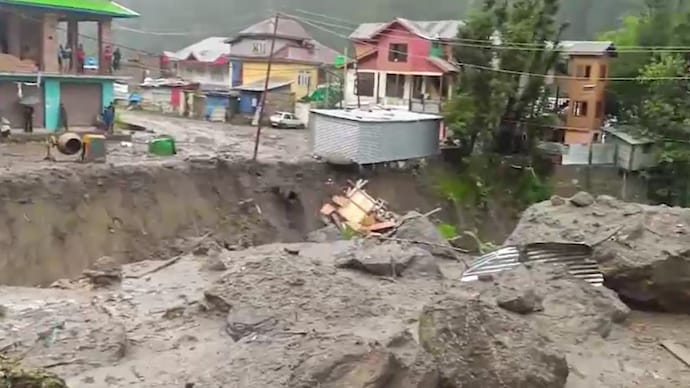
A cloudburst triggered flash floods in the Chatroo area of Jammu and Kashmir's Kishtwar district early on Saturday, inundating markets and residential areas with boulders, mud and slush, sweeping away at least two vehicles and disrupting traffic on the Kishtwar-Chatroo-Sinthan National Highway. Union Minister Jitendra Singh said he had spoken to Kishtwar Deputy Commissioner Pankaj Kumar Sharma and confirmed that no loss of life had been reported. Meanwhile, authorities ordered the closure of schools in Kishtwar, Doda and Ramban districts.
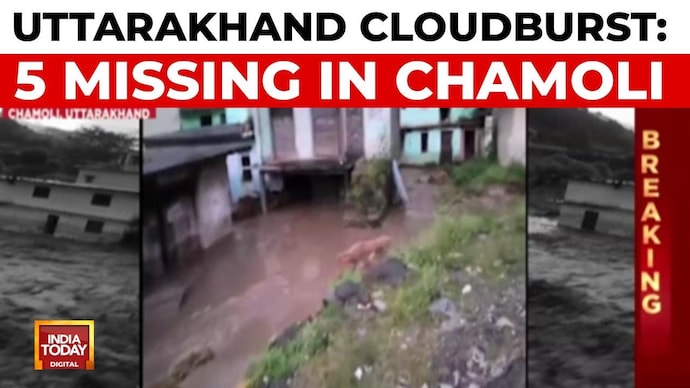
A cloudburst in Nandanagar, Chamoli district, has triggered flash floods and widespread damage in Uttarakhand. According to preliminary information, six buildings in Nandanagar were completely damaged by debris from heavy rain. The flash floods have badly affected Kuntari and Durma villages. Five people are reported missing, with two individuals having been rescued. A reporter noted, "yet again, the monsoon mayhem strikes Uttarakhand and now it's in Nandanagar area of Chamoli." National and State Disaster Response Force teams have launched search and rescue operations. In Durma village, four to five residential houses have suffered damages, with reports of livestock losses. The Chief Minister's office has dispatched a medical team and ambulances to the scene to assist with the relief efforts.
This edition of News Today covers the resumption of trade talks between India and the United States after a month-long pause, with discussions described as positive and forward-looking, aiming for an early conclusion
This programme focusses on the impact of devastating cloudbursts in Uttarakhand and Himachal Pradesh, which have resulted in flash floods and widespread destruction.
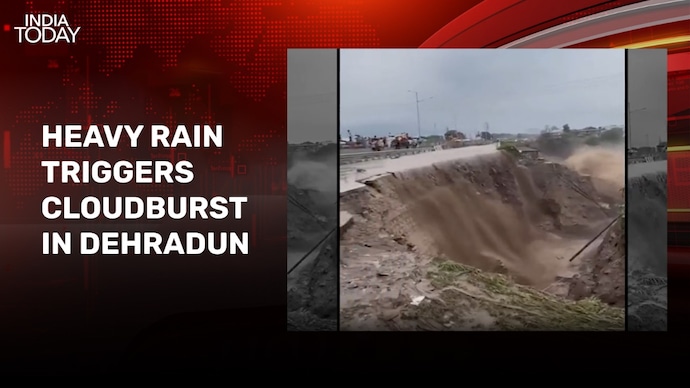
Cloudbursts and flash floods in Uttarakhand's Dehradun and Himachal Pradesh's Mandi have damaged several houses and shops, while two people have been missing.
A late-night cloudburst in Uttarakhand forced authorities to shift residents to safer areas, with rescue teams working to trace two missing persons. District Magistrate Savin Bansal, SDM Kumkum Joshi, and other officials reached the site to assess the damage and expedite search efforts. Chief Minister Pushkar Singh Dhami said he was closely monitoring the situation, remaining in constant touch with the local administration, and personally visited the affected areas with ministers and officials.
Cloudbursts in the states of Himachal Pradesh and Uttarakhand have triggered severe flooding in Dehradun and Mandi. In Dehradun, strong water currents have resulted in two people going missing, prompting search and rescue operations. The floodwaters have inundated large parts of the city, submerging shops and hotels, and numerous vehicles have been damaged or washed away. This event follows a month of massive damage in both states due to weather-related incidents. Uttarakhand Chief Minister Pushkar Singh Dhami had visited affected areas a couple of days prior. The central government has also told the state of Uttarakhand that all necessary relief will be provided to the people impacted by the floods.
Very heavy overnight rains have caused widespread destruction across northern India, particularly in the hill states of Jammu and Kashmir, Uttarakhand, and Himachal Pradesh. In Jammu and Kashmir's Ramban area, a cloudburst led to flash floods, resulting in at least four deaths and one person missing, with several houses damaged or washed away. In Uttarakhand, landslides have blocked the Badrinath National Highway at five separate points in the Chamoli district. Meanwhile, in Himachal Pradesh, severe flooding has resulted in significant damage, with Manali being the most affected area. An India Today ground report from Bang in Manali shows how the popular Shere Punjab Dhaba was almost entirely washed away by the furious currents of the River Beas, with only its front facade left standing precariously.
A cloudburst in Jammu and Kashmir's Ramban region has triggered deadly flash floods in the Rajgarh area, resulting in three deaths with four people reported missing. Rescue and relief operations are currently underway following the incident, which occurred in the dead of the night and caused significant damage to property, including several houses. This event is one of several such weather-related incidents in Jammu and Kashmir in recent months. Authorities had been issuing warnings based on IMD alerts, which predicted heavy rains. According to administrative sources, "because of the prevalent cycle of monsoon as well as western disturbances, the interaction is proving deadly and this could continue and people need to remain cautious and vigilant." The threat of further flash floods and cloudbursts is expected to persist, particularly in the mountainous belts, for the next 10 to 15 days.
The top focus of this episode of 5Live is on the extensive devastation in Himachal Pradesh, Jammu and Kashmir, Uttarakhand and Punjab resulting from relentless rains, flash floods, and landslides.
A section of the Tawi River bridge near Bikram Chowk in Jammu collapsed after relentless rains battered the region, leaving several vehicles stranded. The Jammu region has been hit by its heaviest rainfall in decades since Monday night, crippling road connectivity, damaging bridges, and submerging vast areas. In Doda, a cloudburst killed four people and destroyed more than 10 houses, forcing many residents to move to safer locations.
A red alert has been sounded across the Jammu region due to torrential rains, cloudbursts, and flash floods, bringing the area to a standstill. Rivers including the Tawi, Chenab, Basantar, and Ravi are flowing above the danger mark, leading to evacuations in low-lying areas. A major portion of a bridge on the Tavi river collapsed, and the Jammu-Srinagar highway is blocked by landslides at Ramban. In response, the Vaishnodevi Yatra and Shiv Khori Yatra have been suspended, and schools and government offices are shut. Rescue operations are underway involving the Army, NDRF, and local police. With the IMD sounding a red alert for August 27, authorities are warning that the "next 24 hours could be extremely decisive."
This episode of India First focusses on the 50% tariffs imposed by the United States on Indian exports, which come into effect from August 27.
The top focus of this episode of 5Live show is on the relentless heavy rain that has triggered cloudbursts and flash floods in J&K, Himachal Pradesh and Punjab.
Incessant rainfall for over 24 hours has led to a severe flood situation in the Jammu region. The Tawi river in Jammu city has breached its banks, with floodwaters inundating low-lying residential areas.
A cloudburst in J&K’s Doda district on Tuesday triggered flash floods, damaging over 10 houses, officials said. The weather department has warned of heavy to very heavy rainfall across Jammu region districts, including Kathua, Samba, Doda, Ramban, Kishtwar, and Jammu. Authorities confirmed no casualties so far.
Incessant rains and a cloudburst have caused widespread devastation in Jammu and Kashmir's Doda district, resulting in flash floods across the region.