Election Commission of India | Crisis of credibility
Internal friction and court scrutiny cast a shadow on the impartiality, integrity and transparency of the poll body. What needs to be done to restore people’s faith

The Election Commission of India is a permanent constitutional body responsible for conducting and overseeing elections in India. Established on January 25, 1950, it administers elections to the Lok Sabha, Rajya Sabha, State Legislative Assemblies and the offices of the President and Vice-President.
The Constitution gives the ECI superintendence, direction and control over the electoral process. The Commission currently comprises the Chief Election Commissioner and two Election Commissioners, with decisions taken by majority vote.
Its headquarters and Secretariat are in New Delhi, while Chief Electoral Officers, District Election Officers, Electoral Registration Officers and Returning Officers oversee elections at the state, district and constituency levels.
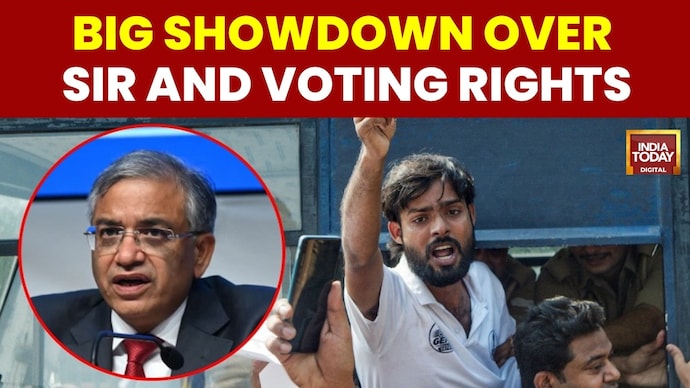
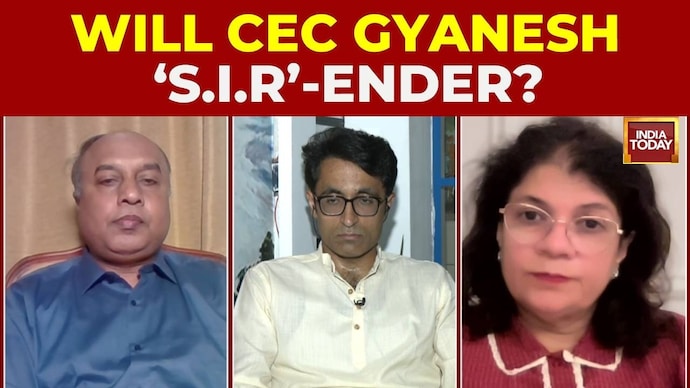
The Supreme Court has refused to pass an interim order to suspend Chief Election Commissioner Gyanesh Kumar following petitions raising claims of internal rifts within the Election Commission of India. During the hearing, the Chief Justice of India questioned the reliance on newspaper reports alone, observing that decisions in the three-member poll body can be taken by majority if there is no unanimity. Senior advocates Vikas Singh and Menaka Guruswamy, appearing for the petitioners, highlighted concerns over unilateral decisions and the integrity of the election process, seeking interim directions. The court inquired into the statutory procedures governing commission meetings, examining whether decisions were backed by unanimous consent, majority agreement, or taken unilaterally by the Chief Election Commissioner. Declining immediate interim relief on the basis of unverified media reports, the Supreme Court issued notice to the poll body and the election commissioners, directing them to submit clarifications and relevant documentation on decision-making processes.
The Supreme Court has issued notice to the Election Commission of India regarding petitions challenging unilateral decision-making by the Chief Election Commissioner. Petitioners before the court raised questions about whether the Chief Election Commissioner acted alone in modifying Form 6 and implementing decisions related to the Special Intensive Revision exercise across several states. Arguments also focused on Section 18 of the newly amended Election Commissioners Act, which grants blanket immunity from prosecution to poll officials after leaving office. Petitioners contended that arbitrary modifications led to voter deletions and disenfranchisement. The court clarified that the law mandates unanimity or a majority in commission decisions, noting it retains the power to overturn illegal actions. The bench indicated that Election Commission records and file notings would be examined to verify how decisions were reached.
The Supreme Court has declined to pass an interim order to suspend Chief Election Commissioner Gyanesh Kumar following allegations that decisions within the Election Commission of India were taken unilaterally without consensus from fellow election commissioners. A bench comprising Chief Justice Surya Kant, Justice Joymalya Bagchi, and Justice V. Mohana issued notices to the Election Commission, the three election commissioners, and the government on a public interest litigation petition. Senior advocates Vikas Singh and Menaka Guruswamy, appearing for the petitioners, argued that provisions of the Election Commission Act requiring unanimous or majority decisions were violated, raising concerns over voter list deletions across states including Delhi and Bengal. The apex court noted that an order cannot be passed without hearing the other side or solely based on news reports, while observing that constitutional authorities are expected to act according to the law and affirming that any illegal decisions can be overturned after due examination.
The Supreme Court has issued notice to the Election Commission of India on a Public Interest Litigation challenging decisions regarding the Special Intensive Revision and alterations to Form 6 and Form 7. The petition alleges that decisions by the poll body were taken in violation of the Election Commission Act, which mandates that resolutions be reached unanimously or by a majority. The apex court observed that the constitutional authority must be guided by law and directed the commission to clarify whether the contentious decisions were taken by the Chief Election Commissioner alone or collectively. While refusing interim prayers to suspend the Chief Election Commissioner, the court granted one week to the Election Commission, the Chief Election Commissioner, and the two Election Commissioners to file their responses detailing how the modifications were approved and whether statutory decision-making norms were followed.
A debate has emerged surrounding the Special Intensive Revision exercise after differing perspectives were voiced regarding the deletion of voters from electoral rolls. Supreme Court Judge Justice Ujjal Bhuyan criticised mass disenfranchisement, terming arbitrary deletions unconstitutional and highlighting that voting rights remain central to Indian democracy under Articles 14 and 326. He warned that depriving citizens of voting rights reduces them to second-class citizens. Conversely, former Uttarakhand High Court judge Justice Lokpal Singh defended the Election Commission of India's revision process, citing concerns over fake voters and illegal infiltration in border states such as West Bengal and Bihar. The discussion comes as multiple public interest litigations and court benches monitor deletions, appeal mechanisms, and software errors impacting voter lists across several states.
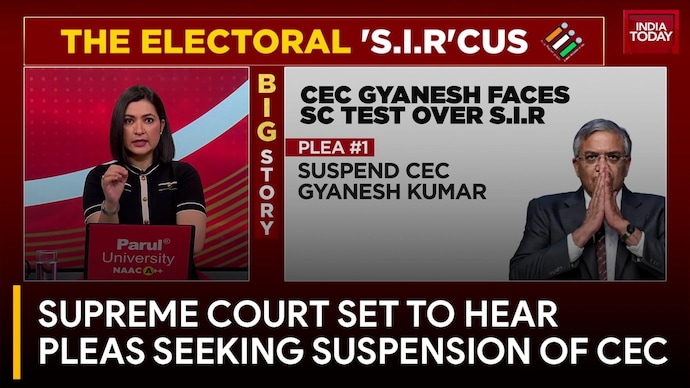
The Supreme Court is set to hear a series of petitions demanding the suspension of Chief Election Commissioner Gyanesh Kumar and challenging unilateral decisions made by the Election Commission. The pleas call for declaring the Special Intensive Revision exercise illegal, quashing fourteen decisions taken without full commissioner approval, initiating an independent judicial probe, and conducting a forensic audit of technical portals including ECI Net and ERO Net. Petitions also seek prosecution of officials and an inquiry into alleged Form 6 modifications. Meanwhile, Supreme Court Justice Ujjal Bhuyan highlighted that citizenship and voting rights are intertwined, noting that wholesale disenfranchisement of citizens violates constitutional provisions.
Ahead of the Supreme Court hearing over petitions against the Chief Election Commissioner, Supreme Court judge Justice Ujjal Bhuiyan made remarks on voting rights and the Special Intensive Revision process during an address at NALSAR. Justice Bhuiyan stated that disenfranchising millions of Indian citizens is arbitrary, emphasising that the Indian Constitution does not create two classes of citizens with and without voting rights. The comments came as the Supreme Court is scheduled to hear a batch of petitions seeking the suspension of the Chief Election Commissioner, an independent judicial probe into the special intensive revision, a forensic audit of Election Commission systems including ECINet and ERONet, and the quashing of decisions allegedly taken without consultation. The Congress welcomed the remarks, stating the observations underline the constitutional sanctity of the right to vote. Pleas before the apex court also seek investigations into alleged Form 6 modifications and legal action against senior officials if wrongdoing is established.
Supreme Court judge Justice Ujjal Bhuyan has stressed that the right to vote forms the foundation of free and fair elections, stating that voter names cannot be deleted without notice, except in the case of deceased individuals. Reacting to the ongoing Special Intensive Revision row during an address at NALSAR University of Law, Justice Bhuyan noted that the Constitution of India does not create two classes of citizens and that detaching voting rights from citizenship is like taking the soul from the body. He observed that wholesale disenfranchisement rendering millions of citizens without voting rights is intrinsically arbitrary and violative of Articles 14 and 326. While the judge is not presiding over the Special Intensive Revision petitions before the apex court, his remarks come as Chief Election Commissioner Gyanesh Kumar faces judicial scrutiny. Several petitions before the Supreme Court seek the suspension of the Chief Election Commissioner, the quashing of unilateral decisions, a judicial probe into the revision process, and a forensic audit of election commission software systems.
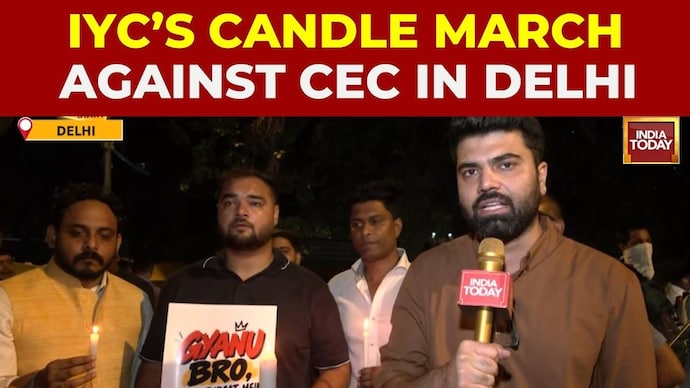
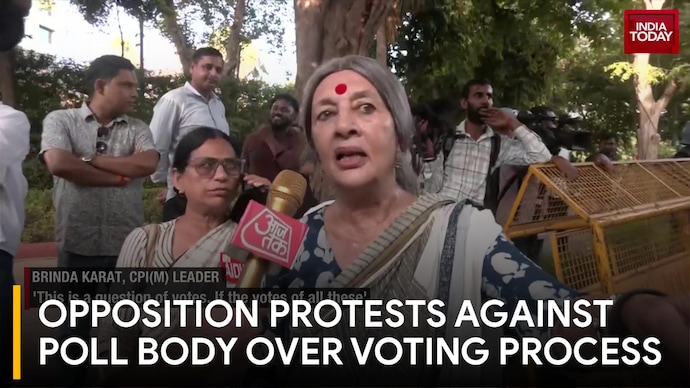
Indian Youth Congress workers staged a candle march on Raisina Road in New Delhi, demanding the immediate resignation of Chief Election Commissioner Gyanesh Kumar. Heavy barricading along with personnel from the Delhi Police and paramilitary forces were deployed by the administration to prevent the protesters from reaching Jantar Mantar. Speaking during the agitation, Delhi Youth Congress President Akshay Lakra described the protest as an effort against the murder of democracy, alleging that the Election Commission of India has been compromised. Lakra demanded that the Special Intensive Revision process be reviewed and that internal objections raised within the Commission be made public. He also questioned why the Chief Election Commissioner has not addressed the media to clarify questions emerging from recent reports. Meanwhile, the ruling Bharatiya Janata Party defended the poll body, dismissing opposition allegations as political frustration. The broadcast noted that other opposition groups, including the Aam Aadmi Party and Left parties, have also organised demonstrations against the Election Commission across the capital.
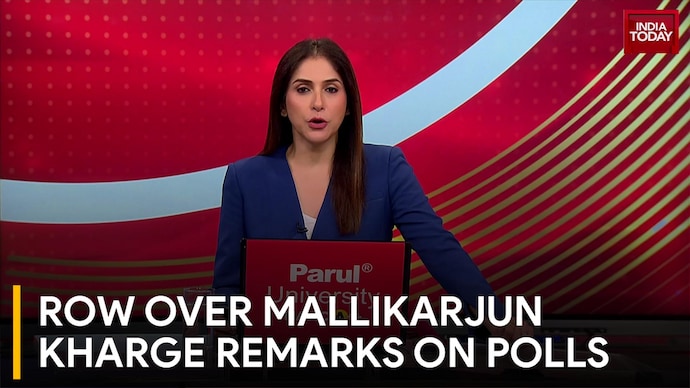
A major political controversy has erupted following remarks by Mallikarjun Kharge claiming elections were rigged and calling polls illegal. Union Minister of Parliamentary Affairs Kiren Rijiju hit back at the Congress chief, questioning whether Rahul Gandhi and various state chief ministers were also illegal and demanding an end to insulting the Constitution. The Bharatiya Janata Party heavily criticised the Congress leadership, alleging that consecutive electoral losses have affected the party's balance and led to attacks on democratic institutions, including the Election Commission.
A major political confrontation has erupted between opposition parties and the Election Commission over the Special Intensive Revision (SIR) of voter lists. In Mumbai, Raj Thackeray and Uddhav Thackeray held a joint demonstration seeking the resignation of Chief Election Commissioner Gyanesh Kumar, while the Aam Aadmi Party and left parties staged protests at India Gate in Delhi. The INDIA bloc announced plans to march to the Election Commission office demanding the immediate repeal of the SIR process. AIMIM chief Asaduddin Owaisi raised allegations in Hyderabad over fraudulent Form 7 submissions, and Congress president Mallikarjun Kharge called recent elections illegal, demanding a switch to paper ballots. In an India Today debate, BJP spokesperson Pradeep Bhandari defended the poll body, arguing that the Supreme Court has backed the SIR process and accusing the opposition of questioning constitutional bodies only when they lose. Congress spokesperson Brijesh Kalappa and Shiv Sena Shinde faction spokesperson Susi Ben Shah presented conflicting perspectives on voter deletions and electoral integrity.
A debate unfolds over the Election Commission of India and the electoral verification process, featuring Bharatiya Janata Party National Spokesperson Pradeep Bhandari, Congress National Spokesperson Brijesh Kalappa, and Shiv Sena spokesperson Susie Shah. Bhandari defends the constitutional validity and consensus-driven functioning of the Election Commission, asserting that 'street anarchy cannot replace representative democracy' and criticising the opposition for crying foul only upon facing electoral defeats. Kalappa counters by accusing the ruling party of weaponising the poll watchdog and facilitating mass disenfranchisement, alleging that nearly 44 lakh voter deletions were attempted in Karnataka using Form 7. Meanwhile, Shah rejects the Congress allegations as baseless narratives lacking legal affidavits, defending the voter roll rationalisation and corrective measures. The panellists spar fiercely over EVMs, electoral integrity, and political legitimacy across key states including Karnataka, Maharashtra, and Telangana.
A political confrontation has intensified between the opposition and the ruling Bharatiya Janata Party over allegations surrounding the electoral process and the Election Commission. Following demonstrations in Mumbai involving Congress, Shiv Sena UBT, MNS, and NCP SP demanding the Chief Election Commissioner's resignation, protests spread to Delhi with the Aam Aadmi Party and left parties demonstrating against the SIR exercise. Amid these demonstrations, three women journalists alleged police sexual harassment during an October 3rd protest at Jantar Mantar, leading to a Crime Branch probe. In Hyderabad, AIMIM chief Asaduddin Owaisi accused Bharatiya Janata Party and RSS workers of filing false form seven objections, seeking intervention from the Telangana Chief Electoral Officer. Meanwhile, the Bharatiya Janata Party accused the Congress of adopting a selective stance towards the poll body depending on election outcomes. Separately, the National Human Rights Commission directed Mumbai Police to investigate reports regarding the participation of minor children in the Mumbai demonstrations.
Parties of the INDIA bloc have decided to hold joint demonstrations outside the Election Commission office in Delhi against the special intensive revision of electoral rolls and demand the resignation of Chief Election Commissioner Gyanesh Kumar. According to a statement by Delhi Congress General Secretary Anil Bharadwaj, representatives from Congress, CPI, CPI(M), RJD, NCP, and RSP agreed to oppose the revision process and seek its repeal, maintaining that the voter list is democracy's foundation. Opposition MPs plan to march from Parliament to the Election Commission office, followed by Delhi unit demonstrations and pan-India protests to raise concerns over the electoral process.
Speaking at the India Today South Conclave in Kochi, Andhra Pradesh Minister for HRD, IT, Electronics and Communications Nara Lokesh addressed key national and state issues, defending the Election Commission of India amid opposition criticism. Remarking, "Is the system perfect? Absolutely not. There are areas of improvement like any system is," Lokesh argued that political parties frequently question electoral bodies out of convenience when they lose rather than developing grassroots booth management. Clarifying the Telugu Desam Party's position within the National Democratic Alliance, he affirmed that differences are raised constructively internally. Lokesh highlighted Andhra Pradesh's economic push, stating the state focuses on grounding investments to generate employment rather than merely signing memorandums of understanding. He defended Chief Minister N. Chandrababu Naidu's statements on demographic management and warned that southern states must not lose parliamentary clout post-delimitation, advocating for proportional representation.
In an interview with India Today, Karnataka Chief Minister DK Shivakumar addressed allegations regarding the targeting and deletion of voters across Karnataka and other parts of India. He asserted that an investigation by his team uncovered large-scale distribution of Form 7 to delete names from the voter rolls, alleging that members of minority groups, backward classes, Scheduled Castes, and homeless citizens were being systematically targeted because they traditionally vote for the Congress Party. Describing the matter as a nationwide issue rather than an isolated Bengaluru case, DK Shivakumar called the deletions a significant criminal conspiracy. He emphasized that the right to vote represents the right to live and insisted that the Election Commission must conduct thorough inquiries and hold the senior organizers legally accountable instead of targeting low-level party cadres.
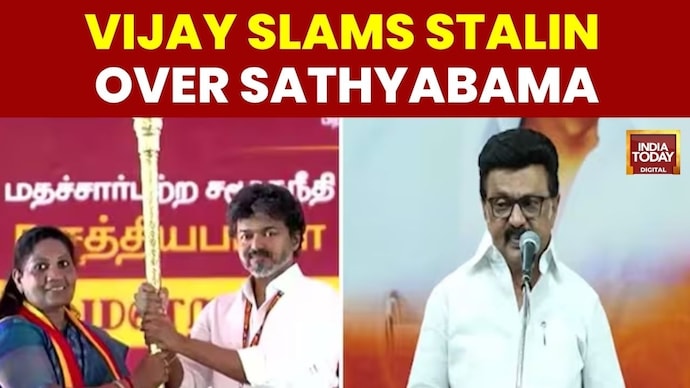
A political row has erupted between the Tamilaga Vettri Kazhagam and the Dravida Munnetra Kazhagam in Dharapuram over remarks made by MK Stalin against TVK candidate Satyabama. The TVK accused Stalin of body-shaming and character assassination against their woman candidate during election campaigning, with party chief Vijay criticising the remarks and accusing him of creating a culture of indecency. Satyabama stated that the remarks caused her deep personal distress. TVK representatives have approached the Election Commission to lodge a formal complaint, alleging a breach of the model code of conduct. Ally Communist Party of India (Marxist) also criticised the comments as character assassination that was unfitting of his stature. The DMK rejected the accusations, asserting that Stalin was referring strictly to Satyabama's political party switches and allegiances rather than her physical appearance, maintaining that the remarks are being misrepresented by political opponents.
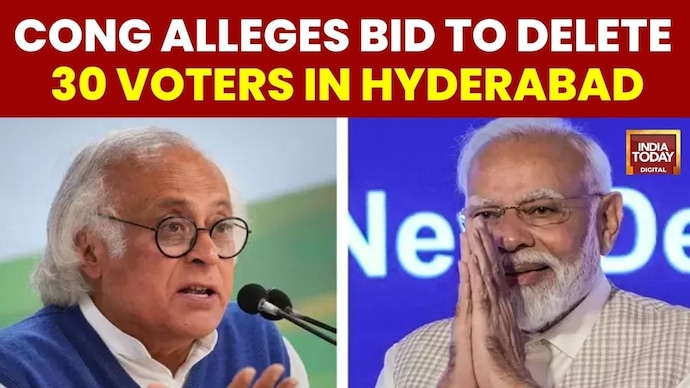
The Telangana unit of the Congress party has lodged a complaint with the Chief Electoral Officer, alleging a conspiracy to delete the names of a booth-level agent and around 30 members of his family from the electoral roll in Hyderabad's Musheerabad constituency. The complaint, filed by Pulaparti Rajesh Kumar of the Telangana Pradesh Congress Committee and Mohammad Wajed Hussain, alleges that pre-printed Form 7 applications were submitted by a Bharatiya Janata Party booth-level agent named S. Balachander. The party demanded a detailed inquiry and criminal proceedings against those responsible. Meanwhile, All India Majlis-e-Ittehadul Muslimeen chief Asaduddin Owaisi also warned the Election Commission of India against the misuse of Form 7 by political opponents to remove voters, threatening street protests if corrective measures are not taken across constituencies in Hyderabad.
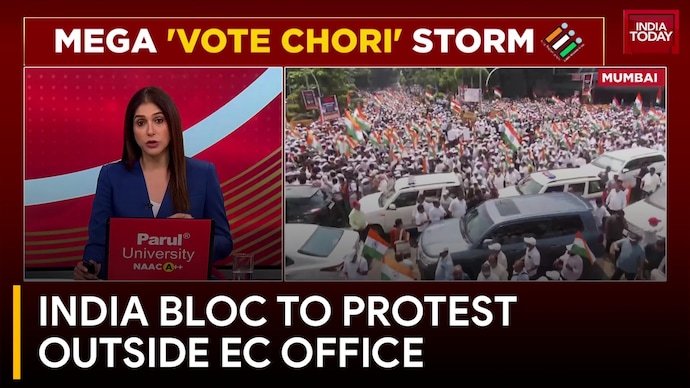
A massive protest march unfolded in Mumbai on October 4, led by Uddhav Thackeray and Raj Thackeray, demanding the removal of Chief Election Commissioner Gyanesh Kumar. Opposition parties, including the Congress and the Nationalist Congress Party Sharad Pawar faction, joined the demonstration after personal invitations from the Thackeray brothers. Senior leaders, including Vijay Wadettiwar, Balasaheb Thorat, and Jayant Patil, participated in the united stir despite past political differences. The march commenced from Metro Cinema and moved toward the Brihanmumbai Municipal Corporation headquarters, drawing large crowds of party workers and unaffiliated citizens, including youth from Mumbai, Thane, and Navi Mumbai. Demonstrators carried the Indian national flag rather than party banners, holding placards, slogans, and caricatures targeting the Election Commission over concerns regarding electoral transparency, logical discrepancies, and the alleged deletion of votes.
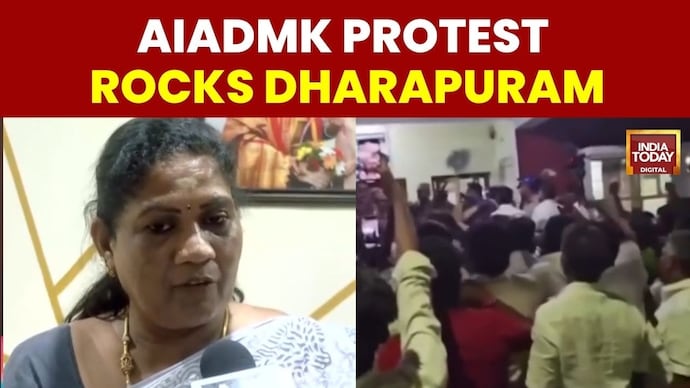
Tensions escalated ahead of the upcoming by-polls in Tamil Nadu as AIADMK cadres staged a sit-in outside the Dharapuram police station following the detention of their rural district secretary, Selvakumar. Party workers and former legislators gathered at the site, raising slogans and alleging that the police were acting in favour of the ruling TVK. The detained leaders were reportedly released after nearly five hours, following which the gathering dispersed. Concurrently, a fierce war of words erupted between the DMK and TVK over campaign remarks made by DMK chief MK Stalin against TVK candidate Sathya Bama. Chief Minister Vijay condemned the comments, accusing the DMK leadership of resorting to indecent language and personal mockery during election rallies. TVK lodged an official complaint with the Election Commission alleging a violation of the model code of conduct, while the DMK defended the statements as political commentary regarding shifting party allegiances.