As UP gears up for Assembly polls, ECI team to review election preparedness
The review, to be held in Agra, is part of the Election Commission’s preparations for Assembly elections in Uttar Pradesh, Uttarakhand, Punjab, Manipur and Goa.

India's Electronic Voting Machines (EVMs) have revolutionized the country's electoral process since their introduction in the 1990s. Designed to ensure efficient, transparent, and tamper-proof elections, these machines have significantly reduced the complexities and irregularities associated with traditional paper ballots. Manufactured by Bharat Electronics Limited (BEL) and Electronics Corporation of India Limited (ECIL), EVMs are composed of two main units: the Control Unit and the Balloting Unit, connected by a five-meter cable.
EVMs operate on a simple, user-friendly interface, allowing voters to select their preferred candidate by pressing a button corresponding to the candidate's name and party symbol. Each vote is securely recorded in the machine's memory and can be tallied quickly and accurately at the end of the polling period. The machines are battery-operated, ensuring functionality even in areas without reliable electricity.
To enhance security and address concerns about potential tampering, EVMs have been supplemented with Voter Verifiable Paper Audit Trails (VVPATs), which provide a paper slip confirming the voter's selection. This slip is visible to the voter for a few seconds before being stored in a sealed compartment, enabling audits and recounts if necessary.
India's EVMs have been praised for their robustness, simplicity, and effectiveness, contributing to the integrity of the democratic process in the world's largest democracy. Despite occasional controversies and calls for further scrutiny, EVMs remain a cornerstone of India's electoral system.
In an exclusive interaction with India Today, political economist Dr. Parakala Prabhakar strongly criticises the Election Commission of India's Special Intensive Revision (SIR), questioning its constitutional and legal basis. Prabhakar contends that neither the Constitution nor the Representation of the People Act provides for such an intensive exercise, asserting that an SIR has never taken place in the country's history. He argues that under the guise of removing deceased individuals or duplicates, the exercise leads to widespread voter deletions, particularly targeting minorities, Dalits, Adivasis, and women. Referring to findings from public hearings conducted in Hyderabad and Secunderabad, he notes that living residents were marked as deleted or shifted. Prabhakar warns that mapping voters against older lists risks disenfranchising future generations, calling the exercise "voter chori" and describing it as "a bloodless political genocide." He also advocates for paper ballots over Electronic Voting Machines (EVMs) and urges citizens not to be mere bystanders in defending universal adult franchise.
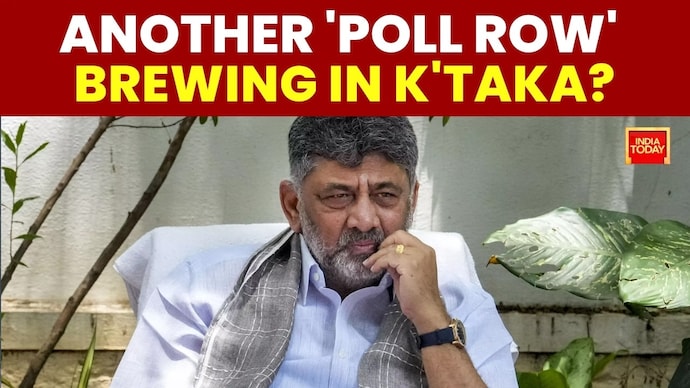
The Karnataka government has confirmed that upcoming local body elections will be conducted using ballot papers following cabinet approval, even as the State Election Commission decides whether to use the old or new voters list. The move comes despite the Congress suffering a 4-0 defeat against the NDA in recent MLC elections conducted via ballots. The decision has sparked internal debate within the Congress, with MP D.K. Suresh previously questioning the replacement of EVMs. Meanwhile, the BJP has strongly opposed the decision, with Union Minister Pralhad Joshi terming the shift regressive and accusing the state government of attempting to cover up its electoral setbacks.
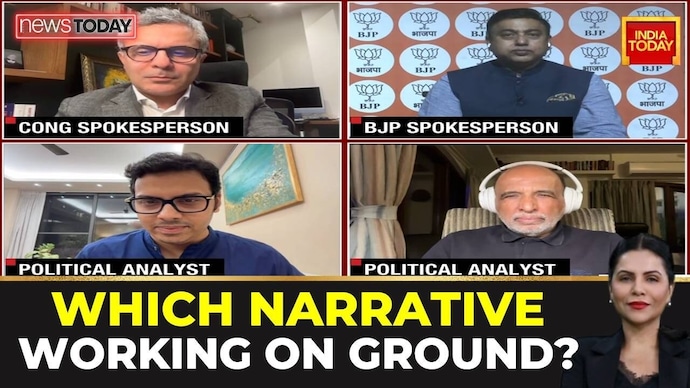
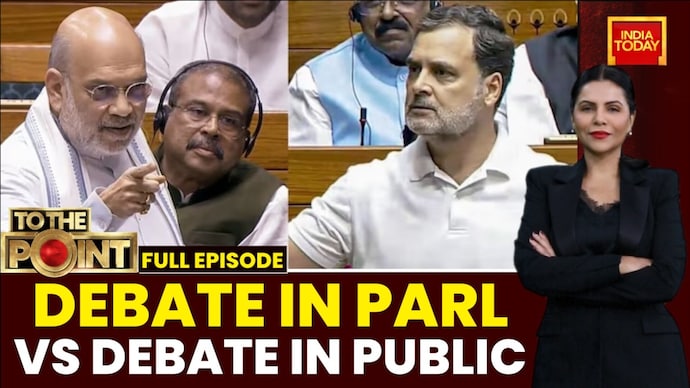
A panel debate moderated by Preeti Choudhry examines the controversy surrounding the Election Commission of India, electoral roll manipulation allegations, and administrative revisions concerning Form 6. Congress spokesperson Salman Soz criticized the poll panel, alleging widespread voter disenfranchisement, pointing to reported institutional dissent, and demanding the resignation of the Chief Election Commissioner. In response, Bharatiya Janata Party national spokesperson Dr. Syed Zafar Islam defended the constitutional body, stating that electoral concerns should be debated inside Parliament rather than through public demonstrations. Political analyst Sanjay Jha called for institutional transparency regarding internal deliberations among election commissioners, while commentator Rajat Sethi highlighted judicial scrutiny at the Supreme Court, voter infiltration issues in border states, and discussions regarding a National Register of Citizens. The discussion centers on poll body accountability, administrative course corrections, and whether the Election Commission should hold direct press conferences to address questions regarding electoral integrity.
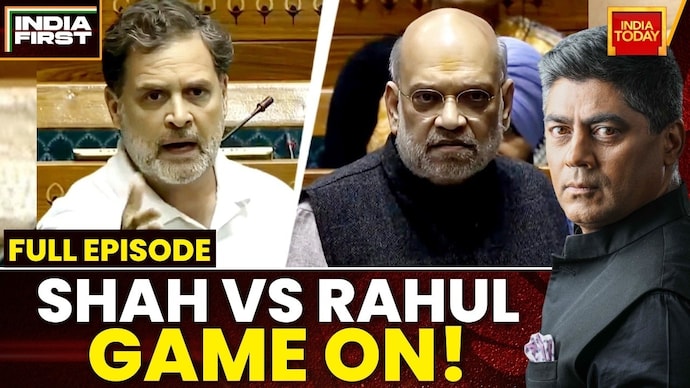
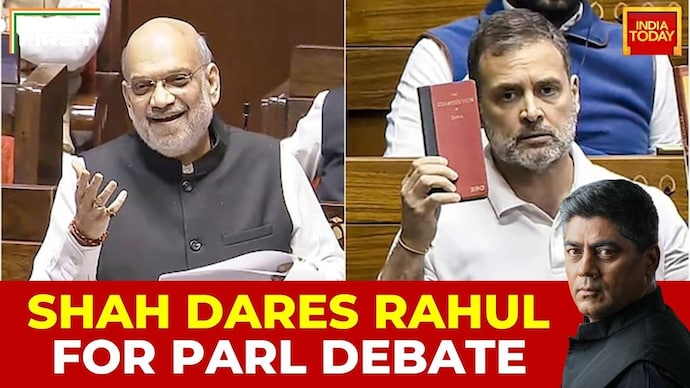
Union Home Minister Amit Shah challenged Leader of Opposition Rahul Gandhi to a parliamentary debate over electoral integrity allegations during the Bharatiya Janata Party's campaign in Karnal, Haryana. The confrontation coincided with political friction over Jharkhand Minister Dr. Irfan Ansari's remarks referencing regional unrest in Bangladesh and Nepal, which drew counteroffensives from Uttar Pradesh Chief Minister Yogi Adityanath. In response, Congress called for a direct debate between Prime Minister Narendra Modi and Rahul Gandhi while alleging parliamentary microphone muting. Concurrently, internal disciplinary actions led to the suspension of more than 200 Youth Congress office-bearers across eight states. Parliamentary discussions also evaluated floor decorum, speaking allocations, and attendance metrics. On policy matters, the central government detailed revisions to the Agnipath military recruitment scheme, introducing an optional two-year retention framework for non-absorbed Agniveers seeking permanent integration. Separately, Union Petroleum Minister Hardeep Singh Puri secured an unopposed election to the Rajya Sabha from Madhya Pradesh, and United States midterm election results were analyzed.
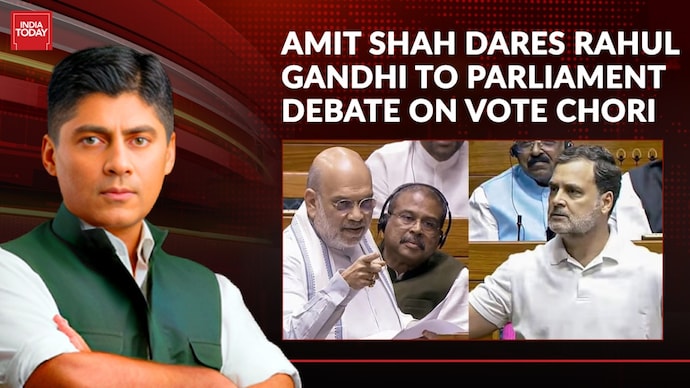
Union Home Minister Amit Shah challenged Leader of Opposition Rahul Gandhi to a parliamentary debate over electoral integrity allegations during the Bharatiya Janata Party's campaign in Karnal, Haryana.
A major political clash has erupted between the Bharatiya Janata Party and the Congress over allegations of electoral malpractice. Union Home Minister Amit Shah challenged Leader of Opposition Rahul Gandhi in Karnal, Haryana, to debate allegations of 'vote chori' inside Parliament rather than taking the issue to the streets. Amit Shah accused the opposition leader of disrupting House proceedings and questioning electronic voting machines only following electoral defeats. Uttar Pradesh Chief Minister Yogi Adityanath also targeted the Congress, recalling the 1975 Emergency and accusing the party of dubious democratic credentials. In response, Congress leadership pushed for a direct presidential-style face-off between Prime Minister Narendra Modi and Rahul Gandhi, alleging that the Prime Minister has avoided press conferences and accountability. Congress leaders also countered that opposition voices are suppressed in Parliament through microphone cutoffs. Meanwhile, Jharkhand Health Minister Dr. Irfan Ansari triggered controversy by warning the government of mass public unrest, drawing comparisons to political upheavals in Nepal and Bangladesh.
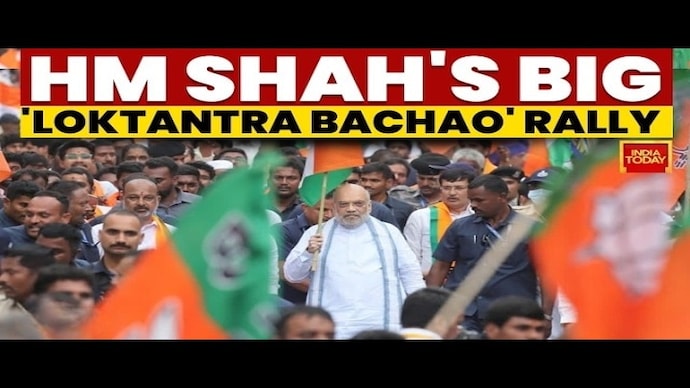
Addressing the concluding day of the Bharatiya Janata Party's nationwide 'Loktantra Bachao, Arajakta Hatao' campaign in Haryana, senior leadership countered allegations regarding the Special Intensive Revision of electoral lists. The rally detailed the breakdown of removed voters from the rolls, specifying that 2.8 crore deceased individuals, 6.25 crore citizens who migrated to other states, and one crore individuals registered in multiple locations were removed, alongside unverified entries. The address questioned irregularities found in draft electoral rolls, including unnatural household numbers, while asserting that correcting voter rolls is the constitutional responsibility of the Election Commission. The Congress party was criticised for repeatedly disrupting parliamentary proceedings instead of engaging in institutional debate. Highlighting the central government's governance track record, the speech noted welfare outreach initiatives, including free ration distribution, health insurance coverage, tap water connections, and Minimum Support Price coverage on 24 crops in Haryana, challenging opposition claims on welfare delivery and institutional neutrality.
National politics witnessed parallel confrontations as the Bharatiya Janata Party clashed with the Congress and the Aam Aadmi Party over governance and public policy.
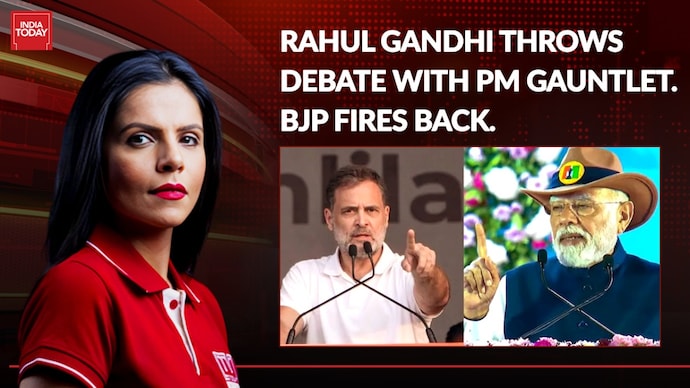
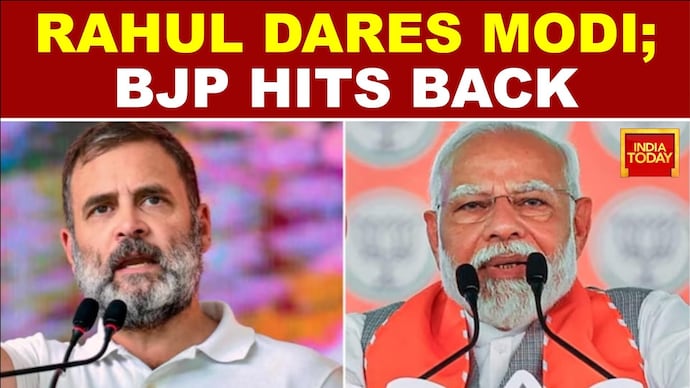
National politics witnessed parallel confrontations as the Bharatiya Janata Party clashed with the Congress and the Aam Aadmi Party over governance and public policy. Leader of Opposition Rahul Gandhi challenged Prime Minister Narendra Modi to an open, moderated debate on foreign policy, the Adani Group, and voter roll controversies. The BJP dismissed the demand, maintaining that Parliament remains the designated constitutional forum for executive accountability and national deliberations. Concurrently, deteriorating air quality in Delhi, marked by Air Quality Index levels surpassing 400 across hotspots including Dhaula Kuan, Ghazipur, and Sunehri Bagh ahead of Diwali, sparked a dispute between the BJP and AAP. Delhi Environment Minister Manjinder Singh Sirsa linked the pollution surge to stubble burning in Punjab, while Punjab Chief Minister Bhagwant Mann and AAP representatives attributed the smog to internal Delhi pollution sources, questioning air monitoring data and enforcement of GRAP-2 measures as environmental analysts called for systemic interventions over seasonal restrictions.
A political showdown has intensified between the Congress and the Bharatiya Janata Party over allegations concerning foreign connections and funding. Leader of Opposition Rahul Gandhi renewed his public challenge to Prime Minister Narendra Modi, daring him to hold an open debate on foreign links and the India-US trade deal. Proposing a format with the media and youth present, Gandhi even suggested Rashtriya Swayamsevak Sangh chief Mohan Bhagwat as a possible moderator, while also initiating a social media survey. The Bharatiya Janata Party swiftly countered the challenge, with Union Home Minister Amit Shah asserting that the government is fully prepared for a debate in Parliament, including convening a special session on the Special Intensive Revision of electoral rolls. Finance Minister Nirmala Sitharaman also criticised Gandhi for demanding a debate on social media instead of engaging inside Parliament, demanding that he substantiate his allegations with verifiable evidence.
In an exclusive interview, senior Congress leader and Lok Sabha MP Manickam Tagore accused the Bharatiya Janata Party of executing widespread 'vote chori' across several states, claiming that the opposition has gathered evidence and is presenting it directly to citizens under Rahul Gandhi's leadership. Commenting on Union Home Minister Amit Shah's remarks regarding voter roll deletions, Tagore rejected allegations about illegal voters, stating, 'Every Muslim or every Christian can't be a ghuspaithiya.' He asserted that the deletion of 13 crore voters was aimed at hurting the INDIA bloc after a tight contest in the 2024 elections. He argued that public outrage over price rise and economic missteps forced the ruling party onto the streets, prompting what he described as targeted communal rhetoric. Tagore affirmed that the entire opposition alliance stands united to defend democratic norms.
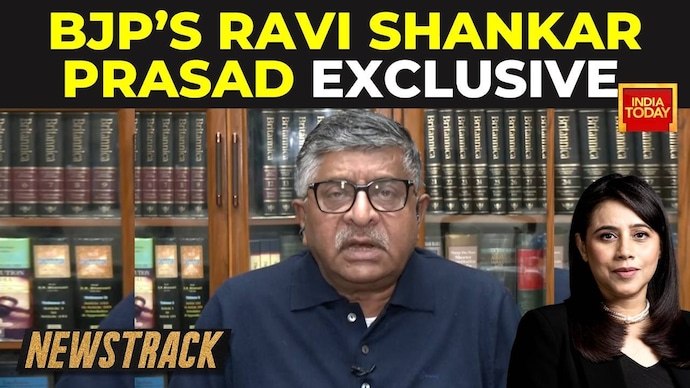
Senior Bharatiya Janata Party leader, Member of Parliament, and former Union Minister Ravi Shankar Prasad defended the ruling party's decision to counter the opposition's vote theft allegations on the streets, accusing Congress leader Rahul Gandhi of building a false narrative and humiliating constitutional bodies. Speaking on India Today, Prasad stated that the Special Intensive Revision (SIR) of electoral rolls is a constitutional requirement under the Representation of the People Act, aimed at removing duplicate and deceased voters while ensuring genuine electors are included with valid documents. Rejecting demands to return to paper ballots, he argued that technology has curtailed historical voting malpractices such as booth capturing. Prasad also challenged the Congress leadership to resign from state governments if they consider election processes compromised, asserting that the opposition is resorting to confrontation and disrespecting institutional processes after repeated electoral defeats across states.
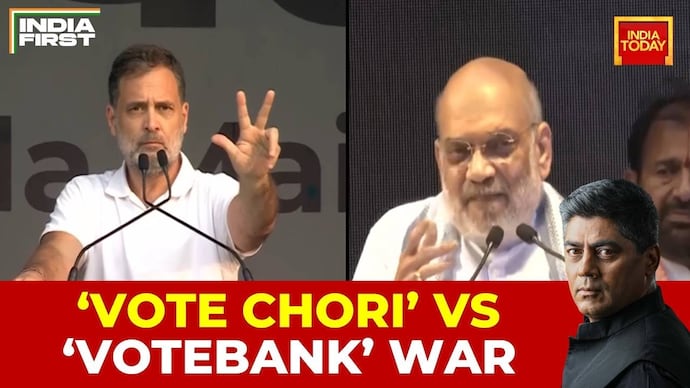
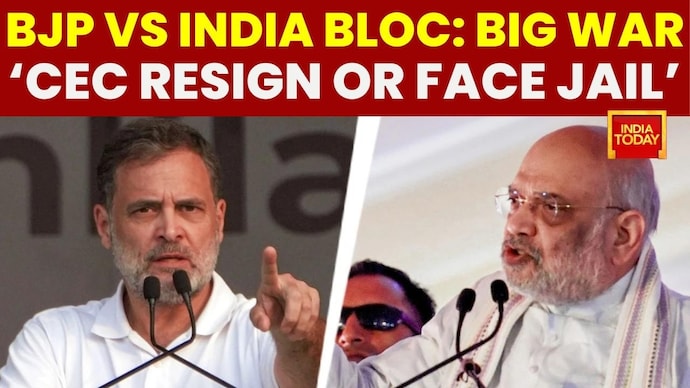
A political war of words has broken out between the BJP and the Congress-led opposition over the Special Intensive Revision (SIR) of electoral rolls. Union Home Minister Amit Shah mounted a counterattack against Rahul Gandhi following the INDIA bloc's rally at Delhi's Ramlila Maidan, terming it a rally to protect infiltrators. Defending the voter roll revision process, Shah stated that approximately three crore absent names belonged to illegal Bangladeshi infiltrators who have been weeded out of the system. He questioned the opposition's challenge to the electoral process, pointing out BJP victories in 2014, 2019, and 2024 before the exercise began, and offered a special parliamentary debate on the matter. Meanwhile, Rahul Gandhi alleged that 15% of the electorate had been deleted since 2024, accusing the Election Commission of manipulation and demanding the resignation and prosecution of Chief Election Commissioner Gyanesh Kumar. The faceoff has also triggered debates over rally attendance and estimated trade disruptions.
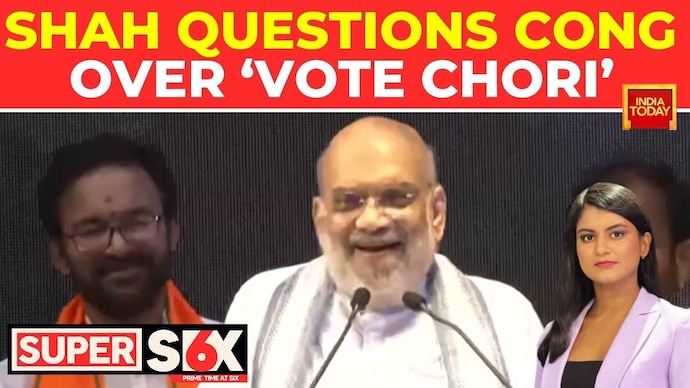
Union Home Minister Amit Shah addressed a massive gathering in Hyderabad following a citywide padayatra, mounting a strong offensive against the Congress and Rahul Gandhi over allegations of vote theft and electronic voting machine tampering. Countering claims made at the opposition's Ramlila rally, Shah questioned how Congress formed governments in Telangana, Kerala, Himachal Pradesh, and Tamil Nadu if voting machines were manipulated. He challenged the opposition to debate all contentious subjects, including the voter list revision, electronic voting machines, and infiltrators, in a special session of Parliament instead of disrupting legislative proceedings. Shah also dismissed claims regarding the deletion of thirteen crore voter names, asserting that over six crore electors had relocated and nearly three crore were deceased persons whose names required removal to prevent bogus voting. Emphasising parliamentary accountability, he asserted that the electorate has rejected Congress's unsubstantiated allegations.
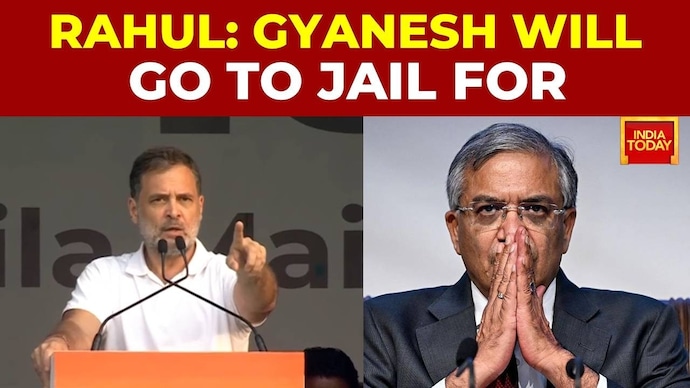
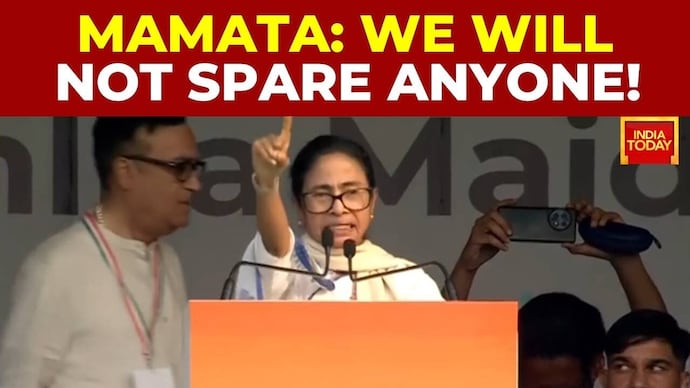
The opposition INDIA bloc held a massive show of strength at Delhi's Ramlila Maidan to protest against alleged vote theft and target the Election Commission. Addressing the gathering, Congress leader Rahul Gandhi demanded the resignation and imprisonment of Chief Election Commissioner Gyanesh Kumar, accusing the ruling Bharatiya Janata Party of hijacking democratic institutions and claiming the 2024 general election was illegal. West Bengal Chief Minister Mamata Banerjee and Samajwadi Party Chief Akhilesh Yadav also took aim at the central government, alleging widespread manipulation of voter lists and predicting the defeat of the ruling alliance in upcoming state assembly polls. In response, the BJP mounted a sharp counteroffensive, dismissing the opposition rally as an exaggerated flop and questioning the turnout figures. Ruling party leaders hit back at Rahul Gandhi, questioning whether claiming the 2024 election was illegal implied that sitting opposition MPs were also illegitimate, as the political war of words intensified.
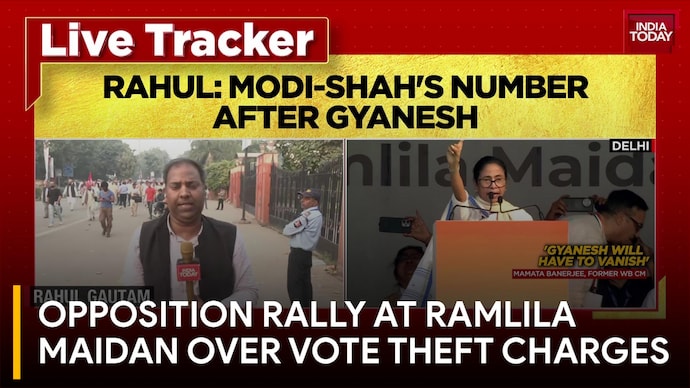
The opposition INDIA bloc mounted a major demonstration at Delhi's Ramlila Maidan to protest against alleged electoral irregularities and targeted the Election Commission of India. Key leaders, including Rahul Gandhi, Mallikarjun Kharge, and Akhilesh Yadav, addressed the gathering, demanding the resignation of Chief Election Commissioner Gyanesh Kumar. Rahul Gandhi accused the ruling Bharatiya Janata Party of hijacking institutions and labelled the 2024 parliamentary elections illegal. West Bengal Chief Minister Mamata Banerjee and Samajwadi Party chief Akhilesh Yadav also criticised the government over voter list manipulation and predicted electoral defeats for the ruling party. Meanwhile, the Bharatiya Janata Party dismissed the opposition demonstration as a flop show and a waste of time. Pointing to visuals from Ramlila Maidan, the party countered claims of a 10 lakh attendance, asserting that significant sections of the venue remained vacant.
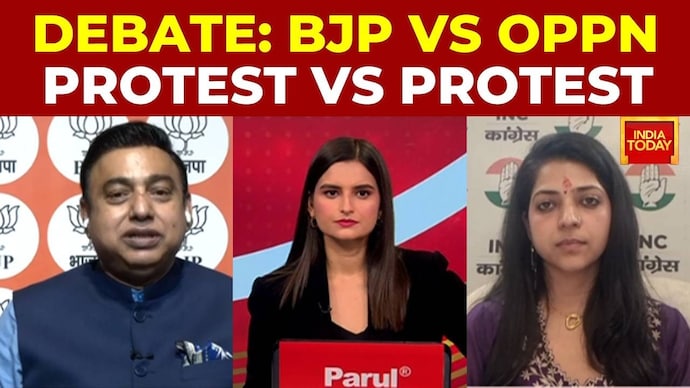
A heated debate unfolded on India Today over the opposition INDIA bloc's mega rally at Delhi's Ramlila Maidan demanding the resignation of the Chief Election Commissioner over alleged vote theft. Congress national spokesperson Nighat Kaushik affirmed the party's satisfaction with the public turnout and voter participation, dismissing the Bharatiya Janata Party's criticisms regarding crowd numbers. She emphasized that the rally highlighted critical questions about voting rights and electoral rolls, asserting, 'When does demanding accountability become anarchy?' In response, BJP national spokesperson Dr Syed Zafar Islam characterised the rally as a flop show that caused disruption for local traders during the festive season. He challenged the Congress leadership to substantiate their allegations by approaching the court rather than attacking democratic institutions. The debate brought sharp focus to allegations of electoral tampering and counter-accusations of political gimmicks.
A mega opposition rally held at Delhi's Ramlila Maidan brought together leaders and cadre from multiple parties, including the Congress, Samajwadi Party, and Trinamool Congress, to protest against alleged vote theft and voter deletions under the Special Intensive Revision (SIR) exercise. Protesters targeted the Election Commission, demanding the removal of Chief Election Commissioner Gyanesh Kumar over charges of compromising institutional neutrality. Slogans and handmade placards were raised by party workers and ordinary citizens, demonstrating broad mobilisation. Observers noted that the voter deletion issue is emerging as a primary poll plank ahead of the upcoming Uttar Pradesh Assembly elections. While high-intensity protests in the national capital may see a temporary pause ahead of Diwali, opposition leaders like Rahul Gandhi, Akhilesh Yadav, Mamata Banerjee, and Tejashwi Yadav remain united in pressing their allegations of stolen electoral mandates. The show of strength reflects renewed energy and momentum among opposition party workers.
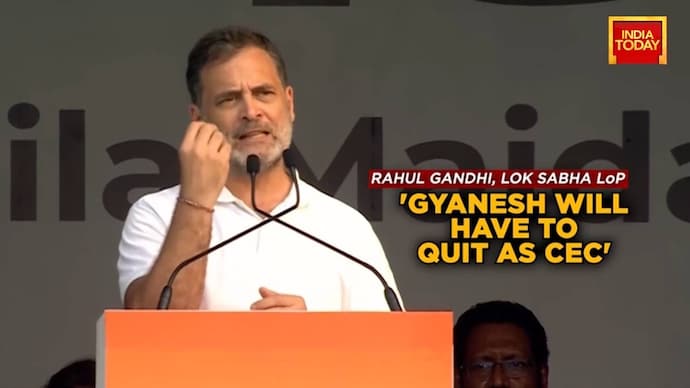
Addressing an INDIA Alliance gathering, Congress leader Rahul Gandhi alleged large-scale electoral manipulation across recent elections and claimed that the 2024 Lok Sabha poll was compromised. He claimed that 13.50 crore names, representing 15 percent of Indian voters, were deleted from voter rolls following the 2024 elections. Striking a direct tone against the election machinery, Rahul Gandhi stated, 'ज्ञानेश कुमार CEC पद से हटेगा' and asserted that Chief Election Commissioner Gyanesh Kumar would go to prison. He labelled the alleged electoral deletions as treason and a theft of public voice. He further alleged that the RSS has captured key national institutions, including the judiciary, probe agencies, and civil services, claiming that the country's wealth has been concentrated in the hands of a few billionaires while farmers and youth remain deprived of their rights.
Addressing an assembly of INDIA bloc leaders including Sonia Gandhi, Mallikarjun Kharge, Farooq Abdullah, Akhilesh Yadav, Tejashwi Yadav, civil society activists, and student groups, the speaker launched a fierce offensive against the ruling Bharatiya Janata Party. The address condemned alleged electoral manipulation, voter deletion, and central interference, asserting that more than one crore votes were purged in Bengal through coordinated systemic subversion. Criticising central authorities and comparing political conduct to outright theft of jobs, public wealth, democratic norms, and constitutional rights, the speaker rallied opposition cadres to resist through sustained democratic struggle. Calling for cross-community solidarity across castes and creeds, the speech appealed to judiciary and investigative agencies to function impartially rather than as political instruments, concluding with a national call to unite under the banner of saving India and protecting democratic governance.