Property purchase from NRI gets simpler from October 1: What buyers need to know
Buying a property from an NRI can mean extra paperwork. From October 1, 2026, that process is set to become simpler for resident buyers.

Income tax is a direct tax imposed by the government on the income earned by individuals, businesses, and other entities within a financial year. It is one of the primary sources of revenue for the government and is used to fund public infrastructure, welfare schemes, national security, and essential services. Every taxpayer is required to calculate their total income, claim eligible deductions or exemptions, and pay tax based on the applicable income tax slabs.
For individuals, income is classified under various heads such as salary, house property, business or profession, capital gains, and other sources. The government periodically revises tax slabs and rules, offering taxpayers the option to choose between the old tax regime (with deductions and exemptions) and the newer simplified regime with lower slab rates but fewer benefits. Selecting the right regime depends on a person’s financial profile and investment habits.
Businesses and professionals also fall under the income tax framework and must maintain proper books of accounts, file returns on time, and comply with audit requirements when applicable. Timely filing of income tax returns not only ensures compliance but also enables refund claims, loan processing, visa applications, and the ability to carry forward certain losses.
The Income Tax Department operates through an increasingly digital platform, allowing taxpayers to file returns, submit documents, and track refunds online with ease. Understanding income tax rules is essential for effective financial planning, reducing tax liability legally, and staying compliant with regulatory obligations.
Chinese President Xi Jinping visits New Delhi on September 12 to participate in the BRICS Summit, marking his first trip to India in seven years. The multilateral gathering features key bilateral engagements involving Prime Minister Narendra Modi, President Xi, and Russian President Vladimir Putin, focusing on India-China border negotiations, trade relations, economic cooperation, and global diplomacy. Alongside summit coverage, this special report examines registered unrecognized political parties across Gujarat, Delhi, Bihar, and Madhya Pradesh that collected substantial donations while operating from residential sites and locked offices without contesting elections. Former Chief Election Commissioner Dr S.Y. Quraishi and transparency activist Anjali Bhardwaj analyze statutory income tax exemptions, regulatory loopholes, and Election Commission oversight, while also addressing widespread voter list deletions flagged during the Special Intensive Revision in Delhi and Karnataka.
Chinese President Xi Jinping visits New Delhi on September 12 to participate in the BRICS Summit, marking his first trip to India in seven years. The multilateral gathering features key bilateral engagements involving Prime Minister Narendra Modi, President Xi, and Russian President Vladimir Putin, focusing on India-China border negotiations, trade relations, economic cooperation, and global diplomacy. Alongside summit coverage, this special report examines registered unrecognized political parties across Gujarat, Delhi, Bihar, and Madhya Pradesh that collected substantial donations while operating from residential sites and locked offices without contesting elections. Former Chief Election Commissioner Dr S.Y. Quraishi and transparency activist Anjali Bhardwaj analyze statutory income tax exemptions, regulatory loopholes, and Election Commission oversight, while also addressing widespread voter list deletions flagged during the Special Intensive Revision in Delhi and Karnataka.
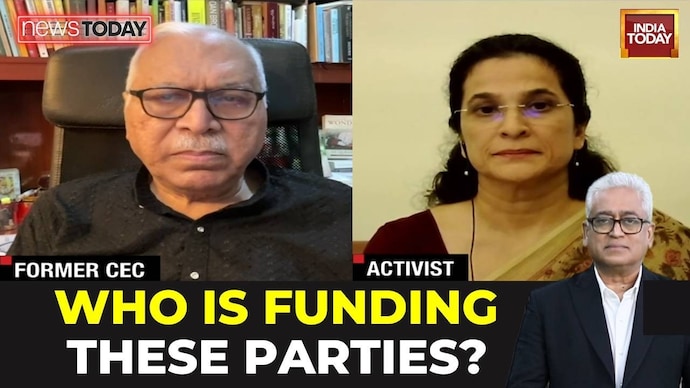
A debate examines the funding and functioning of registered unrecognised political parties across India, raising questions over alleged money laundering, hawala transactions, and tax evasion through poll donations. Former Chief Election Commissioner Dr S.Y. Quraishi pointed out that while registration remains simple, the Election Commission of India lacks statutory powers to de-register political parties following a Supreme Court ruling, making actions like de-listing ineffective. Transparency activist Anjali Bhardwaj questioned the silence of central enforcement agencies, including the Income Tax Department, the Enforcement Directorate, the Central Bureau of Investigation, and the Lokpal, despite significant donations flowing into unrecognised parties that often become untraceable. The discussion highlighted concerns regarding audit compliance, 100 percent income tax exemptions on political contributions, non-implementation of the Central Information Commission order bringing parties under the Right to Information Act, and the need for stricter accountability mechanisms.
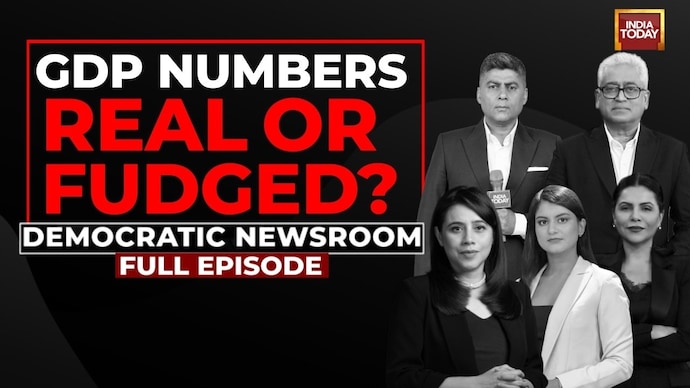
In this edition of Democratic Newsroom, editors and journalists evaluate India's recent 7.8% GDP growth figures, analyzing official statistical methodology alongside ground-level economic conditions. Panelists Rajdeep Sardesai, Gaurav Sawant, Maria Shakil, Siddharth Zarabi, and Raj Chengappa examine data transparency, public perception, graduate unemployment, inflation, and income disparity. The debate contrasts positive macroeconomic indicators—such as record vehicle sales, strong Goods and Services Tax (GST) collections, and growth endorsements from the International Monetary Fund (IMF) and the World Bank—against citizen experiences, agricultural employment quality, and per capita income metrics. The discussion addresses the scale of welfare subsidies supporting 800 million citizens, private investment levels, data lags, and proposed updates to GDP base figures. Further, the panel considers the implementation of a citizen progress report to track job creation, equitable income, and inflation dynamics across the country.
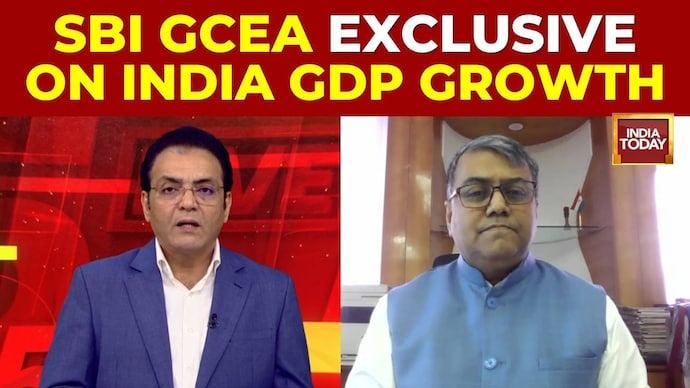
In an interview, Dr Soumya Kanti Ghosh, Group Chief Economic Advisor at the State Bank of India, evaluated India's economic performance following the first-quarter GDP print. Describing the momentum, he said, '7.8% is really a very creditable number,' noting that the expansion is being driven increasingly by manufacturing alongside resilient services. Addressing global headwinds and input price pressures, he projected a full-year GDP growth of around 7.3%. Dr Ghosh also addressed concerns over household leverage, pointing out that nearly 24% of the debt consists of productive asset creation such as housing loans. On income distribution, he highlighted that tax cuts have supported rural consumption. Furthermore, evaluating labour market dynamics through Periodic Labour Force Survey data, he noted an overall unemployment rate near 3.2%, while stressing the importance of aligning skilling initiatives with formal education.
Prime Minister Narendra Modi's gift of Melody toffee to Italian Prime Minister Giorgia Meloni during his visit to Italy has sparked a massive political war.
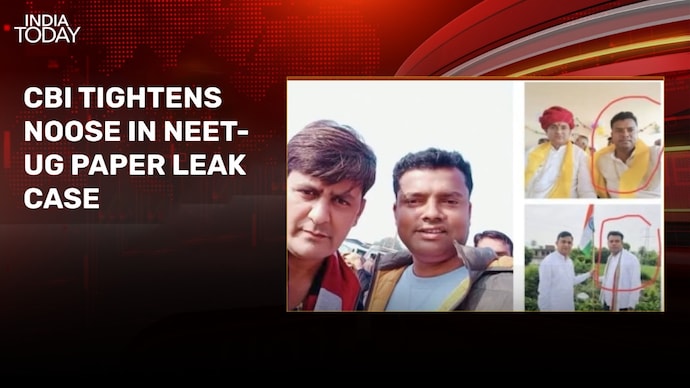
The Central Bureau of Investigation has intensified its probe into the NEET paper leak, arresting five individuals and tracing distribution networks across several states.
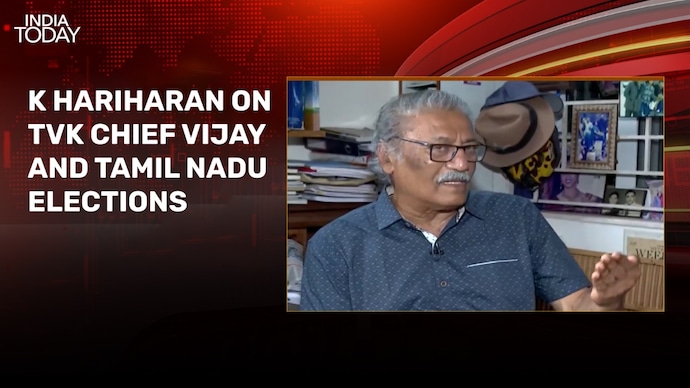
In an interview with India Today, film director and critic K Hariharan discusses actor Vijay's entry into politics and upcoming Tamil Nadu elections. Hariharan states that Vijay cannot immediately replicate the political success of former Chief Minister MGR.
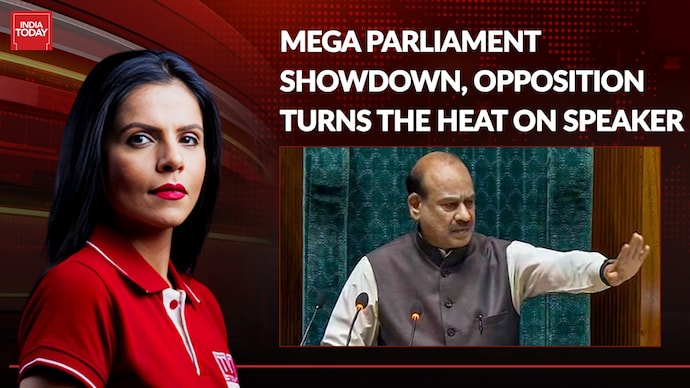
The big talking point of this episode of 'To The Point' is the unprecedented no-confidence motion filed by 118 opposition MPs against Lok Sabha Speaker Om Birla, alleging institutional bias.
In this episode of Super 6, the focus is on the Karnataka government's plan to deploy an AI-based social media monitoring system at an estimated cost of ₹67.2 crore to detect fake news, hate speech, and cyber threats in real-time.
In this India Today special report, Maria Shakil leads coverage as Finance Minister Nirmala Sitharaman prepares to present her ninth Union Budget. For the first time in 75 years, the Finance Minister is expected to read 'Part B' of the budget speech in its entirety, focusing on custom reforms and deregulation. The government aims to balance CAPEX-led growth with consumption relief while emphasizing digital transformation through a tablet-based 'Bahi Khata' at the new Kartavya Bhawan. Key discussions include potential tweaks to the Security Transaction Tax (STT), recalibration of capital gains tax, and increased allocations for PM Awas Yojana and Ayushman Bharat. Union Minister Piyush Goyal provides insights into India's trade deal with the European Union. Analysts examine the 'K-shaped' economy, global headwinds, and the role of cooperative federalism in driving labor-intensive manufacturing. The program also highlights the participation of women in the budget drafting team to address household economic concerns ahead of crucial elections in five states.
This news bulletin provides an inside scoop on the upcoming 2026 Union Budget, which sources suggest will be unique compared to those of the last 75 years. Finance Minister Nirmala Sitharaman is set to present a record ninth budget tomorrow, with a significant pivot expected in the presentation style. Unlike previous years where Part A held the most detail, this budget is expected to see a detailed Part B, focusing on both short-term and long-term goals. The speaker notes that 'Part B of the will play a strong emphasis on both short-term and long-term goals', reflecting the government's strategic vision. The shift acknowledges that indirect tax matters are now handled by the GST Council, allowing the budget to serve as a medium-to-long-term statement of intent. The programme highlights how this aligns with the Vixit Bharat goal and India's aspiration to become the world's third-largest economy.
In this special report, former Minister of State for Finance Jayant Sinha joins Maria Shakil to decode the health of the Indian economy ahead of Budget 2026. Sinha hails the recently signed India-European Union Free Trade Agreement as the 'mother of all deals', predicting it will significantly boost employment in sectors like textiles. He provides a detailed breakdown of India's GDP, noting that the private sector accounts for two-thirds of economic activity. Sinha outlines the vision for 'Viksit Bharat' by 2047, explaining how the income pyramid is shifting as more households move from the 'Aam Janata' category into the middle and global classes. Addressing concerns over jobless growth, he cites stable unemployment rates and rising EPFO subscriptions as evidence of formalisation. Sinha also discusses the impact of AI and the necessity of increasing productivity to compete with global economies like China and the United States.
Ahead of Finance Minister Nirmala Sitharaman’s ninth Union Budget, this News Today special edition brings together leading economists to discuss India’s economic priorities amid global uncertainty.
This India Today Special Report, hosted by Rajdeep Sardesai, features a pre-budget roundtable ahead of Finance Minister Nirmala Sitharaman's ninth consecutive Union Budget. The panel, including economists Neelkanth Mishra and JP Morgan’s Sajid Chinoy, analyzes the 2026 Union Budget challenges amidst global headwinds and geopolitical uncertainty. Key discussion points include fiscal consolidation, job creation, and the necessity of private investment to drive long-term economic growth. Sajid Chinoy advocates for strategic trade shifts, suggesting the easing of Press Note 3 to attract Chinese Foreign Direct Investment (FDI) for local job creation and technology transfer. The experts debate India's potential entry into the CPTPP and the impact of rupee volatility on macroeconomic stability. The program examines the balance between fiscal discipline and structural reforms required to boost labor incomes. This comprehensive analysis explores how global financial instability and fragmented trade environments influence India's growth trajectory as the nation approaches its demographic peak in 2047, emphasizing the urgency of a fast-paced reform agenda.
Sunetra Pawar is set to take oath as the Deputy Chief Minister of Maharashtra on Saturday at 5 pm, according to sources. She has accepted the proposal for her elevation and will continue to handle the Excise and Sports ministries.
On this news report, Naga Arjun provides details regarding the death of CJ Roy, the Chairman of the Bengaluru-based Confident Group. The real estate businessman allegedly died by suicide at his residence following searches conducted by Income Tax officials at his Richmond Road offices. Naga Arjun reports that 'The cops have rushed to the spot. They found bullet wounds on the chest and he was rushed to the hospital where he was declared dead.' The raids were reportedly linked to suspected assets disproportionate to known sources of income. CJ Roy was a prominent figure in Bengaluru’s real estate sector and a well-known sponsor of Kannada cultural events. While the police are yet to recover a suicide note, they are currently recording statements from employees and officials present at the scene. The investigation into the exact circumstances of the death is ongoing as authorities await further forensic details.
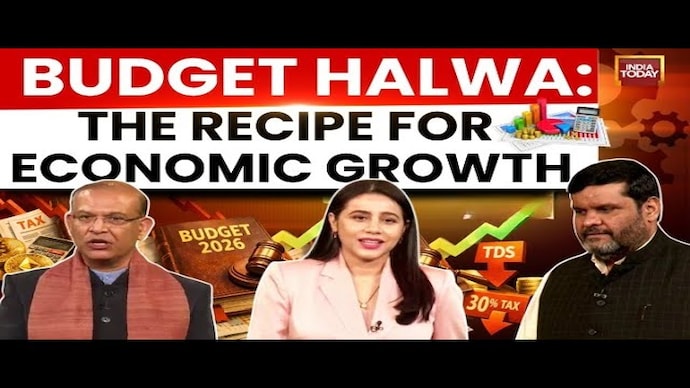
On this Special Report, host Maria Shereen decodes the significance of the traditional 'halwa ceremony' ahead of the Union Budget. Former Minister of State for Finance Jayant Sinha highlights the shift in India's fiscal landscape, stating, 'The mirchi of taxes has become the sugar of these budgets' due to revised tax slabs and GST simplification. The panel, featuring economist Professor Arun Kumar and Gaurav Vallabh of the PM’s Economic Advisory Council, debates the impact of tax relief on the middle class versus the unorganised sector. Sinha emphasizes that India is currently in a 'Goldilocks zone' with steady 7% growth and low inflation. The discussion further explores anticipated hikes in the defence budget following 'Operation Sindoor' and the need for self-reliance in production. The experts also deliberate on rural employment schemes, agricultural productivity, and the necessity of increasing R&D expenditure to compete globally. The programme provides a comprehensive outlook on the economic priorities and fiscal space available for the upcoming financial year.
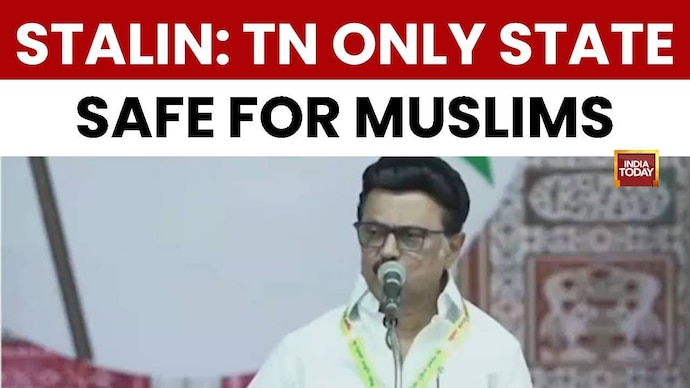
On this news bulletin, the focus is on Tamil Nadu Chief Minister M.K. Stalin's recent remarks ahead of the upcoming elections. Addressing the minority community, M.K. Stalin stated that 'Tamil Nadu is the only state which is safe for Muslims.' He further described the Dravida Munnetra Kazhagam (DMK) as a 'fortress that protects the minority' residing in the state. During his address, the Chief Minister also launched a scathing attack on the central government, accusing it of using central agencies like the CBI, ED, and IT to intimidate political opponents and the public. Stalin remarked that he did not need to explain the current situation of the country further, implying a climate of pressure from the Centre. The report highlights the DMK's strategy to consolidate minority votes by positioning itself as a primary defender against central interference and communal insecurity.
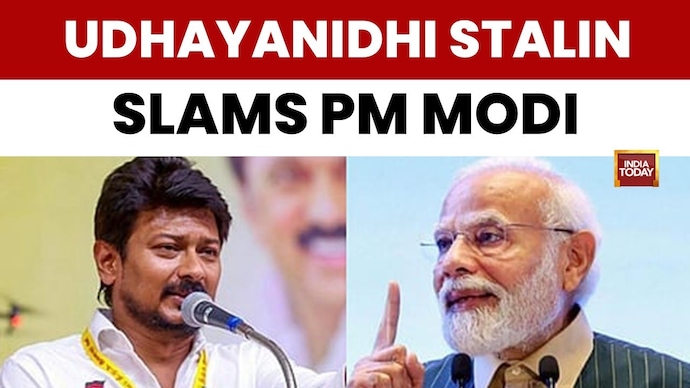
On this Special Report, India Today's Apoorva Jayachandran discusses the intensifying political war of words in Tamil Nadu. The report focuses on Deputy Chief Minister Udhayanidhi Stalin's recent remarks where he reconfirmed his stance against the AIADMK. Apoorva Jayachandran notes that Udhayanidhi Stalin claimed the AIADMK leadership consists of 'leaders and puppets who have been coerced into joining into this alliance with the NDA' by central agencies like the CBI, ED, and IT. The discussion highlights how this 'slave' narrative mirrors recent comments made by TVK chief Vijay and Chief Minister M.K. Stalin, who previously referred to the opposition as 'Amit Shah Munnetra Kazhagam'. The programme explores how the DMK continues to target the AIADMK-BJP relationship, alleging that the opposition is operating under pressure rather than political conviction. Apoorva Jayachandran provides context on how these specific tags are being used to frame the political discourse ahead of upcoming electoral challenges in the state.