Vietnamese crab exporter

Topic

Advertisement
TOPIC

Manmohan Singh

Dr. Manmohan Singh was a renowned economist, scholar, and statesman who served as the 13th Prime Minister of India from 2004 to 2014. Born on September 26, 1932, in Gah (now in Pakistan), Singh's life was remembered for his dedication to public service and academic excellence.

A graduate of Punjab University, Cambridge University, and Oxford University, Dr. Singh was recognised globally for his contributions to economics and public policy. His tenure as Finance Minister (1991-1996) was particularly notable, as he spearheaded transformative economic reforms that liberalised India's economy, pulling the nation back from the brink of a financial crisis and setting it on a trajectory of growth and globalization.

As Prime Minister, Singh oversaw a period of significant economic expansion, championing policies that strengthened India's global stature, including the Indo-US Civil Nuclear Agreement. He emphasised inclusive growth, expanding social welfare programs like the Mahatma Gandhi National Rural Employment Guarantee Act (MGNREGA) and the Right to Education Act.

Despite his successes, his tenure was marked by criticism over policy paralysis and corruption scandals, particularly in his second term. Known for his humility, intellect, and integrity, Dr. Singh died on December 26, 2024.

  • ALL
  • STORIES
  • VIDEOS

STORIES

From the Editor-in-Chief

Sonia Gandhi's memoir offers a rare and candid glimpse into her inner life, her fears and joys, her choices

Sonia Gandhi | The untold truths

A memoir that lifts the veil on the woman behind the enigma, and a telling of the defining events of her political life and legacy that inevitably stirs controversy

Congress leaders stalled probe against Narendra Modi during UPA rule: Veerappa Moily

Veerappa Moily said that certain Congress leaders had stalled the investigation into the Sohrabuddin Sheikh fake encounter case against Narendra Modi during the UPA regime, adding that the party was now paying the price for that decision. Moily made these remarks while speaking at a book launch event for Sonia Gandhi's autobiography.

Rahul Gandhi to Mahua Moitra: Indian politicians who studied abroad

As visa restrictions and uncertainty over overseas opportunities put the spotlight on Indians studying and working abroad, the debate over bringing talent back home continues. Amid this, here is a look at Indian political leaders who studied at universities overseas.

Economic regulations worse than 1991, no Manmohan Singh to bail us out: Chidambaram

Former finance minister P Chidambaram criticised India’s current economic model, saying regulations were worse than in 1991 and the country lacked an economic brain like Manmohan Singh. He questioned the manufacturing push, limited FTAs and shrinking competition, while calling for stronger domestic manufacturing and a more competitive economy.

Load More

VIDEOS

MOTN Poll: Modi Edges Manmohan Singh, Jobs Top Concern; Big Business Seen As Biggest Beneficiary

An India Today Mood of The Nation survey conducted in partnership with C Voter captures public sentiment on the Indian economy. The poll reveals that 47.2% of respondents rate the NDA government's economic performance as outstanding or good, while 28.6% rate it as poor or very poor and 18.4% as average. On policy beneficiaries, 55.7% believe big business benefits the most, compared to 8.1% for farmers, 7.4% for the salaried class, 6.4% for small businesses, and 5.5% for daily wage earners. Unemployment emerges as the biggest economic concern at 22.7%, followed by price rise at 18.1%, farm distress at 7.3%, family income poverty at 5.4%, and corruption at 4.6%. When comparing leadership, 47.3% prefer Narendra Modi's handling of the economy compared to 43.5% for Manmohan Singh, showing a decline from earlier ratings. Panelists SC Garg, Shankar Iyer, and Harsh Gupta Madhusudan discuss the data, analyzing inflation, GDP growth numbers, structural reforms, job creation, and external economic challenges.

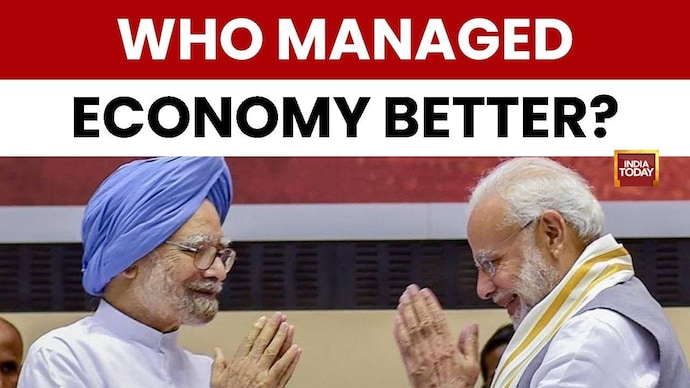
Modi vs Manmohan Singh: Economy Then & Now | Jobs, Reforms, GST, Disinvestment & Growth

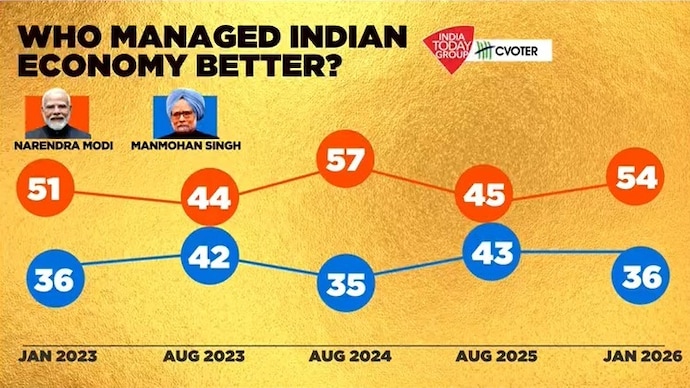
A mood tracker comparing economic management under Prime Minister Narendra Modi and former Prime Minister Manmohan Singh shows a narrowing gap. As of August 2026, 47.3% of respondents state Modi managed the economy better, down from 57.4% in 2024, while support for Manmohan Singh rose from 34.9% to 43.5%. Analysts on the panel discuss the economic challenges facing Modi 3.0. One panelist highlights external factors such as the Ukraine war, COVID pandemic, and Middle East conflict, noting effective supply chain management and welfare schemes. However, concern is raised over 25 lakh vacant posts across states for police, teachers, and healthcare professionals, along with slow disinvestment in public sector units. Another panelist argues structural reforms like GST, IBC, and RERA distinguish NDA terms from UPA terms, describing unemployment as a white-collar issue driven by high demand for permanent government jobs. The discussion highlights questions over job creation, resource raising, and economic perception.

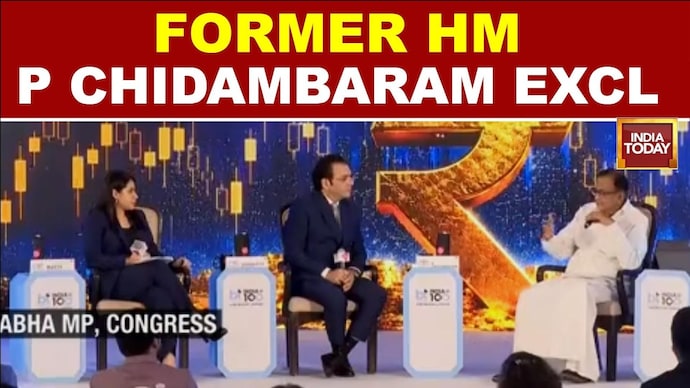
Exclusive: P Chidambaram on Gen Z, ‘Dimaagi Naxal’ debate & India’s economic model

In an interaction with Business Today, former Union Minister P. Chidambaram criticized India's current economic model, stating that it is a default system lacking deep analysis and expert economic leadership comparable to former Prime Minister Dr. Manmohan Singh. Chidambaram argued that initiatives such as Make in India, Atmanirbhar Bharat, and the Production Linked Incentive scheme have failed, highlighting that manufacturing remains stagnant at around 14 percent of Gross Domestic Product. He asserted that semiconductor initiatives are heavily subsidized with public money rather than driven by private capital. Furthermore, he claimed that a rule and regulation raj has replaced the old license raj, trapping capital investment under regulatory hurdles, bureaucratic delays, crony capitalism, and aggressive enforcement. On international trade, Chidambaram dismissed recent Foreign Trade Agreements as minor deals that fail to satisfy India's trade needs. He also highlighted structural deficiencies in regulatory bodies like the Competition Commission of India and pointed to severe judicial vacancies in the National Company Law Tribunal.

P Chidambaram Exclusive: Why He Says India’s ‘Default’ Economic Model Falls Short On Growth & Jobs

In an interview with Business Today, former Union Finance Minister and Rajya Sabha MP P. Chidambaram shared his assessment of India's economy and manufacturing sector. He criticized the current economic trajectory, asserting, "The current economic model is a default model." Chidambaram argued that the government lacks economic expertise, stating, "there's nobody, I underline nobody, in the government today that can compare with Dr. Manmohan Singh." Evaluating key initiatives, he claimed that schemes like Make in India, Atmanirbharta, and Production Linked Incentives have failed, noting that manufacturing remains stagnant at around 13.5 to 14 percent of gross domestic product. He also characterized the current regulatory environment as a "rule and regulation raj" and questioned the effectiveness of foreign trade agreements signed with minor trading partners.

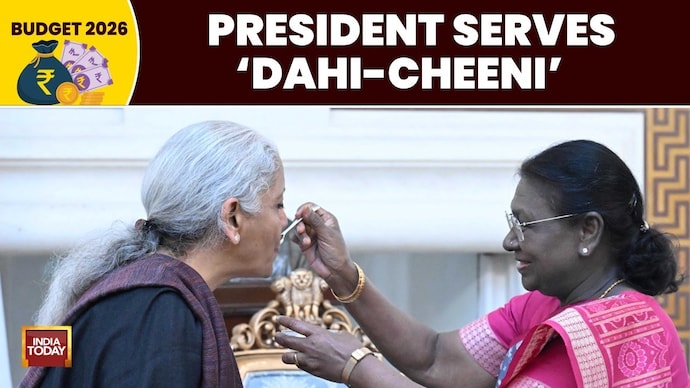
Nirmala Sitharaman Heads To Parliament To Table Union Budget 2026 After Meeting President

On this Special Report, the focus is on the presentation of the Union Budget 2026 as Finance Minister Nirmala Sitharaman heads to Parliament. The transcript captures the live movement of the Finance Minister's convoy from Rashtrapati Bhavan to the new Parliament building after seeking formal permission from the President of India. A key moment highlighted is when the reporter notes, 'This is the convoy of Finance Minister Nirmala Sitharaman which is now heading towards the Parliament' for the crucial Cabinet meeting. The programme discusses the evolution of budget presentations from 1985 to the current televised era, noting how finance ministers have become more conscious of a national audience. Analysts on the show deliberate on the shift from tax-heavy budgets to those focused on tariffs and infrastructure. The discussion further explores the government's significant investments in roads and power since 2020, questioning the remaining fiscal headroom for continued infrastructural spending as the nation awaits the official tabling of the budget at 11 am.

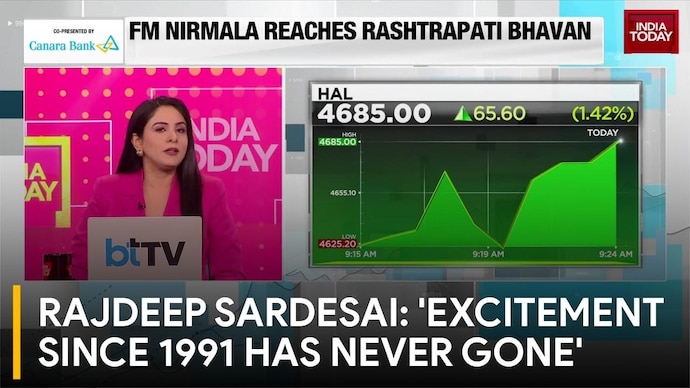
Rajdeep Sardesai Recalls 1994 Budget Coverage: 'Excitement Since 1991 Has Never Really Gone'

On this India Today special, veteran journalist Rajdeep Sardesai reflects on the evolution of the Union Budget in India, tracing his experience back to 1994. Recalling his early days at NDTV, Sardesai notes, 'In 1994, I was at NDTV when we were commissioned to do the post-budget reactions' outside the BSE. He highlights how the post-1991 era brought a unique excitement to budget announcements that persists today, despite the process becoming more 'mundane' following major tax reforms. The discussion covers the shift from high-stakes policy changes to the current market preference for stability and the absence of 'retrospective tax bombshells'. Sardesai also addresses the impact of global geopolitics on the Indian economy, questioning the influence of external leaders on India's sovereign energy decisions, specifically regarding oil imports from Venezuela and Iran. The panel further examines the feasibility of the government's disinvestment targets and the long-term roadmap for defense allocations in the upcoming budget by Nirmala Sitharaman.

Rajdeep Sardesai: 54% Favour PM Modi Over Manmohan Singh On Economy In Mood Of The Nation Poll

On this Special Report, editor Rajdeep Sardesai leads a panel discussion on the latest 'Mood of the Nation' survey following the tabling of the Economic Survey 2026 by Finance Minister Nirmala Sitharaman. The data reveals a significant 9% increase in Prime Minister Narendra Modi's economic approval rating since August 2025, with 54% of respondents preferring his leadership over former PM Manmohan Singh. Sardesai notes, 'It is real livelihood issues that affect people that was a concern over the economy at the time.' The programme examines the impact of next-generation GST reforms, new labour codes, and the trade deal with the European Union. While opposition leader Salman Soz highlights concerns over weak consumption and contracting tax collections, BJP's Zafar Islam defends the government's macro-stability. The discussion concludes that while India remains a fast-growing economy, the public experience remains split, with the survey preparing the nation for global headwinds ahead of Budget 2026.

Unidentified speaker Slams Governor For Skipping Cabinet Speech, Calls It 'Against Constitution'

An unidentified speaker has launched a scathing attack on the state Governor, accusing the office of acting as a 'puppet in the hands of the union government'. The speaker alleged that the Governor violated Sections 176 and 163 of the Constitution by refusing to read the speech prepared by the cabinet, opting instead to read only a single paragraph. 'The governor didn't read the speech given by the cabinet and he wanted to read his own speech,' the speaker stated, labeling the move as unethical and unconstitutional. The address also focused on the dilution of the MGNREGA scheme, referred to as 'Manreka', noting that the right to work and local panchayat powers have been abolished under new central tenets. The speaker confirmed that party MLAs and MLCs will launch state-wide protests until the 'anti-farmer' policies are repealed and the original employment guarantees are reinstated, asserting that the opposition is intentionally defending these changes due to a lack of freedom.

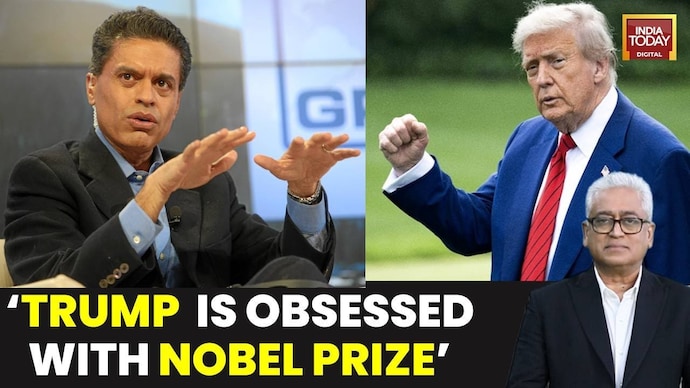
Fareed Zakaria: India Must 'Humor' Narcissist Donald Trump To Secure Trade Deals

On this special broadcast, renowned foreign policy analyst Fareed Zakaria discusses the geopolitical volatility of a 'Trump 2.0' era and its implications for India. Zakaria argues that the United States is abdicating its role as a global stabilizer, leading to a 'Post-American World' marked by instability. Regarding India's strategy, Zakaria suggests that New Delhi should 'manage him, try to humor him' by leveraging grand spectacles to appeal to Donald Trump’s personality. He notes that while India’s economy is resilient due to high domestic consumption, a partnership with the US remains vital for moving up the technological value chain. Zakaria also touches upon the risks of a global tariff war, Trump's obsession with the Nobel Peace Prize, and the limitations of China and Russia as alternative global leaders. He concludes that India must remain patient and focused on modernization, as time and economic momentum are currently on its side.

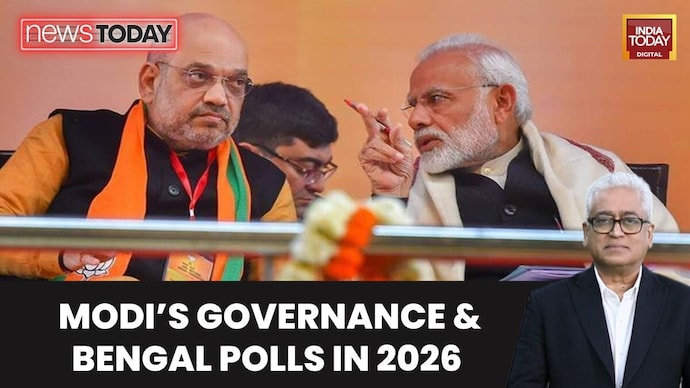
2026 Outlook: Experts Debate Modi Government’s Governance and Bengal Polls

In this New Year special, India Today’s Rajdeep Sardesai discusses expectations for 2026 with a panel of experts. Columnist Tavleen Singh emphasizes the need for education and healthcare reform, hoping the government rectifies past neglect. BJP leader Swapan Dasgupta anticipates a party victory in the upcoming West Bengal elections, aiming to restore the state's status. Author Sanjaya Baru calls for the operationalization of the 'Ease of Living' mission promised by PM Modi in August 2024, citing issues like KYC norms. India Today's Raj Chengappa urges a shift from 'reform express' to a 'bullet train' by reducing bureaucracy. Senior journalist Ashutosh raises concerns about social harmony and the government's record on deportation.

Special Report: Russian President’s Diplomatic Journey From Vajpayee to Modi Era

This Special Report focuses on the enduring diplomatic presence of the President of the Russian Federation, Vladimir Putin, on the global stage. The segment highlights his unique perspective having witnessed significant world changes throughout the tenures of three Indian Prime Ministers: Atal Bihari Vajpayee, Manmohan Singh, and Narendra Modi. The narrative underscores the continuity of Russia-India relations across different eras of Indian leadership. By tracing this timeline, the report emphasizes the Russian President's long-standing role in international geopolitics and his interactions with New Delhi's changing political landscape.

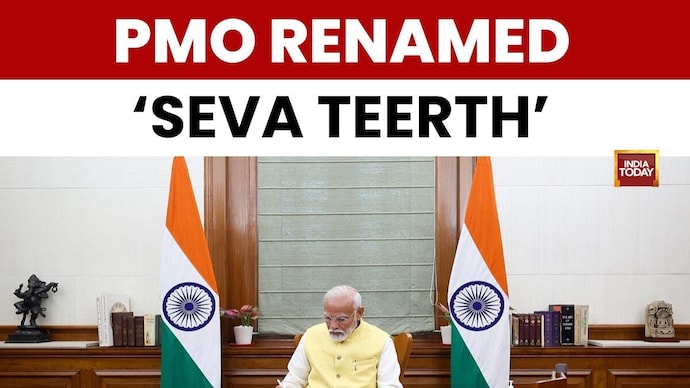
PMO Renamed 'Seva Teerth': Modi Govt's Push for Service Over Rule in New Central Vista Complex

On this Special Report, India Today’s Anjali Estwal breaks the news that the new Prime Minister’s Office (PMO) complex has been renamed ‘Seva Teerth’. This change aligns with the government’s ideology of ‘Seva’ (service) over ruling, following previous renamings like Lok Kalyan Marg and Kartavya Path. Reporter Aishwarya Paliwal explains that the nomenclature reflects the vision of a developed nation by 2047 and the Prime Minister’s role as a ‘Pradhan Sevak’. However, Congress leader Udit Raj strongly criticizes the move, stating, ‘Seva hi nahi hogi, baaki sab kuch hoga’ (There will be no service, only everything else). He argues the renaming is a distraction, claiming the Prime Minister is inaccessible to the public and business groups compared to former PM Manmohan Singh. The programme debates whether this is a meaningful shift in governance or merely symbolic.

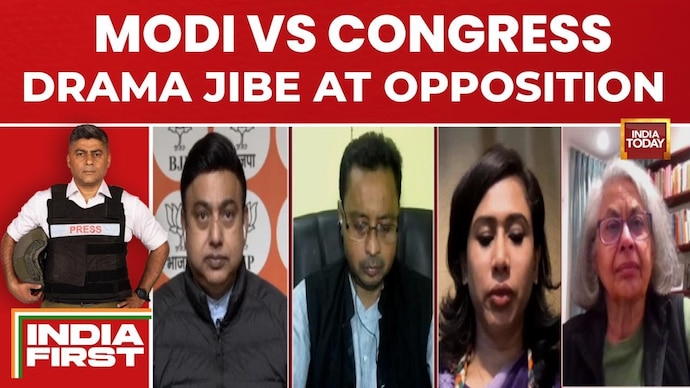
PM Modi's 'Drama' Jibe At Opposition Sparks War Of Words Ahead Of Parliament Session

A political firestorm erupts ahead of the winter session of Parliament after Prime Minister Narendra Modi accuses the opposition of engaging in 'drama'. On this special report, Congress National Spokesperson Dr. Shama Mohammed hits back, calling the Prime Minister the 'drama king at the end of the day'. The debate, featuring BJP National Spokesperson Dr. Syed Zafar Islam, centres on the opposition's demand for discussions on the controversial SIR process, the deaths of over 40 Booth Level Officers (BLOs), severe air pollution in Delhi, and a recent terror attack at the Red Fort. While the BJP maintains it is open to all discussions and accuses the opposition of disrupting Parliament for cameras, the opposition argues it is the government's duty to run the House and address people-centric issues.

Bihar Election: NDA Sweeps Bihar, Nitish Kumar Set For Record 10th Term As Chief Minister

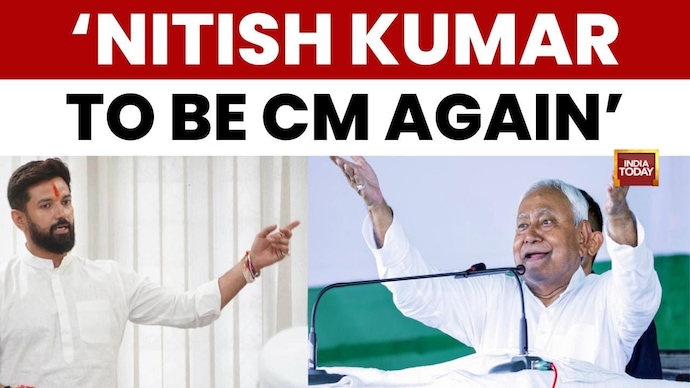
This report covers the National Democratic Alliance's landslide victory in the Bihar Assembly elections, paving the way for Nitish Kumar to continue as Chief Minister. The bulletin discusses the BJP emerging as the single largest party and features reactions from alliance leaders, including Union Minister Chirag Paswan and Union Minister Jitan Ram Manjhi, who have endorsed Kumar's leadership. An alliance leader stated, 'This victory of this nature unprecedented, a sense that was given by Bihar that they believe in this joint leadership of Prime Minister Modi and Nitish Kumar'. The programme also touches upon the celebration at the BJP headquarters led by Prime Minister Narendra Modi and reflects on Bihar's development trajectory, referencing the era of the late former Prime Minister Manmohan Singh.