Vietnamese crab exporter

Topic

Advertisement
TOPIC

Naseeruddin Shah


Regarded as one of the greatest actors India has ever produced, Naseeruddin Shah has built a body of work that seamlessly spans parallel cinema, mainstream blockbusters, theatre, television, international productions and, more recently, streaming platforms. Few actors have displayed such astonishing range while remaining so uncompromising in their craft.


Shah's brilliance has not only been celebrated in India but has also earned recognition across the world. He has been honoured at prestigious platforms including the Venice Film Festival, where he won the Volpi Cup as Best Actor for Goutam Ghose's Paar (1984), and has also won the national Film Award thrice -- Best Actor for Sparsh (1980), Best Actor for Paar (1984) and Best Supporting Actor for Iqbal (2005).


His laurels also include the Padma Shri (1987), Padma Bhushan (2003) and the Sangeet Natak Akademi Award (2000).


If Naseeruddin Shah's place in the pantheon of Indian cinema is beyond debate, his journey started on a prestigious note. After a few uncredited appearances he got his first major break in Shyam Benegal's Nishant (1975), a searing social drama that cast him as a feudal landlord. The role announced the arrival of a remarkable new actor.


The years that followed saw Shah rapidly become one of the most exciting young actors of the era. Those were the days when Indian art cinema was finding new expression thanks to an exciting crop of emerging filmmakers. The likes of Benegal, Govind Nihalani, Saeed Akhtar Mirza, Ketan Mehta and Sai Paranjpye, among others, gave films that explored realism over spectacle, social commentary over escapism, and were on the constant lookout for fresh talent who could bring alive their vision. Shah fit the bill. 


In Benegal's Manthan (1976), he played Bhola, a dairy farmer caught in the corruption of a cooperative movement. In Junoon (1978), the filmmaker cast him amid the backdrop of the 1857 uprising. Saeed Akhtar Mirza's Albert Pinto Ko Gussa Kyoon Aata Hai (1980) transformed him into a defining face of urban middle-class angst as the fiery mechanic Albert Pinto. Nihalani's Aakrosh (1980), cast him as a defence lawyer 
striving to uphold his oppressed client's rights amids a corrupt system.


By the 1980s, audiences had realised they were watching an actor who could blend into almost any role. Whether it was the visually impaired school principal in Paranjpye's Sparsh (1980), the guilt-ridden husband in Shekhar Kapur's Masoom (1983), or the resilient villager in Goutam Ghose's Paar (1984), Shah brought realism into roles that felt revolutionary in an era dominated by larger-than-life heroism on screen.


Other landmark performances around the time include Ketan Mehta's Mirch Masala (1987) and Vijaya Mehta Pestonjee (1988), but Shah's quest for  challenging roles would contine over the decades, with films such as Nagesh Kukunoor's Iqbal (2005), Vishal Bhardwaj's Maqbool (2003) and Bornila Chatterjee's The Hungry (2017).


For generations of cinephiles, Shah has become synonymous with meningful cinema.


Ironically, even as Shah became the poster boy of parallel cinema, he grew increasingly disillusioned with the movement.


In his autobiography And Then One Day, the actor has admitted that many so-called art films suffered from pretension and repetitive storytelling. Importantly, the economics of the movement simply did not work for actors. Budgets were small, payments were negligible, getting a film release was a big challenge


As Shah looked for new challenges, commercial Hindi cinema welcomed him, and he surprised everyone by thriving there too.


His big commercial breakthrough came with Rajiv Rai's Tridev (1989), where he starred alongside Sunny Deol and Jackie Shroff. The action blockbuster is still recalled for the song Oye Oye, filmed on Shah and Sonam, which has become a pop-cultural phenmenon over the years. 


The song continues to find remixed recreations in laterday films, notably Double Dhamaal (2011) and Dhurandhar: The Revenge (2026).


Shah's impressive mainstream resume includes Subhash Ghai's Karma (1986), Gulzar's Ijaazat (1987), Pankaj Parashar's Jalwa (1987), Mahesh Bhatt's Sir (1993), Rajiv Rai's Mohra (1994) and John Matthew Matthan's Sarfarosh (1999). He also impressed fans with Neeraj Pandey's A Wednesday! (2008), Abhishek Chaubey's Ishqiya (2010) and Dedh Ishqiya (2014), and Milan Luthria's The Dirty Picture (2011). The sheer range of filmmaking styles he could effortlessly adapt to speak for his versatility.


Naseeruddin Shah has always been a part of every new medium that entered the Indian entertainment space. Not surprisingly when television came to Indian homes in the eighties, he joined the medium playing the title role of Gulzar's Mirza Ghalib (1988). Shah brought melancholy, wit, pride and vulnerability to Ghalib with subtlety, while Jagjit Singh's immortal ghazals elevated the series into a cultural landmark.


He forayed international cinema, too, most notably as Captain Nemo in the Hollywood fantasy adventure The League of Extraordinary Gentlemen (2003), sharing screen space with Sean Connery in one of the biggest international productions to cast an Indian actor at the time. He had also been a part of Mira Nair's Monsoon Wedding (2001), whose ensemble cast won global acclaim.


To understand Naseeruddin Shah's acting is to understand his lifelong devotion to theatre.


After graduating from FTII, he immersed himself in stage work, collaborating with some of India's finest theatre names before co-founding Motley Productions with Benjamin Gilani and Tom Alter in 1979. Through Motley, the trio staged acclaimed plays of Shakespeare, Samuel Beckett, Ismat Chughtai and many other Indian writers.


His theatre discipline explains his screen work — the precision of his dialogue delivery, his economy of expression and his ability to inhabit characters without excess. Shah has often said that theatre remains his first love. 


Shah has made a mark acting in films of other languages, too, notably the Bangla film Protidan (1983), Mane (1990, Kannada), The Perfect Murder (1988, English), Ponthan Mada (1994, Malayalam), Such A Long Journey (1998, English) and Dhh (2017, Gujarati), among others. 


Shah's quest for fresh tests has led him to the world of OTT in recent times. Among his most feted performances lately has been his role as JRD Tata in Robbie Grewal's 2026 series Made in India: A Titan Story, where he headlines the story of one of India's most iconic brands. The historical series Taj: Divided by Blood (2023) saw him impress as Akbar, amid a multi-star cast that includes Dharmendra, Aditi Rao Hydari and Rahul Bose.


To test new waters, Naseeruddin Shah also turned director once. In 2006, he made Yun Hota To Kya Hota, a film that narrates four intertwined stories in the run-up to 9/11. The ensemble cast of the film includes Konkona Sen Sharma, Irrfan Khan, Jimmy Sheirgill, Ayesha Takia, Paresh Rawal, Saroj Khan, Boman Irani and Ratna Pathak Shah.


Naseeruddin Shah's commitment to his craft remains unabated, as does his search for opportunities to match his calibre.

Follow Naseeruddin Shah on

  • ALL
  • STORIES
  • VIDEOS

STORIES

Load More

VIDEOS

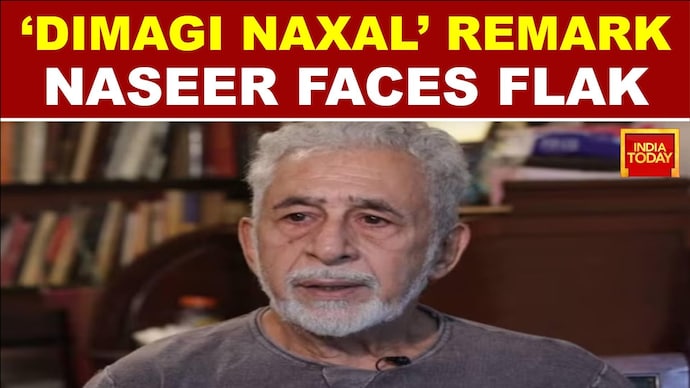
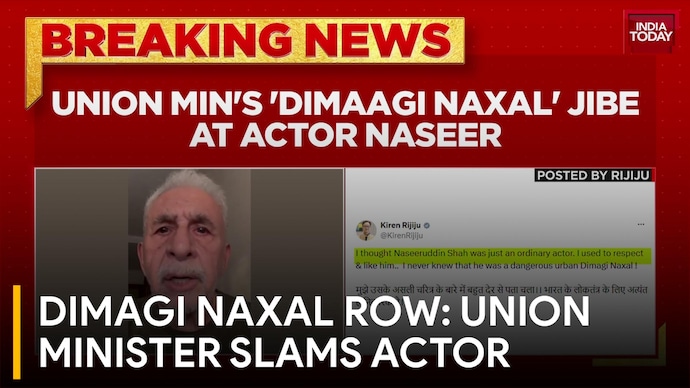
Naseeruddin Shah's 'Dimagi Naxal' Remark Row: Kiren Rijiju, Nitesh Rane & Puneet Issar Hit Out

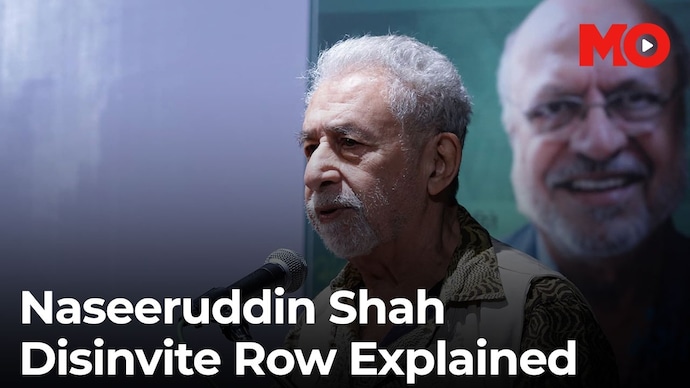
A major political controversy erupted after veteran actor Naseeruddin Shah referred to himself as a proud 'dimagi Naxal' in a video message and challenged the government. Union Minister Kiren Rijiju criticised the actor, stating he once respected him but found his remarks dangerous and harmful to Indian democracy. Maharashtra politician Nitesh Rane accused Shah of promoting Pakistani propaganda and claimed the actor is often not in his senses. Actor Puneet Issar also condemned Shah, accusing him of selective silence on national issues and alleging support for anti-national groups. The broadcast further noted that Prime Minister Narendra Modi originally coined the term 'dimagi Naxal'.

Row Erupts as Naseeruddin Shah Calls Himself Dimagi Naxal, Faces Flak From Rijiju

A major political controversy has erupted following remarks by veteran actor Naseeruddin Shah, who referred to himself as a "Dimagi Naxal" and part of the "tukde-tukde gang" in a self-released video clip on social media. In the clip, the actor challenged the authorities to take action against him. Union Minister of Parliamentary Affairs Kiren Rijiju launched a sharp counterattack against the actor, stating that he used to respect him but never knew he was dangerous, remarking that it took time to uncover his true character. The row follows Shah's continuous backing of various student movements and demonstrations across the country, including those organised by groups at Jamia Millia Islamia and Jantar Mantar in Delhi, as well as student protests in Mumbai. Rijiju's criticism has been echoed by leaders from the Bharatiya Janata Party and voices from within the film fraternity, including actor Puneet Issar, who questioned Shah's controversial stance and statements.

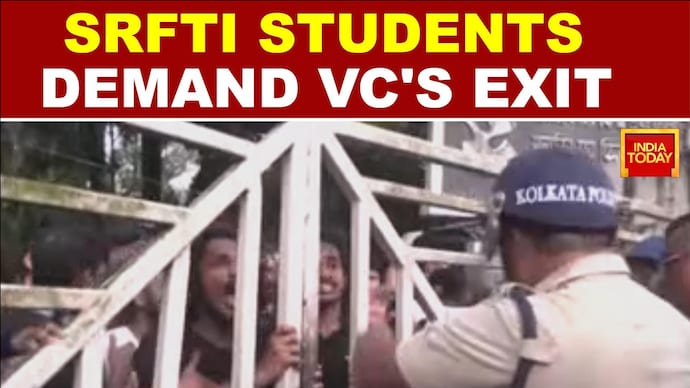
SRFTI Kolkata Protest: Naseeruddin Shah, Payal Kapadia Back Students; BJP Hits Back

Student protests at Kolkata's Satyajit Ray Film and Television Institute have triggered a political confrontation. Students are protesting against alleged incursions and campus violence involving RSS-linked organisations on 27 September and 4 October, demanding Vice-Chancellor Santosh Ajmera's resignation. Veteran actor Naseeruddin Shah and filmmaker Payal Kapadia voiced support for the students, calling for administrative action and campus safety. The BJP hit back, stating that freedom of expression is intact while alleging foreign funding and warning against law violations. Meanwhile, the Congress backed the agitators, alleging that democracy is declining. The institute has asked students to vacate hostels amid ongoing tensions.

Delhi SIR protest sees 1,100 detentions as opposition demands Gyanesh Kumar's exit

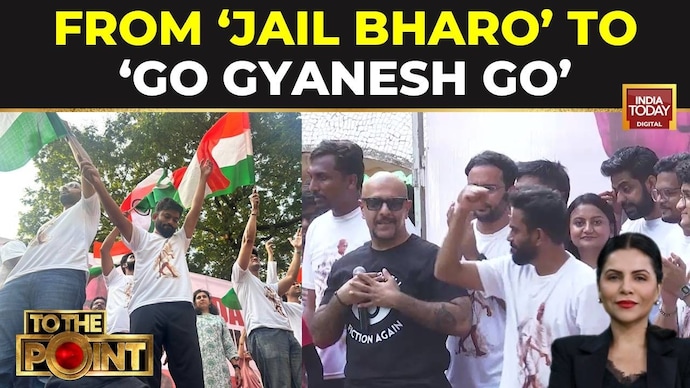
Protests demanding the resignation of Chief Election Commissioner Gyanesh Kumar over the Special Intensive Revision (SIR) process have taken place in Delhi and Mumbai. In Delhi, an earlier demonstration involving the Aam Aadmi Party and Left parties ended after around 1,100 protesters were detained. In Mumbai, the Cockroach Janta Party (CJP), led by Abhijeet Dipke, held a gathering at Shivaji Park, drawing public figures including Shabana Azmi, Vishal Bharadwaj and Naseeruddin Shah. The protests come as opposition parties plan district-level demonstrations and the Election Commission begins a special voter registration drive across 20 states.

CJP Shivaji Park Protest, Delhi Detentions & Resignation Demand for CEC

Protests have erupted across Delhi and Mumbai as demonstrators seek the resignation of the Chief Election Commissioner over the conduct of the Special Intensive Revision (SIR) process. In Delhi, an earlier demonstration involving the Aam Aadmi Party and Left parties concluded following the detention of around 1,100 protesters. Meanwhile, at Shivaji Park in Mumbai, the Cockroach Janta Party (CJP), led by Abhijeet Dipke, staged a targeted gathering despite the venue being a designated silent zone. Demonstrators holding tricolour flags and placards assembled without punitive police intervention, with personalities such as Shabana Azmi, Vishal Bharadwaj, and Naseeruddin Shah visiting the site. Unlike the earlier indefinite agitations, the CJP plans a series of timed flash protests across multiple Indian cities to act as a political pressure group. The movement coincides with opposition party plans for district-level protests and comes as the Election Commission announced a special voter registration drive across 20 states.

Furore over Diljit Dosanjh's film: Is it warranted or is he being scapegoated? Experts debate

NewsTrack on India Today discusses the controversy surrounding Diljit Dosanjh's film 'Sardarji 3' featuring a Pakistani actress. Veteran actor Naseeruddin Shah supports Diljit, stating he's not to blame for the casting. The film, shot before the Pahalgam terror attack, hasn't been released in India due to public sentiment. The debate centers on cultural ties with Pakistan amid tensions between the two nations.

Naseeruddin Shah calls The Kerala Story's success 'disturbing trend', draws BJP's ire

In an exclusive chat with IndiaToday.in, when Naseeruddin Shah was asked about The Kerala story, he said, “Worthwhile films like Bheed, Afwaah, Faraaz, all three collapsed. Nobody went to see them, but they are flocking to see The Kerala Story which I have not seen, and I don’t intend to see because I have read enough about it.” The veteran actor called this a ‘dangerous trend’. Shah also compared this trend to Nazi Germany. 

Naseeruddin Shah calls The Kerala Story's success a 'dangerous trend', sparks row

The veteran actor Naseeruddin Shah called The Kerala Story a ‘dangerous trend’. Shah also compared this trend to Nazi Germany. “On one hand, it is a dangerous trend, no doubt. We seem to be heading the way of Nazi Germany where in Hitler’s time, the filmmakers were co-opted, attempted to be co-opted, by the supreme leader to make films praising him and what he has done for the countrymen, and running down the Jewish community," he said. 

For last 50 yrs, I’ve been seeing movie called how to marginalise Muslim community: Owaisi on ‘The Kerala Story’ | Conclave South

At the India Today Conclave South 2023, AIMIM chief Asaduddin Owaisi was asked if he had watched the movie ‘The Kerala Story’, which sparked a major controversy in the run-up to its release. His response was, “For the last 50 years I have been seeing a movie called how to marginalise the Muslim community.” Watch the video for Owaisi’s full reaction.

There is no religious polarisation because...: Asaduddin Owaisi | Conclave South 2023

At the India Today Conclave South 2023, AIMIM chief Asaduddin Owaisi on Thursday shared his insights into “Is communal polarisation a growing threat and how does it impact Muslim identity?” Owaisi said there is no religious polarisation in the country, because for that to happen there need to be two equal sides. “Religious polarisation happens when there are two equal sides, which we don’t have now in the country... Polarisation is happening because of Hindutva agenda,” he said. Catch the full session here.

Naseeruddin Shah Rubbishes The Insider-Outsider Debate

 After the death of the young actor, Sushant Singh Rajput, the outsider - insider debate has aggravated. Veteran Bollywood actor Naseeruddin Shah on India Today e-conclave spoke about nepotism and rubbished conjectures around the insider-outsider debate saying that he never felt that there's some obstacle that is preventing him from getting to where he deserves to be. Watch the video to know more.