Vietnamese crab exporter

Topic

Advertisement
TOPIC

Nirmala Sitharaman

Nirmala Sitharaman is an Indian politician and the first full-time female finance minister of India.

She was born into a Tamil Brahmin family to Narayanan Sitharaman and Savitri Sitharaman on August 18, 1959, in Madurai, Tamil Nadu. She did her schooling in Madras and Tiruchirappalli and went on to Seethalakshmi Ramaswami College in 1980 to obtain a BA degree in Economics. Sitharaman is an alumnus of Jawaharlal Nehru University and the London School of Economics.  

Before entering into politics, Nirmala Sitharaman briefly worked for BBC World Service and was also designated as a senior manager at PricewaterhouseCoopers.  

Sitharaman joined the Bhartiya Janata Party (BJP) in 2006 and was appointed as the national spokesperson for the party in 2010. A prominent female figure in Indian politics, she was inducted in Narendra Modi’s cabinet as a junior minister and was further elected as a Rajya Sabha member from Andhra Pradesh in 2014.

Nirmala Sitharaman was sworn in as the corporate affairs minister and the 28th Finance Minister of India on May 31, 2019. She also served as the defence minister of the country to become India’s second female defence minister, after Indira Gandhi.

During her effective tenure as the Union Finance Minister of India, she became the second woman in the history of independent India to present the Union Budget after she presented her maiden budget in the Indian parliament in 2019.    

Interestingly, Nirmala Sitharaman has been ranked 39th in the Forbes 2020 list of 100 most powerful women.

 

  • ALL
  • STORIES
  • VIDEOS

STORIES

India, Canada explore easier cross-border remittances for 4 lakh students

India and Canada are working to ease cross-border remittances and payments, potentially benefiting more than four lakh Indian students in Canada and their families in India. The issue was discussed at the inaugural Economic and Financial Dialogue in Toronto between Finance Minister Nirmala Sitharaman and Canadian Finance Minister Francois-Philippe Champagne, with further talks planned.

KTR seeks probe into Rs 2,059-crore PM Ekta Mall tender in Hyderabad

In a letter to Union Finance Minister Nirmala Sitharaman, KTR alleged that tender conditions framed by the Revanth Reddy-led Telangana government could disproportionately benefit a private developer despite the project being built on valuable public land and receiving Central financial assistance.

Load More

VIDEOS

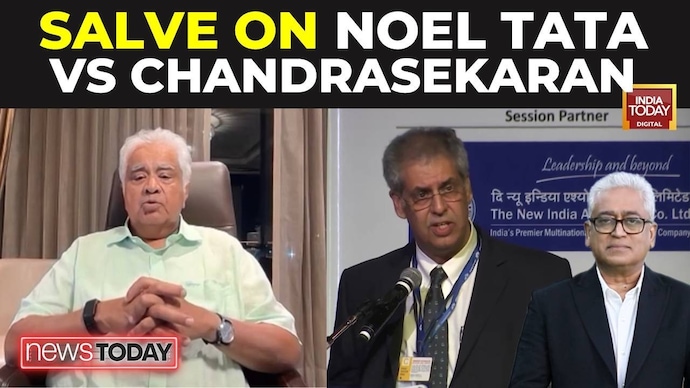
Tata Sons Boardroom Battle: Noel Tata, Chandrasekaran Reappointment & IPO Tussle

A major boardroom conflict has emerged within the Tata Group over corporate governance, leadership, and the proposed stock market listing of Tata Sons. Tata Trusts Chairman Noel Tata opposed the Tata Sons board's four-to-one resolution to reappoint N. Chandrasekaran as chairman for another five-year term from February 2027, and also rejected the proposed listing. In contrast, trust nominee Venu Srinivasan backed the board's decision, while the Shapoorji Pallonji Group favored a listing to unlock share value. The conflict involves regulatory scrutiny after the Reserve Bank of India rejected Tata Sons' request to exit its core investment company status. Amid the escalating corporate dispute heading for legal evaluation, Finance Minister Nirmala Sitharaman highlighted the necessity of professionalisation and separating ownership from management in businesses, while veteran politician Sharad Pawar advocated for dialogue, due process, and upholding the affirmative rights and ownership role of Tata Trusts under its articles of association.

Tata Group Succession Battle Likely To Reach Courts Amid Boardroom Dispute

A report details the intensifying leadership succession dispute within the Tata Group following a contentious board decision regarding N. Chandrasekaran continuing as chairman over Noel Tata. Legal camps are preparing defenses as the issue heads toward potential court litigation. Finance Minister Nirmala Sitharaman highlighted the need to separate ownership from management in family businesses, while NCP SP leader Sharad Pawar defended the trust-nominated affirmative voting rights. Senior advocate Harish Salve addressed the dispute over converting Tata Sons into a public company and the application of a chairman's casting vote amid trustee disagreements.

Sitharaman on Family Disputes, Airfare Surge Amid ATF Hike & TRAI Mandate

In this edition of the Business Today Show, anchor Sakshi Batra details major corporate, financial, and regulatory developments. Union Finance Minister Nirmala Sitharaman emphasised the importance of corporate governance and separating ownership from management in family-run businesses, urging companies to engage constructively with regulators rather than resorting immediately to litigation. In the aviation sector, Civil Aviation Minister Ram Mohan Naidu highlighted how rising Aviation Turbine Fuel costs amid the West Asia conflict are pushing up festive season airfares, reiterating the government's push for greater airline competition. Telecom regulator TRAI introduced new rules mandating separate voice and SMS-only packages to benefit over 20 crore non-data users across India. Market expert Avinash Gurakshakar shared insights on equity market volatility, mid-cap strategies, IT stocks, and aviation market dynamics. Additionally, Uttar Pradesh Principal Secretary Alok Kumar outlined progress on the 3,700 crore rupees India Chip semiconductor OSAT manufacturing facility.

Stock Market Slips, India's GDP Hits 7.8%, Sugar Limit Tightened

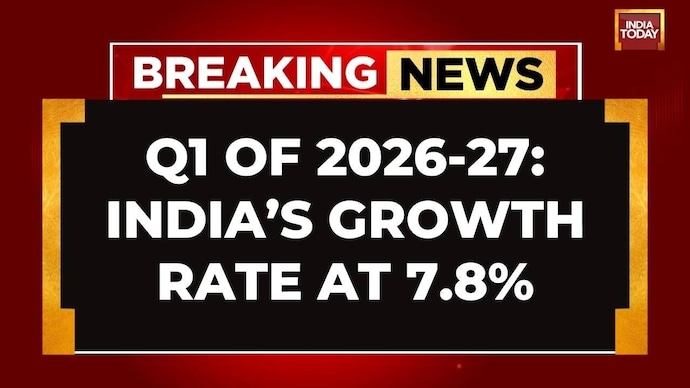
Indian stock markets experienced sharp volatility on Dalal Street as the Nifty slipped below the 24,000 mark before closing at 24,055 points, weighed down by auto and banking stocks amid rising crude oil prices past 92 dollars per barrel. Meanwhile, the central government tightened the sugar stock limit to 2,000 quintals for dealers from 15 September until 30 November. On the macroeconomic front, Prime Minister Narendra Modi and Finance Minister Nirmala Sitharaman hailed India's first-quarter GDP growth of 7.8 per cent, highlighting the nation's broad-based expansion despite global external challenges. Additionally, Mahindra and Mahindra reiterated their focus on electric vehicles, projecting EV contributions to reach 18 to 20 per cent by FY28 as demand transitions from a niche segment to the mass market. In currency trade, the Indian rupee closed 21 paise stronger against the US dollar at 94.95.

India's Q1 Real GDP Grows At 7.8%, Nominal GDP Hits 10.3% Amid Global Headwinds

India's real GDP grew by 7.8% during the first quarter of the financial year, rising from 6.9% in the same period last year. Nominal GDP registered a 10.3% growth during Q1. In absolute figures, real GDP at constant prices reached 81.36 lakh crore rupees compared to 75.46 lakh crore rupees in Q1 of the previous year, while nominal GDP at current prices stood at 88.27 lakh crore rupees against 80 lakh crore rupees in the corresponding period of the previous fiscal. The expansion occurred despite global headwinds, including ongoing geopolitical unrest in West Asia and Eastern Europe, as well as international oil crunches. Government coordination across ministries and policy interventions contributed to shielding the domestic economy from international disruptions. The economic performance provides domestic political impetus to the government against opposition claims regarding economic decline, with further policy measures expected to maintain momentum and support the middle class.

India tackles LPG crisis; US warns Iran of 'most intense strikes'

This India Today Super 6 report, anchored by Akshita Anandakopal, examines the resolution of India's LPG supply crisis and the government's strategy for domestic energy security. Union Petroleum Minister Hardeep Puri confirms that oil refineries are operating at full capacity and supply chains remain intact, prioritizing household consumption. Internationally, Brent crude prices experienced a marginal decline following U.S. President Donald Trump’s assertion that the West Asia conflict may end soon. However, the report also details the economic impact of the war, including fuel price hikes in Pakistan and rationing in Bangladesh. Trump addresses the humanitarian crisis following the bombing of an Iranian girls' school, attributing the strike to Iran despite evidence involving a Tomahawk missile. Additionally, the broadcast covers diplomatic resolution efforts led by Russia and parliamentary disputes in India. A dedicated fact-check segment addresses viral misinformation and social media rumors surrounding the conflict. The episode provides a comprehensive overview of global oil market volatility, regional energy stability, and ongoing geopolitical developments.