Kim Jong Un vows irreversible nuclear buildup, accuses US of escalating threats
Kim Jong Un inspected nuclear facilities and called for tactical weapons deployment. He said North Korea's nuclear status was inviolable as material production expanded.

North Korea, officially known as the Democratic People's Republic of Korea (DPRK), is in East Asia. The country is known for its strict government, secretive policies, and controversial position in world politics. Pyongyang serves as its capital. The country shares borders with South Korea, China, and Russia.
North Korea emerged after World War II when the Korean Peninsula was divided into two parts in 1945 - North Korea (supported by the Soviet Union) and South Korea (supported by the United States). The Korean War began in 1950 and ended in 1953 with an armistice agreement but no clear victory.
The country was first ruled by Kim Il-sung from 1948 to 1994, followed by his son Kim Jong-il, and then his grandson Kim Jong-un. This hereditary dictatorship is referred to as the "Kim dynasty."
North Korea's economy is primarily state-controlled, with no allowance for private enterprise or capitalist policies. Citizens have limited contact with the outside world, and the media is under the government's strict control.
The country frequently faces food shortages and economic sanctions. Its main economic activities include mining, defence industries, and agriculture. However, heavy investment in military spending has led to hardships for the general population.
North Korea's nuclear programme remains a foremost global concern. Since 2006, it has conducted multiple nuclear tests, creating ongoing tensions with the United States, South Korea, Japan, and the United Nations, resulting in severe economic sanctions.
China and Russia remain North Korea's primary allies. While peace talks between North and South Korea have occurred periodically, no permanent resolution has emerged.
North Korean culture is based on Korean traditions but heavily influenced by government ideology. Citizens have limited access to foreign entertainment, the internet, or international news.
The government promotes the "Juche" ideology of self-reliance as a core principle. Additionally, sports, music, and arts are used as tools for propaganda purposes.
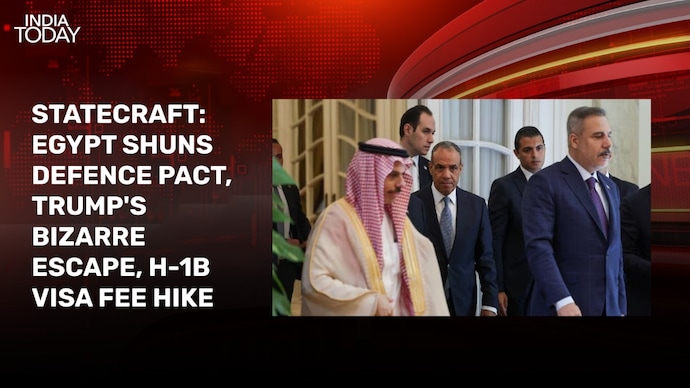
This edition of Statecraft examines Egypt's decision to abstain from the new defence pact signed in Mecca by Turkey, Saudi Arabia, and Pakistan.
This episode of India Today Explains breaks down the anti-defection law, detailing how elected representatives can face disqualification for switching parties and how the two-thirds merger exception operates during political rebellions and other big stories of the week.
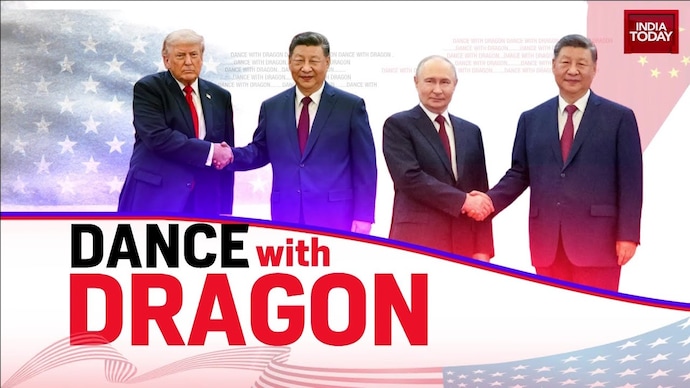
China hosted the Russian and American presidents in consecutive state visits, positioning Beijing at the centre of global geopolitics. The Russian leader's two-day visit marked the twenty-fifth anniversary of a bilateral friendship treaty, resulting in a joint declaration advocating for a multipolar world and expanded trade using local currencies.
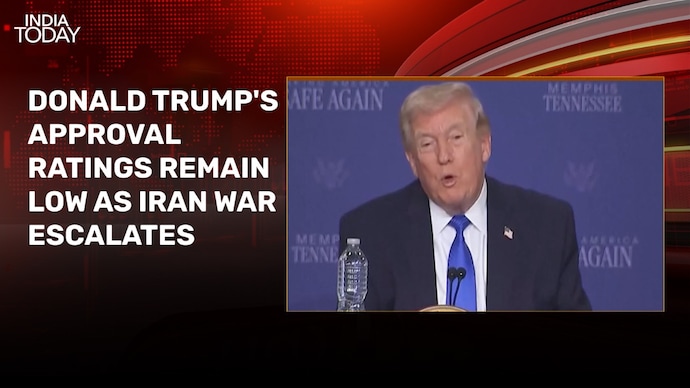
Polls show Donald Trump's approval rating has dropped to 39 per cent, with 57 per cent of Americans disapproving of his performance as the Iran conflict continues.
Iran's IRGC has warned US and Israel-linked industrial companies and heavy industries in the region to evacuate all workplaces, according to reports from Iranian media.
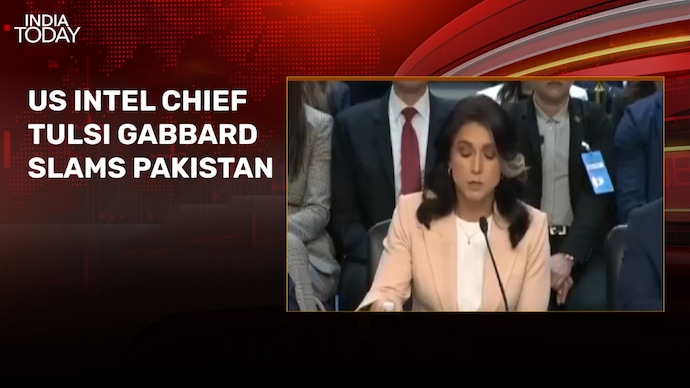
US Director of National Intelligence Tulsi Gabbard identified Pakistan, Russia, China, and North Korea as the most significant nuclear threats to the United States in a Senate testimony.
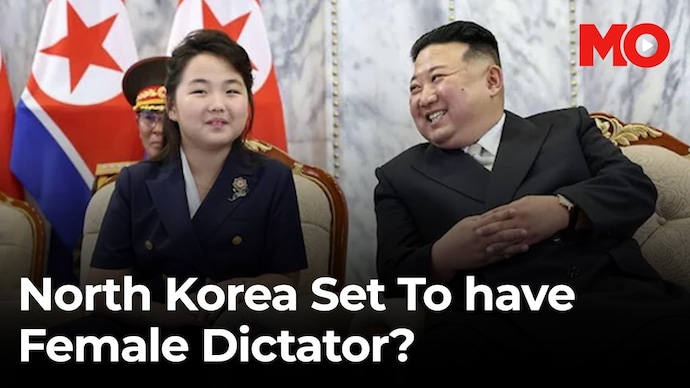
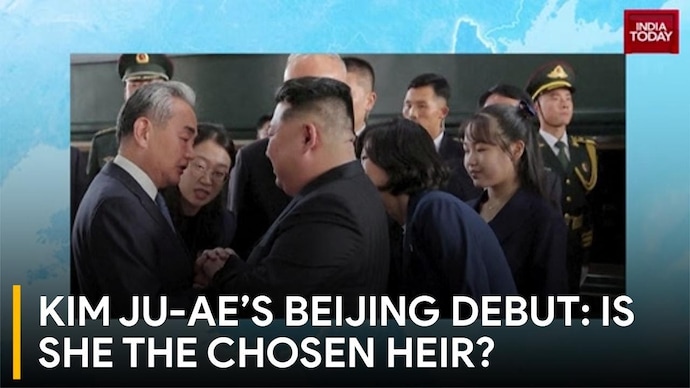
Kim Ju Ae, the teenage daughter of Kim Jong Un, is appearing more frequently at missile launches, military parades and major state events.
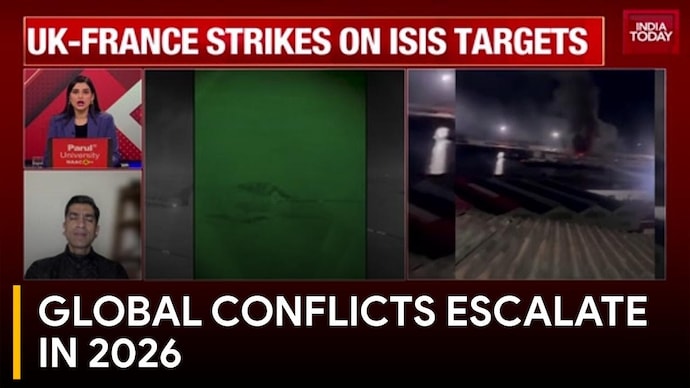
On this Special Report, an unidentified speaker discusses the 'turbulent beginning of 2026', describing it as a continuation of violent global trends from the previous year. The coverage highlights major geopolitical developments, including US airstrikes in Venezuela that reportedly led to the capture of Nicolas Maduro, and a ballistic missile launch by North Korea. The programme also details a joint military operation by the UK and France against ISIS targets in Syria. Additionally, the speaker mentions continued protests in Iran and Kim Jong-un's military preparations ahead of the 8th Party Congress. The report underscores the intensifying conflicts involving major world powers.
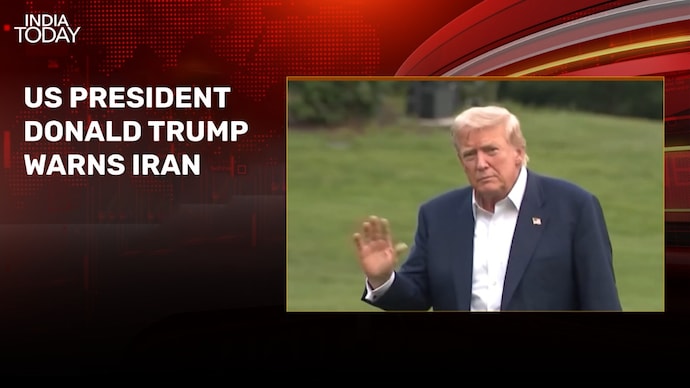
US President Donald Trump has issued a stern warning to Tehran, stating, 'If Iran shoots and violently kills peaceful protesters... the United States of America will come to their rescue.'
In this special report, the focus is on the significant diplomatic debut of Kim Ju-ae, the daughter of North Korean leader Kim Jong-un, in Beijing. The transcript details her appearance alongside her father at a Chinese military parade in 2025, marking her first overseas public engagement. The report highlights the symbolism of the visit, drawing parallels to Kim Jong-un’s own introduction to China’s leadership in 2010. It further explores the growing speculation regarding her potential role as the future heir, citing her honorifics like ‘respected daughter’ and her presence at military events. The segment also examines the challenges of a female successor in a patriarchal regime.
As the world bids farewell to the past, nations across the globe have welcomed 2026 with spectacular firework displays and joyous gatherings. This special news bulletin captures the spirit of the fresh beginning, showcasing visuals of dazzling celebrations from Bangkok to Beijing. In India, the atmosphere was electric as the clock struck midnight, with citizens ushering in the New Year with cheers and festivities. Prime Minister Narendra Modi extended his warm greetings to fellow Indians, praying for peace and happiness in society. The report also notes that these widespread celebrations are being held amid heightened security and a significant police presence to ensure public safety. From the ringing of drums in China to the festive events in Japan and the Koreas, the world is united in looking ahead with renewed hope. The broadcast brings viewers these vibrant visuals, marking a new leaf being turned over for humanity.
As the world bids farewell to the past, nations across the globe have welcomed 2026 with spectacular displays of joy and hope. This special report highlights how India ushered in the New Year with fireworks and cheers across major cities, amidst heightened security measures to ensure public safety. The broadcast captures visual spectacles from around the world, including a dazzling drone display in Bangkok and traditional drum ceremonies in Beijing. In Australia, the nation welcomed the new year as midnight struck. From the skies of Manila lighting up to festivities in Japan and the Koreas, the report showcases the shared spirit of fresh beginnings. As the unidentified speaker notes, this marks a 'new chapter' and a 'new leaf' for people everywhere looking ahead with renewed optimism.
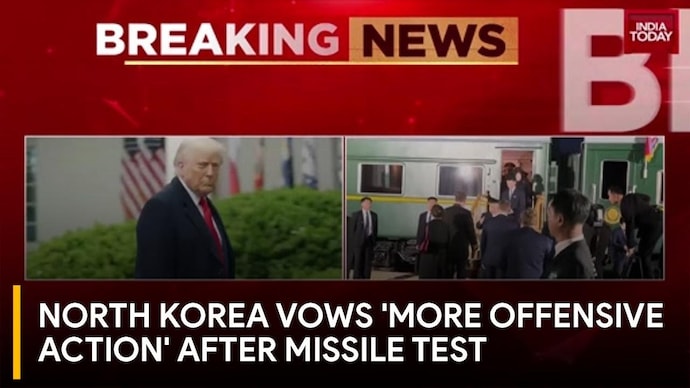
This special report focuses on the escalating tensions on the Korean Peninsula, involving North Korea, South Korea, and the United States. North Korea's Defence Minister, No Kwang Chol, has strongly condemned joint security talks and the arrival of a US aircraft carrier in the region. In a statement to state media, No Kwang Chol vowed 'more offensive action against the enemies' threat on the principle of ensuring security and defending peace by dint of powerful strength'. This threat came a day after Pyongyang fired a ballistic missile off its east coast, an action denounced by Seoul. The condemnation from the North also follows the recent arrival of the US nuclear-powered aircraft carrier, the USS George Washington, in Busan, which Pyongyang claims has escalated military tensions. South Korea's defence ministry has called the North's criticism regrettable.
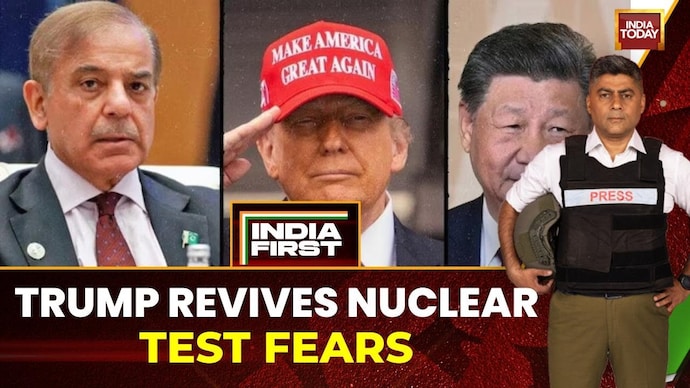
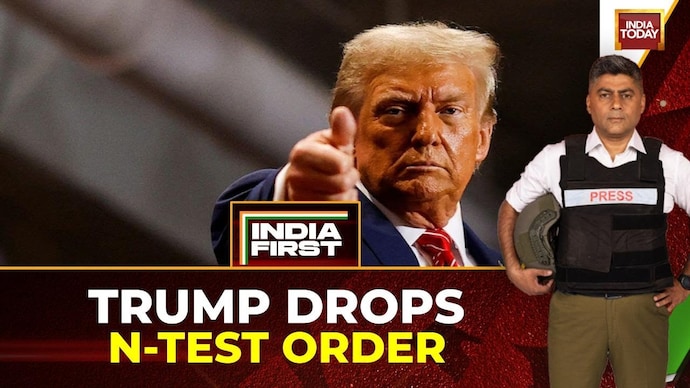
This special report examines the global implications following President Donald Trump's declaration that the U.S. will resume nuclear weapons testing for the first time since 1992, a move sparking fears of a new arms race. This concern is amplified by Russia's launch of the Khabarovsk submarine, armed with the 'Poseidon' doomsday drone. Trump justified his decision by claiming other nations, including Pakistan, North Korea, China, and Russia, have conducted unpublicized nuclear tests. U.S. Energy Secretary Chris Wright clarified these trials would be 'non-critical' component tests without a nuclear blast. The program analyzes the shifting global nuclear strategy's impact on India, considering China's growing arsenal and Pakistan's nuclear posturing following 'Operation Sindoor' in May 2025. The report also delves into the debate surrounding India's 'No First Use' nuclear policy, featuring insights from experts like Sushant Sarin and former Air Vice Chief Anil Khosla. Additionally, the bulletin details the massive tri-services military exercise 'Thrishul' in Rajasthan and Gujarat, which is validating new war-fighting concepts after lessons from 'Operation Sindoor'. The intensifying political battle in Bihar, featuring remarks from PM Narendra Modi and UP CM Yogi Adityanath, is also covered.
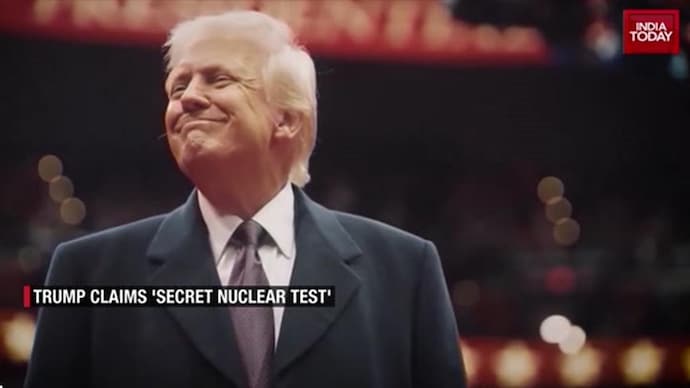
US President Donald Trump claimed that Pakistan, China, Russia, and North Korea are conducting secret underground nuclear tests.
This special report focuses on the global concerns surrounding the United States' nuclear testing policy following a directive from President Donald Trump to resume testing on par with rival nations. In a significant clarification, US Energy Secretary Chris Wright stated, 'There are no plans for a nuclear explosion in the United States of America.' The US administration has elaborated that the upcoming trials are 'non-critical' or 'subcritical' experiments, designed to verify weapon systems and components without triggering a nuclear chain reaction. This bulletin examines President Trump's justification that nations like China, Russia, and Pakistan are conducting tests covertly, and questions whether this move could ignite a new and dangerous global nuclear arms race.
This special report focuses on US President Donald Trump's announcement to resume nuclear testing for the first time since 1992, a move he claims is justified by secret tests being conducted by other nations. Trump stated, 'countries like Pakistan, North Korea, China, and Russia have been carrying out nuclear tests, but since they're not democracies, the world does not hear of these tests'. The declaration raises global alarms, particularly with Russia's recent launch of the Khabarovsk submarine, designed to carry the 'doomsday' Poseidon nuclear drone. The report also examines Trump's claim that he prevented a nuclear war between India and Pakistan. With China's nuclear arsenal projected to grow and Pakistan's activities, the bulletin analyses the strategic pressure on India to reconsider its unilateral moratorium on nuclear testing, which has been in place since the Pokhran tests in 1998.
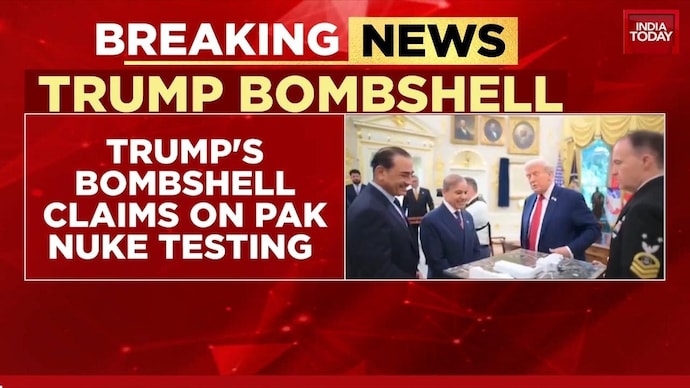
This special report focuses on the stunning claims by US President Donald Trump regarding Pakistan's nuclear activities and India's reaction. ‘We are going to test because they test and others test and certainly North Korea has been testing, Pakistan has been testing,’ Trump stated, alleging that Pakistan is conducting nuclear tests in secret. The revelation gives credence to India's long-standing concerns about its neighbour's nuclear posture, which New Delhi has consistently flagged as irresponsible. The report delves into the geopolitical implications of Trump's statement, which came alongside similar claims about China and Russia. It also highlights how Indian Defence Minister Rajnath Singh has previously urged international bodies like the IAEA to monitor Pakistan's nuclear arsenal, citing the threat it poses to regional stability.
This special report focuses on the critical meeting in Busan, South Korea, between former US President Donald Trump and Chinese President Xi Jinping, unfolding against a tense backdrop of North Korean missile tests and escalating geopolitical friction over Taiwan and the Russia-Ukraine war. According to our correspondent, Donald Trump has reacted to weapons programs from other countries by stating, 'I've instructed Department of War to start testing our Nuclear Weapons on an equal basis'. The summit addresses a severe dip in US-China relations, with discussions expected to cover nuclear brinksmanship, a potential trade deal, US dependence on Chinese rare earths, and Beijing's plans for Taiwan, a critical hub for the global semiconductor industry.
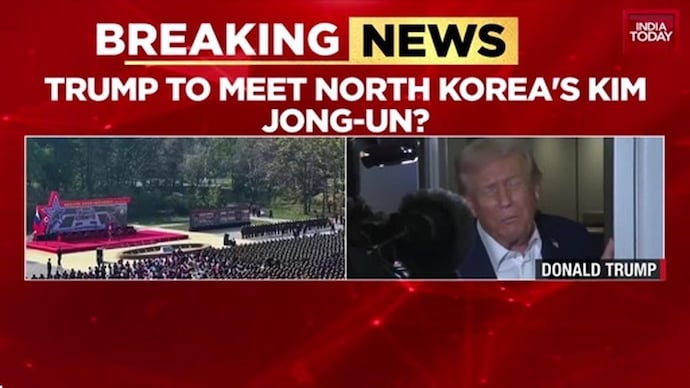
This report covers former US President Donald Trump's remarks about a potential meeting with North Korean leader Kim Jong-un during his tour of Asia. Speaking to reporters, Trump stated he was fully prepared to meet with Kim, creating a significant diplomatic development. When asked about communicating the offer, Trump said, 'You know, they don't have a lot of telephone service. They have a lot of nuclear weapons but not a lot of telephone service, so I'm open to it'. The statement was made as Trump embarked on a five-day trip to Malaysia, Japan, and South Korea. While US officials noted a meeting was not officially on the schedule, they acknowledged that plans could change, leaving the door open for what would be the first meeting between the two leaders in several years.