RBI removes Paytm Payments Bank from Scheduled List after license cancellation
The RBI has removed Paytm Payments Bank from the Second Schedule of the RBI Act. The step follows the cancellation of its licence and years of regulatory action.

Paytm is an Indian technology company specialising in digital payment systems, e-commerce, and other online financial services. Founded in August 2010 by Vijay Shekhar Sharma, Paytm started as a prepaid mobile recharge website and rapidly expanded its services to include a wide range of payment services, including utility bill payments, travel bookings, and mobile recharges.
Its significant breakthrough came with the launch of the Paytm Wallet in 2014, which allowed users to perform cashless transactions both online and across a wide array of offline merchants.
The 2016 demonetisation of high-value currency notes served as a catalyst for Paytm, significantly boosting its user base and transaction volume as people turned towards digital payment solutions.
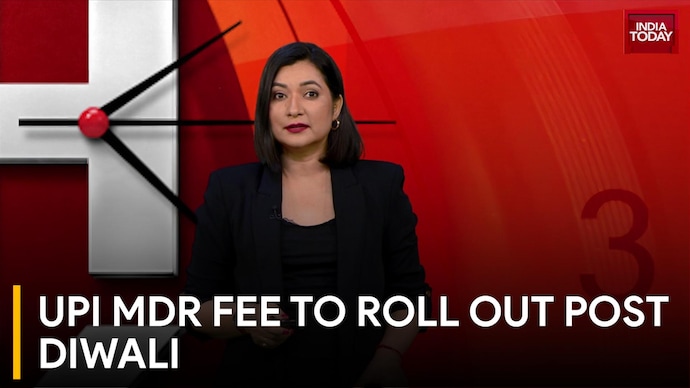
Merchant Discount Rate (MDR) on select person-to-merchant (P2M) Unified Payments Interface (UPI) transactions will be implemented after Diwali on a date to be formally notified. The decision to defer the rollout ensures that the festive season sales across Navratri and Diwali remain unaffected. The upcoming charge, set at 0.4 per cent on specific merchant categories, is not applicable to person-to-person (P2P) transfers. While merchants and fintech companies had sought clarity from the National Payments Corporation of India (NPCI) regarding eligible transaction categories and sustainability, the fee aims to support payment ecosystem infrastructure and address losses incurred by fintech players managing security and fraud safeguards. The government has stressed that merchant costs should not be transferred to consumers.
Indian equity benchmarks reversed early gains to trade sharply lower as elevated crude oil prices and rising global bond yields weighed on market sentiment. The Nifty slipped below the 23,200 mark while the Sensex registered steep losses, with real estate and metal stocks leading the downturn even as select information technology shares bucked the trend. Meanwhile, the National Payments Corporation of India held discussions regarding Merchant Discount Rate charges on merchant UPI transactions above 2,000 rupees following a Finance Ministry notification. In the corporate domain, the Reserve Bank of India filed a caveat in the Bombay High Court ahead of an anticipated appeal by Tata Sons seeking exemption from mandatory listing norms, triggering a rally in several Tata Group shares including Tata Chemicals and Tata Investment Corporation. The bulletin also examined market trends, crude oil volatility, and the upcoming National Stock Exchange initial public offering.
Indian benchmark indices opened lower, with Nifty falling around one per cent and metals and financials facing sharp selling pressure amid rising crude oil prices, surging global bond yields, and currency depreciation. The market decline reflects broad-based global weakness, higher domestic market volatility, and continued foreign institutional investor pullbacks. Alongside opening market movements, details emerged on the National Stock Exchange Initial Public Offering, with the price band set at seventeen hundred to seventeen eighty-five rupees. The offer for sale size was scaled down to 12.64 crore shares after major institutional shareholders, including State Bank of India and Bank of Baroda, reduced their proposed offloading. In corporate updates, HDFC Bank won all seven Bahrain cases concerning Credit Suisse Additional Tier 1 bond mis-selling claims after the court cited insufficient evidence. Meanwhile, Coforge shares dropped following governance clarifications regarding board evaluation reports.
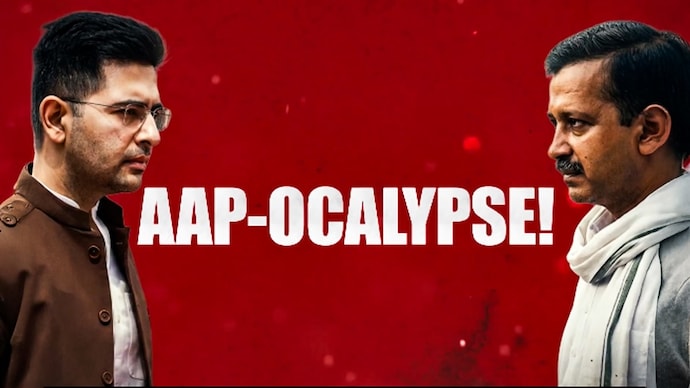
In a big setback to Arvind Kejriwal, Raghav Chadha and six other Aam Aadmi Party Rajya Sabha MPs quit the party to join the BJP.
The top story is the government's proposal to increase the Foreign Direct Investment (FDI) limit in Public Sector Banks (PSBs) from 20% to 49%, a move that has drawn sharp, conflicting views from market experts like Hemendra Hazari and Dharmesh Kanth. Banking industry expert Hemendra Hazari stated, 'There is no economic rationale for this move.' In contrast, other analysts believe the reform will lead to better valuations and increased competition, benefiting consumers. The news has already spurred market excitement, with the PSU Bank index trending higher and Canara Bank's stock hitting a 52-week high. Also in focus, the Centre has approved seven projects worth over ₹5,500 crores under the electronics component manufacturing scheme, and Paytm has enabled UPI payments for NRIs using international mobile numbers.
This special report tracks a bullish day on Dalal Street as the Nifty 50 approaches the 26,000 mark, fuelled by major reforms in Public Sector Banks (PSBs) allowing higher foreign participation. An analyst on the show stated, 'we need to tighten our belt, get ready for a record high on the Nifty in the coming week, a record high on Nifty 500 and on Bank Nifty is already with us.' The bulletin also covers key corporate earnings from companies like Mazagon Dock, Bata, and Raymond, and delves into major news from the fintech world as Paytm rolls out UPI services for NRIs using international mobile numbers. Additionally, experts debate the high valuation of the upcoming Lenskart IPO.
Attention Paytm FASTag users! If you've been relying on Paytm for your FASTags, there's some crucial information you need to know.
The rise and fall of Paytm highlights the precarious balance between ambition and compliance in the country's financial landscape.
Will your Paytm account stop working after February? Watch the video to find out.
Somdutta Singh of Assiduus Global Inc., explained how RBI’s restrictions on Paytm Payments Bank may affect the consumers and what efforts Paytm was making to improve its approach. Here are the key takeaways from the conversation...
In a major action against Paytm Payments Bank (PPBL), the Reserve Bank of India (RBI) has directed Paytm to stop accepting deposits or top-ups in any customer accounts, wallets, FASTags, and other instruments after February 29. Somdutta Singh, Founder and CEO of Assiduus Inc., explains where Paytm failed and how the restrictions will affect the end customer.
Former Tata CLiQ CEO Vikas Purohit has been appointed as the Director of the Global Business Group of India at Meta. Purohit left Tata CLiQ in December last year. Meet META's India Head.
Equity benchmark BSE Sensex rebounded more than 1 per cent while Nifty reclaimed the 18,200 level on Monday, boosted by heavy buying in banking, financial and auto stocks amid a rally in global stock markets.
In this episode of Newstrack, watch the exclusive interviews of Rishad Premji, Executive Chairman, Wipro, Bjyu's founder Byju Raveendran, Roshni Nadar Malhotra, Chairperson, HCL Technologies, and Vijay Shekhar Sharma, Founder, Paytm.