BJP leaders perform havan for LK Advani at HQ as veteran party leader turns 99
BJP leaders held a puja and havan in New Delhi for LK Advani's 99th birthday. The tribute highlighted his role in building the party and nurturing generations of workers.

Piyush Vedprakash Goyal, born on June 13, 1964, is an Indian politician and has held key positions in multiple ministries in the BJP government.
He was born in Mumbai to Chandrakanta Goyal and Ved Prakash Goyal. He is a Chartered Accountant and secured a second all-India rank in CA Final and has also pursued Law from the Mumbai University. He got married to Seema Goyal, an active social worker and the couple has two children.
During the initial days of his career, he started as an investment banker but later entered into politics. In his over three-decade-long political career, he has held several posts and has served as the Minister of State for Coal, Power, New and Renewable Energy; Minister of Railways; Minister of Commerce and Industry and Minister of Consumer Affairs, Food and Public Distribution. Goyal was nominated by the Government of India in the task force for 'Interlinking of Rivers'. In June 2020, he was also appointed as the Deputy leader of the House in Rajya Sabha.
Under his leadership, from 2017 to 2021, the Indian Railways have completed 200 key long-pending projects and also established a ‘Zero Accident’ railway system.
This episode of Statecraft examines major global political battles and their geopolitical repercussions. In Israel, following an inconclusive general election where Benjamin Netanyahu's right-wing bloc secured 53 seats, the Likud party alleged widespread electoral fraud and foreign interference involving Arab parties, Qatar, and Turkey. Israeli election authorities and police found no evidence of systematic fraud or altered outcomes. Meanwhile, rival opposition factions and Arab parties hold potential kingmaker positions amid tense coalition maneuvers. Across the Atlantic, the upcoming US midterm elections threaten Republican control of Congress, presenting significant implications for India. With bilateral trade negotiations stalled over agriculture and Russian oil imports, shifts on Capitol Hill could reshape US tariff policies, trade scrutiny, and strategic ties. In diplomatic developments, External Affairs Minister Dr S Jaishankar arrived in Atlanta for the G20 foreign ministers meeting and Quad deliberations chaired by US Secretary of State Marco Rubio, before heading to the Commonwealth summit. The show concludes with scenes of physical brawls erupting inside Armenia's parliament.
The INDIA bloc has intensified its campaign against Chief Election Commissioner Gyanesh Kumar, announcing a symbolic public impeachment event on October 30, followed by a mega rally at Delhi’s Ramlila Maidan on November 1 over alleged voter deletions during the Special Intensive Revision (SIR) of electoral rolls.
Indian equity benchmark Nifty opened lower near 22,705 amid the monthly options expiry, with Nifty Bank also trading flat with a negative bias. IT and FMCG stocks experienced downward pressure, while small caps, PSU banks, and pharma shares gained ground. The Indian rupee opened slightly stronger at 95.17 per dollar. Globally, Claude maker Anthropic filed to go public on the NASDAQ under ticker ANT at a potential valuation of up to 2 trillion dollars, while reporting an 81 billion dollar first-half net loss. Anthropic devoted over 90 pages of its prospectus to warning that advanced AI systems could manipulate humans, resist shutdowns, and circumvent safeguards. Speaking on the broadcast, market analyst Dharmesh Kant assessed the AI boom and advised a gradual recovery strategy for domestic markets. In corporate developments, Hyundai India outlined plans for 50 percent alternative powertrains by 2030, while Tata Motors' takeover bid for Italian truckmaker Iveco cleared an 80 percent threshold.
Speaking in Berlin, Union Minister Piyush Goyal stated that India is no longer living in isolation and has opened its doors to global trade. Goyal highlighted that India possesses a plethora of trading arrangements across the world and is actively seeking deeper integration into resilient global value chains. He emphasised the necessity of open borders alongside the free flow of goods, services, and ideas to build enduring commercial networks. Goyal underlined that long-term economic growth must be driven by a collaborative partnership between researchers, academia, and industry, noting that the government can at best serve as a catalyst to facilitate global trade expansion.
An India Today Special Investigation Team undercover probe on '5 Live' reveals widespread food safety and hygiene violations across prominent eateries and restaurants in Delhi, including areas around Jyoti Nagar, Karkardooma, Paharganj, and New Delhi Railway Station.
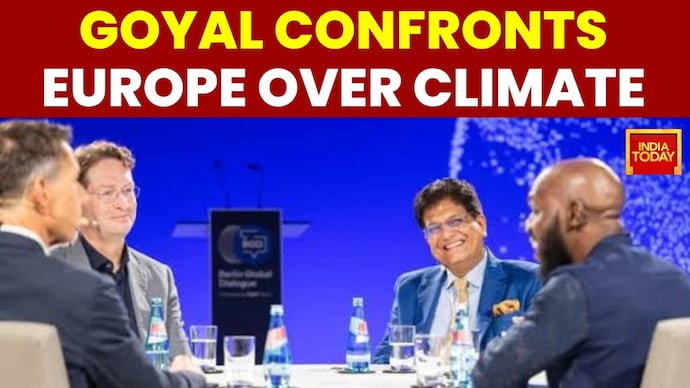
Speaking at the Berlin Global Dialogue, Union Commerce and Industry Minister Piyush Goyal challenged European delegates regarding their historical responsibility for global carbon emissions and climate change. Goyal pointed out that India supports seventeen per cent of the world's population while contributing less than three per cent to global carbon emissions. Contrasting this with Europe's higher per capita environmental footprint, he questioned who caused damage to the ozone layer and emitted carbon during centuries of economic growth. Highlighting India's expanding clean energy programme, the minister underscored the necessity of meeting the energy, food, and security needs of 1.4 billion citizens while promoting a circular economy.
Speaking in Berlin, Union Commerce and Industry Minister Piyush Goyal challenged the European Union and developed nations over climate accountability and unfulfilled financial pledges. Goyal asserted that developed countries are historically responsible for emissions and environmental degradation, noting that Europe grew its economies by burning coal and must shoulder mitigation costs. Confronting claims during an exchange, Goyal stated, "The problem was caused by you," emphasising that India supports 17 percent of the global population while contributing less than 3 percent of carbon emissions. He highlighted that an Indian citizen's per capita carbon emissions remain a fraction of European levels. Goyal also called out the West for zero delivery on the promised 100 billion dollars in climate finance to support the Global South. Pointing out India's rapid expansion of clean energy alongside its imperative to meet the food and energy needs of 1.4 billion people, he argued that developing economies should not be penalised for historical carbon burdens created by industrialised nations.
A detailed discussion examines critical dimensions of India-US bilateral ties following high-level interactions with US Secretary of State Marco Rubio and Trump administration insider Sergio Gor. Addressing the status of trade negotiations, the conversation highlights India's key priorities, including securing a competitive advantage and achieving predictability against arbitrary tariff shifts under mechanisms like Section 301. The dialogue explores the rationale behind Washington's waiver on Russian fuel imports, where global economic stabilization and preventing worldwide fuel price inflation emerged as immediate imperatives. Furthermore, the discussion touches upon diplomatic efforts to resolve the Russia-Ukraine conflict, specifically around Donbas. Analysis indicates that neither side can secure an outright military victory, emphasizing that lasting peace requires mutual concessions through dialogue and diplomacy.
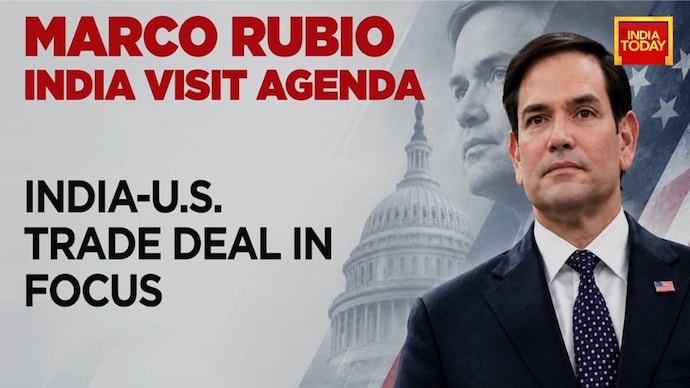
United States President Donald Trump has indicated that a bilateral trade agreement with India is nearing completion, describing it as a deal that will be unlike previous pacts. Trump stated that both countries want to make a deal and noted it is going to be a much different kind of agreement. The development comes alongside official visits and discussions, including US Secretary of State Marco Rubio's visit to India and consultations involving Union Commerce and Industry Minister Piyush Goyal. Officials from both sides indicated that major tariff lines have been negotiated, with India seeking to protect sensitive areas such as agriculture and dairy products. Discussions have also addressed earlier sticking points, including tariffs, Russian oil purchases, and statutory US investigations under Section 301 and Section 293. The two countries are aiming to expand bilateral trade volume up to 500 billion dollars over the next five years as legal drafting and final contours of the agreement are processed.
In an interview with India Today, Atul Keshap, President of the US-India Business Council, discussed the ongoing trade negotiations between India and the United States. Emphasizing the mutual benefits of bilateral economic cooperation, he stated, "We're better off together." Keshap noted that extensive talks spanning 18 months reflect seriousness across leadership and bureaucratic levels in both democracies. Addressing concerns over transactional diplomacy, tariffs, Russian oil purchases, and shifting geopolitical signals, Keshap highlighted that an agreement would deliver critical market predictability, foster investment, generate jobs, and strengthen high-tech collaboration. Highlighting India's economic growth trajectory and partnerships in critical frontier technologies such as artificial intelligence and semiconductors, he urged both governments to conclude the agreement, noting that the long-term strategic alignment between both nations serves as a net positive.
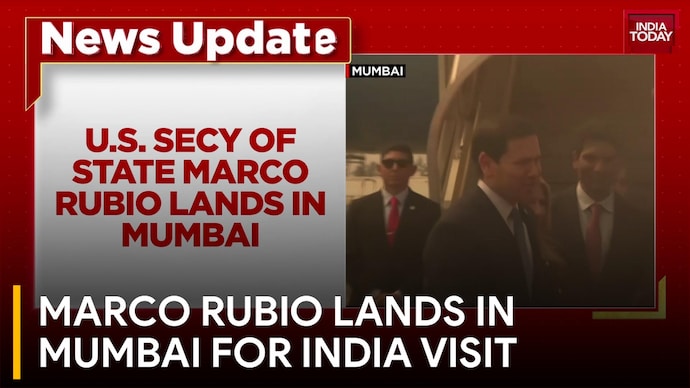
US Secretary of State Marco Rubio has arrived in Mumbai on a two-day official visit to India. During his visit, Rubio is scheduled to travel to Jamnagar to tour the Reliance oil refinery, highlighting energy diplomacy. He will hold bilateral discussions with External Affairs Minister Dr S Jaishankar in Mumbai to review India-US relations, defence partnership, visa issues, and progress on a bilateral trade agreement. The visit serves as preparation for Prime Minister Narendra Modi's scheduled trip to the United States for the G20 Summit in December 2026. Rubio will also pay homage to the victims of the 26/11 terror attacks at the Taj Hotel and attend events marking the 250th anniversary celebrations of United States independence. Addressing media questions on energy and sanctions, Rubio noted that balancing foreign policy requires considering bilateral ties, global energy supplies, and trade deal negotiations, stating that efforts are underway to finalize a trade deal with India.
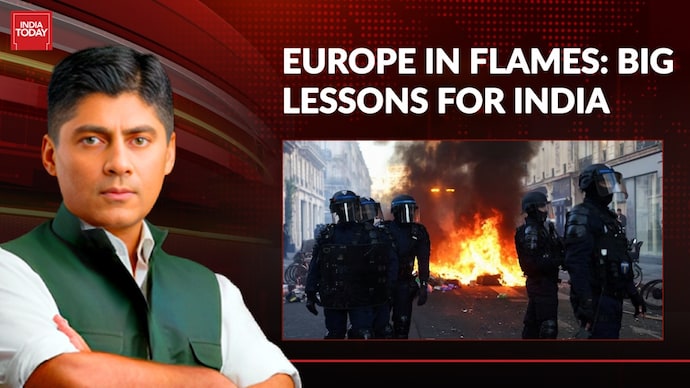
This special broadcast of India First, hosted by Gaurav Sawant, covers unrest across France, Italy, Portugal, and Albania, analysing potential national security lessons for India.
United States Secretary of State Marco Rubio stated that Washington is working to finalize a trade agreement with India ahead of his official visit to Mumbai and Jamnagar. Marco Rubio noted, "We're trying to finalize a trade deal with India right now. We're very close to doing that." He explained that national security waivers and energy sanctions are evaluated alongside global supplies, fuel prices, and bilateral ties, emphasizing that foreign policy cannot be dominated solely by the Russia-Ukraine conflict. Meanwhile, External Affairs Minister Dr. S. Jaishankar indicated talks are nearing a landing point, as Commerce Minister Piyush Goyal stressed resilient supply chains and strategic autonomy.
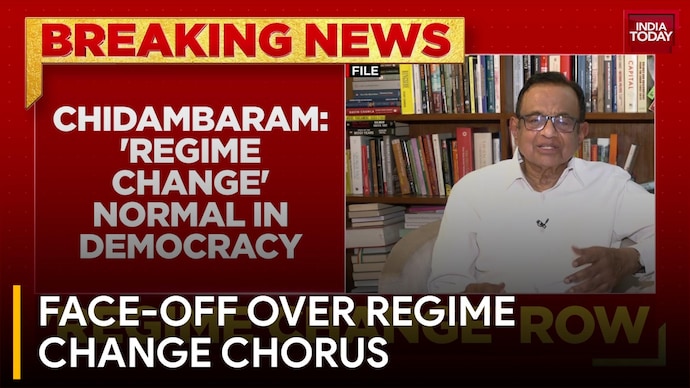
A major political row has erupted between the Congress and the Bharatiya Janata Party over calls for regime change. Senior Congress leader P. Chidambaram defended the term, asserting that regime change is entirely normal in a democracy and explaining that the role of an opposition is to oppose in politics, expose in Parliament, and depose through elections. The Congress maintained that seeking government change through democratic processes and elections aligns fully with democratic principles. In contrast, the ruling BJP, including Union Ministers Piyush Goyal and Rajnath Singh, accused the opposition of using the youth as pawns to destabilise the government, drawing comparisons to violent protests and regime changes witnessed in Bangladesh and Nepal. Demonstrators have also sought the resignation of Chief Election Commissioner Gyanesh Kumar, while opposition leaders like Pawan Khera and P. Chidambaram insisted that the protests remain rooted in legitimate, democratic methods to hold the incumbent regime accountable.
The Bharatiya Janata Party strongly criticised opposition parties over their call for a regime change, accusing them of attempting to mislead the youth and using them as pawns. The remarks follow statements alleging that attempts to trigger unrest similar to recent youth-led regime changes in neighbouring countries like Bangladesh and Nepal have completely failed. Pointing to vibrant celebrations during Navratri, leaders asserted that India's youth energy remains focused on constructive national progress rather than negativity. While opposition figures acknowledged aspirations for a regime change, they maintained that their objective is to achieve it through democratic processes.
A political war of words has broken out between the Congress and the Bharatiya Janata Party over calls for regime change. Union Defence Minister Rajnath Singh slammed the opposition and civil society groups, alleging that the Congress and its allies are attempting to instigate a Bangladesh-like situation in India and use youth protests to spread anarchy. Responding to the charges, Congress leader Pawan Khera acknowledged that the opposition is seeking a change of regime, stressing that in a democracy like India, such transitions occur legitimately through elections. The controversy escalated following remarks made during a press conference by Citizen for Justice and Peace representatives including Prashant Bhushan. The ruling party accused the opposition of using student movements to destabilise institutions, while Congress maintained that challenging and replacing the government through peaceful democratic protests and the ballot box remains the rightful duty of any political opposition.
Ministers of the central government, including Rajnath Singh, Kiren Rijiju, and Piyush Goyal, mounted an attack on the opposition following controversial statements made by activist Neha Bora and senior advocate Prashant Bhushan regarding protests and regime change. The Bharatiya Janata Party targeted Rahul Gandhi and Priyanka Gandhi Vadra after visuals showed them alongside the activists. Union ministers asserted that democracy is not a licence to spread anarchy, accusing elements in the opposition of acting against national interests. Responding to the allegations, senior Congress leader and former Chhattisgarh Deputy Chief Minister TS Singh Deo dismissed accusations of lawlessness. He maintained that the demonstrations were entirely peaceful, dignified, and aimed at defending constitutional institutions. He clarified that any call for regime change refers strictly to constitutional methods through the casting of votes, rejecting comparisons to violent uprisings seen in Bangladesh or Sri Lanka.
Indian equity markets witnessed strong bullish momentum with the Sensex advancing over 1,300 points and the Nifty closing near the 23,000 mark, driven by IT and private banking stocks despite global tech softness. Market analyst Sharad Awasthi shared a positive outlook, assigning high probability to an ongoing recovery and targeting Nifty levels of 29,000 to 30,000 over 12 to 15 months. In major corporate developments, Reliance Industries filed the red herring prospectus for the Rs 30,213 crore Jio Platforms initial public offering, scheduled for subscription between October 21 and 23. Meanwhile, the Supreme Court set aside Yes Bank's AT1 bond write-off, and the central government proposed a phased rollout of Bharat Stage VII vehicle emission norms starting from 2029 through 2032. Additionally, Commerce Minister Piyush Goyal confirmed the finalisation of the first tranche of the India-US trade agreement, while the IMF endorsed India's revised GDP methodology.
Union Minister Piyush Goyal has strongly criticised Congress leader Rahul Gandhi, alleging disrespectful behaviour towards President Droupadi Murmu. The union minister stated that Rahul Gandhi used derogatory language against the President, termed him a blot on Indian democracy, and demanded an apology. Goyal asserted that when the President granted time, Gandhi was duty-bound to provide evidence rather than making unverified claims. This reaction followed Rahul Gandhi's statement after submitting a memorandum to the President, wherein he claimed the President neither denied nor questioned the opposition's allegations of electoral irregularities and instead sought proof of election theft. Government sources within the President's office rejected Gandhi's assertions, clarifying that top officials dismissed the claims. Leaders from the Bharatiya Janata Party have condemned Gandhi's statements, maintaining that constitutional offices should not be drawn into political controversies.
Tata Trusts faces leadership disputes as Vice Chairman Vijay Singh approached the Maharashtra Charity Commissioner regarding governance concerns at the Sir Dorabji Tata Trust, following a complaint by Venu Srinivasan. The move comes amid Tata Sons restructuring and potential succession discussions. Indian equity markets opened lower, with the Nifty falling below the 22,600 mark amid foreign institutional investor selling, while information technology and private bank stocks held gains. Automotive companies reported monthly sales data for September, showing volume expansion. Mahindra and Mahindra recorded a 15 percent rise in total sales to 1.14 lakh units, while Bajaj Auto registered a 5 percent increase in overall sales alongside a 32 percent surge in exports. Geopolitical discussions also gained traction following bilateral interactions between Indian leadership and United States officials over proposed trade talks and energy sanctions.