Vietnamese crab exporter

Topic

Advertisement
TOPIC

PM Kisan

PM Kisan is a Central Sector Scheme with 100 per cent funding from the Government of India. It became operational on 1 December 2018. Income support of Rs 6,000 per year in three equal instalments is being provided to Small and Marginal Farmers (SMFs) who have combined landholding or ownership of up to 2 hectares. The definition of families under this scheme includes a husband, a wife and minor children.
State Government and UT administration identify the farmer families which are eligible for support as per scheme guidelines. The fund is directly transferred to the bank accounts of the beneficiaries. The first instalment for the period is to be provided in the financial year itself. There are various Exclusion Categories for the scheme.

This scheme was announced by Piyush Goyal during the 2019 Interim Union Budget of India. PM Kisan scheme was first implemented by the Government of Telangana, where only a suitable amount was given to farmers who were eligible. The documents required for the PM Kisan scheme includes a Citizenship certificate, landholding papers, an Aadhaar card and your bank account details. The motive behind this scheme is to supplement the financial needs of the Small and Marginal Farmers in achieving various inputs to ensure proper crop health and income.

Follow PM Kisan on

  • ALL
  • STORIES
  • VIDEOS

STORIES

Rs 40k to Rs 4 lakh: How farmers grow food below, generate power above, earn 10x

In India, a small but growing number of farmers are cultivating crops on their land while selling electricity generated by solar panels above. The technological innovation, called agrivoltaics, is turning the same piece of land into two sources of income, with a Rajasthan farmer earning 10 times more than earlier. Here's how Indian farmers are making this possible.

Pilot Bhabhi now: PM reveals how drones changed Jharkhand woman's life

A woman from Jharkhand has earned the nickname "Pilot Bhabhi" after learning to operate agricultural drones, PM Modi revealed at the India Today Group's Bharat Agriculture Conference. He said the Namo Drone Didi initiative was not only modernising farming but also transforming the social standing of rural women, who are the scheme's beneficiaries.

Killing Mother Earth: PM declares war on farm chemicals, bats for natural farming

Speaking at the India Today Group's Bharat Agriculture Conference, PM Narendra Modi made a strong pitch for natural farming over organic farming, warning that excessive chemical use was destroying Mother Earth. His appeal came even as he highlighted that the Centre had spent Rs 16 lakh crore over the past 12 years to keep fertilisers affordable for farmers.

Suvendu Adhikari announces power subsidy, free crop insurance for potato farmers

West Bengal Chief Minister Suvendu Adhikari announced a Rs 2-per-unit power subsidy, free crop insurance and transport subsidies for farmers, along with price support for potato growers. He also unveiled plans for solar-powered cold storages, model markets and flood relief, while promising financial assistance for educated unemployed youth.

Load More

VIDEOS

'Power Is An Intoxicant': PM Modi's Swipe At Opposition At Kisan Conclave

Prime Minister Narendra Modi took an apparent swipe at the Opposition during his address at the India Today Bharat Kisan Conclave, without naming any political leader or party. Referring to the Constitution and democracy, he said some people behave as though they carry both in their pockets. Modi also criticised those who, despite being out of power, continue to act as if they are intoxicated with authority. His remarks appeared to target Opposition leaders and their approach to power, though he did not identify anyone directly.

From AI to solar power: PM Modi outlines vision to transform Indian agriculture

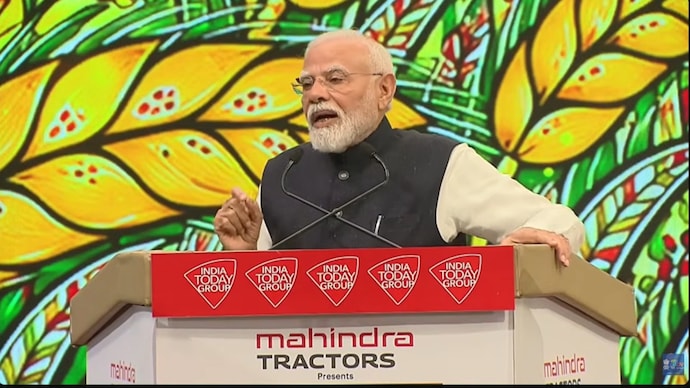
Prime Minister Narendra Modi on Thursday said that building a Viksit Bharat would be impossible without modernising agriculture and empowering farmers. Addressing the India Today Group’s Kisan Tak Bharat Agriculture Conference, he highlighted India's agricultural achievements, including over 4 per cent growth in the sector during the past decade and annual agricultural exports worth more than Rs 4 lakh crore. The PM also cited India's leading position in the production of milk, pulses, rice and jute, and stressed the need to diversify beyond traditional crops to increase farmers' incomes. Emphasising technology-driven farming, Modi called for greater adoption of artificial intelligence, drones, solar-powered equipment and modern agricultural machinery to improve productivity and reduce costs. He highlighted initiatives such as Namo Drone Didis, soil-testing laboratories, Krishi Vigyan Kendras and Farmer Producer Organisations, saying farmers must be transformed into agripreneurs through value addition, food processing and better access to export markets. He also said the government was absorbing the impact of international price shocks to shield farmers from rising fertiliser and fuel costs. The Prime Minister also urged farmers to reduce chemical use and embrace natural farming, warning that excessive use of chemicals was damaging the soil and threatening the environment. Stressing the need to protect Mother Earth, he said natural farming could help make agriculture sustainable and profitable. He called for a future in which farmers are prosperous, villages thrive and farming becomes a modern, viable economic activity.

From importer to exporter: Shivraj Chouhan says foodgrain output up 50% in decade

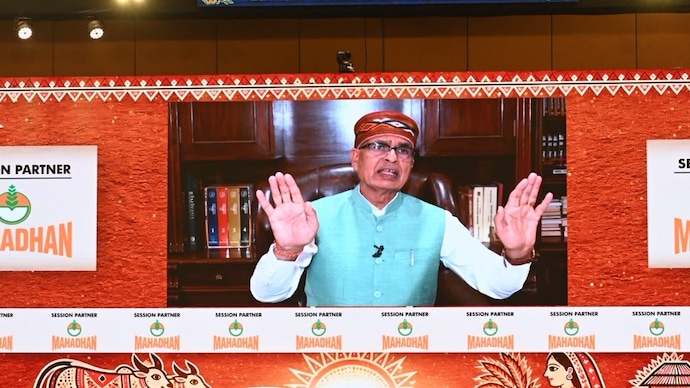
Union Agriculture Minister Shivraj Singh Chouhan on Wednesday said India's agricultural growth rate had risen to 4.5 per cent since 2014-15, compared with around 3 per cent during the Green Revolution, while agricultural production had increased nearly 50 per cent over the past decade. Speaking virtually at the Bharat Agriculture Conference 2026 in New Delhi, he said India had become self-sufficient in foodgrains and a leading global producer of several crops, though gaps in pulses and oilseeds remained. He said the government aimed to increase foodgrain production from the current 376 million tonnes to 550 million tonnes by 2047. Chouhan said the government's priorities included increasing farmers' incomes, reducing cultivation costs and ensuring remunerative prices. He acknowledged that farmers were often affected by adverse weather, market fluctuations and the gap between farmgate and retail prices. Highlighting government support, he cited Rs 2.09 lakh crore in crop insurance payouts, Rs 4.66 lakh crore distributed under PM-Kisan and increased fertiliser subsidies. He also said the government was working to balance farmers' interests with consumers' need for affordable food through its import-export policies. Outlining the push towards technology-driven agriculture, Chouhan said more than 11 crore farmers had received digital Farmer IDs to facilitate access to loans, insurance and government benefits. The government was also promoting climate-resilient seeds, drones, soil testing and digital platforms providing farmers with weather, crop disease and market information. He said agricultural research would increasingly focus on farmers' needs, while horticulture clusters and free trade agreements would help expand exports.

PM Modi: '50 Crore People Defeated Severe Poverty in 10-12 Years'

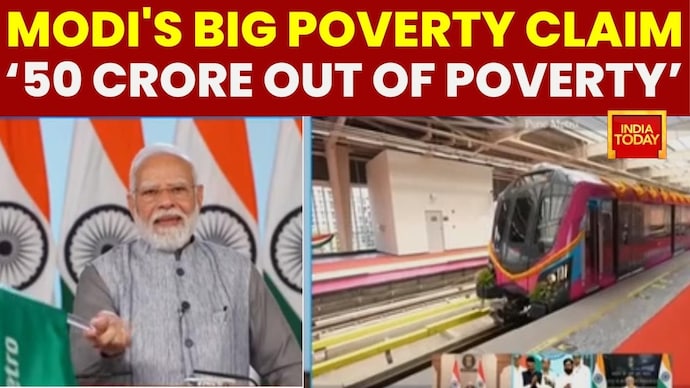
Prime Minister Narendra Modi addressed an event in Maharashtra, highlighting India's economic growth and poverty alleviation milestones. Citing a recent World Bank report, the Prime Minister stated that 50 crore people in India have overcome severe poverty in the last 10 to 12 years. He noted that India has emerged as both the fastest growing economy and the fastest poverty reducer in the world, with government funds reaching beneficiaries directly instead of being lost to leakages. Reflecting on completing 25 years as head of government, he emphasized the concept of 'power to empower' that began with schemes in Gujarat and continues to foster a rising neo-middle class. Addressing drought and adverse weather conditions faced by farmers in Maharashtra, he assured that the National Democratic Alliance government stands firmly with the farming community through advance financial support and welfare funds, urging citizens to remember rural families during the festive season.

PM Launches Banaskantha Projects, Slams Opposition Over 'Fake Narrative'

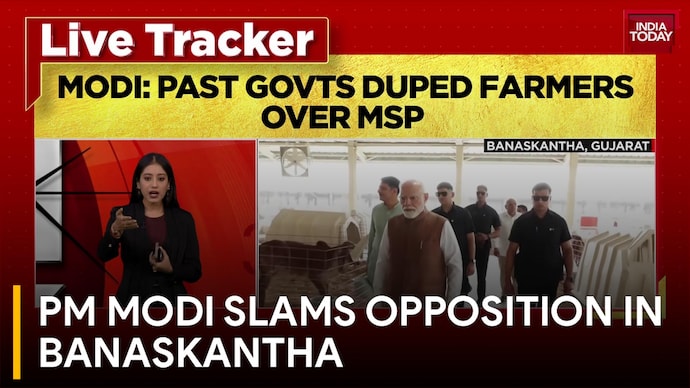
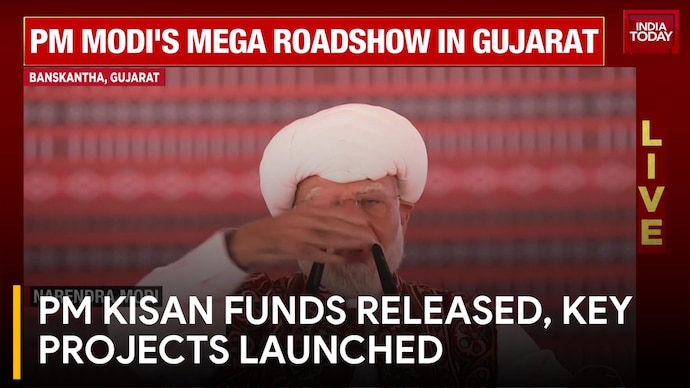
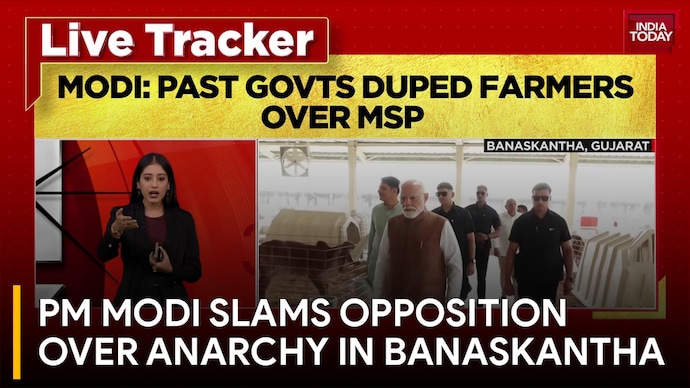
During his visit to Banaskantha, Gujarat, the Prime Minister launched development projects worth around 14,400 crore rupees and is scheduled to announce 19,000 crore rupees under the PM-Kisan scheme. Addressing the public, he made scathing remarks against opposition parties, accusing them of spreading fake narratives and attempting to cause anarchy amid calls demanding his resignation. The Prime Minister highlighted his government's handling of global supply disruptions, specifically addressing issues related to gas and urea availability for women and farmers, and asserted his commitment to serving the public till his last breath.

PM Kisan Instalment Released; Dairy Projects and Metro Expansion Unveiled in Gujarat

During a public address in Banaskantha, Gujarat, Prime Minister Narendra Modi announced the disbursement of the latest instalment of the PM Kisan Samman Nidhi, transferring over 18,000 crore rupees to around 10 crore farmers across India. He highlighted that government initiatives such as subsidized fertilizers, MSP procurement, PM Fasal Bima Yojana, and the PM KUSUM solar scheme have cumulatively benefited farmers with over 50 lakh crore rupees in savings and transfers. The Prime Minister underscored technological advancements in agriculture and animal husbandry, citing the distribution of over 26 crore Soil Health Cards, breed conservation via IVF, and nationwide cattle vaccination drives. He also dedicated and laid the foundation stones for key infrastructure projects, including two new train services, the Ahmedabad Metro extension to GIFT City and the airport, highway widening, cluster development programmes for horticulture, and modern Anganwadis across Gujarat, while inviting citizens to join the Rashtriya Ekta Diwas celebrations.

PM Modi Slams Opposition in Banaskantha Over Anarchy, Launches Rs 14,400-Crore Projects

Prime Minister Narendra Modi launched development projects worth approximately 14,400 crore rupees in Banaskantha, Gujarat, reflecting on his 25-year political journey from the state. In his address, he launched a sharp attack against the opposition, accusing them of spreading fake narratives about shortages of gas and urea amid global supply disruptions caused by the US-Iran conflict. He stated that these narratives were designed to gain control and spread anarchy across the country. Modi affirmed that the government ensured uninterrupted urea supplies at existing rates and resolved to serve the public until his last breath, with plans to announce an additional 19,000 crore rupees under the PM-Kisan scheme.

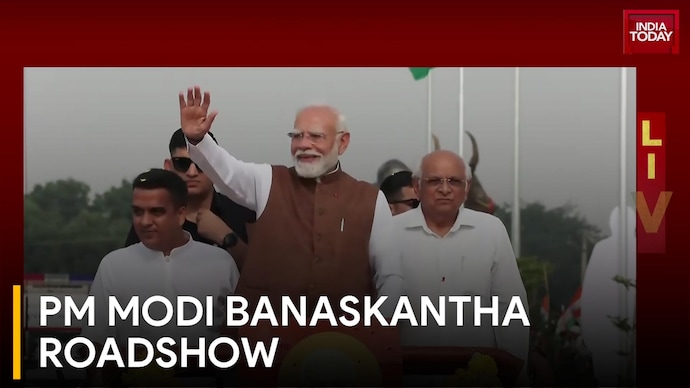
PM Gujarat Visit: Mega Roadshow in Banaskantha; Launches Rs 14,000 Crore Projects

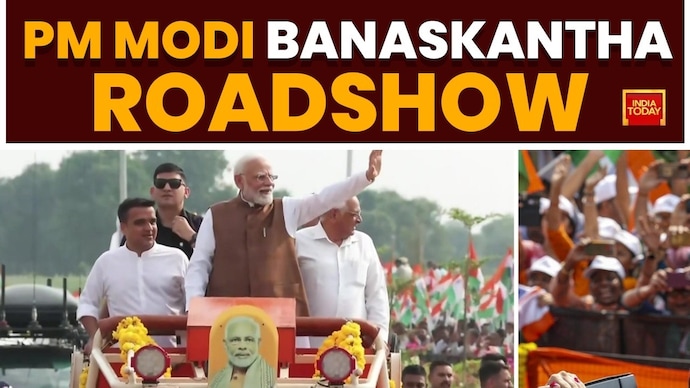
Prime Minister Narendra Modi commenced a two-day visit to Gujarat, beginning with a mega roadshow in Banaskantha alongside the state Chief Minister and Deputy Chief Minister. During the visit, the Prime Minister toured the Embryo Transfer Technology In Vitro Fertilisation Laboratory and the Bharat Bovine Breeding and Research Centre cattle farm, interacting with scientists, doctors, and researchers. The tour highlights development works worth over 14,400 crore rupees, including two Banas Dairy Bio-CNG plants at Tharad and Radhanpur, an Ahmedabad Metro Phase 2 extension towards the airport and GIFT City, and multiple Anganwadi and agricultural infrastructure projects. He will also release the 24th PM-KISAN instalment, amounting to roughly 19,000 crore rupees to assist farmers nationwide, and flag off railway services including the Sabarmati-Varanasi Express and the Mehsana-Becharaji-Sabarmati MEMU train.

Mega Roadshow In Gujarat, Rs 14,000-Crore Projects Launch And Ekta Diwas Visit

A roadshow took place in Banaskantha during a two-day official visit to Gujarat, where attendees gathered along the route holding the national flag. Over the course of the visit, national development projects valued at over 14,400 crore rupees are scheduled for inauguration and foundation-stone laying. These initiatives include the launch of an embryo transfer technology laboratory, a bovine breeding and research centre in Bhildi, and metro rail expansion phases for the airport and GIFT City extensions. Furthermore, the twenty-fourth instalment of the PM Kisan scheme, amounting to approximately 19,000 crore rupees, is slated for release. The scheduled itinerary also includes travel to Ekta Nagar to participate in Rashtriya Ekta Diwas celebrations at the Statue of Unity and inaugurate Bharat Parv. Gatherings along the event route displayed placards highlighting rural welfare schemes, pucca housing, and economic initiatives, addressing opposition statements regarding governance and leadership.

PM Modi Gujarat Visit: Mega Banaskantha Roadshow, Development Projects & Ekta Nagar Event

Prime Minister Narendra Modi commenced a two-day visit to Gujarat from October 30 to 31, holding a roadshow in Banaskantha. During the visit, the Prime Minister is scheduled to inaugurate and lay the foundation stones for development projects worth over 14,000 crore rupees in the region. He will also release the 24th installment of the PM-KISAN scheme, amounting to approximately 19,000 crore rupees, and dedicate the Bharat Gauvin Breeding and Research Centre and an IVF laboratory at Bhildi. Additionally, foundation stones will be laid for the Ahmedabad Metro Phase 2A airport extension and Phase 2B GIFT City extension. On the following day, the Prime Minister is scheduled to travel to Ekta Nagar to participate in Rashtriya Ekta Diwas celebrations marking Sardar Vallabhbhai Patel's 151st birth anniversary, pay floral tributes at the Statue of Unity, and inaugurate Bharat Parv 2026 alongside witnessing the Ekta Prakash Parv.

Maharashtra Facing Drought In 75-80% Area, Seeking Big Relief: Dy CM Eknath Shinde

Speaking at the India Today Mumbai Conclave, Maharashtra Deputy Chief Minister Eknath Shinde addressed the agrarian crisis and severe drought across the state. Shinde stated that 75 to 80 percent of the area is grappling with drought and confirmed raising the requirement for major assistance with Prime Minister Narendra Modi in New Delhi. Emphasising the administration's support for the farming community, Shinde noted that "even one suicide is extremely unfortunate" and underlined that the state government expanded disaster relief criteria under NDMF from two hectares to three hectares while adding supplementary financial assistance of 6,000 rupees to the PM-Kisan scheme during his tenure. Responding to opposition criticism and allegations regarding financial constraints, Shinde urged against politicising the hardships of farmers facing natural calamities and affirmed that the Mahayuti government remains committed to supporting all sectors, including farmers, youth, women, and entrepreneurs across Maharashtra.

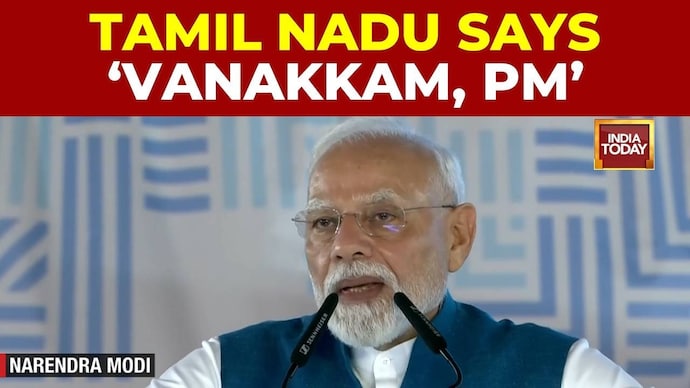
PM Narendra Modi: 'This Is The Historic Day For Tamil Nadu'

Prime Minister Narendra Modi addressed a public gathering in Tamil Nadu, inaugurating and laying the foundation stone for development initiatives worth thirteen thousand crore rupees. Emphasising infrastructure, public health, and manufacturing, he noted that projects spanning metro rail networks, road connectivity, and port modernisation will accelerate industrial growth and generate youth employment across the state. Pointing out that India has become the world's second-largest mobile manufacturer and significantly increased its defence and electronics exports, he reaffirmed the Union Government's commitment to cooperative federalism and empowering state economies. Reflecting on his twenty-five continuous years as a head of government since first taking oath as Chief Minister in October 2001, he underscored that strong states form the foundation of a developed nation. Concluding his address, Narendra Modi stated, 'We are inaugurating many completed projects and laying foundations for new ones' to foster progress from Tamil Nadu to India.

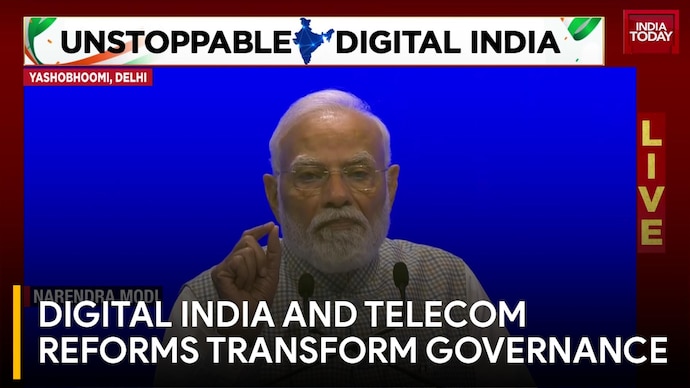
India Mobile Congress Opens; Focus on Digital Expansion, Cyber Security and Deepfake Threats

Addressing the 10th edition of the India Mobile Congress at Yashobhoomi in New Delhi, the speaker welcomed global telecom operators, industry leaders, and startups, noting that India was chosen to host the GSMA board meeting. Tributes were also paid to actor Nana Patekar following news of his demise. Tracing India's digital trajectory, the address highlighted that 5G connectivity now spans every district with over 5.5 lakh base stations, increasing mobile internet speeds tenfold compared to 2022. The speech underscored how digital public delivery has democratised technology and eliminated leakages, citing that over 50 lakh crore rupees were disbursed directly to beneficiaries, preventing an estimated 5 lakh crore rupees from slipping into unauthorized hands. Emphasising the theme 'Scale without boundaries', the address urged telecom operators and tech firms to establish a global security mechanism to counter cybercrime, cross-border fraud, and deepfakes, alongside scaling domestic semiconductor manufacturing and intellectual property creation.

Digital India Revolution, Ease of Living, Mobile Governance and Direct Benefit Transfers

A speech outlines how telecom infrastructure and mobile connectivity have emerged as essential instruments of good governance and citizen empowerment under the Digital India initiative. Over the past decade, efforts focused on democratising technology by expanding digital infrastructure, encouraging domestic manufacturing of mobile hardware, and lowering data costs to eliminate the digital divide. Mobile connectivity ensured the continuity of education, healthcare, banking, and public services during the pandemic, with platforms such as DIKSHA recording over 500 crore learning sessions. The implementation of Direct Benefit Transfer has channeled approximately fifty lakh crore rupees directly into beneficiary accounts, preventing leakage of around five lakh crore rupees. Over four lakh crore rupees have also reached farmers directly under PM Kisan Samman Nidhi. These measures have curbed systemic leakages, eliminated middlemen, and reduced costs and travel for citizens, delivering substantial governance gains.

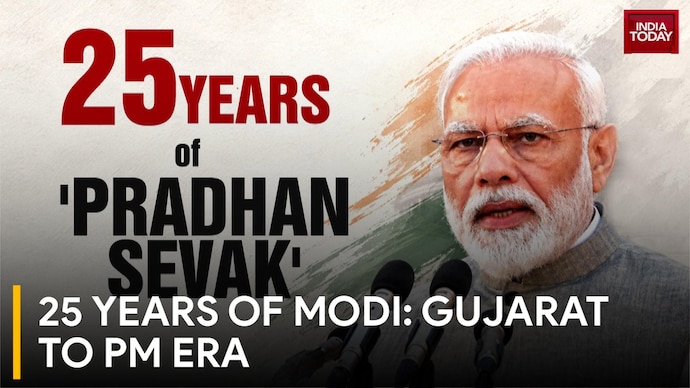
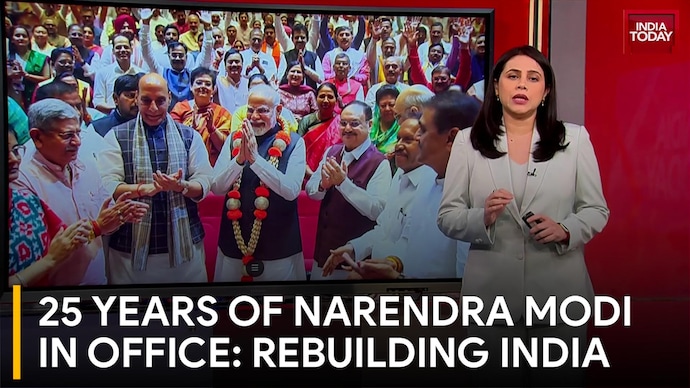
25 Years of Modi: From Gujarat Model to Prime Minister, Economy & Security

A special retrospective reviews Narendra Modi's 25 uninterrupted years as an elected head of government, marking the milestone since he first took oath as Chief Minister of Gujarat on 7 October 2001. After rebuilding the state following the Bhuj earthquake, Modi established a governance blueprint focused on infrastructure, administrative efficiency, and investment through initiatives like Krishi Mahotsav and the Vibrant Gujarat Global Investors Summit. Transitioning to the national stage in May 2014, his twelve-year tenure as Prime Minister expanded these frameworks nationwide through digital public infrastructure, direct benefit transfers, highway expansion, and Make in India. The report details significant economic growth, rising domestic electronics and defence production, and last-mile welfare delivery via schemes such as PM-KISAN, Ayushman Bharat, and Jyoti Gram Yojana. Furthermore, it outlines a transformed national security paradigm featuring targeted counter-insurgency, the abrogation of Article 370, border infrastructure modernization, and the replacement of colonial-era criminal laws with contemporary legal codes.

25 Years of Modi in Governance: Gujarat Model, Economic Reforms and National Security Transformation

A special broadcast reviews 25 years of Narendra Modi in public office as an elected head of government, spanning his tenure as Gujarat Chief Minister from October 2001 and his leadership as Prime Minister since 2014. The report traces the transition from rebuilding earthquake-hit Gujarat and launching the Vibrant Gujarat initiative to driving nationwide economic, digital, and welfare programmes, including UPI, Direct Benefit Transfers, Make in India, and PM Kisan. Beneficiaries across Gujarat recount how welfare schemes such as Ayushman Bharat, Jyoti Gram Yojana, and Anganwadi initiatives transformed rural livelihoods, healthcare access, and women's empowerment. Furthermore, the report examines the overhaul of India's national security architecture, highlighted by the abrogation of Article 370 in Jammu and Kashmir, counterinsurgency accords in the North East, the near-eradication of Naxalism, and the replacement of colonial-era criminal laws with modern legal frameworks.

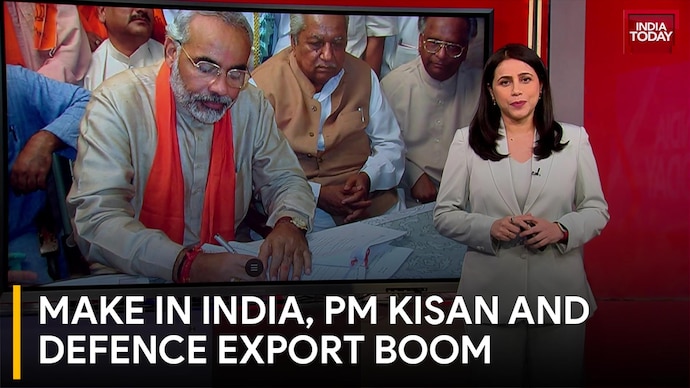
PM Kisan Scheme, Defence Production Growth and Make In India Push

A review of Narendra Modi's 25 years in governance outlines the economic shift from state to national policies. Initiatives like Gujarat's Krishi Mahotsav expanded into the Pradhan Mantri Kisan Samman Nidhi, providing 6,000 rupees annually to over 12 crore farmers. The Vibrant Gujarat model informed Make in India, boosting electronics manufacturing from two lakh crore rupees to over 12 lakh crore rupees. In defence manufacturing, production climbed from 46,429 crore rupees in 2014-15 to 127,434 crore rupees in 2023-24, while defence exports reached 23,622 crore rupees in 2024-25 compared to 686 crore rupees in 2014. Additionally, India improved its rank on the Ease of Doing Business index from 142nd in 2015 to 63rd in 2025.

PM Marks 25 Years In Office, Offers Prayers In Delhi As BJP Plans Mega Events

Prime Minister Narendra Modi marked the completion of 25 continuous years in executive public office, tracing a tenure that began on 7 October 2001 when he first took oath as the Chief Minister of Gujarat, followed by three successive terms as Prime Minister of India from 2014. The day commenced with prayers offered at the Shree Vinayak Temple in Sarojini Nagar, New Delhi. To mark the milestone, the Union Cabinet adopted a formal resolution documenting policy initiatives and governance decisions implemented over the period, citing programmes such as the Swachh Bharat Mission, Make in India, Atmanirbhar Bharat, the Unified Payments Interface, the Goods and Services Tax, the abrogation of Article 370, Jan Dhan Yojana, PM Awas Yojana, and Ayushman Bharat. Nationwide events organized by the Bharatiya Janata Party included a gathering at the Indira Gandhi Stadium in New Delhi attended by Union ministers and party officials, as well as public programmes connecting Vadnagar and Varanasi.

PM Modi Marks 25 Years In Public Office, Offers Prayers In Delhi As Key Schemes Get Highlighted

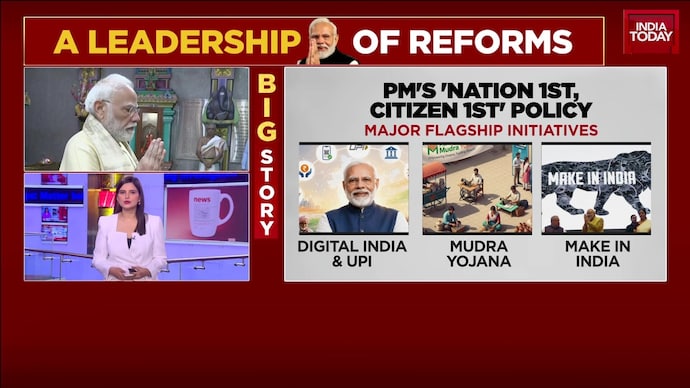
Prime Minister Narendra Modi has completed 25 continuous years in executive public office, marking a milestone in Indian political history. The journey began on 7 October 2001, when he took oath as the Chief Minister of Gujarat shortly after the Bhuj earthquake. Modi led Gujarat for over a decade before assuming office as Prime Minister of India in 2014, securing three consecutive terms at the Centre. To mark the milestone, Prime Minister Modi offered prayers in Delhi. Over these 25 years, key flagship initiatives under his nation first, citizen first policy have included the Jan Dhan Yojana, Swachh Bharat Mission, Ujjwala Yojana, PM Awas Yojana, Ayushman Bharat, Jal Jeevan Mission, Digital India, and PM Kisan Yojana. His governance journey from Gandhinagar to New Delhi highlighted delivery-driven administration, infrastructure development, and electoral consolidation across states.

Welfare Schemes, National Security Push And Economic Growth Highlight 25-Year Governance Milestone

A comprehensive overview of governance achievements and nationwide outreach initiatives was presented during a media address. Key milestones highlighted include the lifting of millions out of multi-dimensional poverty, direct benefit transfers via bank accounts, tap water connections, free ration distribution, sanitation coverage, and housing initiatives. Significant progress in economic transformation was outlined, focusing on gross domestic product growth, digital public infrastructure, tax reforms, banking sector turnaround, and infrastructure expansion across railways, roadways, and aviation. Major policy decisions concerning national security, legislative representation for women, internal security improvements, and administrative reforms across several states were detailed. A series of community service programmes, outreach drives, innovation challenges, and governance dialogues spanning villages to representative assemblies were announced to connect with beneficiaries and promote citizen participation across the country.