Vietnamese crab exporter

Topic

Advertisement
TOPIC

Rajya Sabha

The upper house of the Indian Parliament, known as the Rajya Sabha or Council of States, is crucial in forming the nation's legislative framework.  The Rajya Sabha is made up of members chosen by the legislative assemblies of states and union territories, in contrast to the Lok Sabha, which is chosen directly by the electorate.  Members serve staggered six-year terms, with a maximum total strength of 250.  To maintain continuity, a third of the body retires every two years.

The ex-officio chairman of the Rajya Sabha is the vice president of India.  By allowing states to participate in the main legislative process, the House reflects the federal nature of the country.  It has the authority to examine, revise, and postpone laws that the Lok Sabha has passed.

The Rajya Sabha has discussed and approved important proposals in recent years pertaining to women's reservation, labor regulations, education reforms, and data protection.

Even though it is unable to propose money legislation, the Rajya Sabha is an important part of the legislative process, particularly when regional issues require national attention.  Its sessions gain intellectual depth with the participation of seasoned politicians, legal professionals, and nominated members from a variety of areas.

To boost public engagement and transparency, the House has started live broadcasting proceedings. For information on Rajya Sabha discussions, member biographies, bill summaries, election outcomes, and significant sessions, bookmark this page.

  • ALL
  • STORIES
  • VIDEOS

STORIES

How a Vajpayee-era shift lets Delhi-voter Raghav Chadha represent Punjab in Rajya Sabha

BJP Rajya Sabha MP Raghav Chadha's return to Delhi's voter rolls has raised questions over how he can continue representing Punjab in the Rajya Sabha. The answer lies in an Atal Bihari Vajpayee-era amendment that abolished the state-residency requirement for Upper House candidates. The change was later upheld by the Supreme Court despite concerns that it weakened the Rajya Sabha's federal character.

Load More

VIDEOS

Mamata Backs CPM Call for Joint Strategy, Urges Unity and Delhi Opposition Meet

In a rare political development, Trinamool Congress supremo Mamata Banerjee has backed Communist Party of India (Marxist) General Secretary M.A. Baby's proposal for a joint opposition strategy. Responding promptly to Baby's letter, Banerjee urged opposition forces to set aside differences and unite to protect democracy. The two leaders also held a cordial telephonic conversation, discussing joint action regarding the Election Commission. Banerjee highlighted ongoing talks between Rajya Sabha MPs of both parties and mentioned recent discussions with Congress leader Rahul Gandhi, pitching for an urgent opposition meeting in Delhi to formulate the next plan of action.

ECI Decisions 'All Illegal': Former CEC S. Y. Quraishi Slams Gyanesh Kumar

In an interview, former Chief Election Commissioner S. Y. Quraishi addressed the reported internal rift within the Election Commission of India involving CEC Gyanesh Kumar and fellow election commissioners. Quraishi stated that unilateral decision-making by a single individual within the multi-member body renders decisions invalid, remarking, "Any, all decisions taken by a single man, whosoever he may be, he may be the chairman of the Election Commission, but they're all illegal." He discussed opposition demands to nullify recent elections, noting that extensive voter deletions have compromised the electoral process. Quraishi observed that dissenting election commissioners face distinct operational pressures, citing historical instances where dissenting members were removed. Addressing public agitation and street ultimatums, he described the diminishing public trust in the commission as unprecedented. He also called for a technical and legal audit of all decisions taken by the Election Commission over the past two years.

Row Over CEC Removal: INDIA Bloc Mulls Impeachment, BJP Cites Process

Political tensions have escalated over demands for the removal of the Chief Election Commissioner, prompting protests from the streets to Parliament. The Congress party launched street agitations across states following a press conference by Rahul Gandhi, while the INDIA bloc is considering collective action, including a potential impeachment motion and legal challenges. However, an impeachment motion requires a two-thirds majority of members present and voting in both Houses of Parliament, representing a steep numerical hurdle for the opposition. Previous removal attempts encountered significant procedural obstacles and pending motions. Meanwhile, the Bharatiya Janata Party has responded with multiple press conferences, defending the integrity of democratic processes and noting that the Election Commission clarified all proper protocols were strictly observed. As the government remains watchful of emerging political developments, the opposition is assessing whether to escalate protests or pursue formal parliamentary and legal routes.

Voter Roll Row: Opposition Protests, Court Plea & Fresh CEC Impeachment Push

A major political confrontation erupted across multiple states over the Election Commission of India's decisions regarding Special Intensive Revisions and voter rolls. Congress workers staged nationwide protests, burning effigies of Chief Election Commissioner Gyanesh Kumar and demanding his resignation alongside leaders across the opposition spectrum. Defending its processes, the poll panel clarified that its ECI NET platform operates with decentralized, secure access limited to authorized officials. However, the opposition has taken the battle to the judiciary and Parliament. A court petition seeks the invalidation of the SIR decisions, restoration of the original Form Six, and prosecution of the CEC, Deputy Election Commissioner, and IT head. Concurrently, opposition parties are preparing a third impeachment notice against the CEC after previous motions were dismissed or held up by parliamentary hurdles. Discussions also touched upon historical dissents within the commission and the political implications currently playing out between the ruling party and the opposition.

Opposition Protests Grow Against CEC Over Vote Theft Row as BJP Hits Back

A major political row has erupted following allegations of vote theft against Chief Election Commissioner Gyanesh Kumar, Prime Minister Narendra Modi, and Home Minister Amit Shah. Opposition parties, led by the Congress, are staging nationwide demonstrations outside state election offices, while the RJD announced plans to burn effigies of the Chief Election Commissioner across Bihar. Sources indicate the opposition bloc plans to pursue impeachment proceedings against the Chief Election Commissioner in Parliament. Meanwhile, the Bharatiya Janata Party rejected the accusations, asserting that the opposition is unnerved by anti-incumbency and administrative electoral revision exercises. The Election Commission clarified that its internal digital platform is decentralized with restricted access for designated election officials and protected by cybersecurity measures. In Goa, Chief Electoral Officer Sanjay Koyal faced scrutiny over the reported omission of ninety-seven verified voters from the electoral rolls. The broadcast outlined the constitutional procedure required for the removal of a Chief Election Commissioner.

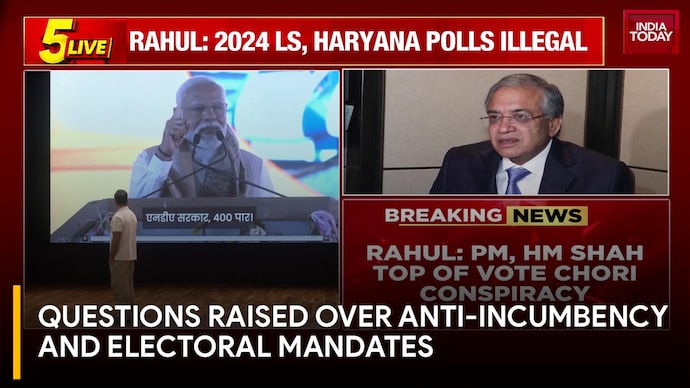
Opposition Leader Questions Anti-Incumbency Trends, Poll Fairness And Election Mandates

A political leader addressed a press briefing raising questions over recurring electoral victories, the phenomenon of anti-incumbency, and the foundational integrity of the voting process in India. Highlighting historical precedents of political shifts witnessed by past prime ministers and various regional governments across states like Tamil Nadu, Uttar Pradesh, and Haryana, the speaker pointed out the unusual absence of anti-incumbency for the ruling dispensation across multiple state and national elections. The address focused on the critical role of voting as the cornerstone of the Constitution, state institutions, and parliamentary legislation. The speaker further claimed that undermining the sanctity of votes compromises the legitimacy of statutory laws, the judiciary, bureaucracy, and public institutions, asserting that electoral manipulation has systematically disrupted established constitutional checks and balances.

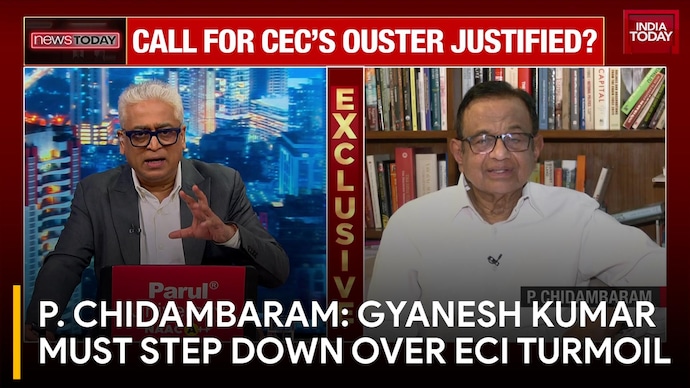
P. Chidambaram: 'He Should Step Down, And Then An Inquiry Can Be Ordered'

In an interview with India Today, senior Congress leader and Rajya Sabha MP P. Chidambaram demanded the immediate resignation of Chief Election Commissioner Gyanesh Kumar following investigative reports alleging internal dissent within the Election Commission of India. Emphasising accountability in constitutional bodies, Chidambaram asserted, "He should step down, and then an inquiry can be ordered." He argued that the Commission is a multi-member body where the majority view must prevail, warning that overriding fellow commissioners is unconstitutional and ultra vires. Chidambaram highlighted widespread discrepancies and large-scale deletions under the Special Intensive Revision (SIR) process, asserting, "the SIR process must be immediately suspended, and after an inquiry, it must be reversed." Calling for complete transparency, he urged the government to release internal files and deliberations to the public and proposed that a parliamentary committee review recent decisions of the poll body. He maintained that fair and free general elections require an impartial Election Commission.

INDIA Bloc Readies Impeachment Motion Against CEC Gyanesh Kumar, Notice Expected Next Week

The opposition INDIA bloc is preparing to move an impeachment motion against Chief Election Commissioner Gyanesh Kumar in both the Lok Sabha and Rajya Sabha. A draft is currently being circulated among Members of Parliament to collect the requisite signatures, requiring support from 100 Lok Sabha MPs and 50 Rajya Sabha MPs. Sources indicate that Parliament does not need to be in session to submit the notice, which is likely to be filed next week. Meanwhile, Congress leader Rahul Gandhi is scheduled to address a press conference at Indira Bhawan alongside senior party leaders to present findings concerning elections conducted in Maharashtra and Haryana.

Kapil Sibal: 'This is the biggest scam that's happened in this country'

In an interview with Rajdeep Sardesai, Rajya Sabha MP and senior Supreme Court advocate Kapil Sibal leveled serious allegations against Chief Election Commissioner Gyanesh Kumar and the functioning of the Election Commission of India. Kapil Sibal alleged that the Election Commission has bypassed fellow election commissioners to centralize control over voter rolls, stating, 'This is scandal of the highest order.' He asserted that the statutory authority of Electoral Registration Officers was unlawfully usurped during elections in West Bengal, leading to massive wrongful voter deletions. Sibal argued that instructions were being issued from higher authorities to manipulate electoral outcomes selectively in favor of the ruling party. Calling the centralized changes in Form Six and voter deletion procedures extraordinary and egregious, Sibal termed the entire electoral roll controversy as 'the biggest scam that's happened in this country' since elections began, pledging to produce investigative evidence.

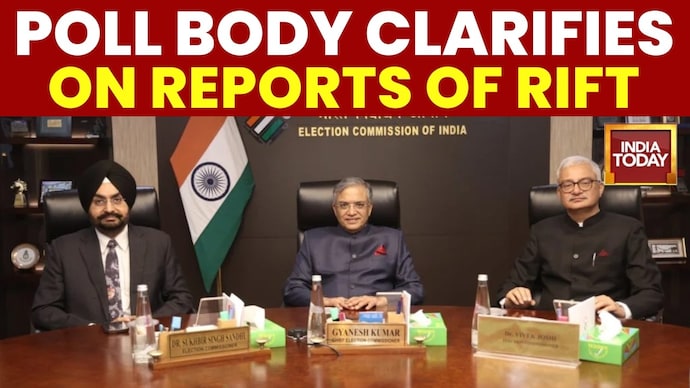
Election Commission Denies Internal Rift Over SIR; Opposition Demands CEC Impeachment

The Election Commission of India has issued a clarification denying reports of internal dissent and rifts regarding the Special Summary Revision (SIR) exercise. The poll body stated that internal discussions and raising observations among commissioners are routine administrative procedures, maintaining that recent orders were signed unanimously without any formal dissent recorded in writing. However, opposition leaders have launched a sharp offensive against Chief Election Commissioner Gyanesh Kumar. Opposition parties allege that Election Commissioners Vivek Joshi and Sukhbir Singh Sandhu objected to arbitrary decision-making and centralisation of voter addition and deletion systems multiple times. Senior advocate and former Union Minister Kapil Sibal claimed the centralisation bypassed Electoral Registration Officers (EROs) and violated statutory election procedures. Backing past objections raised by leaders like Abhishek Banerjee, the opposition has renewed demands for an impeachment motion against the Chief Election Commissioner.

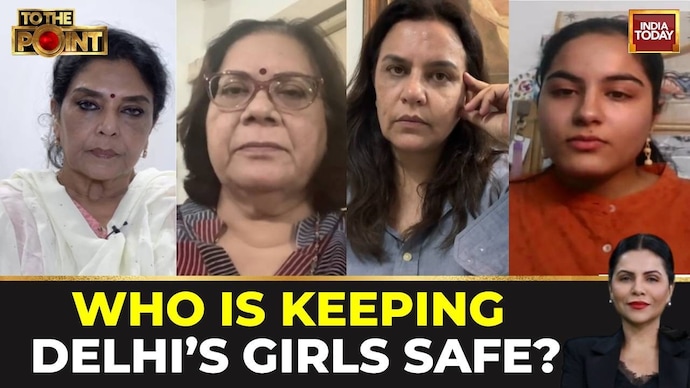
Delhi Rape Shock: 'National Capital Has Been The Capital Of Rape For Many Years'

A debate on women's safety in the national capital focuses on the alarming rise of sexual assault cases in Delhi, including the gang rape of a seventeen-year-old girl in the back lane of Lady Shri Ram College. Congress MP and former Union Minister Renuka Chowdhury, former NCW Chairperson Lalitha Kumaramangalam, women's rights activist Yogita Bhayana, and LSR student union president Anusha Garg discuss systemic administrative and policing failures. Renuka Chowdhury questioned the inaction over persistent crimes, stating, 'the national capital has been the national capital of rape for many years now' and asking 'why are we still in this situation where girls are being raped, there are predators all around, we are being hunted, and we still keep talking about it?' Panelists called for strict accountability, urgent parliamentary intervention, and robust reforms to ensure public safety for women.

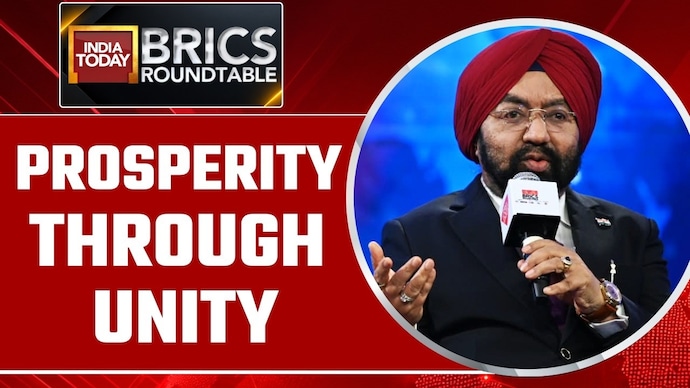
BRICS Must Unify to Tackle Supply Crises: MP Vikramjit Singh Sahney

In an exclusive conversation, Rajya Sabha Member of Parliament and BRICS Business Council member Dr. Vikramjit Singh Sahney outlines the strategic relevance of the BRICS grouping amid evolving geopolitical and economic dynamics. Sahney emphasizes that the 11-member bloc represents nearly half of the global population and serves as a vital platform for South-South cooperation. Highlighting severe global supply chain disruptions caused by conflicts in West Asia and the Red Sea, he discusses the soaring freight and fertilizer costs impacting economies worldwide. Sahney advocates for strengthening intra-BRICS trade by harmonizing standards, eliminating non-tariff barriers, utilizing local currency settlements to ease foreign exchange pressures, and promoting skill mobility for youth across member nations. He also underlines the potential of artificial intelligence in advancing agriculture, healthcare, and education across emerging markets.

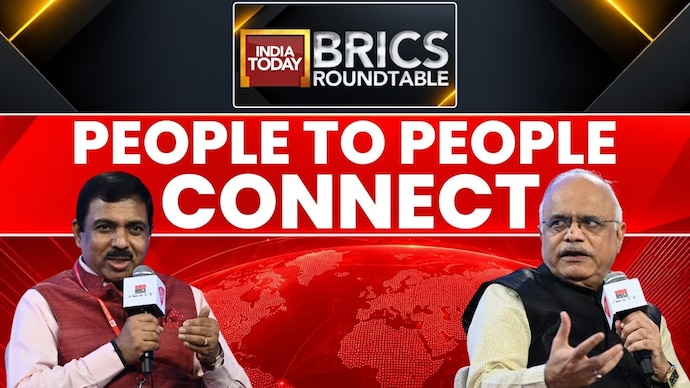
BRICS Pushes Multipolar World Order, Rejects Currency Hegemony and Promotes People-to-People Ties

A special panel discussion at the Aaj Tak India Today Global conclave examined the evolving role of the expanding 11-member BRICS bloc amid global geopolitical volatility. Former Rajya Sabha MP Vinay Sahasrabuddhe and seasoned diplomat Muktesh Pardeshi highlighted the rejection of hegemonic global structures and monopolistic currency control, pointing to bilateral trades conducted in rupees and rubles as evidence of economic democratisation. The session focused on the significance of people-to-people connectivity, cultural diplomacy, and digital networks across member nations representing nearly half of the global population. The speakers discussed the retrieval of stolen cultural artefacts, creative economies, and cartographic democratisation. Addressing regional conflicts in West Asia and Eastern Europe, the panel underscored India's diplomatic capacity to navigate complex global equations through dialogue, shared heritage, and consensus-building.

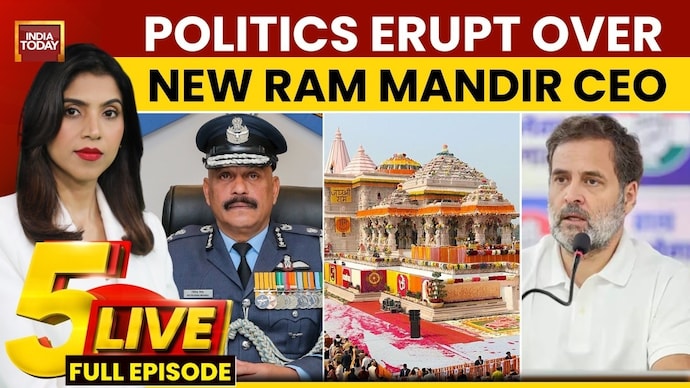
Ram Mandir CEO Row, Showdown Over 7.8% GDP Data And Punjab Voter List Clash

The Ram Mandir Trust has appointed retired Air Marshal Jitender Mishra as its first Chief Executive Officer, sparking a sharp political clash. The Congress and its allies questioned the decision, linking it to the Chanda chori controversy and Operation Sindoor, while the BJP defended the decorated veteran. Separately, a political showdown erupted over India's latest GDP growth figures. While Prime Minister Narendra Modi hailed the 7.8% quarterly expansion amid global turbulence, the Congress challenged the revised methodology and data credibility. Union Minister Piyush Goyal and Ministry of Statistics and Programme Implementation Secretary Saurabh Garg rejected claims of data manipulation, defending the robust collection mechanisms and transparency. Meanwhile, in Punjab, a row broke out after Rajya Sabha MP Raghav Chadha's name was removed from the draft electoral roll under the Election Commission's special intensive revision exercise. Chadha alleged political vendetta by the state government, while the Aam Aadmi Party dismissed the charge, claiming he had shifted his residence to Delhi.

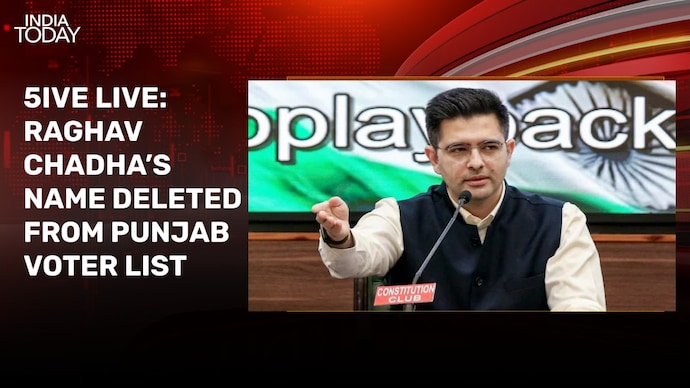
Voter List Row in Punjab as Raghav Chadha's Name Deleted; AAP & BJP Spar Over SIR Revision

A political storm has erupted in Punjab ahead of the assembly elections after Rajya Sabha MP Raghav Chadha's name was removed from the state's draft voter list under the Election Commission's Special Intensive Revision exercise, marked as permanently shifted. The deletion is not final, and claims can be filed through Form 6. Chadha alleged political vendetta by the Aam Aadmi Party government, while AAP leader Harpal Cheema rejected the accusations, claiming Chadha resides in Delhi and calling for an investigation. Opposition leaders questioned the removal, alleging political bias in the electoral roll revision.

Raghav Chadha Voter Name Deleted In Punjab SIR Draft, Sparking Political Row Ahead Of Polls

A political controversy has emerged after Rajya Sabha MP Raghav Chadha's name was deleted from the Punjab Special Intensive Revision (SIR) electoral draft list, where he has been marked as permanently shifted. Crying vendetta politics ahead of elections, Chadha alleged revenge politics by the Bhagwant Mann government. Countering the claims, the Aam Aadmi Party stated the SIR exercise is conducted by the Centre and alleged Chadha is attempting a backdated entry to shift to Delhi. With the final list expected on October 12, an appeal window remains open.

RSS Chief Mohan Bhagwat Speaks On Hindu-Muslim Unity In New York; Sparking Praise And Political Debate

Speaking at the Universal Oneness event at Madison Square Garden in New York City during a 17-day world tour marking the centennial of the RSS, RSS Chief Mohan Bhagwat advocated for Hindu-Muslim unity and inclusivity. Bhagwat stated that a true Hindu can never exclude Muslims, even in a Hindu Rashtra, emphasizing that different religions follow varied paths of worship while humanity binds them as one. His statements received praise from sections of the Muslim community, including former Babri Masjid litigant Iqbal Ansari and various Muslim clerics, who called the message commendable. However, the remarks triggered political backlash in India, with Rajya Sabha MP Kapil Sibal asserting that actions must speak louder than words. Additionally, opposition leaders questioned the contrast between Bhagwat's overseas message of pluralism and his positions within India. New York City Mayor Zohran Mamdani expressed disapproval of the event while acknowledging a lack of city jurisdiction to cancel private gatherings, whereas USCIRF Chair Asif Mahmood had earlier called for sanctions against the RSS and the revocation of Bhagwat's US visa.

Dr Ashok Kumar Mittal: 'No Plan To Have A Coalition With Akali Dal'

In an exclusive interview with India Today's Kamaljeet Sandhu in Chandigarh, BJP Rajya Sabha MP and Lovely Professional University (LPU) Chancellor Dr. Ashok Kumar Mittal addressed critical political and social issues facing Punjab. Discussing Prime Minister Narendra Modi's focus on combating the drug menace, Mittal announced that the BJP is planning multiple rallies across Punjab leading up to a mega rally attended by Union Home Minister Amit Shah. Addressing relief efforts for Nepalese students at LPU following a major tragedy in Nepal, Mittal highlighted the university's matching fund initiative and supply assistance. He also urged the Punjab government to resolve ongoing grievances with state employees on strike. Clarifying political speculations, Dr. Ashok Kumar Mittal firmly dismissed reports of an alliance between the BJP and the Shiromani Akali Dal, confirming that the party plans to contest all 117 assembly seats independently.

Special Parliament Session? Delimitation, Women’s Quota Trigger Fresh Political Buzz

Following an interview with the parliamentary affairs minister, speculation has arisen regarding the possibility of a special session of parliament as the monsoon session has not been officially prorogued. The leader of opposition in the upper house has written to the prime minister requesting an all-party meeting to allow opposition parties, state governments, and political stakeholders to examine the delimitation proposal before any legislative action is taken. The discussion highlights that a parliamentary session can be reconvened when not prorogued. Furthermore, details emerged regarding the implementation of women's reservation in parliament, known as the Nari Shakti Vandan Adhinayam. The government clarified that women's reservation is constitutionally tied to the delimitation process, which will be conducted based on the census available after 2026. Consequently, opposition leaders continue to seek clarity on the timeline for delimitation and the potential summoning of a parliamentary session.