The Independent Factor: Did general-caste anger hurt BJP?
A longstanding feature of Rajasthan’s municipal politics, the formidable Independent vote is not an anti-BJP phenomenon triggered by recent caste grievances

The University Grants Commission (UGC) is India’s main regulatory body for higher education, functioning under the Ministry of Education.
It was established in 1956 with the goal of coordinating, establishing, and upholding standards for instruction, testing, and research in all of the nation's institutions. The UGC is crucial in determining how universities operate and how higher education quality is maintained.
The UGC's ability to recognise colleges and universities is one of its main functions. It establishes requirements for courses, faculty credentials, and academic standards and determines which universities are qualified to provide degrees.
Additionally, the UGC provides grants and financial aid to universities, assisting them in enhancing their facilities, research, and quality of instruction. It establishes rules for things like admissions, tests, online learning, and academic reforms.
The UGC has played a significant role in implementing major reforms, such as encouraging greater autonomy for universities, introducing credit-based frameworks, and facilitating online and blended learning opportunities. Its policies have a direct impact on millions of students and educators across central, state, and private universities.
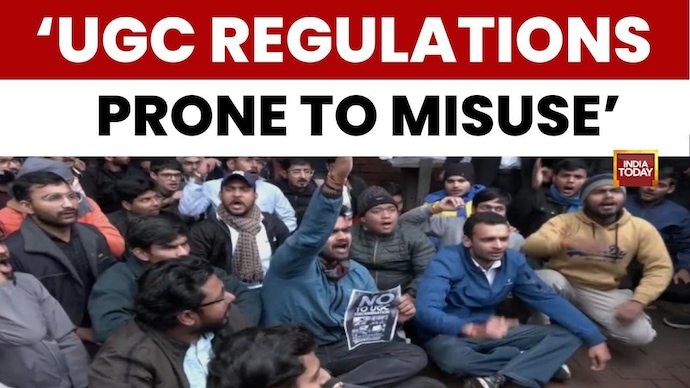
Recently, the UGC has garnered attention due to a controversy surrounding its anti-discrimination regulations. The commission proposed new draft guidelines aimed at preventing discrimination in higher education institutions based on factors such as caste, gender, religion, or disability. Although the intention behind this move was to enhance inclusion and ensure student safety, critics and teachers' organisations expressed concerns regarding ambiguous definitions and the potential for misuse. Furthermore, some universities raised questions about the extent of the UGC's authority to enforce such regulations.
The discussion has ignited broader conversations about campus rights, the autonomy of institutions, and their accountability. In general, the UGC continues to be a significant authority whose decisions heavily impact the higher education system in India.
A Union Minister held a round of talks with representatives of the Reservation Hatao Andolan following demonstrations held at Jantar Mantar. The delegation previously met with the Uttar Pradesh Deputy Chief Minister, who assured them that their demands would be presented to central government leaders. The anti-quota group is demanding systemic changes to the reservation framework, advocating that affirmative action be determined primarily by economic status rather than caste criteria. Additional demands raised by the movement include the establishment of a National Commission for the General Category, the complete rollback of University Grants Commission caste equity rules, the abolition of the creamy layer concept to make reservation need-based, a review of the Scheduled Castes and Scheduled Tribes Prevention of Atrocities Act, and the expansion of benefits under the Economically Weaker Sections category. Although no final breakthrough was reached during the initial discussions, both sides agreed to hold another round of meetings to continue dialogue on the matter.
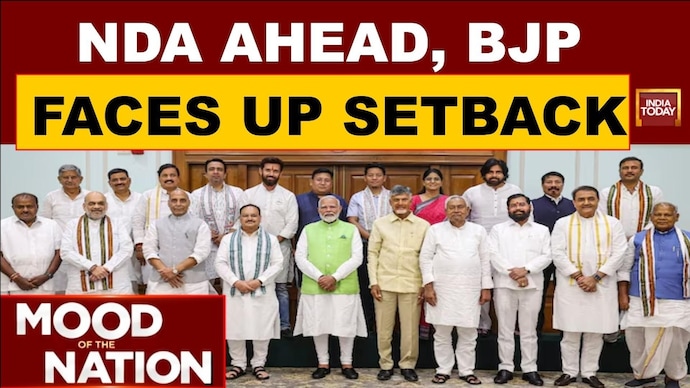
The latest India Today C-Voter Mood of the Nation (MOTN) poll projects the National Democratic Alliance (NDA) to secure 326 seats with a 45 percent vote share if Lok Sabha general elections were held today. Based on a survey of over one lakh respondents, the Bharatiya Janata Party (BJP) is projected to win 261 seats, placing it below the majority mark independently. The Congress rises to 106 seats, bringing the total projection for the INDIA alliance to 185 seats. In Uttar Pradesh, the INDIA alliance leads with 41 seats compared to 38 for the NDA, driven by voter concerns over youth unemployment, examination transparency, and University Grants Commission (UGC) policies. Conversely, the NDA shows gains in West Bengal. National leadership ratings indicate Prime Minister Narendra Modi holds a 58 percent approval rating, with political stability cited as a key strength while inflation and joblessness remain primary public concerns. Within the opposition, Rahul Gandhi leads preference ratings as panelists analyze regional dynamics across states.
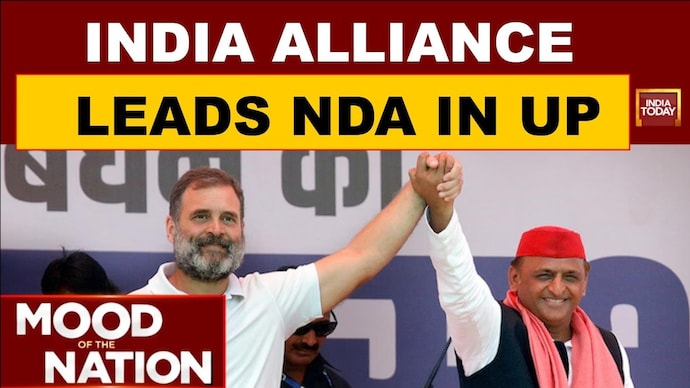
An India Today 'Mood of the Nation' poll discussion by C Voter highlights a significant political shift in Uttar Pradesh, projecting the India Alliance to secure 41 out of 80 seats and a 40% vote share, while the NDA is projected at 38 seats with 42% vote share. Anchor Rajdeep Sardesai and panelists analyze the shift, noting a 5% drop for the NDA compared to January 2026. Pollster Yashwant Deshmukh points out that concerns surrounding the UGC reservation guidelines are driving an upper-caste backlash among Gen X parents, rather than the Ayodhya issue. Panelists also cite Gen Z's growing anxieties over unemployment and fair examinations as key drivers of changing voter sentiment. While panelists debate the validity of extrapolating national Lok Sabha projections to upcoming state assembly elections, they emphasize that rising job concerns and UGC policy feedback present critical warning signals for the BJP's core vote bank in North India.
The latest India Today C-Voter Mood of the Nation (MOTN) poll projects the National Democratic Alliance (NDA) to secure 326 seats with a 45 percent vote share if Lok Sabha general elections were held today.
Student protests broke out in Patna as hundreds of examination aspirants marched towards the Chief Minister's residence, demanding the cancellation and reconduct of the 70th Bihar Public Service Commission examination over alleged paper leaks and recruitment irregularities. Protesters broke through police barricades, leading security personnel to deploy water cannons to control the crowd. Beyond the civil services examination, aspirants also raised demands regarding transparency in teacher recruitment processes and adherence to University Grants Commission guidelines for professor appointments. Concurrently, a separate demonstration was held at the Gargani Bag dharna site by TRE4 candidates protesting against negative marking and two-tier examination structures. While the state administration maintained that the 70th examination results declared earlier stand final with no plans for cancellation, the peaceful march brought traffic to a standstill for nearly five hours, highlighting widespread youth dissatisfaction with state competitive examination procedures.
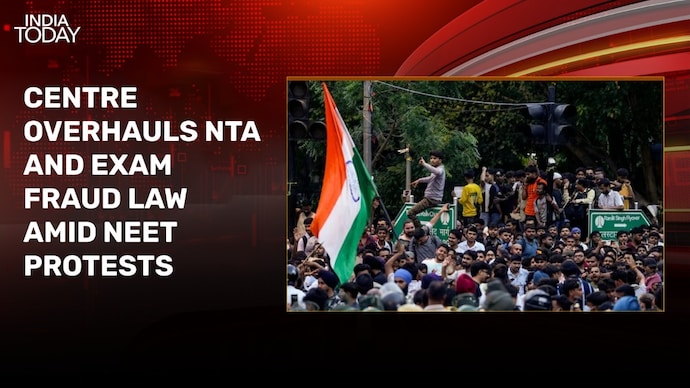
The government has initiated a major overhaul of the examination system following weeks of nationwide student protests over paper leaks.
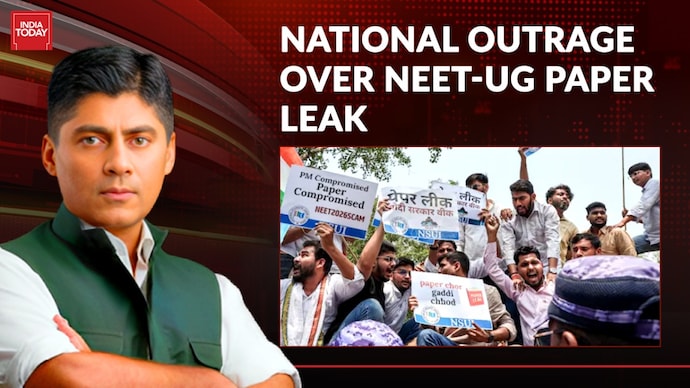
The National Eligibility cum Entrance Test Undergraduate 2026 has been cancelled following a widespread paper leak involving a multi-state organised network. Investigations reveal the paper circulated fifteen days prior to the exam, leading the Central Bureau of Investigation to take over the probe.
At the India Today Education Conclave 2026, UGC Chairperson Vineet Joshi highlighted NEP reforms, progress, and initiatives to integrate technology, innovation, and student support in India’s universities.
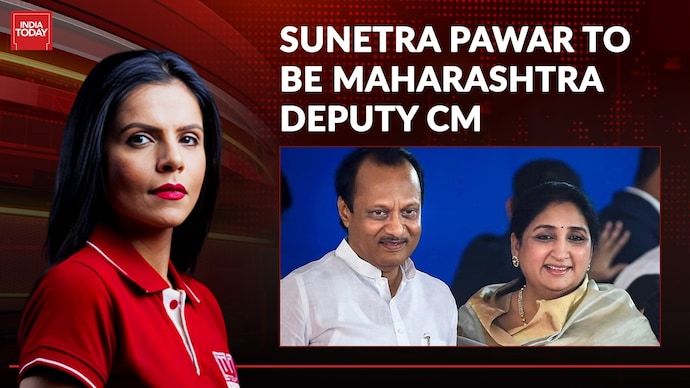
Sunetra Pawar is set to take oath as the Deputy Chief Minister of Maharashtra on Saturday at 5 pm, according to sources. She has accepted the proposal for her elevation and will continue to handle the Excise and Sports ministries.
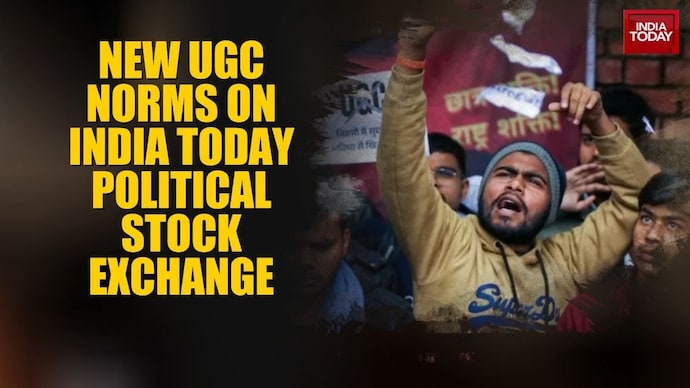
On this Special Report, host Preeti Choudhry leads a debate on the 'Political Stock Exchange' regarding the controversial 2026 UGC norms. Following a Supreme Court stay on the regulations, Choudhry presents a snap poll conducted by Sea Water exploring public sentiment across different caste and age groups. The data reveals a significant divide, with 80% of upper-caste respondents viewing the reforms as 'anti-upper caste' and 65% of students fearing increased campus casteism. Political analyst Ashutosh questions the data's representative nature, stating, 'This reaction is purely casteist reaction,' while expressing surprise at the speed of the Supreme Court's intervention. The programme features insights from Rajat Sethi, Professor Chandra Bhushan Sharma, and Professor Suraj Yengde, analyzing whether these reforms represent genuine equity or an electoral risk for the government. The discussion highlights the deep-seated caste dynamics in Indian academia and the legal challenges facing the Centre's new educational framework.
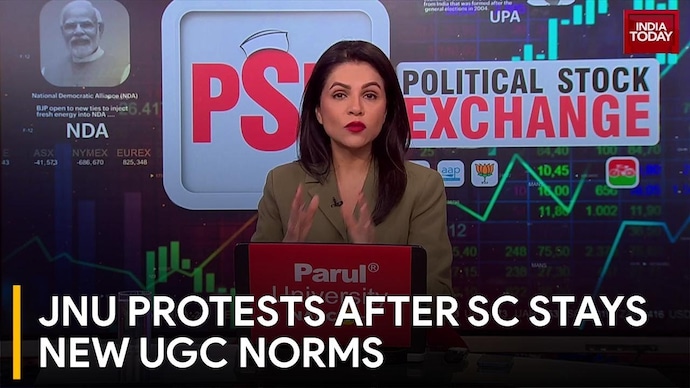
This news report covers the intensifying protests at Jawaharlal Nehru University (JNU) following the Supreme Court's decision to stay the new University Grants Commission (UGC) equity regulations. The JNU Students Union (JNUSU) is leading the demonstrations, claiming that 'caste based discrimination at universities have surged in the last few years' despite the legal intervention. The Supreme Court observed that certain provisions of the regulations were ambiguous and 'too sweeping,' potentially reversing decades of progress toward a casteless society. The stay on these new norms implies a temporary return to the 2012 regulations until the government formulates updated guidelines. The programme highlights the friction between student bodies and the judicial ruling, featuring visuals of the protests recorded on the JNU campus. The report also mentions a data analytics segment titled 'Political Stock Exchange' to gauge public sentiment regarding the controversial UGC norms and the subsequent legal stay by the top court.
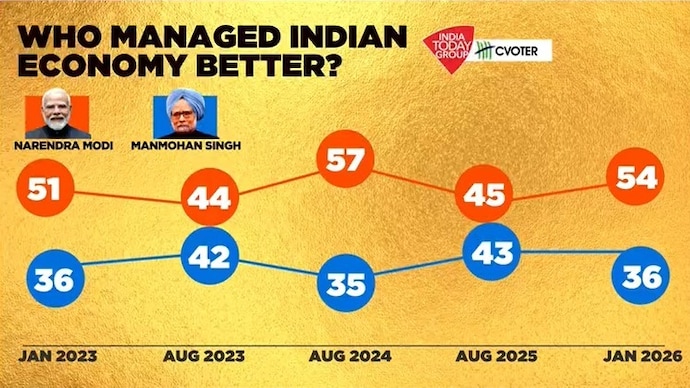
The India Today-CVoter 'Mood of the Nation' poll, a comprehensive survey with a sample size of over 90,000 participants, indicates and highlights the public's perception of economic management, where 54% of respondents prefer Prime Minister Narendra Modi's handling of the economy compared to 36% for former PM Dr Manmohan Singh.
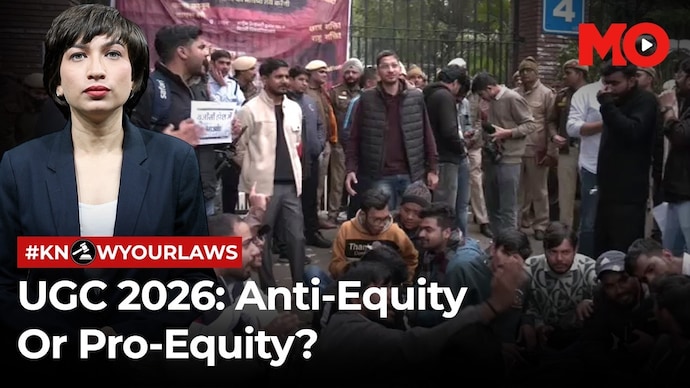
Why did the UGC bring new equity regulations in 2026 — and why did campuses erupt in protest?
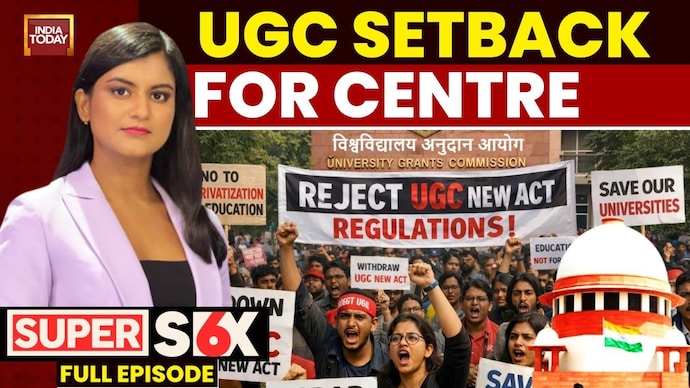
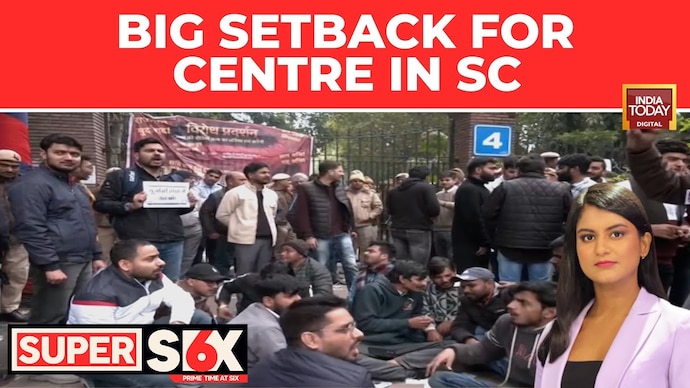
On this Special Report, anchor Akshita Nandagopal discusses the Supreme Court's significant decision to stay the University Grants Commission (UGC) 2026 equity regulations. The apex court described the new norms as 'prima facie vague and prone to misuse,' providing major relief to protesting students. During the hearing, the court expressed concerns that the regulations could lead to a societal divide, stating, 'Hope we don't divide campuses like America.' The programme explores the legal and political fallout of this 'judicial bombshell' on the central government, featuring insights from legal correspondent Srishti Ojha and ground reports from Delhi University. While the government faces a January 19 deadline to submit a detailed response, students remain divided; some fear the birth of 'reverse discrimination' while others advocate for clearer safeguards against historical caste-based exclusion. The report also touches upon the upcoming budget with a glimpse of an interview with Chief Economic Advisor V. Anantha Nageswaran regarding trade deals and the Indian rupee.
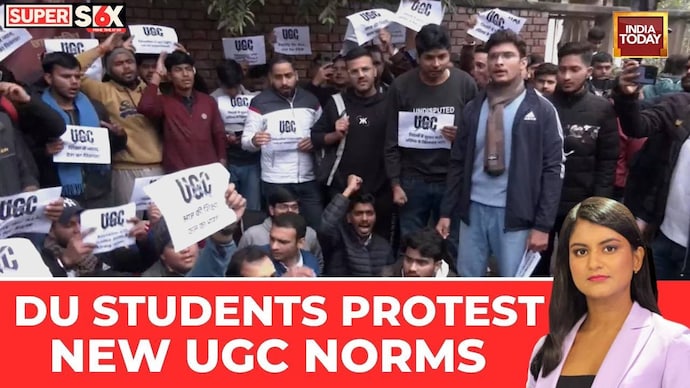
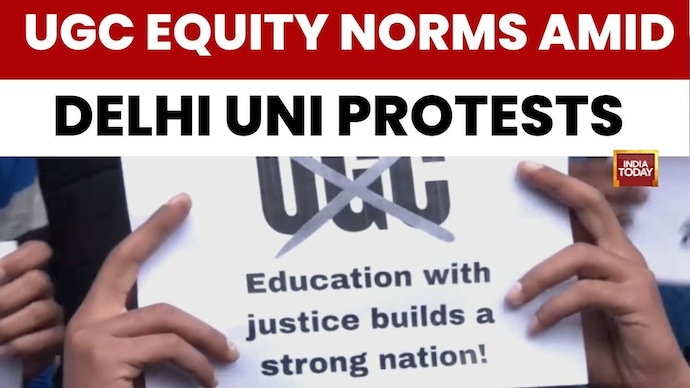
This special report explores the growing tension at Delhi University following the introduction of new University Grants Commission (UGC) norms aimed at curbing caste-based discrimination. Students protesting the regulations expressed fears of 'reverse discrimination' and the potential weaponisation of complaints, with one student stating, 'The burden of proof will come on the general caste.' Conversely, other students and faculty members defended the norms as a necessary step toward social inclusion, questioning why an act intended to stop discrimination is being viewed as an attack on specific groups. The report, filed by Anjali Pandey, highlights a significant clash of perceptions on campus, where one side views the rules as a correction of historical injustice while the other fears a new sense of exclusion. The programme examines whether policy makers can successfully ensure campus inclusion without deepening existing social divides or creating fresh grievances among the student body.
On this Special Report, anchor Akshita Nandagopal discusses the Supreme Court's decision to stay the new University Grants Commission (UGC) regulations. The top court raised significant concerns regarding discrimination in higher educational institutions, questioning if the new rules are 'taking us towards a regressive direction' after 75 years of independence. Legal correspondent Srishti Ojha highlights the court's intent to move toward a classless society where unity is visible in educational institutions rather than segregation. The discussion also features insights from Aishwarya Paliwal on the Centre's 'catch-22' situation as it prepares a detailed response for the 19th deadline. The government is reportedly wary of potential rollbacks and is focusing on the implementation strategy of the guidelines. The programme explores the legal and political fallout of the controversy as the Centre and UGC are mandated to respond to the court's observations regarding the potential for institutional isolation.
On this Special Report, the focus is on the Supreme Court's interim stay on the new equity guidelines introduced by the University Grants Commission (UGC). The court observed that the intervention was necessary as the 'new guidelines are capable of dividing the society'. While the central government provided assurances against the misuse of these regulations, the bench emphasized that the mere possibility of a provision being prone to misuse warrants judicial scrutiny to ensure laws remain uniform and applicable to all sections of society. The court has issued notices to both the Centre and the UGC, seeking their responses to the petitions. Furthermore, the Supreme Court clarified that while the new guidelines are stayed, the 2012 regulations will continue to be enforced. The matter is scheduled for further hearing in March, where the vision of a 'caste-less society' and the unity of India's higher institutions will remain central to the legal discourse.
On this Special Report, the focus is on the escalating protests at Delhi University against the University Grants Commission's (UGC) new equity regulations. Students from the general category have labeled the norms a 'black law,' expressing fears of 'reverse discrimination' and the potential weaponisation of complaints due to confidential identities and the shifted burden of proof. National Students' Union of India (NSUI) President Varun Choudhary defended the regulations, stating, 'We are about equality, talking about equality,' while highlighting that 70% of OBC professor vacancies remain unfilled due to systemic discrimination. The programme examines the clash of perceptions between those viewing the norms as a correction of historical injustice and those fearing new forms of exclusion. The report also notes political friction, with the BJP attacking Congress's support for the norms while citing Prime Minister Modi's 10% EWS quota for the upper-caste poor as the alternative approach to inclusive growth.
On this report, the focus is on the Supreme Court of India's significant decision to stay the University Grants Commission's (UGC) new equity guidelines. The bench, including the Chief Justice of India, Justice Suryakant, and Justice Joy Malia Bagchi, observed that the new regulations are 'capable of dividing society' and could have a 'grave impact' on national unity. The court questioned the inclusion of separate clauses for discrimination and expressed concern over whether the country is 'losing the gains towards classless society' made over 75 years. Until further orders, the 2012 guidelines will remain in force. The Centre and the UGC have been asked to respond to petitions filed by various groups, including the savarna classes represented by Advocate Vishnu Shankar Jain, who argue the norms discriminate against the general category. The matter is scheduled for its next hearing on March 19th.
On this news report, the focus is on the Supreme Court of India's scathing observations regarding the 2026 UGC regulations. The top court stayed the new norms, questioning if the country is 'losing gains of 75 years' and moving in a 'regressive direction' by using vague language prone to misuse. Varun Choudhary, President of the Congress youth wing NSUI, stated, 'this is mostly seen that it happens more with SC, ST and OBC' while clarifying that the NSUI stands against all forms of discrimination. The broadcast highlights the court's concern over campus unity and the potential for catastrophic damage if guidelines are not accurately drafted. The 2012 regulations will continue to remain in effect as the court seeks expert opinion for a redraft. The matter is scheduled for its next hearing on 19th March, as stakeholders from the BJP, Congress, and student communities react to the potential for internal rifts and the necessity for robust equity guidelines in higher education.