Bihar | The tone is civil, the disquiet is uniform
The UCC faces a genuine tumbling block in Bihar, as BJP seeks not to upset partners JD(U) and LJP. Muslim alienation could upset electoral equilibrium

The United Democratic Party (UDP) is a regional political party based in Meghalaya, India, founded in 1997 by E.K. Mawlong. The party's ideology revolves around regionalism and populism, aiming to restore Meghalaya's prestige and provide an effective, corruption-free government. It was formed through the merger of three regional parties: The Hill State People’s Democratic Party, The Hill People Union, and The Public Demand Implementation Convention. The UDP's election symbol, the drum, symbolizes announcing good news, celebration, and harmony, reflecting the party's promise to bring positivity to Meghalaya.
Donkupar Roy currently leads the UDP and previously served as Meghalaya's Chief Minister from 2008 to 2009 as part of the Meghalaya Progressive Alliance. He is also the Leader of Opposition in the Meghalaya Legislative Assembly, representing the ST-reserved Shella Assembly constituency. The UDP's formation marked a significant moment in Meghalaya's political landscape, unifying various regional voices under one banner to pursue the state's development and welfare.
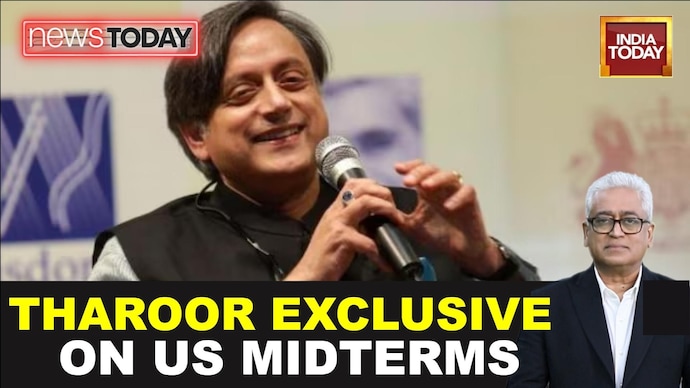
In an interview with Rajdeep Sardesai, Congress MP and Chairperson of the Parliamentary Standing Committee on External Affairs Dr. Shashi Tharoor evaluated the United States midterm election results, calling the verdict 'an extraordinary repudiation of President Trump and the party that has been remade in his name.' Tharoor noted that while the Democratic resurgence marks historic wins across battlegrounds, US foreign policy leeway means minimal immediate disruption to bilateral India-US engagements or ongoing trade negotiations. However, he cautioned that issues surrounding potential Graham Act sanctions, competitive trade terms, and Washington's ties with Pakistan remain key factors. Connecting the political outcome to India, Tharoor argued that domestic anti-incumbency is driven by inflation, rising living costs, graduate unemployment, and voter roll controversies, urging the Indian opposition to question whether citizens are better off under current governance.
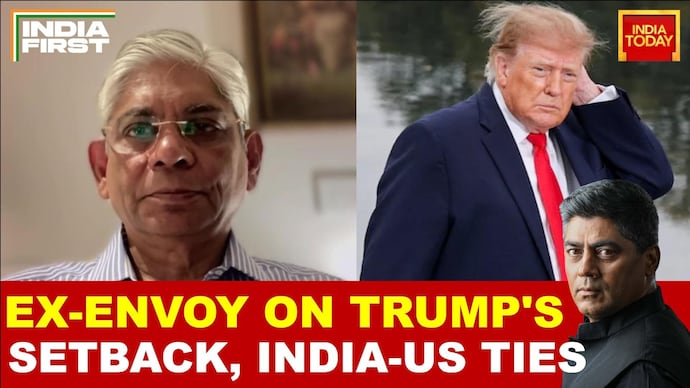
In an exclusive interview on an India Today special broadcast, former Indian Ambassador to the United States Arun Kumar Singh analysed the outcome and diplomatic fallout of the US midterm elections. Assessing the substantial gains made by the Democratic Party across both the Senate and the House of Representatives, Singh termed the election result 'a huge setback for President Trump.' He noted that growing domestic discontent over elevated energy and food prices sparked by the protracted conflict with Iran played a decisive role in shaping voter sentiment. Discussing bilateral strategic ties, Singh observed that while the White House retains broad constitutional leeway over foreign policy and trade accords, New Delhi must navigate Washington's policy volatility with caution. He stressed that even as India deepens engagement with America in technology and defence domains, New Delhi should maintain strategic autonomy and diversify external partnerships, pointing out that 'you need to hedge also against the US, even as you deepen the partnership.'
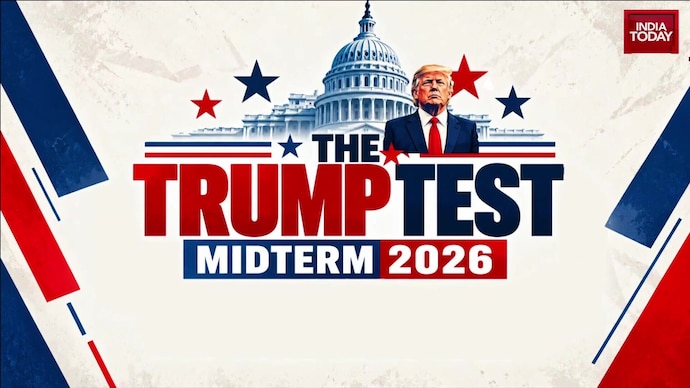
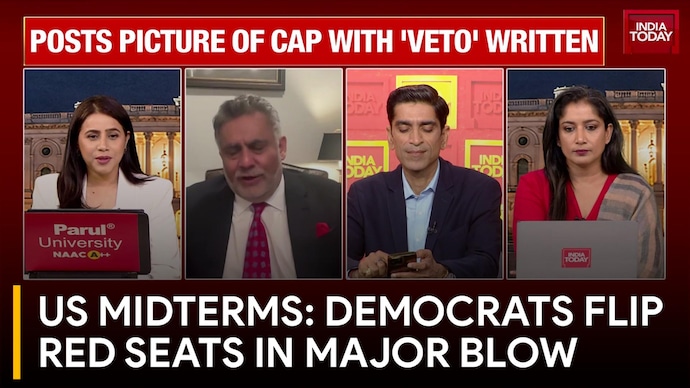
The Democratic Party secured majorities in both the House of Representatives and the Senate in the United States midterm elections, altering the balance of power in Washington. The election outcome flipped traditional Republican strongholds, with Democrat James Talarico defeating Ken Paxton in Texas, Sherrod Brown defeating Jon Husted in Ohio, and Roy Cooper winning in North Carolina. In Ohio's gubernatorial race, Democrat Amy Acton defeated Republican Vivek Ramaswamy. Prominent Indian-American candidates recorded key wins, including Pia Dandia, Suhas Subramanyam, Pramila Jayapal, Ro Khanna, and Shri Thanedar, who pointed to voter dissatisfaction regarding inflation, living costs, tariffs, and military involvement in Iran. In response to the congressional shift, President Donald Trump stated he would accept the results and engage with Democrats, while signaling the potential deployment of presidential veto powers. Democratic control of Congress introduces legislative oversight on executive actions, creating procedural limits on the administration's policy initiatives and budget proposals.
A news broadcast discusses the United States midterm election results, reporting that the Democratic Party has gained control of both the Senate and the House of Representatives. Numbers cited from official counts and the Associated Press show the Democrats crossing the majority threshold with 53 seats in the Senate and 220 seats in the House of Representatives, leaving Republicans behind. Panelists evaluate the scale of the victory and compare the performance to previous midterm cycles, noting that while midterm losses for a sitting administration are not unprecedented, the current mandate reflects significant public discontent. Key factors cited by the analysts include the conflict with Iran, economic conditions, and policies affecting immigrants. The discussion highlights that unlike past wartime rallies, voter sentiment penalised the administration for initiating military conflict contrary to earlier campaign stances. Key races discussed also include Vivek Ramaswamy losing Ohio to Amy Acton and Democratic victories across notable states.
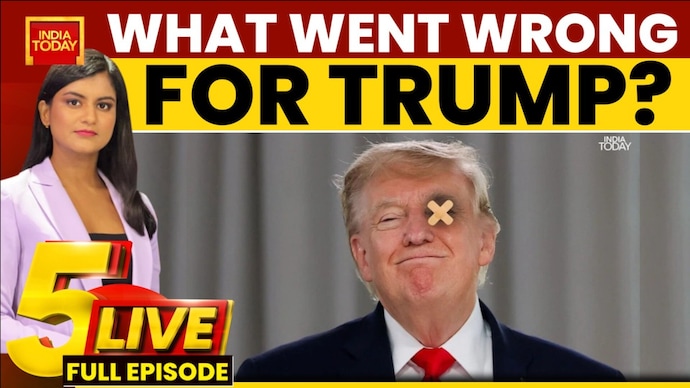
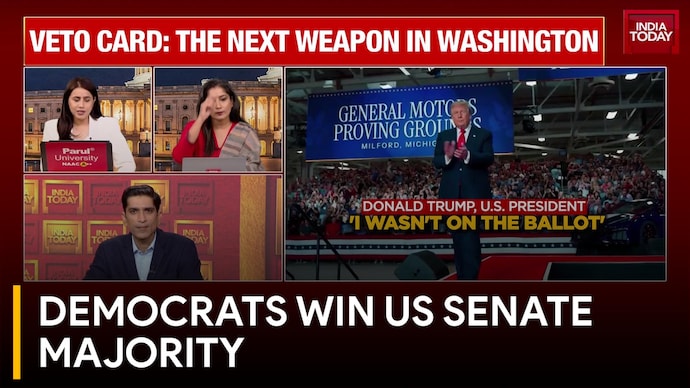
A special news broadcast on the United States midterm election results examines the electoral setbacks faced by the Republican Party, with the Democratic Party flipping traditionally red Senate seats including Texas, South Carolina, North Carolina, Georgia, and New Hampshire. The analysis focuses on shifting voter demographics, economic affordability, inflation, energy policies, and foreign conflicts involving Iran. The bulletin outlines Donald Trump's post-midterm playbook, detailing his signaled willingness to negotiate with a Democrat-controlled Congress alongside threats to frequently deploy his presidential veto power and executive orders to advance policy goals. Reporters and commentators discuss the implications of Democrats securing majorities in both the Senate and the House of Representatives, highlighting the unprecedented legislative dynamics Trump faces heading into the remainder of his term, potential shifts in White House personnel, and the challenges of securing federal funding.
The Democratic Party has secured control of the United States Senate after winning 51 seats, as projected by the Associated Press during the midterm elections. With 35 Senate seats up for contest, the shift tips the balance of power in the US Congress, while Democrats also lead the count in the House of Representatives. Newly elected North Carolina Senator Roy Cooper addressed supporters, criticising Washington's governance and pledging action. Analysts noted that congressional control by Democrats will place legislative moves and executive decisions under heightened scrutiny, exposing the administration to investigations, subpoenas, and potential impeachment proceedings over policy actions.
Early results from the United States midterm elections indicate significant gains for the Democratic Party, pointing to an apparent wave against the policies of the administration. Projections show Democrats crossing the 100-seat mark in the House of Representatives, establishing a lead of nearly 50 seats over Republicans and flipping four key states. Discussions highlight that the outcome could compel President Donald Trump to govern alongside a Democratic-led Congress for the first time, altering legislative strategy from January 2027. While GOP campaign efforts focused on battleground states such as Texas, North Carolina, and Pennsylvania, early reporting shows Democratic momentum extending into contested Senate races. Officials and observers also note that potential shifts in legislative control could redirect presidential focus toward executive actions, veto powers, foreign policy, and early positioning among prospective candidates ahead of the 2028 presidential campaign.
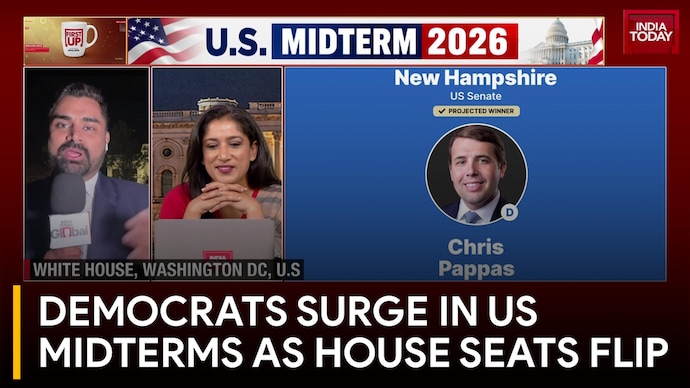
Early US midterm election results indicate notable gains for the Democratic Party in key contests across the country, though control of the United States Congress remains undecided. In a major breakthrough, Democrat Roy Cooper flipped a Republican-held Senate seat in North Carolina by defeating Michael Whatley, while Jon Ossoff held Georgia and Chris Pappas secured New Hampshire. Crucial Senate races in Ohio, Maine, Alaska, Texas, and Iowa are still being counted. Meanwhile, the battle for the House of Representatives remains intense, with Democrats seeking a net gain of three seats to capture the 218-seat majority. Several Indian American candidates also contested prominent races, including Suhas Subramanyam winning re-election in Virginia and Pia Dandiya winning Florida's 22nd Congressional District, while Vivek Ramaswamy trailed in Ohio's gubernatorial race. With high-stakes issues shaping the vote, analysts observe that a shift in either congressional chamber could significantly impact Donald Trump's legislative agenda and executive oversight during his presidency.
Early projections from the United States midterm elections indicate significant gains for the Democratic Party across key House, Senate, and gubernatorial contests. Democrats secured early leads in congressional tallies, picking up seats in North Carolina, while Roy Cooper delivered a victory speech after capturing a United States Senate seat for the state. Jon Ossoff claimed a Senate seat in Georgia, and Helena Foulkes won the Rhode Island gubernatorial election. Meanwhile, Republicans saw Byron Donalds secure the Florida governorship and Ashley Moody win re-election to the Senate from Florida. Inside the White House, President Donald Trump monitored incoming results from the East Room alongside cabinet members, including Marco Rubio. Analysts noted that while early counts placed Democrats significantly ahead in the House toward the 218-seat majority threshold, final outcomes remain contingent on key battleground states, including Ohio, Michigan, and Texas, as polling closes and votes are tabulated across different time zones.
In an exclusive interview, senior Congress leader and Lok Sabha MP Manickam Tagore accused the Bharatiya Janata Party of executing widespread 'vote chori' across several states, claiming that the opposition has gathered evidence and is presenting it directly to citizens under Rahul Gandhi's leadership. Commenting on Union Home Minister Amit Shah's remarks regarding voter roll deletions, Tagore rejected allegations about illegal voters, stating, 'Every Muslim or every Christian can't be a ghuspaithiya.' He asserted that the deletion of 13 crore voters was aimed at hurting the INDIA bloc after a tight contest in the 2024 elections. He argued that public outrage over price rise and economic missteps forced the ruling party onto the streets, prompting what he described as targeted communal rhetoric. Tagore affirmed that the entire opposition alliance stands united to defend democratic norms.
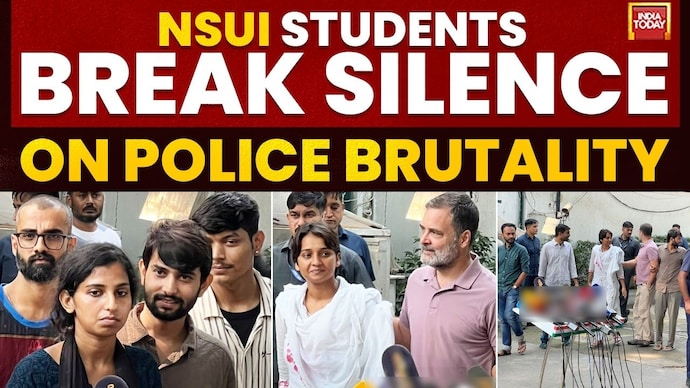
Student and youth activists representing the National Students' Union of India and the Youth Congress addressed a press conference alongside Rahul Gandhi in Delhi, alleging severe police brutality, torture, and illegal detention during recent protests. Detainees, including female students from Delhi University, described physical assaults by police personnel inside detention buses and police stations, specifically pointing to instances of beatings and injuries sustained in Connaught Place. Rahul Gandhi addressed the gathering, urging youth to keep video evidence of any high-handedness for legal action, asserting that the united voice of the youth cannot be silenced. The Congress party accused authorities of orchestrating arbitrary detentions, using makeshift lockups near Rajiv Chowk, and suppressing peaceful democratic demonstrations across the national capital.
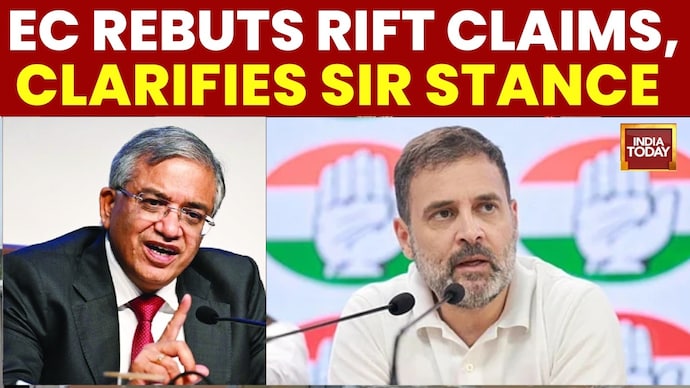
The Election Commission of India has addressed claims regarding internal rifts among its commissioners, issuing a clarification that all major decisions concerning the Special Intensive Revision (SIR) were approved unanimously by Chief Election Commissioner Gyanesh Kumar, Sukhbir Singh Sandhu, and Vivek Joshi. Following a full commission meeting, the poll body maintained that internal discussions and objections did not override final institutional decisions, confirming that statutory Form 6 remained unchanged and was merely accompanied by Annexure D. The Commission also announced deadline extensions for filing claims under SIR, setting October 30 for Delhi and October 12 for Maharashtra, alongside booth level officer house visits in Goa. While opposition parties raised concerns over Form 6 amendments and voter deletions, the Bharatiya Janata Party and National Democratic Alliance partners, including the Telugu Desam Party and Janata Dal (United), backed the poll body, stating that the clarification affirms the credibility of constitutional bodies.
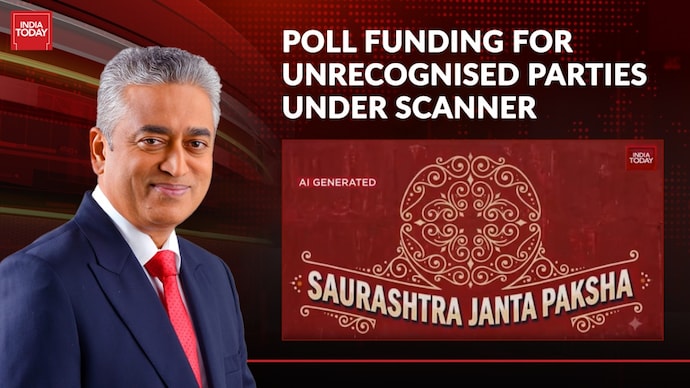
Chinese President Xi Jinping visits New Delhi on September 12 to participate in the BRICS Summit, marking his first trip to India in seven years. The multilateral gathering features key bilateral engagements involving Prime Minister Narendra Modi, President Xi, and Russian President Vladimir Putin, focusing on India-China border negotiations, trade relations, economic cooperation, and global diplomacy. Alongside summit coverage, this special report examines registered unrecognized political parties across Gujarat, Delhi, Bihar, and Madhya Pradesh that collected substantial donations while operating from residential sites and locked offices without contesting elections. Former Chief Election Commissioner Dr S.Y. Quraishi and transparency activist Anjali Bhardwaj analyze statutory income tax exemptions, regulatory loopholes, and Election Commission oversight, while also addressing widespread voter list deletions flagged during the Special Intensive Revision in Delhi and Karnataka.
Chinese President Xi Jinping visits New Delhi on September 12 to participate in the BRICS Summit, marking his first trip to India in seven years. The multilateral gathering features key bilateral engagements involving Prime Minister Narendra Modi, President Xi, and Russian President Vladimir Putin, focusing on India-China border negotiations, trade relations, economic cooperation, and global diplomacy. Alongside summit coverage, this special report examines registered unrecognized political parties across Gujarat, Delhi, Bihar, and Madhya Pradesh that collected substantial donations while operating from residential sites and locked offices without contesting elections. Former Chief Election Commissioner Dr S.Y. Quraishi and transparency activist Anjali Bhardwaj analyze statutory income tax exemptions, regulatory loopholes, and Election Commission oversight, while also addressing widespread voter list deletions flagged during the Special Intensive Revision in Delhi and Karnataka.
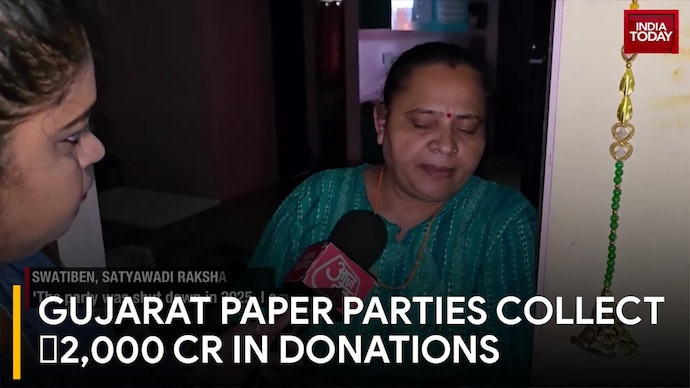
An India Today special investigation reveals that registered unrecognised political parties in Gujarat collected over two thousand crore rupees in donations between 2019 and 2024, based on data analyzed by the Association for Democratic Reforms. Ground checks across Gujarat, Delhi, Bihar, and Madhya Pradesh showed that several of these parties exist primarily on paper. The Bharatiya National Janata Dal received 957.44 crore rupees, while The New India United Party secured over 600 crore rupees, though its registered Ahmedabad office was locked without any signboard. The Satyavadi Rakshak Party, which collected over 330 crore rupees in 2023-24, fielded just one candidate in Vadodara who finished last, operating from a locked flat in Anand. Similarly, the Aam Janmat Party collected over 220 crore rupees while its registered office remained shut, and Saurashtra Janata Paksha received over 200 crore rupees. ADR noted that 90 percent of donations come from individuals and large donors despite poor electoral participation and minimal vote shares.
After months of war, Iran and the United States agreed to a peace deal to be signed on 19th of June, but Israel refuses to leave Lebanon.
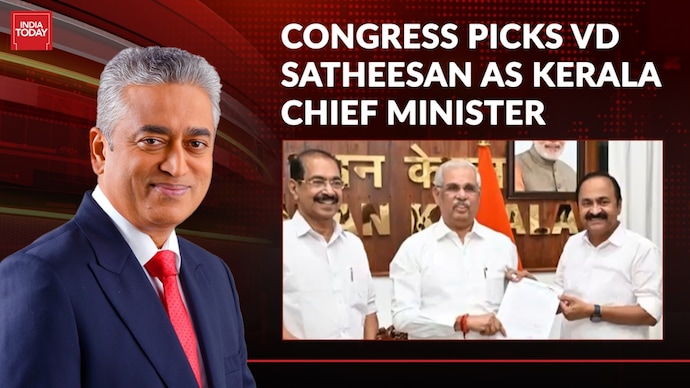
The Congress party has selected VD Satheesan as the next Chief Minister of Kerala, following the United Democratic Front's assembly election victory. The six-time MLA will take the oath of office on May 18.
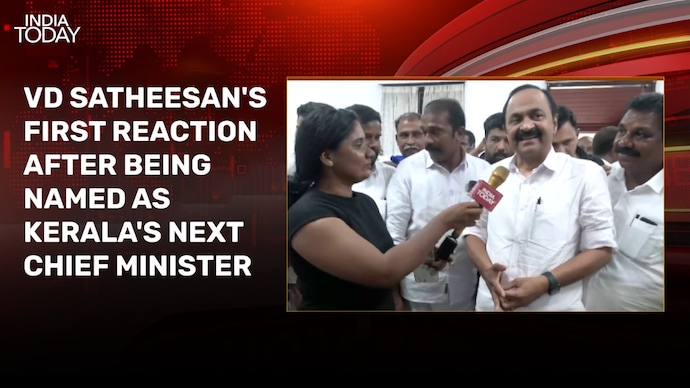
In an exclusive interview with India Today, Kerala Chief Minister-elect VD Satheesan expressed his gratitude to the Congress leadership and said he dedicates his chief ministership to the people of Kerala.
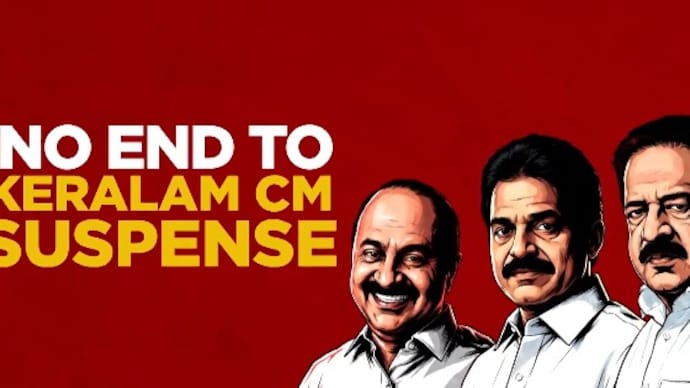
Ten days after securing a massive mandate in the Kerala assembly elections, the Congress party has yet to finalise its Chief Minister.
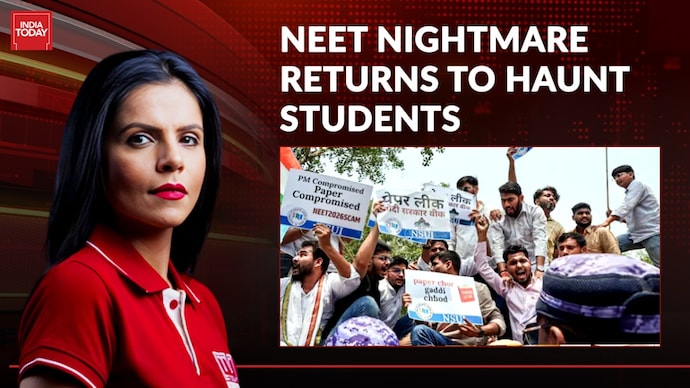
The National Testing Agency has cancelled the NEET UG 2026 medical entrance examination following widespread allegations of a paper leak.