12 missing as avalanche hits Himlung Himal base camp in Nepal's Manang
The avalanche comes amid heavy rain and snowfall across Nepal, which has disrupted roads, trekking routes and mountaineering expeditions.

There’s a strange kind of beauty in all the mess that comes with the different weather seasons. The sound of water hitting the windows late at night somehow makes everything feel calmer. Walks with an umbrella, even when your feet get soaked, end up staying in your memory. And then there are those quiet moments just sitting by the window, hands wrapped around a warm cup of chai, watching the rain fall. Nothing fancy, but it feels almost poetic in its own way.
Weather, in general, has a way of setting the tone for our lives, even when we don’t realize it. A bright, sunny morning can push us into motion. A cloudy afternoon might slow us down. Rain doesn’t just water the ground it stirs something inside. It can make a regular day feel heavy or peaceful, depending on what’s going on in your mind. It brings people indoors, but also somehow closer. The weather shapes moods, plans, and sometimes even conversations.
It changes how the day feels. It makes you notice things like the smell of the soil, the sound of birds that only sing in the rain, or how trees look greener than usual.
Weather is one of those things we talk about every single day without even noticing. It’s the first thing people mention in small talk, and yet it shapes so much of how we live. A sunny morning can make you feel unstoppable, while a grey, cloudy sky can slow everything down before the day even begins.
Sometimes it feels like weather carries moods of its own. Summer heat that sticks to your skin, making you crave shade and cold water. The chill of winter mornings when getting out of bed feels like the hardest task in the world. The gentle breeze on a spring evening that makes you want to walk a little slower.
Severe waterlogging following heavy rainfall in Gorakhpur has triggered a political dispute within the Bharatiya Janata Party. The situation escalated after a local party councillor contacted Gorakhpur MP Ravi Kishan to flag water accumulation in areas that had reportedly never flooded in over a decade. During the phone call, the MP questioned if the councillor had joined the Samajwadi Party, prompting the councillor to retort asking whether the MP had joined the Bahujan Samaj Party. The confrontation has placed scrutiny on the MP's earlier remarks comparing Gorakhpur's development to Spain. Defending the administrative response, Ravi Kishan stated that the intensity of the rain was unprecedented in nearly two decades, adding that municipal pumps were deployed and water levels would recede once the downpour stopped.
MRH Technologies Private Limited, in partnership with German multinational Mann+Hummel, has introduced the Filter Cube air filtration technology in India to tackle severe air pollution. According to company representatives, infrastructure development contributes significantly to air pollution, requiring active public-private participation rather than relying solely on government action. The Filter Cube operates via forced air circulation, capturing road dust, smoke, and harmful gases such as nitrogen dioxide and sulphur dioxide. Validated during a trial by IIT Delhi between September and November 2024, the equipment demonstrated a 60 to 70 percent reduction in pollution levels. Designed in Germany and manufactured and assembled in India, each unit delivers approximately 17,500 cubic metres of clean air per hour. The automated system features weather sensors that turn off the device during rain, an energy-saving night mode, and a centralised dashboard providing real-time performance data across city zones.
An exhibition at Bharat Mandapam in New Delhi highlighted India's emerging prowess in defence and space technologies, spotlighting private sector innovations developed alongside the Indian Space Research Organisation. Among the featured innovations is OptoSAR, a 190-kilogram satellite designed by IIT Madras alumni that combines optical payloads and synthetic aperture radar. The satellite simultaneously captures images through clouds, smoke, and nighttime conditions, serving defence operations, flood monitoring, and forest fire management. Following the launch of Mission Drishti in May, developers aim to build a constellation of 30 satellites within three years to cater to global requirements. The initiative reflects growing government backing and grants aimed at expanding India's private space tech sector.
A special address outlines India's vision for space exploration, highlighting collective responsibility, multilateral cooperation, and sustainability. The space domain must be guided by international law and open scientific data to serve humanity. ISRO's contributions encompass weather forecasting, disaster management, navigation, and launching over four hundred and thirty satellites for thirty-four countries. Key milestones include Chandrayaan-3 landing near the lunar south pole and Aditya-L1 studying the Sun. India aims to establish an Indian space station by 2035 and land an Indian on the Moon by 2040. India's private space sector is expanding alongside ISRO. Bilateral space collaboration with France, which began at Thumba in the 1960s, continues to grow across advanced technologies and Earth observation. A call was made at the space summit in Paris for global partners to explore, innovate, and protect space together.
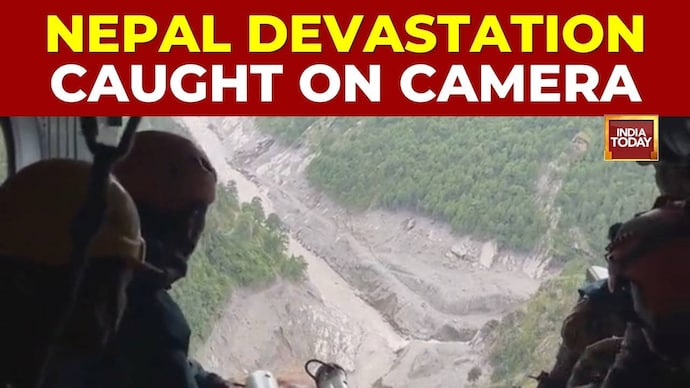
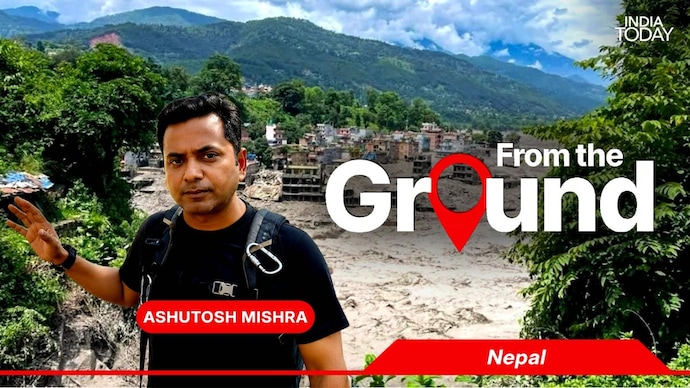
Catastrophic flash floods in Nepal have claimed more than 1,300 lives, with over 5,000 people still reported missing following severe destruction across Rasuwa and downstream areas along the Mansarovar pilgrimage route. Aerial visuals reveal entire villages, homes, and roads swallowed by heavy debris and floodwaters. Ground rescue operations face severe challenges due to damaged road networks, adverse weather, and contaminated water supplies. Multi-national emergency teams, including the Nepalese Army, Indian Army, NDRF, and personnel from China, Australia, Korea, and the US, are conducting rescue and relief operations. Recent rescue efforts pulled survivors from the Trishuli hydro project tunnel, alongside a 64-year-old woman trapped under muck on a fourth floor in Bhadravati. Forces are using air sorties, ropeways, and heavy cargo drones to deliver food, fuel, and medical supplies to isolated communities, while authorities establish DNA sample collection centres to help identify recovered bodies.
Incessant heavy rains lashed Delhi NCR for a second straight day, bringing significant weather changes across North India. The India Meteorological Department issued alerts predicting continued cloud cover and widespread showers across the National Capital Region. While downpours led to waterlogging in some pockets, including previous disruptions near the airport, central Delhi and NDMC areas reported manageable conditions with steady rain. Traffic congestion on major routes saw partial respite owing to an ongoing long weekend, reducing commuter volumes on Saturday morning. However, with the monsoon reactivating and the weather department forecasting persistent rainfall over the next two to three days covering Sunday and Monday, concerns remain regarding civic readiness, water drainage, and potential traffic bottlenecks as the workweek resumes.
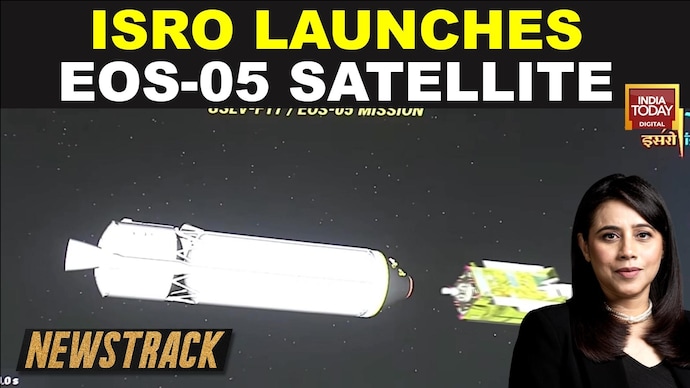
The Indian Space Research Organisation (ISRO) has successfully launched its first dedicated geostationary imaging satellite, EOS-05, aboard the GSLV-F17 rocket from Sriharikota. Operating from a geosynchronous orbit around 36,000 kilometres above Earth, the satellite enables continuous regional observation to aid weather monitoring, agriculture, water resource assessment, disaster management, and strategic surveillance. The mission precisely injected the satellite into its intended transfer orbit, overcoming a previous mission setback from August 2021.
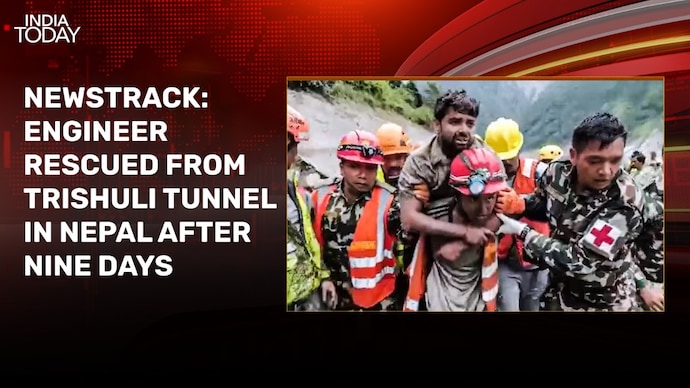
Nine days after deadly flash floods struck Nepal, two workers trapped inside a hydropower project tunnel were rescued alive on Friday.
The Indian Space Research Organisation (ISRO) has successfully launched the Earth Observation Satellite EOS-05 aboard the GSLV F17 from the Satish Dhawan Space Centre in Sriharikota.
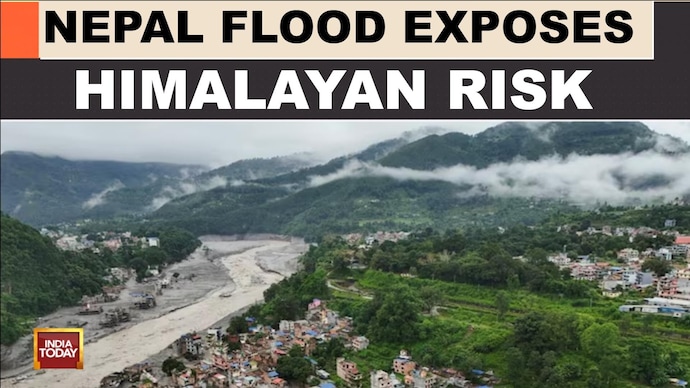
A devastating flood triggered by a glacial collapse in Nepal's Rasuwa region near the Nepal-Tibet border has highlighted major risks of cascading Himalayan hazards. In response to rising threat levels from Glacial Lake Outburst Floods, the National Disaster Management Authority has identified 195 vulnerable glacier lakes across Himachal Pradesh, Sikkim, Ladakh, Arunachal Pradesh, Jammu and Kashmir, and Uttarakhand. India relies on multiple disaster monitoring systems, including Indian Space Research Organisation satellites for remote sensing and terrain mapping, Met Department weather models providing river sub-basin quantitative precipitation forecasts, and Central Water Commission river gauges offering up to 24-hour advance flood warnings. The National Remote Sensing Centre integrates geospatial data into a national emergency database to provide hazard maps and early warnings. However, the Nepal disaster underscores gaps in monitoring high-altitude ice collapses, where one failure sets off a chain of catastrophic events across the fragile Himalayan ecosystem.
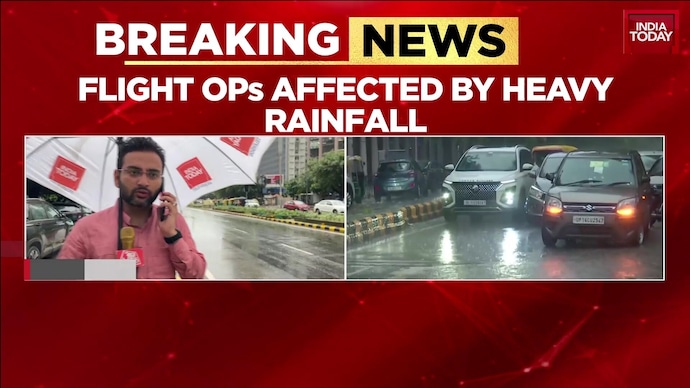
Torrential rainfall in Delhi and the National Capital Region has disrupted normal life, triggering severe traffic snarls, waterlogging on major roads, and chaos at the Indira Gandhi International Airport. Flight operations at the airport were hampered with mass flight diversions and delays after water flooded the entrance and forecourt of Terminal 3, forcing passengers to wade through water. The India Meteorological Department has warned that rainfall will continue across the national capital region. Following viral videos of the waterlogging, Delhi Airport authorities issued a statement confirming that water accumulated in the approach road and forecourt areas due to heavy afternoon downpours, adding that the accumulated water was cleared shortly after.
A brief spell of heavy rainfall lasting sixty minutes has triggered waterlogging and traffic snarls across the national capital and Delhi NCR. The India Meteorological Department escalated its weather warning from an orange alert to a red alert, forecasting moderate-to-heavy rainfall. Severe waterlogging was reported outside Terminal arrivals at the Indira Gandhi International Airport, forcing passengers to wade through accumulated water. Traffic bottlenecks were observed along Delhi border flyovers and around the airport area as evening commute hours commenced amid Janmashtami.
Heavy rainfall in Delhi NCR has caused severe waterlogging and traffic disruptions across the national capital, including central and south Delhi locations such as Connaught Place, Akbar Road, and Lajpat Nagar. Flight operations at the Indira Gandhi International Airport have been impacted due to waterlogging on the premises, leading to delays for arrivals from sectors including Ahmedabad, Mumbai, and Port Blair. An orange alert was issued ahead of the downpour, with expectations of wind speeds reaching forty to fifty kilometres per hour. The meteorological department has indicated that the active monsoon spell and weather alert will continue across Delhi NCR and parts of north India over the next two days.
Ecosystem Private Limited founders Pratiraj Kumar and Sumit Pawar have introduced 'Pawan 3', an on-ground air purification innovation designed to combat outdoor air pollution at hotspots and roadside dividers. Developed as a 'Made in India and Made for India' solution, the device is built to withstand Indian climate conditions, featuring anti-theft and weather-resistant designs. The system utilises a high suction mechanism, multilayer filtration, HEPA filters, and an integrated cooling and heating unit to purify air, reducing AQI, PM 2.5, and PM 10 levels. While the earlier 'Pawan 1' device demonstrated over a 29 percent reduction in Kolhapur, Maharashtra, the founders project that 'Pawan 3' could achieve more than a 40 percent reduction. Currently installed in Kirti Nagar, Delhi, the electricity-powered unit has been operating for three months. The initiative was highlighted as part of the 'Pollution Ka Solution' campaign launched by the India Today network and the Delhi government to scale innovative ground-level anti-pollution solutions.
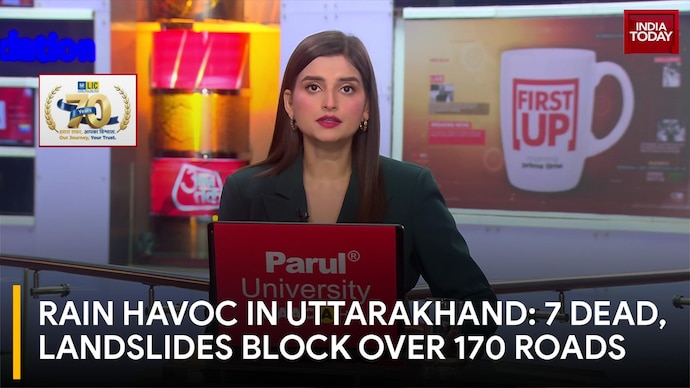
Continuous heavy rainfall in Uttarakhand has claimed at least seven lives, triggering landslides, house collapses, and flash flood-like situations across several districts. In Almora, house collapses and debris flows led to multiple casualties, while falling boulders and landslides blocked over 170 roads, including major national highways and the Dehradun-Mussoorie route. Swollen rivers like the Gola, Kosi, and Shipra have prompted evacuations along riverbanks. Relief and rescue teams, including the SDRF, are conducting operations as the Public Works Department works to clear blocked routes. With orange and yellow alerts issued for districts like Nainital, Tehri, and Dehradun, schools have been ordered shut across five districts.
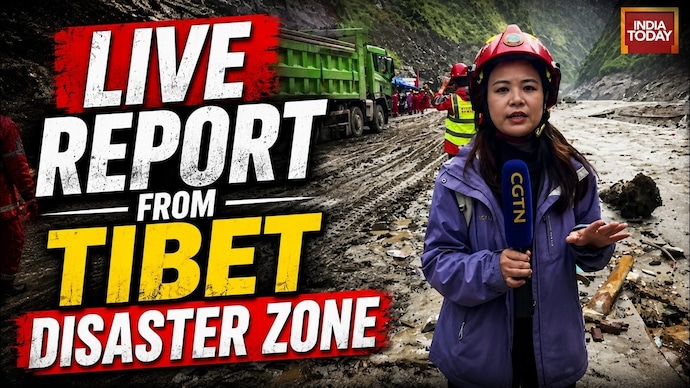
The official death toll in Nepal's flood disaster has reached 903, with over 4,000 people reported missing and 10,451 individuals rescued so far. Disaster authorities and rescue workers are conducting door-to-door search operations in devastated areas like Dunge, where buildings have been submerged in sludge and debris up to the second floor. Ground reports show survivors returning to ruined homes to salvage remaining belongings while civil workers search for trapped individuals. In addition, rescue and clearance operations are ongoing in Tibet following Himalayan mudslides caused by a glacial outburst at an altitude of around 5,000 metres. Speaking to India Today, CGTN reporter Gong Ming explained that workers are using artificial intelligence equipment to monitor upstream barrier lakes and weather changes while attempting to clear damaged road stretches. Gong Ming dismissed allegations regarding Chinese construction causing the flash floods, citing expert confirmation that a high-altitude glacial collapse caused the mudslide.
Spiritual leader Sadhguru has pledged one crore rupees to the Nepal Prime Minister Disaster Fund following devastating floods in Nepal that have left over 750 dead and more than 2,500 missing. Speaking at a solidarity event in Kathmandu, Sadhguru called for the creation of a five-nation Himalayan board comprising India, China, Pakistan, Nepal, and Bhutan to collectively address regional natural disasters without disparity. Asserting that death is a resounding silence and that divine attributions diminish the reality of suffering, he stressed that a calamity of this scale cannot be left solely to the Nepali government and urged global participation. He also announced 'Kalabhairav Karma', a consecrated death ritual, for the departed souls, including Isha Foundation members lost in the tragedy. Meanwhile, search and rescue operations continue in flood-hit regions as over 180 Indians have been rescued, while specialized teams navigate severe terrain, changeable weather, and barrier lake risks in affected areas.
A ground report from National Highway G216 near the Jerum Port site details the ongoing road clearance operations following severe mudslides and flash floods in Tibet. Engineering rescue teams are transferring large rocks from nearby areas to construct a new road and prevent fast-moving river waters from submerging the pathway. Rescue operations face multiple obstacles, including changing weather conditions, continuous rainfall, narrow valley terrain, barrier lakes formed upstream, and fast water levels exceeding five meters per second. Emergency teams are utilizing AI monitoring equipment to track upstream risks and avoid underwater hazards. Reporter Gong Ming states that rescue teams are working overnight, with the estimated completion of highway clearance projected for tomorrow morning to enable full-scale rescue operations. According to official figures cited in the report, the death toll in China has reached 16, with 546 people reported missing. Authorities rejected claims attributing the flash floods to Himalayan construction, stating that experts confirmed the mudslide was triggered by a glacial break at an altitude of 5,000 meters.
On the fifth day of rescue and relief operations in Nepal, authorities issued alerts following a rise in the water levels of the Bhote Koshi and Trishuli rivers, triggered by water discharge from upstream Tibet. In Bhattar, residents have been advised to evacuate to safer areas as the furious river continues to threaten downstream and upstream regions. Helicopter-based rescue operations have resumed after weather-related delays, while ground personnel work to clear blocked road networks to reach stranded victims and deliver essential support.
Rescue operations in flood-hit areas of Nepal have been halted as persistent rain since last night created further challenges. Helicopter operations have also been suspended due to the weather. Families continue to wait anxiously for information about relatives who remain missing as authorities face growing difficulties in reaching affected areas.