
Trump drops 20% Hormuz fee plan in favour of investment deals with Gulf states
Donald Trump said the Strait of Hormuz was now open to global shipping, except for vessels linked to Iran, and credited the US military for securing one of the world's most important maritime routes.
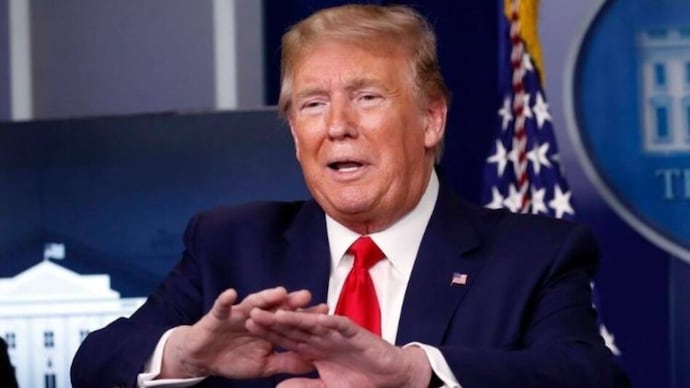

A day after proposing 20 per cent fee on all cargo passing through the Strait of Hormuz, US President Donald Trump made a U-turn on Tuesday, saying Gulf nations would instead make "massive" trade and investment commitments to the US.
In a post on Truth Social, Trump said the Strait of Hormuz was now open to global shipping, except for vessels linked to Iran, and credited the US military for securing one of the world's most important maritime routes.
"Based on highly productive conversations with Middle East leadership, I have decided to replace the 20% United States Reimbursement Fee with Trade and Investment Deals that the various Gulf States will be making into the United States," Trump wrote.
His latest announcement came a day after he said the US would become the "Guardian of the Hormuz Strait" and charge a 20 per cent reimbursement fee on all cargo passing through the strategic waterway. Iran mocked the proposal, with Foreign Minister Abbas Araghchi saying, "20 per cent is of course too much. We will be fair."
Announcing a change in his plan, he claimed the investments would be "MASSIVE" and would benefit both the United States and Gulf nations.
"Those Investments will be MASSIVE but, at the same time, extraordinarily good for them, and their future," he said.
Trump also said the new agreements would lead to more factories, manufacturing plants and equipment being built in the United States.
"We will see Factories, Plants, and Equipment pour into the United States at Historic levels, which will create additional millions of High Paying AMERICAN Jobs!" he added.
TRUMP PRAISES US MILITARY
Crediting the American military for keeping the Strait of Hormuz open despite the ongoing conflict with Iran, Trump praised Secretary of War Pete Hegseth, Chairman of the Joint Chiefs of Staff Dan Caine, CENTCOM Commander Admiral Brad Cooper and other members of the armed forces.
The US President also announced what he described as a "FULL Blockade" on Iranian shipping.
"We will therefore have a FULL Blockade, but only on Ships coming to and from Iranian ports, or carrying anything have to do with Iranian cargo," he said.
Escalating his rhetoric, Trump accused Iran's leadership of taking the country "down the path of TOTAL DESTRUCTION" and reiterated that Tehran would never be allowed to acquire a nuclear weapon.
"The days of Iran killing hundreds of thousands of people, including 52,000 protestors, are OVER and, most importantly, IRAN WILL NEVER HAVE A NUCLEAR WEAPON!" Trump wrote.
PLAN MARKS SHARP POLICY SHIFT
His latest announcement marked a major shift from the position he outlined just a day earlier.
On Monday, he declared that the US would "take control" of the Strait of Hormuz and become its "guardian."
"The USA will be, from this point forward, known as 'THE GUARDIAN OF THE HORMUZ STRAIT,' but as such, and as a matter of FAIRNESS, will be reimbursed, at the rate of 20% on all cargo shipped, for any and all costs necessary to do the job of providing safety and security to this very volatile section of the World," Trump had said.
IRAN REJECTS US ROLE
Iran immediately dismissed Trump's proposals and rejected any American role in managing the Strait of Hormuz.
Tehran's top joint military command said it would not allow US forces to control or oversee the strategic waterway. Iran also warned that any attempt by American forces to move through the strait without Iranian authorisation would be "strongly confronted."
The military further cautioned regional governments against cooperating with Washington, saying any such cooperation would be viewed as "war against Iran."
The exchange came as military tensions between the United States and Iran continued to escalate across the Gulf, with both sides exchanging fresh strikes.