
Was US midterm loss worth the Iran war, reporter asks JD Vance. Here's his reply

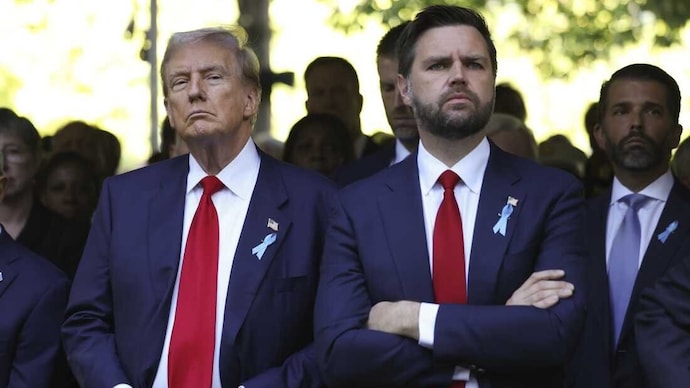
Standing alongside Trump, Vance was asked whether he believed the war was worth Republicans losing the Senate, to which he replied that he "absolutely" believed the US should prevent Iran from acquiring nuclear weapons but stopped short of endorsing the decision to launch joint strikes with Israel.
 Last UpdatedNov 21, 2026 07:45 IST
 Published by
US Vice President JD Vance on Friday sidestepped a question on whether the war with Iran was worth the Republican Party's heavy losses in the midterm elections, refusing to explicitly endorse President Donald Trump's decision to launch strikes against Tehran.
Asked alongside Trump at a White House press conference whether the Iran war was worth the Republicans’ midterm losses, Vance said he “absolutely” believed that the United States should work to keep Iran from having a nuclear weapon, but maintained that the decision to launch the strikes was Trump's to make.
"What I've said is the goal of keeping Iran from getting a nuclear weapon is absolutely what we need to be doing," Vance said.
Describing Iran as the "biggest state sponsor of terrorism", the vice-president warned that a nuclear-armed Tehran could use the weapon as leverage or even launch an attack that could kill thousands, potentially hundreds of thousands, of innocent people.
However, he stopped short of saying whether he would have ordered the strikes himself, adding, "The president is the one who makes the decision, and the president has said he would do it again. And my view is that my goal is and my job is to support the president of the United States."
The exchange came weeks after Vance directly blamed the Iran war for the Republicans' historic midterm losses and called for the US to withdraw from the conflict, exposing a sharp divide at the highest levels of the administration – between the president and his vice-president.
His remarks, posted on social media, were widely seen as a departure from Trump's position and fuelled speculation about the vice-president's political ambitions ahead of the 2028 presidential election.
"The reason we lost is the war," Vance wrote in his post-election assessment. "The president himself said so last night. If you'd like to argue it was worth it, that losing the Senate for the next six years was worth it, then do so. Argue it was a worthwhile cost to pay."
Vance's criticism has reportedly caused friction between him and Trump. According to a report in The New York Times, the president has privately expressed growing displeasure with the vice-president for questioning the war and failing to publicly endorse the decision to launch the strikes.
Trump has reportedly complained that Vance should have publicly backed the military campaign, while praising Secretary of State Marco Rubio for repeatedly defending the strikes as necessary for US national security and suggesting he could be a strong presidential candidate, according to people familiar with his remarks cited by the publication.
Trump, however, defended the military operation on Friday, saying he was not unhappy with Vance expressing his views but insisting that the strikes had been necessary.
"People that work for me, they have a right to their opinion," Trump said, adding that he believed Iran's leadership was "crazy". The president also maintained that Vance would make the same decision again.
VANCE'S IRAN STANCE PUTS HIM IN DELICATE POSITION
Vance's response highlights the difficult political position he occupies as he attempts to balance his loyalty to Trump with his reservations about the Iran war.
The vice-president has long been opposed to the conflict and previously served as Washington's key representative in efforts to negotiate peace with Tehran. He helped broker a provisional truce over the summer, but the arrangement collapsed soon afterwards.
In recent weeks, Vance had also sent personal correspondence to hardliners in Tehran in an effort to revive negotiations. However, Trump called off the diplomatic engagements shortly after the vice-president published his assessment of the Republicans' election losses, directing him to focus on domestic policy instead.
"We don't need a deal with Iran," Trump wrote on social media while announcing his decision. "Those days have long since passed."
VANCE BACKS TRUMP'S DIPLOMATIC OUTREACH TO RIVALS
The differences over Iran came as Trump returned on Thursday from a four-day diplomatic tour of Asia, which culminated in an unprecedented trilateral meeting with Chinese President Xi Jinping and Russian President Vladimir Putin.
Trump faced criticism over his interactions with the two leaders, having hugged Xi upon arriving in China and referred to Putin as "my friend".
White House officials defended the engagements as an example of statesmanship, arguing that Trump's ability to maintain ties with US adversaries demonstrated American strength on the global stage.
Vance, who remained in Washington during the trip, was among the strongest supporters of Trump's diplomatic outreach. Joking about being left behind, he compared his situation to the 1990 family comedy Home Alone.
"It's amazing what's possible when you give diplomacy a real chance," he wrote on social media on Thursday.