
Former UK minister says ex-colonies owe Britain for empire's development work
Former UK Home Secretary Suella Braverman, whose parents are of Indian origin, has stirred controversy by saying that countries once colonised by Britain should repay the United Kingdom for the investments made during the British Empire. Her remarks came as Jamaica prepares to petition King Charles III for reparations over Britain's role in slavery.
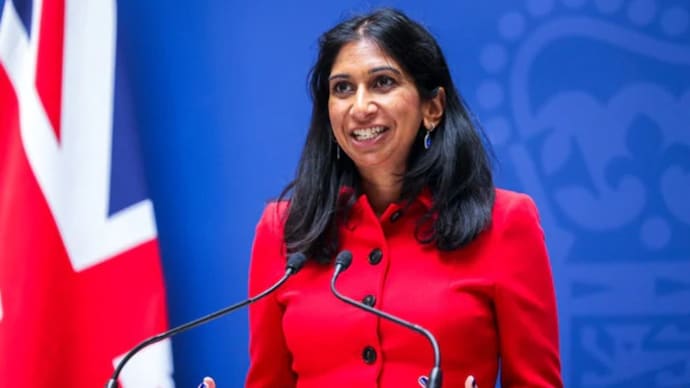

Former UK Home Secretary Suella Braverman, whose parents are of Indian origin, has sparked controversy by saying that countries once colonised by Britain should "pay the British back" instead of seeking reparations for the empire's legacy.
Braverman made the remarks on X in response to Labour MP Bell Ribeiro-Addy's post about Jamaica's move to petition King Charles III for reparations over Britain's role in the transatlantic slave trade.
"The British Empire did so much good for the world. Of course slavery was abhorrent, but to expect the British people of the 21st century to pay for actions that took place in the 18th century has no basis in law," Braverman wrote.
She added that if the Jamaican government is "seriously thinking about" receiving reparations from Britain, then former colonies should "pay the British back" for the "considerable investment, effort and contribution" Britain made in creating what she called today's flourishing democracies.
The British Empire ruled India for nearly two centuries until 1947, while large parts of Asia, Africa and the Caribbean also lived under British colonial rule before winning independence through anti-colonial movements.
JAMAICA'S PETITION TO KING CHARLES III
The Jamaican government has announced that its officials will travel to the United Kingdom on September 6 to formally submit a petition to King Charles III, seeking legal guidance on the country's claim for reparations over Britain's role in slavery, reported London-based daily The Guardian.
Jamaica's Culture Minister, Olivia Grange, told Parliament that the move would take the country's campaign for reparatory justice to "the next level".
The petition asks the King to exercise his authority to seek an advisory opinion from the Judicial Committee of the Privy Council on whether the forced transportation of Africans to Jamaica was lawful, whether it constituted a crime against humanity, and whether Britain has a legal obligation to compensate Jamaica for slavery and its enduring consequences, according to The Guardian
This move marks one of the most significant legal efforts yet by a Commonwealth nation to seek reparations from Britain over its colonial past.
WHY IS JAMAICA SEEKING REPARATIONS CHARGES BY THE UK?
The reparations debate frequently centres on what happened after Britain abolished slavery in the 19th century.
An official response issued by HM Treasury, the United Kingdom's economic and finance ministry, confirms that the British government borrowed 20 million pounds to implement the Slavery Abolition Act of 1833, a sum equivalent to around 40% of the government's total annual expenditure at the time.
The Treasury further confirmed that the borrowing associated with the Act was fully repaid only in 2015, largely because the debt was repeatedly rolled into successive government bonds over nearly two centuries.
However, the compensation was paid to slave owners, not to the enslaved people who had endured generations of forced labour. This historical fact has become a central argument for Caribbean nations seeking reparations today, who contend that those who suffered under slavery received no compensation while those who profited from it were financially reimbursed.
The issue of reparations for colonialism and slavery has increasingly gained momentum across the Caribbean through the Caribbean Community (CARICOM), whose member states argue that European colonial powers amassed enormous wealth through slavery and exploitation while leaving lasting economic and social inequalities.
Britain, however, has consistently maintained that it does not intend to pay reparations for historical slavery, arguing that the events occurred centuries ago and that modern governments should not be held legally liable for them.
With Jamaica preparing to formally seek reparations from the British Crown, Braverman's remarks are likely to intensify the long-running debate over the legacy of the British Empire and whether former colonial powers owe reparations to their erstwhile colonies.