Rare books are going fast. Are others next in AI's hunt?
What AI is doing now could have even bigger consequences in the future. While the discussion around the technology has largely focused on jobs being influenced by AI, another change is taking place: how we will receive information and how books will be viewed. Anthropic AI is at the centre of this conversation. The company is scanning rare books, feeding them to its AI models, and presenting the information to a wider audience, raising many questions.
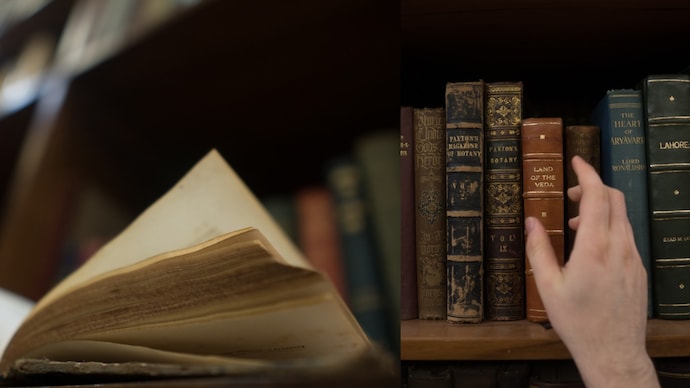
Your favourite rare book may disappear someday -- not because of age or neglect, but because it could be scanned for artificial intelligence training and discarded afterwards.
For Delhi-based antiquarian bookseller Rishabh Jain, who runs Memoirs of India, one of the capital's oldest rare book businesses, that possibility raises concerns far beyond the loss of paper.
"It is unfortunate and heartbreaking to destroy anything of original heritage. There are other ways to digitise a book without damaging its originality," Jain told India Today Digital.
He believes digitisation can preserve text, but not everything that makes a historical book valuable.
"There are many books with illustrations having hand-painted gold. Old-school techniques like lithography and aquatints were labour and skill-intensive methods that produced limited prints. If digitisation had the same feeling and value as the originals, the whole art industry would collapse," he said.
His concerns come as AI companies are racing to acquire more human-written material to train their models.
Earlier this year, The Washington Post reported that Anthropic launched an internal initiative, Project Panama, under which the company bought millions of physical books, scanned them and discarded the originals after digitisation.
According to the report, one internal planning document described Project Panama as "our effort to destructively scan all the books in the world" and said the company did not want the initiative to become public.
Originality and the preservation of antiquarian books seem to be real challenges. Experts have started raising concerns about the issues AI is creating. Their handling is also a challenge. An already declining attention span and changing sources of information have created a vacuum in the demand for books.
Now, the crushing is happening with some of the rarest books available in the 21st century. Where will this lead?
THE LOSS GOES BEYOND PAPER
For collectors, the concern is not limited to the physical object. Many rare books are primary historical sources written by eyewitnesses, historians or scholars who documented events using the earliest available records.
Jain says AI systems still depend on original material for reliable information.
"AI data could be true or false. To verify information, we need the original source. From cave paintings to manuscripts and books, these are the earliest documented records. AI can interpret history only if those sources are available for digitisation. Since we are still far from digitising everything, the available source material remains limited," he explained.
He also pointed to another challenge in the age of AI-generated content.
"We now live in an era where anyone can publish their own interpretation of history. That can result in contradictory versions of the same event. The original source becomes even more important."
SCARCITY IS ALREADY VISIBLE
While AI companies have not directly approached his business to buy books in bulk, Jain says rare books are becoming harder to find.
"There is definitely a rise in scarcity. Prices in our industry depend on demand and supply. The supply hasn't been generous while demand has increased, so prices have gone up significantly. We don't see them coming down anytime soon."
Interestingly, he says younger readers are also showing renewed interest in original editions from the 18th and 19th centuries, moving away from digital reading devices and returning to printed books.
Many readers have raised the same concern online. One Reddit user summed it up by saying, "They're not preserving. They're destroying the books and the contents are just being used as training data."
One user wrote that less popular books are often printed in much smaller numbers than bestsellers, making every surviving copy valuable and increasing the risk of permanent loss.
India has taken a different route. Through the National Mission for Manuscripts (NMM) and digitisation projects by institutions such as the Indira Gandhi National Centre for the Arts (IGNCA), lakhs of rare manuscripts have been digitised while the original documents continue to be preserved.
Anthropic says its process is legal, and a US court ruled that using legally purchased books to train AI qualified as "fair use" because it was transformative. The company, however, still faces copyright claims over the alleged use of pirated books.
As AI companies continue looking for more books to train their models, one question remains: can technology learn from the past without leaving the original books behind?
Your favourite rare book may disappear someday -- not because of age or neglect, but because it could be scanned for artificial intelligence training and discarded afterwards.
For Delhi-based antiquarian bookseller Rishabh Jain, who runs Memoirs of India, one of the capital's oldest rare book businesses, that possibility raises concerns far beyond the loss of paper.
"It is unfortunate and heartbreaking to destroy anything of original heritage. There are other ways to digitise a book without damaging its originality," Jain told India Today Digital.
He believes digitisation can preserve text, but not everything that makes a historical book valuable.
"There are many books with illustrations having hand-painted gold. Old-school techniques like lithography and aquatints were labour and skill-intensive methods that produced limited prints. If digitisation had the same feeling and value as the originals, the whole art industry would collapse," he said.
His concerns come as AI companies are racing to acquire more human-written material to train their models.
Earlier this year, The Washington Post reported that Anthropic launched an internal initiative, Project Panama, under which the company bought millions of physical books, scanned them and discarded the originals after digitisation.
According to the report, one internal planning document described Project Panama as "our effort to destructively scan all the books in the world" and said the company did not want the initiative to become public.
Originality and the preservation of antiquarian books seem to be real challenges. Experts have started raising concerns about the issues AI is creating. Their handling is also a challenge. An already declining attention span and changing sources of information have created a vacuum in the demand for books.
Now, the crushing is happening with some of the rarest books available in the 21st century. Where will this lead?
THE LOSS GOES BEYOND PAPER
For collectors, the concern is not limited to the physical object. Many rare books are primary historical sources written by eyewitnesses, historians or scholars who documented events using the earliest available records.
Jain says AI systems still depend on original material for reliable information.
"AI data could be true or false. To verify information, we need the original source. From cave paintings to manuscripts and books, these are the earliest documented records. AI can interpret history only if those sources are available for digitisation. Since we are still far from digitising everything, the available source material remains limited," he explained.
He also pointed to another challenge in the age of AI-generated content.
"We now live in an era where anyone can publish their own interpretation of history. That can result in contradictory versions of the same event. The original source becomes even more important."
SCARCITY IS ALREADY VISIBLE
While AI companies have not directly approached his business to buy books in bulk, Jain says rare books are becoming harder to find.
"There is definitely a rise in scarcity. Prices in our industry depend on demand and supply. The supply hasn't been generous while demand has increased, so prices have gone up significantly. We don't see them coming down anytime soon."
Interestingly, he says younger readers are also showing renewed interest in original editions from the 18th and 19th centuries, moving away from digital reading devices and returning to printed books.
Many readers have raised the same concern online. One Reddit user summed it up by saying, "They're not preserving. They're destroying the books and the contents are just being used as training data."
One user wrote that less popular books are often printed in much smaller numbers than bestsellers, making every surviving copy valuable and increasing the risk of permanent loss.
India has taken a different route. Through the National Mission for Manuscripts (NMM) and digitisation projects by institutions such as the Indira Gandhi National Centre for the Arts (IGNCA), lakhs of rare manuscripts have been digitised while the original documents continue to be preserved.
Anthropic says its process is legal, and a US court ruled that using legally purchased books to train AI qualified as "fair use" because it was transformative. The company, however, still faces copyright claims over the alleged use of pirated books.
As AI companies continue looking for more books to train their models, one question remains: can technology learn from the past without leaving the original books behind?
Your favourite rare book may disappear someday -- not because of age or neglect, but because it could be scanned for artificial intelligence training and discarded afterwards.
For Delhi-based antiquarian bookseller Rishabh Jain, who runs Memoirs of India, one of the capital's oldest rare book businesses, that possibility raises concerns far beyond the loss of paper.
"It is unfortunate and heartbreaking to destroy anything of original heritage. There are other ways to digitise a book without damaging its originality," Jain told India Today Digital.
He believes digitisation can preserve text, but not everything that makes a historical book valuable.
"There are many books with illustrations having hand-painted gold. Old-school techniques like lithography and aquatints were labour and skill-intensive methods that produced limited prints. If digitisation had the same feeling and value as the originals, the whole art industry would collapse," he said.
His concerns come as AI companies are racing to acquire more human-written material to train their models.
Earlier this year, The Washington Post reported that Anthropic launched an internal initiative, Project Panama, under which the company bought millions of physical books, scanned them and discarded the originals after digitisation.
According to the report, one internal planning document described Project Panama as "our effort to destructively scan all the books in the world" and said the company did not want the initiative to become public.
Originality and the preservation of antiquarian books seem to be real challenges. Experts have started raising concerns about the issues AI is creating. Their handling is also a challenge. An already declining attention span and changing sources of information have created a vacuum in the demand for books.
Now, the crushing is happening with some of the rarest books available in the 21st century. Where will this lead?
THE LOSS GOES BEYOND PAPER
For collectors, the concern is not limited to the physical object. Many rare books are primary historical sources written by eyewitnesses, historians or scholars who documented events using the earliest available records.
Jain says AI systems still depend on original material for reliable information.
"AI data could be true or false. To verify information, we need the original source. From cave paintings to manuscripts and books, these are the earliest documented records. AI can interpret history only if those sources are available for digitisation. Since we are still far from digitising everything, the available source material remains limited," he explained.
He also pointed to another challenge in the age of AI-generated content.
"We now live in an era where anyone can publish their own interpretation of history. That can result in contradictory versions of the same event. The original source becomes even more important."
SCARCITY IS ALREADY VISIBLE
While AI companies have not directly approached his business to buy books in bulk, Jain says rare books are becoming harder to find.
"There is definitely a rise in scarcity. Prices in our industry depend on demand and supply. The supply hasn't been generous while demand has increased, so prices have gone up significantly. We don't see them coming down anytime soon."
Interestingly, he says younger readers are also showing renewed interest in original editions from the 18th and 19th centuries, moving away from digital reading devices and returning to printed books.
Many readers have raised the same concern online. One Reddit user summed it up by saying, "They're not preserving. They're destroying the books and the contents are just being used as training data."
One user wrote that less popular books are often printed in much smaller numbers than bestsellers, making every surviving copy valuable and increasing the risk of permanent loss.
India has taken a different route. Through the National Mission for Manuscripts (NMM) and digitisation projects by institutions such as the Indira Gandhi National Centre for the Arts (IGNCA), lakhs of rare manuscripts have been digitised while the original documents continue to be preserved.
Anthropic says its process is legal, and a US court ruled that using legally purchased books to train AI qualified as "fair use" because it was transformative. The company, however, still faces copyright claims over the alleged use of pirated books.
As AI companies continue looking for more books to train their models, one question remains: can technology learn from the past without leaving the original books behind?

