Tharoor calls it 'utterly appalling', Bhagat mocks DU over protest advisory
From Shashi Tharoor and Chetan Bhagat to authors, actors and politicians, critics question whether universities should discourage students from participating in public protests.
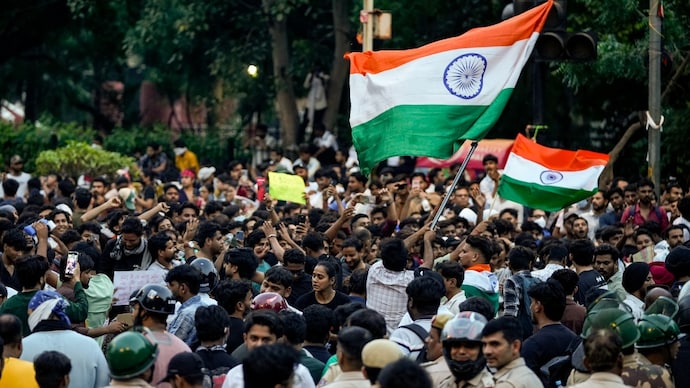
The University of Delhi's advisory asking students and faculty to stay away from demonstrations at Jantar Mantar has triggered a wider debate on the role of higher education institutions, with politicians, authors and public figures arguing that universities are meant to nurture critical thinking and democratic engagement – not discourage students from participating in civic life.
The advisory, issued on Thursday amid the ongoing nationwide protests over alleged irregularities in competitive examinations, urged students to avoid "unlawful assemblies or demonstrations" at Jantar Mantar. It warned that participation could invite legal action, jeopardise academic progress and professional opportunities, and pose risks to personal safety. The university also cautioned students against fake and misleading information circulating on social media.
The advisory quickly drew criticism from across ideological lines, with many arguing that while universities have a duty to protect students, they should not appear to discourage peaceful civic participation.
Congress MP Shashi Tharoor described the advisory as "utterly appalling", saying it could have a "chilling effect" on democratic speech. In a post on X, he argued that a university should encourage critical thinking, independent judgment and participation in democratic processes rather than issue warnings that could deter students from engaging with public issues.
Author Chetan Bhagat also questioned the advisory, arguing that universities exist to teach students how to think, not what to think. He suggested that higher education institutions should foster curiosity, debate and civic awareness instead of asking students to stay away from protests.
Publisher Chiki Sarkar echoed similar concerns, writing that a university's purpose is to cultivate independent thinking rather than suppress it. Several academics and social media users also argued that engagement with public affairs has historically been an integral part of university life.
Actor Pooja Bhatt criticised the advisory as well, saying educational institutions should stand up for students' right to express themselves rather than attempt to silence their voices.
Leader of Opposition Rahul Gandhi accused the university of threatening students for exercising their democratic rights, saying institutions of higher learning should not discourage freedom of expression.
A LARGER QUESTION ABOUT UNIVERSITIES
The controversy has moved beyond the immediate advisory to a broader question: What is a university expected to do?
Universities across the world are commonly viewed as spaces where students learn to analyse competing ideas, challenge assumptions and participate in informed public discourse. Concepts such as critical thinking, academic freedom and civic engagement are central to higher education and are frequently highlighted in institutional missions and education policies.
Critics argue that an advisory asking students to stay away from protests risks sending the opposite message — that engagement with public life is something to be avoided rather than understood. They contend that universities should equip students to make informed choices about participating in democratic processes, not discourage them from doing so.
Supporters of the advisory, however, argue that the university's primary responsibility is student welfare. DU has maintained that the warning was issued in view of safety concerns and legal implications associated with unauthorised demonstrations, not to restrict free expression.
Thousands of students and young job aspirants have been participating in demonstrations over examination irregularities, paper leaks and demands for reforms in the country's testing system.
For many observers, the DU advisory has therefore become more than an administrative notice. It has reopened a long-standing conversation about whether universities should merely produce graduates – or also prepare citizens capable of questioning institutions, engaging with public issues and participating in democracy.
The University of Delhi's advisory asking students and faculty to stay away from demonstrations at Jantar Mantar has triggered a wider debate on the role of higher education institutions, with politicians, authors and public figures arguing that universities are meant to nurture critical thinking and democratic engagement – not discourage students from participating in civic life.
The advisory, issued on Thursday amid the ongoing nationwide protests over alleged irregularities in competitive examinations, urged students to avoid "unlawful assemblies or demonstrations" at Jantar Mantar. It warned that participation could invite legal action, jeopardise academic progress and professional opportunities, and pose risks to personal safety. The university also cautioned students against fake and misleading information circulating on social media.
The advisory quickly drew criticism from across ideological lines, with many arguing that while universities have a duty to protect students, they should not appear to discourage peaceful civic participation.
Congress MP Shashi Tharoor described the advisory as "utterly appalling", saying it could have a "chilling effect" on democratic speech. In a post on X, he argued that a university should encourage critical thinking, independent judgment and participation in democratic processes rather than issue warnings that could deter students from engaging with public issues.
Author Chetan Bhagat also questioned the advisory, arguing that universities exist to teach students how to think, not what to think. He suggested that higher education institutions should foster curiosity, debate and civic awareness instead of asking students to stay away from protests.
Publisher Chiki Sarkar echoed similar concerns, writing that a university's purpose is to cultivate independent thinking rather than suppress it. Several academics and social media users also argued that engagement with public affairs has historically been an integral part of university life.
Actor Pooja Bhatt criticised the advisory as well, saying educational institutions should stand up for students' right to express themselves rather than attempt to silence their voices.
Leader of Opposition Rahul Gandhi accused the university of threatening students for exercising their democratic rights, saying institutions of higher learning should not discourage freedom of expression.
A LARGER QUESTION ABOUT UNIVERSITIES
The controversy has moved beyond the immediate advisory to a broader question: What is a university expected to do?
Universities across the world are commonly viewed as spaces where students learn to analyse competing ideas, challenge assumptions and participate in informed public discourse. Concepts such as critical thinking, academic freedom and civic engagement are central to higher education and are frequently highlighted in institutional missions and education policies.
Critics argue that an advisory asking students to stay away from protests risks sending the opposite message — that engagement with public life is something to be avoided rather than understood. They contend that universities should equip students to make informed choices about participating in democratic processes, not discourage them from doing so.
Supporters of the advisory, however, argue that the university's primary responsibility is student welfare. DU has maintained that the warning was issued in view of safety concerns and legal implications associated with unauthorised demonstrations, not to restrict free expression.
Thousands of students and young job aspirants have been participating in demonstrations over examination irregularities, paper leaks and demands for reforms in the country's testing system.
For many observers, the DU advisory has therefore become more than an administrative notice. It has reopened a long-standing conversation about whether universities should merely produce graduates – or also prepare citizens capable of questioning institutions, engaging with public issues and participating in democracy.
The University of Delhi's advisory asking students and faculty to stay away from demonstrations at Jantar Mantar has triggered a wider debate on the role of higher education institutions, with politicians, authors and public figures arguing that universities are meant to nurture critical thinking and democratic engagement – not discourage students from participating in civic life.
The advisory, issued on Thursday amid the ongoing nationwide protests over alleged irregularities in competitive examinations, urged students to avoid "unlawful assemblies or demonstrations" at Jantar Mantar. It warned that participation could invite legal action, jeopardise academic progress and professional opportunities, and pose risks to personal safety. The university also cautioned students against fake and misleading information circulating on social media.
The advisory quickly drew criticism from across ideological lines, with many arguing that while universities have a duty to protect students, they should not appear to discourage peaceful civic participation.
Congress MP Shashi Tharoor described the advisory as "utterly appalling", saying it could have a "chilling effect" on democratic speech. In a post on X, he argued that a university should encourage critical thinking, independent judgment and participation in democratic processes rather than issue warnings that could deter students from engaging with public issues.
Author Chetan Bhagat also questioned the advisory, arguing that universities exist to teach students how to think, not what to think. He suggested that higher education institutions should foster curiosity, debate and civic awareness instead of asking students to stay away from protests.
Publisher Chiki Sarkar echoed similar concerns, writing that a university's purpose is to cultivate independent thinking rather than suppress it. Several academics and social media users also argued that engagement with public affairs has historically been an integral part of university life.
Actor Pooja Bhatt criticised the advisory as well, saying educational institutions should stand up for students' right to express themselves rather than attempt to silence their voices.
Leader of Opposition Rahul Gandhi accused the university of threatening students for exercising their democratic rights, saying institutions of higher learning should not discourage freedom of expression.
A LARGER QUESTION ABOUT UNIVERSITIES
The controversy has moved beyond the immediate advisory to a broader question: What is a university expected to do?
Universities across the world are commonly viewed as spaces where students learn to analyse competing ideas, challenge assumptions and participate in informed public discourse. Concepts such as critical thinking, academic freedom and civic engagement are central to higher education and are frequently highlighted in institutional missions and education policies.
Critics argue that an advisory asking students to stay away from protests risks sending the opposite message — that engagement with public life is something to be avoided rather than understood. They contend that universities should equip students to make informed choices about participating in democratic processes, not discourage them from doing so.
Supporters of the advisory, however, argue that the university's primary responsibility is student welfare. DU has maintained that the warning was issued in view of safety concerns and legal implications associated with unauthorised demonstrations, not to restrict free expression.
Thousands of students and young job aspirants have been participating in demonstrations over examination irregularities, paper leaks and demands for reforms in the country's testing system.
For many observers, the DU advisory has therefore become more than an administrative notice. It has reopened a long-standing conversation about whether universities should merely produce graduates – or also prepare citizens capable of questioning institutions, engaging with public issues and participating in democracy.

