25 schools shut every day in India as enrolment drops by 2.26 crore
A NITI Aayog report says 94,000 government schools shut across India over the past decade. The findings are shocking as they reveal many crises that education in rural India is facing.
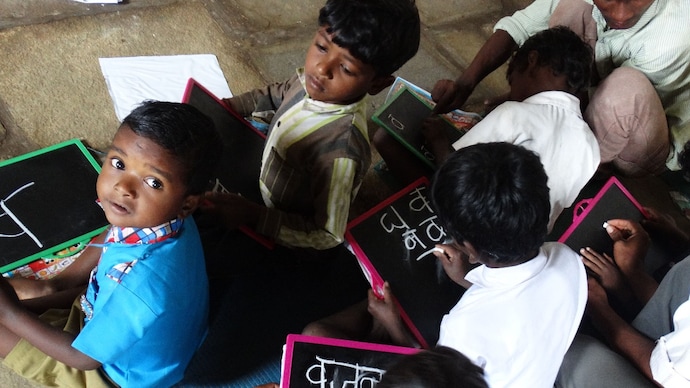
25 schools on a daily basis have closed in India in the last 10 years. This consist of schools of government dropping the enrollement number to 2.26 crore.
A total of 94,000 government schools have shut across the country over the last 10 years, according to a recent NITI Aayog report. The number of government schools declined from 11.07 lakh in 2014-15 to 10.13 lakh in 2024-25. During the same period, government-aided schools also fell from 83,000 to 79,000.
At the same time, private schools increased from 2.88 lakh to 3.39 lakh over the decade.
The report, School Education System in India: Temporal Analysis and Policy Roadmap for Quality Enhancement, found that total school enrolment declined from 26.95 crore students in 2014-15 to 24.69 crore in 2024-25. It attributed the decline to a smaller school-age population because of falling fertility rates, school consolidation, and challenges in retaining students at higher levels of education.
School consolidation, under which nearby schools with low enrolment are merged, has been promoted by the Centre and the NITI Aayog to improve the use of resources. However, education activists say the policy has also contributed to the fall in enrolment, as many children stop attending school when neighbourhood schools are closed.
The report also highlighted concerns over student retention beyond the primary level. While the dropout rate remained low at 0.3 per cent in primary classes, it increased to 3.5 per cent at the upper primary stage and reached 11.5 per cent at the secondary level.
The transition rate from upper primary to secondary school also declined from 91.58 per cent in 2014-15 to 86.6 per cent in 2024-25. States such as Puducherry and Kerala recorded transition rates of 99.6 per cent, while Meghalaya, Bihar, Mizoram, Madhya Pradesh, Uttar Pradesh, Jharkhand, Arunachal Pradesh and Nagaland reported lower rates.
The report noted that Uttar Pradesh and Madhya Pradesh have seen a large number of school mergers over the past decade, accounting for nearly 40,000 schools together.
It also pointed to learning gaps at the secondary level. Many Class IX students were found to be struggling not only with advanced mathematics topics such as algebra and geometry but also with basic concepts like percentages, fractions and ratios, indicating that foundational learning gaps continue as students move through the school system.
25 schools on a daily basis have closed in India in the last 10 years. This consist of schools of government dropping the enrollement number to 2.26 crore.
A total of 94,000 government schools have shut across the country over the last 10 years, according to a recent NITI Aayog report. The number of government schools declined from 11.07 lakh in 2014-15 to 10.13 lakh in 2024-25. During the same period, government-aided schools also fell from 83,000 to 79,000.
At the same time, private schools increased from 2.88 lakh to 3.39 lakh over the decade.
The report, School Education System in India: Temporal Analysis and Policy Roadmap for Quality Enhancement, found that total school enrolment declined from 26.95 crore students in 2014-15 to 24.69 crore in 2024-25. It attributed the decline to a smaller school-age population because of falling fertility rates, school consolidation, and challenges in retaining students at higher levels of education.
School consolidation, under which nearby schools with low enrolment are merged, has been promoted by the Centre and the NITI Aayog to improve the use of resources. However, education activists say the policy has also contributed to the fall in enrolment, as many children stop attending school when neighbourhood schools are closed.
The report also highlighted concerns over student retention beyond the primary level. While the dropout rate remained low at 0.3 per cent in primary classes, it increased to 3.5 per cent at the upper primary stage and reached 11.5 per cent at the secondary level.
The transition rate from upper primary to secondary school also declined from 91.58 per cent in 2014-15 to 86.6 per cent in 2024-25. States such as Puducherry and Kerala recorded transition rates of 99.6 per cent, while Meghalaya, Bihar, Mizoram, Madhya Pradesh, Uttar Pradesh, Jharkhand, Arunachal Pradesh and Nagaland reported lower rates.
The report noted that Uttar Pradesh and Madhya Pradesh have seen a large number of school mergers over the past decade, accounting for nearly 40,000 schools together.
It also pointed to learning gaps at the secondary level. Many Class IX students were found to be struggling not only with advanced mathematics topics such as algebra and geometry but also with basic concepts like percentages, fractions and ratios, indicating that foundational learning gaps continue as students move through the school system.

