NCERT revises Class 8 book, drops Hitler references, adds Savarkar's Swaraj call
NCERT has overhauled its revised Class 8 Social Science textbook after the Supreme Court ordered the earlier edition withdrawn over its judiciary chapter. The new book also recasts the Congress position on Partition, drops Hitler references around Bose, and adds Savarkar to the Swaraj discussion.
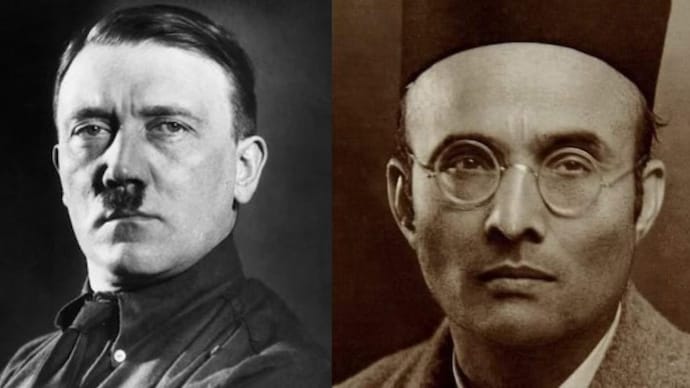
The revised NCERT Class 8 Social Science textbook has undergone sweeping changes beyond the much-debated judiciary chapter that prompted intervention from the Supreme Court.
The new edition not only rewrites the chapter on the judiciary but also revises the account of the Indian National Congress' position on Partition, removes references to Adolf Hitler and Nazi ideology in the context of Netaji Subhas Chandra Bose, and introduces a mention of Vinayak Damodar Savarkar's demand for Swaraj.
The changes come in the wake of the apex court's unprecedented directive to withdraw the earlier edition and replace it with a revised version.
SUPREME COURT'S INTERVENTION LED TO COMPLETE REVISION
The latest edition, titled Exploring Society: India and Beyond, was released after the Supreme Court ordered the withdrawal of the previous version of the textbook over its chapter on the judiciary.
Taking suo motu cognisance of the content, the apex court had strongly criticised the chapter, describing parts of it as offensive. It directed NCERT to withdraw all physical and digital copies of the book, impose a complete ban on its circulation, and prepare a revised version.
Following the court's directions, NCERT apologised for what it termed an "error of judgement" and published the revised textbook after an expert review conducted under the supervision of a committee constituted by the Ministry of Education.
CONGRESS' STAND ON PARTITION RECAST
Among the most notable revisions is a change in the chapter dealing with India's Independence and Partition.
The earlier textbook stated that although Mahatma Gandhi and most Congress leaders opposed Partition, they ultimately accepted it as the only way forward.
The revised edition now says that Partition was widely opposed even by the Indian National Congress and adds that whether accepting it was the only way forward remains a matter of historical debate.
Another sentence from the earlier version, which said that Congress leaders were helpless as communal massacres engulfed the subcontinent during Partition, has also been removed.
HITLER AND NAZI IDEOLOGY REFERENCES DROPPED
The revised textbook has also altered its description of Netaji Subhas Chandra Bose's efforts during the Second World War.
Earlier, the chapter stated that Bose sought the support of Adolf Hitler and described Hitler as a "dictator whose racist Nazi ideology and expansionist goals" had triggered the war.
The new edition replaces that formulation with a broader statement saying Bose "sought support from the anti-British forces," removing all references to Hitler and Nazi ideology.
FRENCH, RUSSIAN REVOLUTIONS SHIFT TO CLASS 10
NCERT has also overhauled the Class 9 Social Science curriculum, removing chapters on the French Revolution, the Russian Revolution and the rise of Nazism from the revised textbook.
The new Class 9 textbook instead focuses on early human history, the Harappan civilisation, ancient civilisations such as Mesopotamia, Egypt and China, as well as Indian knowledge systems. According to NCERT, the modern world history chapters have been shifted to Class 10 as part of a revised progression of the secondary-stage curriculum.
SAVARKAR INCLUDED IN SWARAJ DISCUSSION
The history chapter has also been expanded to include a reference to Vinayak Damodar Savarkar.
While discussing the demand for complete independence, the revised textbook states that "a similar demand for Swaraj was expressed by VD Savarkar in 1925," adding a new historical reference that was absent from the previous edition.
JUDICIARY CHAPTER NOW FOCUSES ON CONSTITUTIONAL ROLE
The rewritten judiciary chapter shifts its emphasis from criticism of the judicial system to explaining its constitutional functions.
Instead of discussing issues such as corruption, judicial delays and complaints against judges, the revised chapter explains the structure of the Indian judiciary, constitutional remedies under Articles 32 and 226, Public Interest Litigation (PIL), tribunals, and alternative dispute resolution mechanisms including arbitration and mediation.
It also introduces students to recent technological initiatives such as e-filing, hybrid court hearings and the live-streaming of court proceedings.
NCERT ACKNOWLEDGES COURT-MANDATED REVIEW
The acknowledgements section of the revised textbook states that the edition was published after a review process undertaken "in compliance with the directions of the Supreme Court" in a suo motu writ petition.
It also notes that the judiciary chapter was rewritten by an expert committee constituted by the Ministry of Education in accordance with the apex court's directions.
The revised NCERT Class 8 Social Science textbook reflects one of the most significant overhauls of recent years, extending well beyond the judiciary chapter that triggered judicial scrutiny.
By revising the narrative around the Congress' acceptance of Partition, removing references to Hitler and Nazi ideology in the context of Subhas Chandra Bose, adding Savarkar's demand for Swaraj, and recasting the judiciary chapter around constitutional principles, the new edition marks a broad recalibration of how key episodes in Indian history and governance are presented to students.
The revised NCERT Class 8 Social Science textbook has undergone sweeping changes beyond the much-debated judiciary chapter that prompted intervention from the Supreme Court.
The new edition not only rewrites the chapter on the judiciary but also revises the account of the Indian National Congress' position on Partition, removes references to Adolf Hitler and Nazi ideology in the context of Netaji Subhas Chandra Bose, and introduces a mention of Vinayak Damodar Savarkar's demand for Swaraj.
The changes come in the wake of the apex court's unprecedented directive to withdraw the earlier edition and replace it with a revised version.
SUPREME COURT'S INTERVENTION LED TO COMPLETE REVISION
The latest edition, titled Exploring Society: India and Beyond, was released after the Supreme Court ordered the withdrawal of the previous version of the textbook over its chapter on the judiciary.
Taking suo motu cognisance of the content, the apex court had strongly criticised the chapter, describing parts of it as offensive. It directed NCERT to withdraw all physical and digital copies of the book, impose a complete ban on its circulation, and prepare a revised version.
Following the court's directions, NCERT apologised for what it termed an "error of judgement" and published the revised textbook after an expert review conducted under the supervision of a committee constituted by the Ministry of Education.
CONGRESS' STAND ON PARTITION RECAST
Among the most notable revisions is a change in the chapter dealing with India's Independence and Partition.
The earlier textbook stated that although Mahatma Gandhi and most Congress leaders opposed Partition, they ultimately accepted it as the only way forward.
The revised edition now says that Partition was widely opposed even by the Indian National Congress and adds that whether accepting it was the only way forward remains a matter of historical debate.
Another sentence from the earlier version, which said that Congress leaders were helpless as communal massacres engulfed the subcontinent during Partition, has also been removed.
HITLER AND NAZI IDEOLOGY REFERENCES DROPPED
The revised textbook has also altered its description of Netaji Subhas Chandra Bose's efforts during the Second World War.
Earlier, the chapter stated that Bose sought the support of Adolf Hitler and described Hitler as a "dictator whose racist Nazi ideology and expansionist goals" had triggered the war.
The new edition replaces that formulation with a broader statement saying Bose "sought support from the anti-British forces," removing all references to Hitler and Nazi ideology.
FRENCH, RUSSIAN REVOLUTIONS SHIFT TO CLASS 10
NCERT has also overhauled the Class 9 Social Science curriculum, removing chapters on the French Revolution, the Russian Revolution and the rise of Nazism from the revised textbook.
The new Class 9 textbook instead focuses on early human history, the Harappan civilisation, ancient civilisations such as Mesopotamia, Egypt and China, as well as Indian knowledge systems. According to NCERT, the modern world history chapters have been shifted to Class 10 as part of a revised progression of the secondary-stage curriculum.
SAVARKAR INCLUDED IN SWARAJ DISCUSSION
The history chapter has also been expanded to include a reference to Vinayak Damodar Savarkar.
While discussing the demand for complete independence, the revised textbook states that "a similar demand for Swaraj was expressed by VD Savarkar in 1925," adding a new historical reference that was absent from the previous edition.
JUDICIARY CHAPTER NOW FOCUSES ON CONSTITUTIONAL ROLE
The rewritten judiciary chapter shifts its emphasis from criticism of the judicial system to explaining its constitutional functions.
Instead of discussing issues such as corruption, judicial delays and complaints against judges, the revised chapter explains the structure of the Indian judiciary, constitutional remedies under Articles 32 and 226, Public Interest Litigation (PIL), tribunals, and alternative dispute resolution mechanisms including arbitration and mediation.
It also introduces students to recent technological initiatives such as e-filing, hybrid court hearings and the live-streaming of court proceedings.
NCERT ACKNOWLEDGES COURT-MANDATED REVIEW
The acknowledgements section of the revised textbook states that the edition was published after a review process undertaken "in compliance with the directions of the Supreme Court" in a suo motu writ petition.
It also notes that the judiciary chapter was rewritten by an expert committee constituted by the Ministry of Education in accordance with the apex court's directions.
The revised NCERT Class 8 Social Science textbook reflects one of the most significant overhauls of recent years, extending well beyond the judiciary chapter that triggered judicial scrutiny.
By revising the narrative around the Congress' acceptance of Partition, removing references to Hitler and Nazi ideology in the context of Subhas Chandra Bose, adding Savarkar's demand for Swaraj, and recasting the judiciary chapter around constitutional principles, the new edition marks a broad recalibration of how key episodes in Indian history and governance are presented to students.

