Exclusive: No encryption can stop a rogue paper setter, says V Kamakoti
IIT Madras Director Professor V Kamakoti says rebuilding students' trust is central to NTA reforms, stressing that technology alone cannot stop rogue paper setters. The panel recommends transparent evaluation, stronger oversight, independent audits and phased reforms to curb paper leaks.
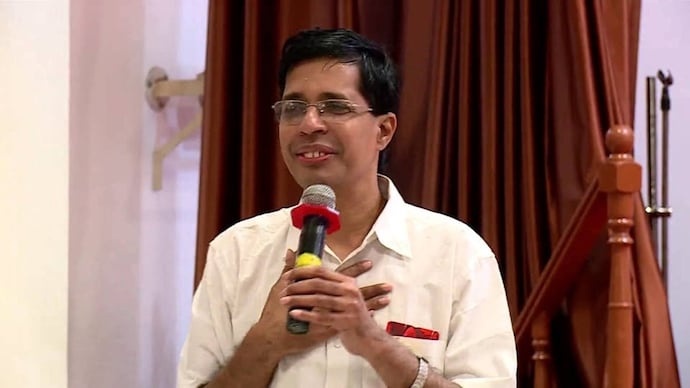
IIT Madras Director Professor V Kamakoti, a member of Prime Minister Narendra Modi's high-level task force on examination reforms, spoke exclusively to India Today about the panel's vision for strengthening the National Testing Agency (NTA), rebuilding public trust after the NEET-UG 2024 controversy, and creating a more transparent and secure examination ecosystem.
Highlighting the need for systemic reforms, Kamakoti said the committee was constituted at a time when participation in national-level entrance examinations has increased significantly, making it essential to build a more transparent, secure, and reliable examination system.
"The reforms will basically build the confidence back of the students," he said, adding that the recommendations are aimed at strengthening the integrity of the examination process and reinforcing public trust in the NTA.
The expert panel comprises technology leader Nandan Nilekani, former ISRO Chairman Dr. S. Somanath, former Intelligence Bureau Director Tapan Deka, former Education Secretary Anita Karwal, former Civil Aviation Secretary Amrit Lal Meena, and IIT Madras Director Professor V Kamakoti.
Explaining the committee's priorities, Kamakoti said the recommendations focus on two broad objectives: leveraging technology to make examinations more transparent and secure, and strengthening accountability through multi-layered verification mechanisms similar to the "maker-checker" model used in the banking sector.
EVERY STEP IS A REFORM, NOT A PATCHWORK
Describing the overhaul as a continuous process rather than a one-time intervention, Kamakoti said the committee has recommended short-, medium- and long-term reforms to strengthen examination security.
"Every step is a reform, not patchwork," he said.
"The committee has proposed short-term, medium-term and long-term recommendations. Some changes can be implemented immediately, while others will require policy decisions and institutional reforms."
He clarified that the committee has already submitted its report and that the government will decide the implementation roadmap.
"The committee has made its recommendations. The government will take a call on implementation," he said.
NO ENCRYPTION CAN STOP A ROGUE PAPER SETTER
Acknowledging that question paper leaks remain one of the biggest challenges facing large-scale public examinations, Kamakoti said the committee's primary objective is to eliminate them through systemic reforms.
"Paper leaks are an integral challenge. The goal is to prevent paper leaks," he said.
Reflecting on the lessons from the NEET-UG 2024 controversy, Kamakoti said the biggest weakness exposed was not technology but human trust.
"The root of trust was shattered because the question paper setter allegedly leaked the paper," he said.
"No encryption can stop a question paper setter from leaking the paper."
According to Kamakoti, while significant reforms have already secured the process from the NTA to examination centres, the alleged breach in the 2024 case occurred before that stage during question paper preparation. He said technology alone cannot eliminate risk if trusted insiders compromise the system.
To further strengthen safeguards, the committee has recommended independent third-party audits of the NTA's systems to identify vulnerabilities and continuously improve security.
TWO EYES ON EVERY EXAMINATION
Apart from preventing leaks, the committee has recommended tighter monitoring at every stage of the examination cycle.
"There should be two eyes on every examination process," Kamakoti said.
He explained that the "two eyes" of the examination system are preventing paper leaks and ensuring transparent evaluation. Stronger oversight is needed during question paper preparation, printing, transportation, storage, conduct of examinations and evaluation so that every critical process is independently monitored and verified.
The emphasis, he said, is on introducing multiple layers of checks to minimise the possibility of leaks or irregularities.
RESTORING TRUST THROUGH TRANSPARENT EVALUATION
According to Kamakoti, restoring public confidence in the examination system is at the heart of the committee's recommendations.
"If a student believes they deserve 90 marks, they should have confidence that the evaluation process is fair," he said.
He stressed that students should also understand how every mark was awarded. "Students must know why they received every mark they were awarded."
The committee aims to institutionalise a transparent evaluation process that allows candidates to understand how their answer scripts have been assessed.
Citing the Central Board of Secondary Education (CBSE) as an example, Kamakoti noted that more than 1.7 lakh students apply for re-evaluation every year. However, question-wise verification and digital evaluation have substantially improved transparency and reduced ambiguity.
"It is not that the government has not attempted reforms. We must ensure proper evaluation and give students confidence that the system is not broken," he said.
LESSONS FROM NEET UG 2024
Kamakoti said every examination provides an opportunity to identify vulnerabilities and strengthen safeguards.
"Every examination teaches us lessons; the system is continuously learning," he said.
"With every exam, we learn more and deploy more technology." He added that technology itself is evolving and newer tools will further strengthen examination security over time.
"What happened in May 2024 exposed gaps, including in the question paper-setting and monitoring process. Those lessons have been incorporated into the reforms."
Referring to the re-NEET conducted for affected candidates, he said it demonstrated that stronger safeguards can work effectively.
"The re-NEET was conducted without any question paper leak."
A JOURNEY OF CONTINUOUS REFORMS
Asked how long it would take to eliminate examination leaks, Kamakoti said there is no single solution or fixed timeline.
"This is a journey involving short-term, medium-term and long-term reforms," he said.
"It may take two to three iterations to achieve better and better implementations."
He added that every examination strengthens the system further and that technology will continue to evolve alongside examination security.
"With every examination we learn and tend to make the next one better."
MESSAGE TO STUDENTS
Addressing students directly, Kamakoti said the committee's foremost priorities are to ensure transparent examinations, prevent question paper leaks and make the evaluation process more credible.
"We will make our earnest attempt to ensure examinations are transparent and leak-proof," he said.
Framing the reforms within the vision of Viksit Bharat 2047, Kamakoti said the long-term goal is to create an examination ecosystem that students can trust.
"Our effort is to ensure the system is not broken and that every student believes the examination process is fair, secure and credible," he said.
IIT Madras Director Professor V Kamakoti, a member of Prime Minister Narendra Modi's high-level task force on examination reforms, spoke exclusively to India Today about the panel's vision for strengthening the National Testing Agency (NTA), rebuilding public trust after the NEET-UG 2024 controversy, and creating a more transparent and secure examination ecosystem.
Highlighting the need for systemic reforms, Kamakoti said the committee was constituted at a time when participation in national-level entrance examinations has increased significantly, making it essential to build a more transparent, secure, and reliable examination system.
"The reforms will basically build the confidence back of the students," he said, adding that the recommendations are aimed at strengthening the integrity of the examination process and reinforcing public trust in the NTA.
The expert panel comprises technology leader Nandan Nilekani, former ISRO Chairman Dr. S. Somanath, former Intelligence Bureau Director Tapan Deka, former Education Secretary Anita Karwal, former Civil Aviation Secretary Amrit Lal Meena, and IIT Madras Director Professor V Kamakoti.
Explaining the committee's priorities, Kamakoti said the recommendations focus on two broad objectives: leveraging technology to make examinations more transparent and secure, and strengthening accountability through multi-layered verification mechanisms similar to the "maker-checker" model used in the banking sector.
EVERY STEP IS A REFORM, NOT A PATCHWORK
Describing the overhaul as a continuous process rather than a one-time intervention, Kamakoti said the committee has recommended short-, medium- and long-term reforms to strengthen examination security.
"Every step is a reform, not patchwork," he said.
"The committee has proposed short-term, medium-term and long-term recommendations. Some changes can be implemented immediately, while others will require policy decisions and institutional reforms."
He clarified that the committee has already submitted its report and that the government will decide the implementation roadmap.
"The committee has made its recommendations. The government will take a call on implementation," he said.
NO ENCRYPTION CAN STOP A ROGUE PAPER SETTER
Acknowledging that question paper leaks remain one of the biggest challenges facing large-scale public examinations, Kamakoti said the committee's primary objective is to eliminate them through systemic reforms.
"Paper leaks are an integral challenge. The goal is to prevent paper leaks," he said.
Reflecting on the lessons from the NEET-UG 2024 controversy, Kamakoti said the biggest weakness exposed was not technology but human trust.
"The root of trust was shattered because the question paper setter allegedly leaked the paper," he said.
"No encryption can stop a question paper setter from leaking the paper."
According to Kamakoti, while significant reforms have already secured the process from the NTA to examination centres, the alleged breach in the 2024 case occurred before that stage during question paper preparation. He said technology alone cannot eliminate risk if trusted insiders compromise the system.
To further strengthen safeguards, the committee has recommended independent third-party audits of the NTA's systems to identify vulnerabilities and continuously improve security.
TWO EYES ON EVERY EXAMINATION
Apart from preventing leaks, the committee has recommended tighter monitoring at every stage of the examination cycle.
"There should be two eyes on every examination process," Kamakoti said.
He explained that the "two eyes" of the examination system are preventing paper leaks and ensuring transparent evaluation. Stronger oversight is needed during question paper preparation, printing, transportation, storage, conduct of examinations and evaluation so that every critical process is independently monitored and verified.
The emphasis, he said, is on introducing multiple layers of checks to minimise the possibility of leaks or irregularities.
RESTORING TRUST THROUGH TRANSPARENT EVALUATION
According to Kamakoti, restoring public confidence in the examination system is at the heart of the committee's recommendations.
"If a student believes they deserve 90 marks, they should have confidence that the evaluation process is fair," he said.
He stressed that students should also understand how every mark was awarded. "Students must know why they received every mark they were awarded."
The committee aims to institutionalise a transparent evaluation process that allows candidates to understand how their answer scripts have been assessed.
Citing the Central Board of Secondary Education (CBSE) as an example, Kamakoti noted that more than 1.7 lakh students apply for re-evaluation every year. However, question-wise verification and digital evaluation have substantially improved transparency and reduced ambiguity.
"It is not that the government has not attempted reforms. We must ensure proper evaluation and give students confidence that the system is not broken," he said.
LESSONS FROM NEET UG 2024
Kamakoti said every examination provides an opportunity to identify vulnerabilities and strengthen safeguards.
"Every examination teaches us lessons; the system is continuously learning," he said.
"With every exam, we learn more and deploy more technology." He added that technology itself is evolving and newer tools will further strengthen examination security over time.
"What happened in May 2024 exposed gaps, including in the question paper-setting and monitoring process. Those lessons have been incorporated into the reforms."
Referring to the re-NEET conducted for affected candidates, he said it demonstrated that stronger safeguards can work effectively.
"The re-NEET was conducted without any question paper leak."
A JOURNEY OF CONTINUOUS REFORMS
Asked how long it would take to eliminate examination leaks, Kamakoti said there is no single solution or fixed timeline.
"This is a journey involving short-term, medium-term and long-term reforms," he said.
"It may take two to three iterations to achieve better and better implementations."
He added that every examination strengthens the system further and that technology will continue to evolve alongside examination security.
"With every examination we learn and tend to make the next one better."
MESSAGE TO STUDENTS
Addressing students directly, Kamakoti said the committee's foremost priorities are to ensure transparent examinations, prevent question paper leaks and make the evaluation process more credible.
"We will make our earnest attempt to ensure examinations are transparent and leak-proof," he said.
Framing the reforms within the vision of Viksit Bharat 2047, Kamakoti said the long-term goal is to create an examination ecosystem that students can trust.
"Our effort is to ensure the system is not broken and that every student believes the examination process is fair, secure and credible," he said.
IIT Madras Director Professor V Kamakoti, a member of Prime Minister Narendra Modi's high-level task force on examination reforms, spoke exclusively to India Today about the panel's vision for strengthening the National Testing Agency (NTA), rebuilding public trust after the NEET-UG 2024 controversy, and creating a more transparent and secure examination ecosystem.
Highlighting the need for systemic reforms, Kamakoti said the committee was constituted at a time when participation in national-level entrance examinations has increased significantly, making it essential to build a more transparent, secure, and reliable examination system.
"The reforms will basically build the confidence back of the students," he said, adding that the recommendations are aimed at strengthening the integrity of the examination process and reinforcing public trust in the NTA.
The expert panel comprises technology leader Nandan Nilekani, former ISRO Chairman Dr. S. Somanath, former Intelligence Bureau Director Tapan Deka, former Education Secretary Anita Karwal, former Civil Aviation Secretary Amrit Lal Meena, and IIT Madras Director Professor V Kamakoti.
Explaining the committee's priorities, Kamakoti said the recommendations focus on two broad objectives: leveraging technology to make examinations more transparent and secure, and strengthening accountability through multi-layered verification mechanisms similar to the "maker-checker" model used in the banking sector.
EVERY STEP IS A REFORM, NOT A PATCHWORK
Describing the overhaul as a continuous process rather than a one-time intervention, Kamakoti said the committee has recommended short-, medium- and long-term reforms to strengthen examination security.
"Every step is a reform, not patchwork," he said.
"The committee has proposed short-term, medium-term and long-term recommendations. Some changes can be implemented immediately, while others will require policy decisions and institutional reforms."
He clarified that the committee has already submitted its report and that the government will decide the implementation roadmap.
"The committee has made its recommendations. The government will take a call on implementation," he said.
NO ENCRYPTION CAN STOP A ROGUE PAPER SETTER
Acknowledging that question paper leaks remain one of the biggest challenges facing large-scale public examinations, Kamakoti said the committee's primary objective is to eliminate them through systemic reforms.
"Paper leaks are an integral challenge. The goal is to prevent paper leaks," he said.
Reflecting on the lessons from the NEET-UG 2024 controversy, Kamakoti said the biggest weakness exposed was not technology but human trust.
"The root of trust was shattered because the question paper setter allegedly leaked the paper," he said.
"No encryption can stop a question paper setter from leaking the paper."
According to Kamakoti, while significant reforms have already secured the process from the NTA to examination centres, the alleged breach in the 2024 case occurred before that stage during question paper preparation. He said technology alone cannot eliminate risk if trusted insiders compromise the system.
To further strengthen safeguards, the committee has recommended independent third-party audits of the NTA's systems to identify vulnerabilities and continuously improve security.
TWO EYES ON EVERY EXAMINATION
Apart from preventing leaks, the committee has recommended tighter monitoring at every stage of the examination cycle.
"There should be two eyes on every examination process," Kamakoti said.
He explained that the "two eyes" of the examination system are preventing paper leaks and ensuring transparent evaluation. Stronger oversight is needed during question paper preparation, printing, transportation, storage, conduct of examinations and evaluation so that every critical process is independently monitored and verified.
The emphasis, he said, is on introducing multiple layers of checks to minimise the possibility of leaks or irregularities.
RESTORING TRUST THROUGH TRANSPARENT EVALUATION
According to Kamakoti, restoring public confidence in the examination system is at the heart of the committee's recommendations.
"If a student believes they deserve 90 marks, they should have confidence that the evaluation process is fair," he said.
He stressed that students should also understand how every mark was awarded. "Students must know why they received every mark they were awarded."
The committee aims to institutionalise a transparent evaluation process that allows candidates to understand how their answer scripts have been assessed.
Citing the Central Board of Secondary Education (CBSE) as an example, Kamakoti noted that more than 1.7 lakh students apply for re-evaluation every year. However, question-wise verification and digital evaluation have substantially improved transparency and reduced ambiguity.
"It is not that the government has not attempted reforms. We must ensure proper evaluation and give students confidence that the system is not broken," he said.
LESSONS FROM NEET UG 2024
Kamakoti said every examination provides an opportunity to identify vulnerabilities and strengthen safeguards.
"Every examination teaches us lessons; the system is continuously learning," he said.
"With every exam, we learn more and deploy more technology." He added that technology itself is evolving and newer tools will further strengthen examination security over time.
"What happened in May 2024 exposed gaps, including in the question paper-setting and monitoring process. Those lessons have been incorporated into the reforms."
Referring to the re-NEET conducted for affected candidates, he said it demonstrated that stronger safeguards can work effectively.
"The re-NEET was conducted without any question paper leak."
A JOURNEY OF CONTINUOUS REFORMS
Asked how long it would take to eliminate examination leaks, Kamakoti said there is no single solution or fixed timeline.
"This is a journey involving short-term, medium-term and long-term reforms," he said.
"It may take two to three iterations to achieve better and better implementations."
He added that every examination strengthens the system further and that technology will continue to evolve alongside examination security.
"With every examination we learn and tend to make the next one better."
MESSAGE TO STUDENTS
Addressing students directly, Kamakoti said the committee's foremost priorities are to ensure transparent examinations, prevent question paper leaks and make the evaluation process more credible.
"We will make our earnest attempt to ensure examinations are transparent and leak-proof," he said.
Framing the reforms within the vision of Viksit Bharat 2047, Kamakoti said the long-term goal is to create an examination ecosystem that students can trust.
"Our effort is to ensure the system is not broken and that every student believes the examination process is fair, secure and credible," he said.

