You can't change my mind, Spider-Man is the greatest Avenger ever
Spider-Man holds a special place as the greatest Avenger. I've never understood why greatness in the MCU is measured by power. If anything, Spider-Man proves the opposite. His biggest strength has always been that he feels like one of us.
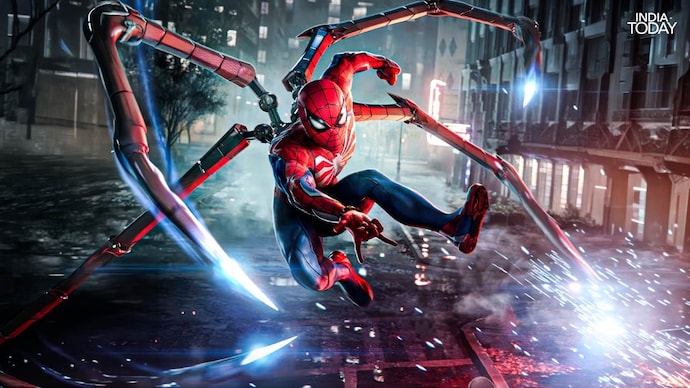
You can throw every argument at me. Tell me Iron Man built the Marvel Cinematic Universe aka the MCU. Tell me Captain America is everything a leader should be. Tell me Thor is a god who has fought cosmic battles beyond human imagination. I will probably agree with every single point. But you still won't change my mind. Spider-Man is, and always will be, the greatest Avenger.
Maybe it's because I never met him through comic books. I met him the way millions of children around the world did – through cartoons. Growing up, Saturday mornings meant watching a lanky teenager in a red-and-blue suit swing across New York City, cracking jokes while chasing villains twice his size. At the time, I didn't know who the Avengers were, nor did I realise there was an entire Marvel universe waiting to be discovered. I just knew Peter Parker.
Looking back, I realise Spider-Man wasn't merely my favourite superhero. He was my introduction to superheroes. When Tom Holland's Peter Parker entered the Marvel Cinematic Universe years later, I wasn't excited because Spider-Man had joined the Avengers. I was excited because the character I had grown up with was finally leading me into this enormous world of gods, billionaires, soldiers and sorcerers. Through him, I met Iron Man, Doctor Strange, Captain America, Black Panther and everyone else. He wasn't another Avenger for me; he was the doorway. That is perhaps why he has always felt different.
The thing about Spider-Man is that he never feels out of reach. He isn't royalty. He isn't genetically perfect. He isn't the richest man in the room or the strongest person on the battlefield. More often than not, he is simply trying to survive another day. He's worrying about exams, running late for class, wondering how he'll pay the bills, and trying to keep promises to the people he loves while secretly saving strangers. Among heroes who save the universe, Spider-Man somehow finds time to tell us what it means to survive everyday life.
That is why Peter Parker has always been the ultimate underdog. As a student, he's constantly falling behind. Assignments pile up, friendships become complicated and responsibilities collide. He's brilliant, but brilliance doesn't exempt him from failure. If anything, it makes his failures hurt even more because we know how hard he's trying. Who hasn't felt that? We've all sat in classrooms pretending to understand life while quietly feeling overwhelmed. We've all chased ambitions while wondering whether we're good enough. We've all carried burdens invisible to everyone else. Spider-Man only does it wearing a mask.
Family forms the emotional anchor of every version of Peter Parker. No matter which adaptation you grew up with, the story always circles back to the people who raised him. Uncle Ben's lesson about responsibility has become one of the most recognisable lines in popular culture because it isn't merely advice; it's the guilt Peter carries every single day. Aunt May, in every version, reminds us that superheroes still need someone asking whether they've eaten or whether they'll be home for dinner.
For all the alien invasions and multiversal chaos, Spider-Man's greatest battles have always begun at home.
His love stories have shaped him just as much. And these relationships have always been a huge part of why his stories stay with us. Whether it's Mary Jane Watson or Gwen Stacy, every relationship changes Peter Parker in some way. They bring out his happiest moments, but they also remind him of the sacrifices that come with being Spider-Man.
Love, for Peter, has never been easy. Every choice comes with consequences, and every loss leaves a mark. That's what makes his journey feel so human.
The same can be said about the actors who have played him. Tobey Maguire, Andrew Garfield and Tom Holland have all brought something different to Peter Parker. People will always debate who the best Spider-Man is, but one thing has never changed – the love for the character itself. The actors have changed, the suits have changed, and even the universes have changed, but people have remained just as invested in Peter Parker's story.
If anything, Spider-Man: No Way Home (2021) proved that our love was never attached to one actor. Watching three generations of Spider-Men share the screen wasn't simply fan service; it felt like celebrating different phases of our own lives. Some of us grew up with Tobey. Others found Spider-Man through Andrew. Today's generation sees Tom as their Peter Parker. The multiverse didn't divide the fandom – it united it by proving that no matter who wears the suit, Peter Parker's heart remains the same.
His popularity has also escaped cinema altogether. Walk into a toy shop almost anywhere in the world and chances are Spider-Man occupies an entire shelf. Children wear Spider-Man backpacks before they can even pronounce "multiverse". Adults still buy hoodies with the spider emblem. His iconic meme has become internet shorthand for shared guilt and mutual accusation, while the upside-down kiss remains one of cinema's most recognisable romantic images. Very few superheroes have transcended fiction in quite the same way because Peter Parker has always represented something larger than superheroes. He represents possibility.
Today, I don't see Spider-Man the same way I did as a child. Life has become more complicated. Responsibilities are heavier. Deadlines are relentless. Dreams now come with rent, bills and uncertainty. Oddly enough, Peter Parker feels even more relatable now than he did back then. He's still trying to balance work and life. He's still disappointing people unintentionally. He's still wondering whether he's enough. Yet despite all of it, he still swings towards the next crisis because someone needs help. That, to me, is heroism.
So yes, you can remind me that Iron Man sacrificed himself to save the universe (not a spoiler anymore). You can point to Captain America lifting Mjolnir (not a spoiler at all) or Thor's godhood and Doctor Strange's mastery of the mystic arts. I admire every one of them. But if you ask me which Avenger has always felt the most real, the one whose victories feel like ours and whose failures hurt like our own, my answer will never change. Spider-Man isn't the greatest Avenger because he's the strongest. He's the greatest because, beneath the mask, he's still just one of us. And somehow, that has always been more than enough.
Spider-Man: Brand New Day releases in theatres this Thursday.
You can throw every argument at me. Tell me Iron Man built the Marvel Cinematic Universe aka the MCU. Tell me Captain America is everything a leader should be. Tell me Thor is a god who has fought cosmic battles beyond human imagination. I will probably agree with every single point. But you still won't change my mind. Spider-Man is, and always will be, the greatest Avenger.
Maybe it's because I never met him through comic books. I met him the way millions of children around the world did – through cartoons. Growing up, Saturday mornings meant watching a lanky teenager in a red-and-blue suit swing across New York City, cracking jokes while chasing villains twice his size. At the time, I didn't know who the Avengers were, nor did I realise there was an entire Marvel universe waiting to be discovered. I just knew Peter Parker.
Looking back, I realise Spider-Man wasn't merely my favourite superhero. He was my introduction to superheroes. When Tom Holland's Peter Parker entered the Marvel Cinematic Universe years later, I wasn't excited because Spider-Man had joined the Avengers. I was excited because the character I had grown up with was finally leading me into this enormous world of gods, billionaires, soldiers and sorcerers. Through him, I met Iron Man, Doctor Strange, Captain America, Black Panther and everyone else. He wasn't another Avenger for me; he was the doorway. That is perhaps why he has always felt different.
The thing about Spider-Man is that he never feels out of reach. He isn't royalty. He isn't genetically perfect. He isn't the richest man in the room or the strongest person on the battlefield. More often than not, he is simply trying to survive another day. He's worrying about exams, running late for class, wondering how he'll pay the bills, and trying to keep promises to the people he loves while secretly saving strangers. Among heroes who save the universe, Spider-Man somehow finds time to tell us what it means to survive everyday life.
That is why Peter Parker has always been the ultimate underdog. As a student, he's constantly falling behind. Assignments pile up, friendships become complicated and responsibilities collide. He's brilliant, but brilliance doesn't exempt him from failure. If anything, it makes his failures hurt even more because we know how hard he's trying. Who hasn't felt that? We've all sat in classrooms pretending to understand life while quietly feeling overwhelmed. We've all chased ambitions while wondering whether we're good enough. We've all carried burdens invisible to everyone else. Spider-Man only does it wearing a mask.
Family forms the emotional anchor of every version of Peter Parker. No matter which adaptation you grew up with, the story always circles back to the people who raised him. Uncle Ben's lesson about responsibility has become one of the most recognisable lines in popular culture because it isn't merely advice; it's the guilt Peter carries every single day. Aunt May, in every version, reminds us that superheroes still need someone asking whether they've eaten or whether they'll be home for dinner.
For all the alien invasions and multiversal chaos, Spider-Man's greatest battles have always begun at home.
His love stories have shaped him just as much. And these relationships have always been a huge part of why his stories stay with us. Whether it's Mary Jane Watson or Gwen Stacy, every relationship changes Peter Parker in some way. They bring out his happiest moments, but they also remind him of the sacrifices that come with being Spider-Man.
Love, for Peter, has never been easy. Every choice comes with consequences, and every loss leaves a mark. That's what makes his journey feel so human.
The same can be said about the actors who have played him. Tobey Maguire, Andrew Garfield and Tom Holland have all brought something different to Peter Parker. People will always debate who the best Spider-Man is, but one thing has never changed – the love for the character itself. The actors have changed, the suits have changed, and even the universes have changed, but people have remained just as invested in Peter Parker's story.
If anything, Spider-Man: No Way Home (2021) proved that our love was never attached to one actor. Watching three generations of Spider-Men share the screen wasn't simply fan service; it felt like celebrating different phases of our own lives. Some of us grew up with Tobey. Others found Spider-Man through Andrew. Today's generation sees Tom as their Peter Parker. The multiverse didn't divide the fandom – it united it by proving that no matter who wears the suit, Peter Parker's heart remains the same.
His popularity has also escaped cinema altogether. Walk into a toy shop almost anywhere in the world and chances are Spider-Man occupies an entire shelf. Children wear Spider-Man backpacks before they can even pronounce "multiverse". Adults still buy hoodies with the spider emblem. His iconic meme has become internet shorthand for shared guilt and mutual accusation, while the upside-down kiss remains one of cinema's most recognisable romantic images. Very few superheroes have transcended fiction in quite the same way because Peter Parker has always represented something larger than superheroes. He represents possibility.
Today, I don't see Spider-Man the same way I did as a child. Life has become more complicated. Responsibilities are heavier. Deadlines are relentless. Dreams now come with rent, bills and uncertainty. Oddly enough, Peter Parker feels even more relatable now than he did back then. He's still trying to balance work and life. He's still disappointing people unintentionally. He's still wondering whether he's enough. Yet despite all of it, he still swings towards the next crisis because someone needs help. That, to me, is heroism.
So yes, you can remind me that Iron Man sacrificed himself to save the universe (not a spoiler anymore). You can point to Captain America lifting Mjolnir (not a spoiler at all) or Thor's godhood and Doctor Strange's mastery of the mystic arts. I admire every one of them. But if you ask me which Avenger has always felt the most real, the one whose victories feel like ours and whose failures hurt like our own, my answer will never change. Spider-Man isn't the greatest Avenger because he's the strongest. He's the greatest because, beneath the mask, he's still just one of us. And somehow, that has always been more than enough.
Spider-Man: Brand New Day releases in theatres this Thursday.
You can throw every argument at me. Tell me Iron Man built the Marvel Cinematic Universe aka the MCU. Tell me Captain America is everything a leader should be. Tell me Thor is a god who has fought cosmic battles beyond human imagination. I will probably agree with every single point. But you still won't change my mind. Spider-Man is, and always will be, the greatest Avenger.
Maybe it's because I never met him through comic books. I met him the way millions of children around the world did – through cartoons. Growing up, Saturday mornings meant watching a lanky teenager in a red-and-blue suit swing across New York City, cracking jokes while chasing villains twice his size. At the time, I didn't know who the Avengers were, nor did I realise there was an entire Marvel universe waiting to be discovered. I just knew Peter Parker.
Looking back, I realise Spider-Man wasn't merely my favourite superhero. He was my introduction to superheroes. When Tom Holland's Peter Parker entered the Marvel Cinematic Universe years later, I wasn't excited because Spider-Man had joined the Avengers. I was excited because the character I had grown up with was finally leading me into this enormous world of gods, billionaires, soldiers and sorcerers. Through him, I met Iron Man, Doctor Strange, Captain America, Black Panther and everyone else. He wasn't another Avenger for me; he was the doorway. That is perhaps why he has always felt different.
The thing about Spider-Man is that he never feels out of reach. He isn't royalty. He isn't genetically perfect. He isn't the richest man in the room or the strongest person on the battlefield. More often than not, he is simply trying to survive another day. He's worrying about exams, running late for class, wondering how he'll pay the bills, and trying to keep promises to the people he loves while secretly saving strangers. Among heroes who save the universe, Spider-Man somehow finds time to tell us what it means to survive everyday life.
That is why Peter Parker has always been the ultimate underdog. As a student, he's constantly falling behind. Assignments pile up, friendships become complicated and responsibilities collide. He's brilliant, but brilliance doesn't exempt him from failure. If anything, it makes his failures hurt even more because we know how hard he's trying. Who hasn't felt that? We've all sat in classrooms pretending to understand life while quietly feeling overwhelmed. We've all chased ambitions while wondering whether we're good enough. We've all carried burdens invisible to everyone else. Spider-Man only does it wearing a mask.
Family forms the emotional anchor of every version of Peter Parker. No matter which adaptation you grew up with, the story always circles back to the people who raised him. Uncle Ben's lesson about responsibility has become one of the most recognisable lines in popular culture because it isn't merely advice; it's the guilt Peter carries every single day. Aunt May, in every version, reminds us that superheroes still need someone asking whether they've eaten or whether they'll be home for dinner.
For all the alien invasions and multiversal chaos, Spider-Man's greatest battles have always begun at home.
His love stories have shaped him just as much. And these relationships have always been a huge part of why his stories stay with us. Whether it's Mary Jane Watson or Gwen Stacy, every relationship changes Peter Parker in some way. They bring out his happiest moments, but they also remind him of the sacrifices that come with being Spider-Man.
Love, for Peter, has never been easy. Every choice comes with consequences, and every loss leaves a mark. That's what makes his journey feel so human.
The same can be said about the actors who have played him. Tobey Maguire, Andrew Garfield and Tom Holland have all brought something different to Peter Parker. People will always debate who the best Spider-Man is, but one thing has never changed – the love for the character itself. The actors have changed, the suits have changed, and even the universes have changed, but people have remained just as invested in Peter Parker's story.
If anything, Spider-Man: No Way Home (2021) proved that our love was never attached to one actor. Watching three generations of Spider-Men share the screen wasn't simply fan service; it felt like celebrating different phases of our own lives. Some of us grew up with Tobey. Others found Spider-Man through Andrew. Today's generation sees Tom as their Peter Parker. The multiverse didn't divide the fandom – it united it by proving that no matter who wears the suit, Peter Parker's heart remains the same.
His popularity has also escaped cinema altogether. Walk into a toy shop almost anywhere in the world and chances are Spider-Man occupies an entire shelf. Children wear Spider-Man backpacks before they can even pronounce "multiverse". Adults still buy hoodies with the spider emblem. His iconic meme has become internet shorthand for shared guilt and mutual accusation, while the upside-down kiss remains one of cinema's most recognisable romantic images. Very few superheroes have transcended fiction in quite the same way because Peter Parker has always represented something larger than superheroes. He represents possibility.
Today, I don't see Spider-Man the same way I did as a child. Life has become more complicated. Responsibilities are heavier. Deadlines are relentless. Dreams now come with rent, bills and uncertainty. Oddly enough, Peter Parker feels even more relatable now than he did back then. He's still trying to balance work and life. He's still disappointing people unintentionally. He's still wondering whether he's enough. Yet despite all of it, he still swings towards the next crisis because someone needs help. That, to me, is heroism.
So yes, you can remind me that Iron Man sacrificed himself to save the universe (not a spoiler anymore). You can point to Captain America lifting Mjolnir (not a spoiler at all) or Thor's godhood and Doctor Strange's mastery of the mystic arts. I admire every one of them. But if you ask me which Avenger has always felt the most real, the one whose victories feel like ours and whose failures hurt like our own, my answer will never change. Spider-Man isn't the greatest Avenger because he's the strongest. He's the greatest because, beneath the mask, he's still just one of us. And somehow, that has always been more than enough.
Spider-Man: Brand New Day releases in theatres this Thursday.

