Furious review: Emmy Rossum and Lola Petticrew's thriller earns its rage
Furious series review: Furious follows FBI investigator Alice Black as murders of powerful men expose a deeper history of harm. The series uses the case to examine institutional failure, grief and female anger without easy answers.
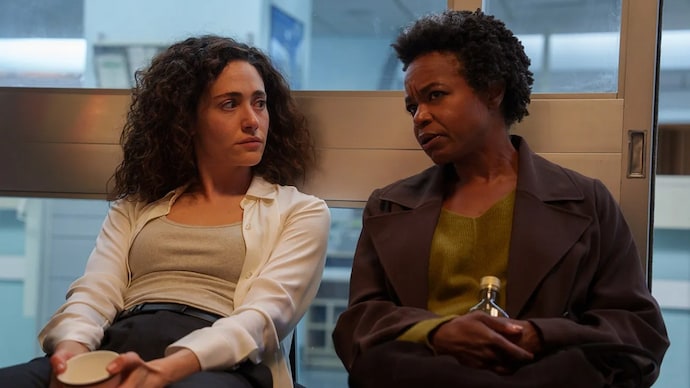
Hulu’s new show Furious opens with a murder but rarely behaves like a murder mystery. Every death raises questions, but the series is less interested in solving the crime than in examining everything that made it possible.
Created by Elizabeth Meriwether, the eight-episode thriller, streaming on JioHotstar in India, borrows the framework of a serial-killer mystery but steadily peels away its genre conventions. The murders are merely the entry point. What unfolds instead is a story about women navigating institutions that repeatedly fail them, where anger isn’t treated as a character flaw but as a consequence.
Former NYPD detective Alice Black (Emmy Rossum), now working at the FBI, finds herself investigating a string of murders targeting powerful men with troubling pasts. Across town is Catherine (Lola Petticrew), the woman behind the killings, whose own history gradually transforms what initially appears to be a straightforward cat-and-mouse chase into something far murkier. By revealing more than a conventional whodunnit usually would, Furious shifts the intrigue away from the killer’s identity and towards the people caught in its wake.
Rossum gives Alice a quiet resolve that feels refreshing in a genre often built around emotionally detached investigators. She isn’t written as infallible, nor is she burdened with unnecessary quirks to appear complex. Instead, Alice carries her own scars while trying to make sense of a system that seems designed to overlook the vulnerable. Rossum allows those contradictions to simmer beneath the surface, making Alice compelling even in the show’s quieter moments.
If Rossum provides the show’s emotional anchor, Petticrew supplies unpredictability. Catherine is neither glorified nor reduced to a symbol of vengeance. Petticrew plays her with an unsettling calm that makes every appearance quietly unnerving. The series never asks viewers to celebrate violence, but neither does it simplify the moral questions surrounding it. It’s at its strongest when it refuses to offer easy answers.
The dynamic between Alice and veteran FBI agent Nora Washington (Quincy Tyler Bernstine) also gives the series much of its emotional weight. Rather than manufacturing rivalry, the show allows their partnership to evolve through mutual scepticism, respect and shared exhaustion. It’s a refreshing departure from procedurals that rely on constant interpersonal conflict to generate drama.
For all its commentary on institutional failure and exploitation, Furious never feels like it’s chasing a larger message at the expense of its story. Meriwether trusts the audience to recognise the gaps between law, justice and accountability without spelling out every conclusion. The series acknowledges the horrors at its centre without exploiting them for shock value, allowing its most devastating moments to emerge through implication rather than graphic spectacle.
The direction follows that same approach. Suspense is less about elaborate action and more about lingering conversations, uncomfortable silences and the constant uncertainty of who is really in control. Even when the plot edges towards familiar thriller territory, the performances keep it grounded.
Still, Furious isn’t without its stumbles.
The series occasionally struggles to balance its many ideas. It juggles procedural investigation, social commentary, psychological drama and conspiracy thriller elements, and not all of those threads receive the same attention. Some supporting characters remain underdeveloped, while certain twists arrive more as narrative necessity than emotional inevitability. There are also stretches where the pacing softens under the weight of exposition, particularly in the middle episodes.
Yet those shortcomings don’t diminish what Furious does remarkably well. It refuses to package female anger as either empowerment fantasy or cautionary tale. Instead, it presents rage as something deeply human – messy, contradictory and impossible to separate from grief.
That’s what lingers after the final episode. Not the bodies or the investigation, but the uncomfortable recognition that the real tragedy began long before anyone was killed. Furious is less interested in asking whether revenge is justified than in examining the conditions that make it imaginable in the first place – and that’s what makes it more than just another crime thriller.
Furious is available to stream on JioHotstar.
Hulu’s new show Furious opens with a murder but rarely behaves like a murder mystery. Every death raises questions, but the series is less interested in solving the crime than in examining everything that made it possible.
Created by Elizabeth Meriwether, the eight-episode thriller, streaming on JioHotstar in India, borrows the framework of a serial-killer mystery but steadily peels away its genre conventions. The murders are merely the entry point. What unfolds instead is a story about women navigating institutions that repeatedly fail them, where anger isn’t treated as a character flaw but as a consequence.
Former NYPD detective Alice Black (Emmy Rossum), now working at the FBI, finds herself investigating a string of murders targeting powerful men with troubling pasts. Across town is Catherine (Lola Petticrew), the woman behind the killings, whose own history gradually transforms what initially appears to be a straightforward cat-and-mouse chase into something far murkier. By revealing more than a conventional whodunnit usually would, Furious shifts the intrigue away from the killer’s identity and towards the people caught in its wake.
Rossum gives Alice a quiet resolve that feels refreshing in a genre often built around emotionally detached investigators. She isn’t written as infallible, nor is she burdened with unnecessary quirks to appear complex. Instead, Alice carries her own scars while trying to make sense of a system that seems designed to overlook the vulnerable. Rossum allows those contradictions to simmer beneath the surface, making Alice compelling even in the show’s quieter moments.
If Rossum provides the show’s emotional anchor, Petticrew supplies unpredictability. Catherine is neither glorified nor reduced to a symbol of vengeance. Petticrew plays her with an unsettling calm that makes every appearance quietly unnerving. The series never asks viewers to celebrate violence, but neither does it simplify the moral questions surrounding it. It’s at its strongest when it refuses to offer easy answers.
The dynamic between Alice and veteran FBI agent Nora Washington (Quincy Tyler Bernstine) also gives the series much of its emotional weight. Rather than manufacturing rivalry, the show allows their partnership to evolve through mutual scepticism, respect and shared exhaustion. It’s a refreshing departure from procedurals that rely on constant interpersonal conflict to generate drama.
For all its commentary on institutional failure and exploitation, Furious never feels like it’s chasing a larger message at the expense of its story. Meriwether trusts the audience to recognise the gaps between law, justice and accountability without spelling out every conclusion. The series acknowledges the horrors at its centre without exploiting them for shock value, allowing its most devastating moments to emerge through implication rather than graphic spectacle.
The direction follows that same approach. Suspense is less about elaborate action and more about lingering conversations, uncomfortable silences and the constant uncertainty of who is really in control. Even when the plot edges towards familiar thriller territory, the performances keep it grounded.
Still, Furious isn’t without its stumbles.
The series occasionally struggles to balance its many ideas. It juggles procedural investigation, social commentary, psychological drama and conspiracy thriller elements, and not all of those threads receive the same attention. Some supporting characters remain underdeveloped, while certain twists arrive more as narrative necessity than emotional inevitability. There are also stretches where the pacing softens under the weight of exposition, particularly in the middle episodes.
Yet those shortcomings don’t diminish what Furious does remarkably well. It refuses to package female anger as either empowerment fantasy or cautionary tale. Instead, it presents rage as something deeply human – messy, contradictory and impossible to separate from grief.
That’s what lingers after the final episode. Not the bodies or the investigation, but the uncomfortable recognition that the real tragedy began long before anyone was killed. Furious is less interested in asking whether revenge is justified than in examining the conditions that make it imaginable in the first place – and that’s what makes it more than just another crime thriller.
Furious is available to stream on JioHotstar.
Hulu’s new show Furious opens with a murder but rarely behaves like a murder mystery. Every death raises questions, but the series is less interested in solving the crime than in examining everything that made it possible.
Created by Elizabeth Meriwether, the eight-episode thriller, streaming on JioHotstar in India, borrows the framework of a serial-killer mystery but steadily peels away its genre conventions. The murders are merely the entry point. What unfolds instead is a story about women navigating institutions that repeatedly fail them, where anger isn’t treated as a character flaw but as a consequence.
Former NYPD detective Alice Black (Emmy Rossum), now working at the FBI, finds herself investigating a string of murders targeting powerful men with troubling pasts. Across town is Catherine (Lola Petticrew), the woman behind the killings, whose own history gradually transforms what initially appears to be a straightforward cat-and-mouse chase into something far murkier. By revealing more than a conventional whodunnit usually would, Furious shifts the intrigue away from the killer’s identity and towards the people caught in its wake.
Rossum gives Alice a quiet resolve that feels refreshing in a genre often built around emotionally detached investigators. She isn’t written as infallible, nor is she burdened with unnecessary quirks to appear complex. Instead, Alice carries her own scars while trying to make sense of a system that seems designed to overlook the vulnerable. Rossum allows those contradictions to simmer beneath the surface, making Alice compelling even in the show’s quieter moments.
If Rossum provides the show’s emotional anchor, Petticrew supplies unpredictability. Catherine is neither glorified nor reduced to a symbol of vengeance. Petticrew plays her with an unsettling calm that makes every appearance quietly unnerving. The series never asks viewers to celebrate violence, but neither does it simplify the moral questions surrounding it. It’s at its strongest when it refuses to offer easy answers.
The dynamic between Alice and veteran FBI agent Nora Washington (Quincy Tyler Bernstine) also gives the series much of its emotional weight. Rather than manufacturing rivalry, the show allows their partnership to evolve through mutual scepticism, respect and shared exhaustion. It’s a refreshing departure from procedurals that rely on constant interpersonal conflict to generate drama.
For all its commentary on institutional failure and exploitation, Furious never feels like it’s chasing a larger message at the expense of its story. Meriwether trusts the audience to recognise the gaps between law, justice and accountability without spelling out every conclusion. The series acknowledges the horrors at its centre without exploiting them for shock value, allowing its most devastating moments to emerge through implication rather than graphic spectacle.
The direction follows that same approach. Suspense is less about elaborate action and more about lingering conversations, uncomfortable silences and the constant uncertainty of who is really in control. Even when the plot edges towards familiar thriller territory, the performances keep it grounded.
Still, Furious isn’t without its stumbles.
The series occasionally struggles to balance its many ideas. It juggles procedural investigation, social commentary, psychological drama and conspiracy thriller elements, and not all of those threads receive the same attention. Some supporting characters remain underdeveloped, while certain twists arrive more as narrative necessity than emotional inevitability. There are also stretches where the pacing softens under the weight of exposition, particularly in the middle episodes.
Yet those shortcomings don’t diminish what Furious does remarkably well. It refuses to package female anger as either empowerment fantasy or cautionary tale. Instead, it presents rage as something deeply human – messy, contradictory and impossible to separate from grief.
That’s what lingers after the final episode. Not the bodies or the investigation, but the uncomfortable recognition that the real tragedy began long before anyone was killed. Furious is less interested in asking whether revenge is justified than in examining the conditions that make it imaginable in the first place – and that’s what makes it more than just another crime thriller.
Furious is available to stream on JioHotstar.

