Lock Upp 2 vs Alliance: Which show is winning and why? Here's our pick
While Lock Upp 2 leans into the familiar reality TV recipe of conflicts and controversies, Alliance takes a different route by making strategy, challenges and smart gameplay the real stars of the show.
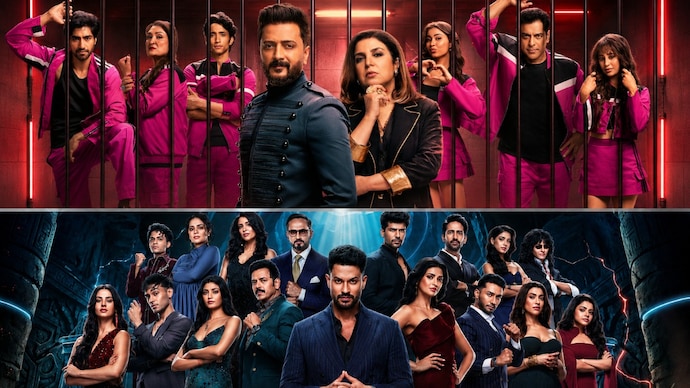
Fights. Bigger fights. Louder fights. That has increasingly become the defining formula of Indian reality television. The louder the argument, the bigger the headline; the messier the conflict, the more it dominates social media. Recent shows have leaned heavily into confrontations and high-voltage drama, with Netflix's Lock Upp 2 appearing to follow a similar path. While there is undeniably an audience that tunes in for exactly this kind of entertainment, not everyone is looking for endless screaming matches.
That's where Amazon Prime Video's Alliance feels like a breath of fresh air. Instead of making conflict its biggest selling point, the reality show brings strategy, planning and innovation back to the forefront, placing them alongside drama rather than beneath it. The result is a competition where gameplay takes centre stage, proving that intelligence and well-thought-out moves can be just as gripping as the loudest fight in the room.
Lock Upp: Sach Ya Sazaa
Lock Upp returned for its second season on Netflix with Riteish Deshmukh and Farah Khan taking over as the jailers, replacing Kangana Ranaut, who hosted the inaugural season on MX Player. The first season was won by comedian Munawar Faruqui. Staying true to its original format, the reality show places contestants, known as inmates, inside a jail-themed set, where they compete for basic necessities, take on challenging tasks, reveal personal truths and navigate accusations, rivalries and redemption while battling to survive in the game.
Alliance
Alliance, on the other hand, is built around strategy. Hosted by Kunal Kemmu, the inaugural season sees 16 contestants enter a high-tech facility, initially paired up before forming four competing alliances. Teams face physical and mental challenges to earn points—the only currency that determines status and survival. An automated governing entity called 'System' keeps players on their toes with regular tasks, surprise twists and sudden rule changes, while weekly eliminations and wildcard entries constantly reshape the game's power dynamics.
At their core, both Lock Upp 2 and Alliance follow the same reality TV blueprint. They bring together strangers in a confined space, divide them into competing groups, assign tasks that influence survival and steadily eliminate contestants until a winner emerges. Alliances are formed, rivalries develop and trust is constantly tested. Both shows also rely on unexpected twists to keep contestants and viewers on edge. But that is where the similarities end.
Chaos and strategy: The real battle
The biggest difference between the two lies in what they choose to prioritise. Lock Upp 2 is a personality-driven reality show, where the contestants themselves are the main attraction. The format promised a compelling premise—celebrities locked up based on accusations surrounding them, embarking on a journey of ownership, acceptance and redemption. However, that central idea has seemingly taken a back seat, making more room for confrontations, personal feuds and heated exchanges, leading many viewers to compare it to Bigg Boss in a different setting.
That isn't unique to Lock Upp. Reality television in India has increasingly embraced conflict as its primary currency. Whether it is Bigg Boss, with established celebrities, or Splitsvilla, featuring relatively new faces, the formula remains familiar: amplify rivalries, create emotionally charged situations and let the drama drive the narrative. It is undeniably effective—these shows command massive viewership precisely because chaos is entertaining.
However, for viewers who tune in for the game as much as the people playing it, the constant emphasis on conflict has also started feeling exhausting. When every twist is designed to provoke an argument, the concept itself risks fading into the background.
For example, Lock Upp 2 brought in content creator Apoorva Mukhija as an informer for the jailers, with the sole purpose of shaking things up inside the jail and creating unrest among the contestants. Even while leaving the show, she pointed to Shreya Kalra's gameplay, suggesting that her constant shouting matches had made her Lock Upp's biggest highlight. That, in many ways, says a lot about what the show chooses to reward. The louder the fight, the bigger the moment.
That is where Alliance feels different. Instead of waiting for drama to happen, the show keeps the game moving. Strategy, planning and adaptability remain its driving forces, while drama emerges naturally from shifting alliances, betrayals and high-stakes decisions. The result is a reality show where the concept is not overshadowed by the contestants—it is strengthened by them.
Lock Upp leaves ample room for its inmates to interact, allowing drama to develop organically between them. When that does not happen, the tasks and twists introduced by the jailers often appear designed to trigger reactions. Alliance, meanwhile, operates on a tightly packed schedule of challenges, strategy sessions, nominations and more challenges, leaving contestants with little downtime. As a result, the game is always moving forward instead of waiting for conflict to become the episode's centrepiece.
Of course, put a group of strangers in a confined living space and disagreements are inevitable. Personalities will clash, tempers will flare and alliances will break. The difference lies in how those moments arrive. In Alliance, conflict feels like a by-product of the game rather than its primary objective.
The very first elimination was proof of that. Content creator Vanshaj Singh was strategically targeted by Arslan Goni and Kushal Tandon, after an initial run-in with each other which had ended in loud confrontations but was quickly diverted towards the game. That sense of organic storytelling is what makes it a more wholesome and refreshing watch among the two competing reality shows.
The conversations reveal the difference
The contrast becomes even more apparent when looking at the conversations surrounding both shows online. Discussions around Lock Upp 2 are often dominated by who fought with Shreya Kalra or Shilpa Shinde, the latest controversy, a big secret reveal or the elimination of the week, especially when it involved ex-Splitsvilla contestants Yogesh Rawat or Akanksha Chaudhary. The game itself rarely becomes the main talking point.
Alliance, on the other hand, has been appreciated for the quality of its format. Viewers have highlighted the innovation behind its physical challenges, the lighter quiz-style tasks that balance the intensity, the constantly shifting alliances that force contestants to rethink their strategies every week, and the unpredictability of a game where adaptability is just as important as strength.
That is not to say Alliance is devoid of drama. The show has its share of arguments, betrayals and emotional moments. TV actor Kushal Tandon is one of the most talked-about contestants on the show for his repeated outbursts and fights with contestants like Vanshaj, Arslan Goni, Sachin Bali and others. However, those moments rarely overshadow the game itself.
Instead, personalities shine through their gameplay—through how contestants navigate changing alliances, respond to unexpected twists and outmanoeuvre their opponents. No contestant is ever questioned if they choose to remain peaceful and passive.
These are reasons why Alliance feels like the better show, because it understands that reality television does not have to choose between strategy and entertainment. Drama will always be an essential part of reality TV, but the most engaging moments are the ones that emerge from the game itself.
By keeping the concept, challenges and gameplay at the centre, Alliance allows its contestants to be judged not just by how loudly they argue, but by how smartly they play the game.
At a time when reality TV has become synonymous with chaos, Alliance proves that there is still room for innovation, creativity and a format that respects the intelligence of its viewers. It feels like a show where the makers were genuinely thinking about innovative ideas for gameplay and not simply about how to make two people fight each other. It does not eliminate drama; it simply gives drama a reason to exist.
Fights. Bigger fights. Louder fights. That has increasingly become the defining formula of Indian reality television. The louder the argument, the bigger the headline; the messier the conflict, the more it dominates social media. Recent shows have leaned heavily into confrontations and high-voltage drama, with Netflix's Lock Upp 2 appearing to follow a similar path. While there is undeniably an audience that tunes in for exactly this kind of entertainment, not everyone is looking for endless screaming matches.
That's where Amazon Prime Video's Alliance feels like a breath of fresh air. Instead of making conflict its biggest selling point, the reality show brings strategy, planning and innovation back to the forefront, placing them alongside drama rather than beneath it. The result is a competition where gameplay takes centre stage, proving that intelligence and well-thought-out moves can be just as gripping as the loudest fight in the room.
Lock Upp: Sach Ya Sazaa
Lock Upp returned for its second season on Netflix with Riteish Deshmukh and Farah Khan taking over as the jailers, replacing Kangana Ranaut, who hosted the inaugural season on MX Player. The first season was won by comedian Munawar Faruqui. Staying true to its original format, the reality show places contestants, known as inmates, inside a jail-themed set, where they compete for basic necessities, take on challenging tasks, reveal personal truths and navigate accusations, rivalries and redemption while battling to survive in the game.
Alliance
Alliance, on the other hand, is built around strategy. Hosted by Kunal Kemmu, the inaugural season sees 16 contestants enter a high-tech facility, initially paired up before forming four competing alliances. Teams face physical and mental challenges to earn points—the only currency that determines status and survival. An automated governing entity called 'System' keeps players on their toes with regular tasks, surprise twists and sudden rule changes, while weekly eliminations and wildcard entries constantly reshape the game's power dynamics.
At their core, both Lock Upp 2 and Alliance follow the same reality TV blueprint. They bring together strangers in a confined space, divide them into competing groups, assign tasks that influence survival and steadily eliminate contestants until a winner emerges. Alliances are formed, rivalries develop and trust is constantly tested. Both shows also rely on unexpected twists to keep contestants and viewers on edge. But that is where the similarities end.
Chaos and strategy: The real battle
The biggest difference between the two lies in what they choose to prioritise. Lock Upp 2 is a personality-driven reality show, where the contestants themselves are the main attraction. The format promised a compelling premise—celebrities locked up based on accusations surrounding them, embarking on a journey of ownership, acceptance and redemption. However, that central idea has seemingly taken a back seat, making more room for confrontations, personal feuds and heated exchanges, leading many viewers to compare it to Bigg Boss in a different setting.
That isn't unique to Lock Upp. Reality television in India has increasingly embraced conflict as its primary currency. Whether it is Bigg Boss, with established celebrities, or Splitsvilla, featuring relatively new faces, the formula remains familiar: amplify rivalries, create emotionally charged situations and let the drama drive the narrative. It is undeniably effective—these shows command massive viewership precisely because chaos is entertaining.
However, for viewers who tune in for the game as much as the people playing it, the constant emphasis on conflict has also started feeling exhausting. When every twist is designed to provoke an argument, the concept itself risks fading into the background.
For example, Lock Upp 2 brought in content creator Apoorva Mukhija as an informer for the jailers, with the sole purpose of shaking things up inside the jail and creating unrest among the contestants. Even while leaving the show, she pointed to Shreya Kalra's gameplay, suggesting that her constant shouting matches had made her Lock Upp's biggest highlight. That, in many ways, says a lot about what the show chooses to reward. The louder the fight, the bigger the moment.
That is where Alliance feels different. Instead of waiting for drama to happen, the show keeps the game moving. Strategy, planning and adaptability remain its driving forces, while drama emerges naturally from shifting alliances, betrayals and high-stakes decisions. The result is a reality show where the concept is not overshadowed by the contestants—it is strengthened by them.
Lock Upp leaves ample room for its inmates to interact, allowing drama to develop organically between them. When that does not happen, the tasks and twists introduced by the jailers often appear designed to trigger reactions. Alliance, meanwhile, operates on a tightly packed schedule of challenges, strategy sessions, nominations and more challenges, leaving contestants with little downtime. As a result, the game is always moving forward instead of waiting for conflict to become the episode's centrepiece.
Of course, put a group of strangers in a confined living space and disagreements are inevitable. Personalities will clash, tempers will flare and alliances will break. The difference lies in how those moments arrive. In Alliance, conflict feels like a by-product of the game rather than its primary objective.
The very first elimination was proof of that. Content creator Vanshaj Singh was strategically targeted by Arslan Goni and Kushal Tandon, after an initial run-in with each other which had ended in loud confrontations but was quickly diverted towards the game. That sense of organic storytelling is what makes it a more wholesome and refreshing watch among the two competing reality shows.
The conversations reveal the difference
The contrast becomes even more apparent when looking at the conversations surrounding both shows online. Discussions around Lock Upp 2 are often dominated by who fought with Shreya Kalra or Shilpa Shinde, the latest controversy, a big secret reveal or the elimination of the week, especially when it involved ex-Splitsvilla contestants Yogesh Rawat or Akanksha Chaudhary. The game itself rarely becomes the main talking point.
Alliance, on the other hand, has been appreciated for the quality of its format. Viewers have highlighted the innovation behind its physical challenges, the lighter quiz-style tasks that balance the intensity, the constantly shifting alliances that force contestants to rethink their strategies every week, and the unpredictability of a game where adaptability is just as important as strength.
That is not to say Alliance is devoid of drama. The show has its share of arguments, betrayals and emotional moments. TV actor Kushal Tandon is one of the most talked-about contestants on the show for his repeated outbursts and fights with contestants like Vanshaj, Arslan Goni, Sachin Bali and others. However, those moments rarely overshadow the game itself.
Instead, personalities shine through their gameplay—through how contestants navigate changing alliances, respond to unexpected twists and outmanoeuvre their opponents. No contestant is ever questioned if they choose to remain peaceful and passive.
These are reasons why Alliance feels like the better show, because it understands that reality television does not have to choose between strategy and entertainment. Drama will always be an essential part of reality TV, but the most engaging moments are the ones that emerge from the game itself.
By keeping the concept, challenges and gameplay at the centre, Alliance allows its contestants to be judged not just by how loudly they argue, but by how smartly they play the game.
At a time when reality TV has become synonymous with chaos, Alliance proves that there is still room for innovation, creativity and a format that respects the intelligence of its viewers. It feels like a show where the makers were genuinely thinking about innovative ideas for gameplay and not simply about how to make two people fight each other. It does not eliminate drama; it simply gives drama a reason to exist.
Fights. Bigger fights. Louder fights. That has increasingly become the defining formula of Indian reality television. The louder the argument, the bigger the headline; the messier the conflict, the more it dominates social media. Recent shows have leaned heavily into confrontations and high-voltage drama, with Netflix's Lock Upp 2 appearing to follow a similar path. While there is undeniably an audience that tunes in for exactly this kind of entertainment, not everyone is looking for endless screaming matches.
That's where Amazon Prime Video's Alliance feels like a breath of fresh air. Instead of making conflict its biggest selling point, the reality show brings strategy, planning and innovation back to the forefront, placing them alongside drama rather than beneath it. The result is a competition where gameplay takes centre stage, proving that intelligence and well-thought-out moves can be just as gripping as the loudest fight in the room.
Lock Upp: Sach Ya Sazaa
Lock Upp returned for its second season on Netflix with Riteish Deshmukh and Farah Khan taking over as the jailers, replacing Kangana Ranaut, who hosted the inaugural season on MX Player. The first season was won by comedian Munawar Faruqui. Staying true to its original format, the reality show places contestants, known as inmates, inside a jail-themed set, where they compete for basic necessities, take on challenging tasks, reveal personal truths and navigate accusations, rivalries and redemption while battling to survive in the game.
Alliance
Alliance, on the other hand, is built around strategy. Hosted by Kunal Kemmu, the inaugural season sees 16 contestants enter a high-tech facility, initially paired up before forming four competing alliances. Teams face physical and mental challenges to earn points—the only currency that determines status and survival. An automated governing entity called 'System' keeps players on their toes with regular tasks, surprise twists and sudden rule changes, while weekly eliminations and wildcard entries constantly reshape the game's power dynamics.
At their core, both Lock Upp 2 and Alliance follow the same reality TV blueprint. They bring together strangers in a confined space, divide them into competing groups, assign tasks that influence survival and steadily eliminate contestants until a winner emerges. Alliances are formed, rivalries develop and trust is constantly tested. Both shows also rely on unexpected twists to keep contestants and viewers on edge. But that is where the similarities end.
Chaos and strategy: The real battle
The biggest difference between the two lies in what they choose to prioritise. Lock Upp 2 is a personality-driven reality show, where the contestants themselves are the main attraction. The format promised a compelling premise—celebrities locked up based on accusations surrounding them, embarking on a journey of ownership, acceptance and redemption. However, that central idea has seemingly taken a back seat, making more room for confrontations, personal feuds and heated exchanges, leading many viewers to compare it to Bigg Boss in a different setting.
That isn't unique to Lock Upp. Reality television in India has increasingly embraced conflict as its primary currency. Whether it is Bigg Boss, with established celebrities, or Splitsvilla, featuring relatively new faces, the formula remains familiar: amplify rivalries, create emotionally charged situations and let the drama drive the narrative. It is undeniably effective—these shows command massive viewership precisely because chaos is entertaining.
However, for viewers who tune in for the game as much as the people playing it, the constant emphasis on conflict has also started feeling exhausting. When every twist is designed to provoke an argument, the concept itself risks fading into the background.
For example, Lock Upp 2 brought in content creator Apoorva Mukhija as an informer for the jailers, with the sole purpose of shaking things up inside the jail and creating unrest among the contestants. Even while leaving the show, she pointed to Shreya Kalra's gameplay, suggesting that her constant shouting matches had made her Lock Upp's biggest highlight. That, in many ways, says a lot about what the show chooses to reward. The louder the fight, the bigger the moment.
That is where Alliance feels different. Instead of waiting for drama to happen, the show keeps the game moving. Strategy, planning and adaptability remain its driving forces, while drama emerges naturally from shifting alliances, betrayals and high-stakes decisions. The result is a reality show where the concept is not overshadowed by the contestants—it is strengthened by them.
Lock Upp leaves ample room for its inmates to interact, allowing drama to develop organically between them. When that does not happen, the tasks and twists introduced by the jailers often appear designed to trigger reactions. Alliance, meanwhile, operates on a tightly packed schedule of challenges, strategy sessions, nominations and more challenges, leaving contestants with little downtime. As a result, the game is always moving forward instead of waiting for conflict to become the episode's centrepiece.
Of course, put a group of strangers in a confined living space and disagreements are inevitable. Personalities will clash, tempers will flare and alliances will break. The difference lies in how those moments arrive. In Alliance, conflict feels like a by-product of the game rather than its primary objective.
The very first elimination was proof of that. Content creator Vanshaj Singh was strategically targeted by Arslan Goni and Kushal Tandon, after an initial run-in with each other which had ended in loud confrontations but was quickly diverted towards the game. That sense of organic storytelling is what makes it a more wholesome and refreshing watch among the two competing reality shows.
The conversations reveal the difference
The contrast becomes even more apparent when looking at the conversations surrounding both shows online. Discussions around Lock Upp 2 are often dominated by who fought with Shreya Kalra or Shilpa Shinde, the latest controversy, a big secret reveal or the elimination of the week, especially when it involved ex-Splitsvilla contestants Yogesh Rawat or Akanksha Chaudhary. The game itself rarely becomes the main talking point.
Alliance, on the other hand, has been appreciated for the quality of its format. Viewers have highlighted the innovation behind its physical challenges, the lighter quiz-style tasks that balance the intensity, the constantly shifting alliances that force contestants to rethink their strategies every week, and the unpredictability of a game where adaptability is just as important as strength.
That is not to say Alliance is devoid of drama. The show has its share of arguments, betrayals and emotional moments. TV actor Kushal Tandon is one of the most talked-about contestants on the show for his repeated outbursts and fights with contestants like Vanshaj, Arslan Goni, Sachin Bali and others. However, those moments rarely overshadow the game itself.
Instead, personalities shine through their gameplay—through how contestants navigate changing alliances, respond to unexpected twists and outmanoeuvre their opponents. No contestant is ever questioned if they choose to remain peaceful and passive.
These are reasons why Alliance feels like the better show, because it understands that reality television does not have to choose between strategy and entertainment. Drama will always be an essential part of reality TV, but the most engaging moments are the ones that emerge from the game itself.
By keeping the concept, challenges and gameplay at the centre, Alliance allows its contestants to be judged not just by how loudly they argue, but by how smartly they play the game.
At a time when reality TV has become synonymous with chaos, Alliance proves that there is still room for innovation, creativity and a format that respects the intelligence of its viewers. It feels like a show where the makers were genuinely thinking about innovative ideas for gameplay and not simply about how to make two people fight each other. It does not eliminate drama; it simply gives drama a reason to exist.

