Adulteration fears now leave many Indians questioning the purity of ghee: Survey
Most urban consumers are not fully confident about the purity of the ghee they buy. These new findings come after FSSAI crackdowns on counterfeit dairy products, including ghee in Delhi, Haryana and Bengaluru.
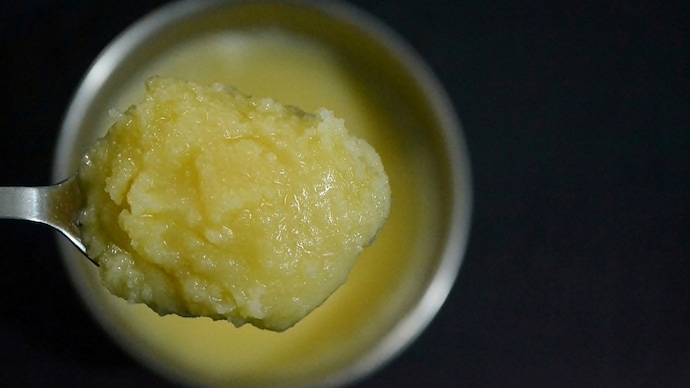
A spoonful of ghee on a hot roti for many Indian households is more than just food, it is tradition. But a new nationwide survey suggests that more and more people are concerned over food adulteration, making consumers question whether the ghee on their plate is really what it claims to be.
The survey, conducted by LocalCircles among more than 91,000 people from 18,000 urban households across 293 districts, found that six in 10 consumers are either only somewhat confident or not confident at all about the purity and quality of the ghee they buy.
The findings come months after several crackdowns by the Food Safety and Standards Authority of India (FSSAI) on fake and adulterated dairy products, including large seizures of counterfeit ghee in Delhi, Haryana and Bengaluru.
TRUST IS FADING DESPITE RISING DEMAND
Ghee has become increasingly popular in recent years, mostly driven by interest in traditional diets, keto eating plans and growing awareness of healthy fats.
The market is expected to continue expanding over the next decade.
Yet, consumer confidence appears to be moving in the opposite direction.
Among more than 18,000 households surveyed, only 38% said they were very confident that the ghee they buy is pure.
Another 41% were only somewhat confident, while 19% said they were not confident at all.
The survey points to repeated reports of adulteration as a likely reason behind these concerns.
BRANDED GHEE IS THE PREFERRED CHOICE
The survey found that 89% of urban households buy branded or packaged ghee, suggesting that consumers trust sealed products more than loose varieties sold by local vendors. At the same time, 22% said they still make ghee at home, while 10% continue to buy loose or unbranded ghee.
Brand reputation has become one of the biggest deciding factors while shopping. Nearly 76% of respondents said a trusted brand matters, while 66% said quality and purity are among the most important considerations before making a purchase.
MOST FAMILIES USE LESS THAN 1 KG A MONTH
Although ghee remains a staple in many homes, most families use it sparingly.
The survey found that two in three households consume less than one kilogram of ghee every month. Around one in five households use less than 250 grams, another 22% consume between 250 and 500 grams, and a similar proportion use between 500 grams and one kilogram each month.
When it comes to eating habits, 65% said they mostly use ghee as a topping on rotis, chapatis and parathas. More than half also use it while cooking certain dishes or during festivals and special occasions.
FAKE GHEE CASES HAVE PUT FOOD SAFETY IN FOCUS
The survey comes against the backdrop of multiple enforcement actions by food safety authorities.
Over the past year, FSSAI has asked states to step up inspections of milk products after reports of adulteration.
Authorities have also seized thousands of litres of counterfeit ghee and taken action against fake manufacturing units and companies accused of selling expired or relabelled food products.
According to LocalCircles, these incidents have made consumers more cautious about where they buy ghee.
The survey concludes that stronger enforcement, regular testing and stricter checks are needed to rebuild public trust in one of India's most commonly used kitchen staples.
A spoonful of ghee on a hot roti for many Indian households is more than just food, it is tradition. But a new nationwide survey suggests that more and more people are concerned over food adulteration, making consumers question whether the ghee on their plate is really what it claims to be.
The survey, conducted by LocalCircles among more than 91,000 people from 18,000 urban households across 293 districts, found that six in 10 consumers are either only somewhat confident or not confident at all about the purity and quality of the ghee they buy.
The findings come months after several crackdowns by the Food Safety and Standards Authority of India (FSSAI) on fake and adulterated dairy products, including large seizures of counterfeit ghee in Delhi, Haryana and Bengaluru.
TRUST IS FADING DESPITE RISING DEMAND
Ghee has become increasingly popular in recent years, mostly driven by interest in traditional diets, keto eating plans and growing awareness of healthy fats.
The market is expected to continue expanding over the next decade.
Yet, consumer confidence appears to be moving in the opposite direction.
Among more than 18,000 households surveyed, only 38% said they were very confident that the ghee they buy is pure.
Another 41% were only somewhat confident, while 19% said they were not confident at all.
The survey points to repeated reports of adulteration as a likely reason behind these concerns.
BRANDED GHEE IS THE PREFERRED CHOICE
The survey found that 89% of urban households buy branded or packaged ghee, suggesting that consumers trust sealed products more than loose varieties sold by local vendors. At the same time, 22% said they still make ghee at home, while 10% continue to buy loose or unbranded ghee.
Brand reputation has become one of the biggest deciding factors while shopping. Nearly 76% of respondents said a trusted brand matters, while 66% said quality and purity are among the most important considerations before making a purchase.
MOST FAMILIES USE LESS THAN 1 KG A MONTH
Although ghee remains a staple in many homes, most families use it sparingly.
The survey found that two in three households consume less than one kilogram of ghee every month. Around one in five households use less than 250 grams, another 22% consume between 250 and 500 grams, and a similar proportion use between 500 grams and one kilogram each month.
When it comes to eating habits, 65% said they mostly use ghee as a topping on rotis, chapatis and parathas. More than half also use it while cooking certain dishes or during festivals and special occasions.
FAKE GHEE CASES HAVE PUT FOOD SAFETY IN FOCUS
The survey comes against the backdrop of multiple enforcement actions by food safety authorities.
Over the past year, FSSAI has asked states to step up inspections of milk products after reports of adulteration.
Authorities have also seized thousands of litres of counterfeit ghee and taken action against fake manufacturing units and companies accused of selling expired or relabelled food products.
According to LocalCircles, these incidents have made consumers more cautious about where they buy ghee.
The survey concludes that stronger enforcement, regular testing and stricter checks are needed to rebuild public trust in one of India's most commonly used kitchen staples.

