Grandparents at 70, parents at 45: How IVF is quietly redrawing the Indian family
As more Indians become parents in their 40s through IVF and assisted reproduction, family life is changing in unexpected ways. Grandparents in their 70s are becoming active caregivers, while parents are balancing toddlerhood with retirement planning, creating an entirely new phase of Indian family life.
There was a time when becoming a grandparent in India usually happened in the early 50s. Children were born soon after marriage, and three generations often moved through life on a familiar timeline.
Today, that picture is changing.
Across India's cities and, increasingly, in smaller towns too, many couples are becoming first-time parents in their late 30s and 40s. Careers, financial stability, delayed marriages, second marriages, changing priorities and growing awareness about fertility treatment have all contributed to this shift. Alongside these social changes, advances in in-vitro fertilisation (IVF) and assisted reproductive technology (ART) have made it possible for many people to have children later than previous generations thought possible.
The result is not just older parents. It is creating a completely new family structure.
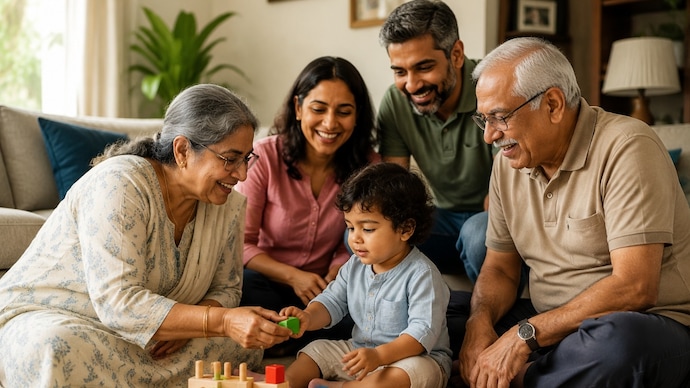
Today, it is increasingly common to find grandparents in their late 60s and even 70s helping raise toddlers, attending school functions, babysitting after classes, and learning how to use video calls to entertain grandchildren. Parents, meanwhile, are worrying about nursery admissions while also planning retirement, paying for home loans, supporting ageing parents and building college funds—all at the same time.
Doctors say IVF is no longer only changing how babies are conceived. It is quietly changing what it means to be a parent, a grandparent and a family in modern India.
PARENTHOOD IS NO LONGER FOLLOWING THE OLD TIMELINE
For decades, Indian society expected a predictable sequence: education, marriage, children and then grandchildren.
That timeline has steadily shifted.
Many women today pursue higher education, build careers or marry later. Couples often wait until they feel financially secure before starting a family. Some face fertility challenges that become more common with increasing age, leading them to seek medical help through IVF or other fertility treatments.
According to Dr Muskaan Chhabra, Fertility Specialist at Birla Fertility & IVF, IVF allows many couples to become parents when pregnancy has not happened naturally after careful medical evaluation and personalised treatment.
THE RISE OF "OLDER GRANDPARENTS"
Perhaps the biggest change is happening one generation above.
Instead of becoming grandparents in their early 50s, many are entering grandparenthood in their late 60s or early 70s.
For some families, retirement no longer means travelling, relaxing or pursuing hobbies. Instead, it means morning school runs, preparing lunchboxes, storytelling, helping with homework, and spending afternoons with energetic toddlers.
Dr Muskaan Chhabra says grandparents are increasingly becoming active participants throughout the fertility journey and beyond.
She notes that parents who once found infertility difficult to discuss are now accompanying their adult children to consultations, asking informed questions and offering emotional support during treatment. After the baby arrives, many continue to play an important caregiving role despite being in their late 60s or 70s.
For working couples, this support can be invaluable.
With daycare costs rising, and both parents often employed, grandparents provide stability, trust and continuity that many families depend on.
BALANCING DIAPERS AND RETIREMENT PLANNING
Late parenthood also creates unique financial realities.
Parents in their 40s are often at the peak of their careers, but they are simultaneously managing several major financial responsibilities.
They may be:
- Saving for retirement.
- Paying off home loans.
- Supporting ageing parents.
- Funding IVF treatment.
- Planning for a child's education that may continue well into their own retirement years.
Unlike younger parents, they have fewer earning years left before retirement to build wealth for their children.
Financial planners say this makes long-term planning more important than ever.
MORE MATURITY, BUT LESS ENERGY?
Experts say later parenthood comes with both advantages and challenges.
Many older parents are emotionally mature, financially stable and better prepared for raising children. They often report feeling more patient and intentional in their parenting.
However, physical stamina can become a challenge. Keeping up with toddlers requires energy, regular health check-ups and maintaining good physical fitness. Parents also need to think ahead about their own health as their children grow into teenagers.
The same applies to grandparents. Many are willing and eager to help, but caregiving in their 70s can also be physically demanding.
Families increasingly need to balance enthusiasm with realistic expectations about health and caregiving responsibilities.
IVF IS CHANGING FAMILY CONVERSATIONS
Another noticeable shift is the way families talk about fertility. Just a decade ago, infertility was often discussed in whispers, if at all.
Today, fertility specialists say conversations are becoming more open. Parents attend appointments with their adult children. Siblings, relatives and even workplaces are becoming more supportive of fertility treatment.
Dr Chhabra says IVF is no longer viewed only as a private issue between a couple and their doctor. Families are becoming active partners in the journey, reflecting a broader acceptance of fertility care.
CHANGING IDEAS OF MOTHERHOOD AND FATHERHOOD
Public conversations around later motherhood have also become more visible.
Celebrities and public figures having children in their 40s have challenged the traditional belief that parenthood must happen within one fixed age window.
Doctors caution that every fertility journey is unique and that one person's experience should not be compared with another's. Age remains one of the biggest factors affecting fertility, and IVF cannot completely overcome the natural decline in egg quality or sperm quality.
Still, growing awareness has encouraged more couples to seek medical advice earlier instead of silently accepting infertility.
A NEW GENERATION OF INDIAN FAMILIES
The changing age of parenthood is creating families unlike any India has seen before. A five-year-old may have grandparents who are in their mid-70s. A father attending a parent-teacher meeting may also be planning his retirement. A grandmother who imagined peaceful retirement may instead be learning nursery rhymes again.
These changes reflect more than medical advances. They mirror broader shifts in Indian society: people marrying later, living longer, building careers differently and redefining what family life looks like.
IVF has not simply helped more couples become parents. It has quietly rewritten the rhythm of the Indian family.
The traditional timeline of marriage, children and grandparenthood is giving way to one that is more flexible, more individual and increasingly supported by modern medicine. As Dr Chhabra points out, what has changed is not the value Indians place on family, but the age at which people reach parenthood and the growing acceptance of medical support in helping them get there.
There was a time when becoming a grandparent in India usually happened in the early 50s. Children were born soon after marriage, and three generations often moved through life on a familiar timeline.
Today, that picture is changing.
Across India's cities and, increasingly, in smaller towns too, many couples are becoming first-time parents in their late 30s and 40s. Careers, financial stability, delayed marriages, second marriages, changing priorities and growing awareness about fertility treatment have all contributed to this shift. Alongside these social changes, advances in in-vitro fertilisation (IVF) and assisted reproductive technology (ART) have made it possible for many people to have children later than previous generations thought possible.
The result is not just older parents. It is creating a completely new family structure.
Today, it is increasingly common to find grandparents in their late 60s and even 70s helping raise toddlers, attending school functions, babysitting after classes, and learning how to use video calls to entertain grandchildren. Parents, meanwhile, are worrying about nursery admissions while also planning retirement, paying for home loans, supporting ageing parents and building college funds—all at the same time.
Doctors say IVF is no longer only changing how babies are conceived. It is quietly changing what it means to be a parent, a grandparent and a family in modern India.
PARENTHOOD IS NO LONGER FOLLOWING THE OLD TIMELINE
For decades, Indian society expected a predictable sequence: education, marriage, children and then grandchildren.
That timeline has steadily shifted.
Many women today pursue higher education, build careers or marry later. Couples often wait until they feel financially secure before starting a family. Some face fertility challenges that become more common with increasing age, leading them to seek medical help through IVF or other fertility treatments.
According to Dr Muskaan Chhabra, Fertility Specialist at Birla Fertility & IVF, IVF allows many couples to become parents when pregnancy has not happened naturally after careful medical evaluation and personalised treatment.
THE RISE OF "OLDER GRANDPARENTS"
Perhaps the biggest change is happening one generation above.
Instead of becoming grandparents in their early 50s, many are entering grandparenthood in their late 60s or early 70s.
For some families, retirement no longer means travelling, relaxing or pursuing hobbies. Instead, it means morning school runs, preparing lunchboxes, storytelling, helping with homework, and spending afternoons with energetic toddlers.
Dr Muskaan Chhabra says grandparents are increasingly becoming active participants throughout the fertility journey and beyond.
She notes that parents who once found infertility difficult to discuss are now accompanying their adult children to consultations, asking informed questions and offering emotional support during treatment. After the baby arrives, many continue to play an important caregiving role despite being in their late 60s or 70s.
For working couples, this support can be invaluable.
With daycare costs rising, and both parents often employed, grandparents provide stability, trust and continuity that many families depend on.
BALANCING DIAPERS AND RETIREMENT PLANNING
Late parenthood also creates unique financial realities.
Parents in their 40s are often at the peak of their careers, but they are simultaneously managing several major financial responsibilities.
They may be:
- Saving for retirement.
- Paying off home loans.
- Supporting ageing parents.
- Funding IVF treatment.
- Planning for a child's education that may continue well into their own retirement years.
Unlike younger parents, they have fewer earning years left before retirement to build wealth for their children.
Financial planners say this makes long-term planning more important than ever.
MORE MATURITY, BUT LESS ENERGY?
Experts say later parenthood comes with both advantages and challenges.
Many older parents are emotionally mature, financially stable and better prepared for raising children. They often report feeling more patient and intentional in their parenting.
However, physical stamina can become a challenge. Keeping up with toddlers requires energy, regular health check-ups and maintaining good physical fitness. Parents also need to think ahead about their own health as their children grow into teenagers.
The same applies to grandparents. Many are willing and eager to help, but caregiving in their 70s can also be physically demanding.
Families increasingly need to balance enthusiasm with realistic expectations about health and caregiving responsibilities.
IVF IS CHANGING FAMILY CONVERSATIONS
Another noticeable shift is the way families talk about fertility. Just a decade ago, infertility was often discussed in whispers, if at all.
Today, fertility specialists say conversations are becoming more open. Parents attend appointments with their adult children. Siblings, relatives and even workplaces are becoming more supportive of fertility treatment.
Dr Chhabra says IVF is no longer viewed only as a private issue between a couple and their doctor. Families are becoming active partners in the journey, reflecting a broader acceptance of fertility care.
CHANGING IDEAS OF MOTHERHOOD AND FATHERHOOD
Public conversations around later motherhood have also become more visible.
Celebrities and public figures having children in their 40s have challenged the traditional belief that parenthood must happen within one fixed age window.
Doctors caution that every fertility journey is unique and that one person's experience should not be compared with another's. Age remains one of the biggest factors affecting fertility, and IVF cannot completely overcome the natural decline in egg quality or sperm quality.
Still, growing awareness has encouraged more couples to seek medical advice earlier instead of silently accepting infertility.
A NEW GENERATION OF INDIAN FAMILIES
The changing age of parenthood is creating families unlike any India has seen before. A five-year-old may have grandparents who are in their mid-70s. A father attending a parent-teacher meeting may also be planning his retirement. A grandmother who imagined peaceful retirement may instead be learning nursery rhymes again.
These changes reflect more than medical advances. They mirror broader shifts in Indian society: people marrying later, living longer, building careers differently and redefining what family life looks like.
IVF has not simply helped more couples become parents. It has quietly rewritten the rhythm of the Indian family.
The traditional timeline of marriage, children and grandparenthood is giving way to one that is more flexible, more individual and increasingly supported by modern medicine. As Dr Chhabra points out, what has changed is not the value Indians place on family, but the age at which people reach parenthood and the growing acceptance of medical support in helping them get there.
There was a time when becoming a grandparent in India usually happened in the early 50s. Children were born soon after marriage, and three generations often moved through life on a familiar timeline.
Today, that picture is changing.
Across India's cities and, increasingly, in smaller towns too, many couples are becoming first-time parents in their late 30s and 40s. Careers, financial stability, delayed marriages, second marriages, changing priorities and growing awareness about fertility treatment have all contributed to this shift. Alongside these social changes, advances in in-vitro fertilisation (IVF) and assisted reproductive technology (ART) have made it possible for many people to have children later than previous generations thought possible.
The result is not just older parents. It is creating a completely new family structure.
Today, it is increasingly common to find grandparents in their late 60s and even 70s helping raise toddlers, attending school functions, babysitting after classes, and learning how to use video calls to entertain grandchildren. Parents, meanwhile, are worrying about nursery admissions while also planning retirement, paying for home loans, supporting ageing parents and building college funds—all at the same time.
Doctors say IVF is no longer only changing how babies are conceived. It is quietly changing what it means to be a parent, a grandparent and a family in modern India.
PARENTHOOD IS NO LONGER FOLLOWING THE OLD TIMELINE
For decades, Indian society expected a predictable sequence: education, marriage, children and then grandchildren.
That timeline has steadily shifted.
Many women today pursue higher education, build careers or marry later. Couples often wait until they feel financially secure before starting a family. Some face fertility challenges that become more common with increasing age, leading them to seek medical help through IVF or other fertility treatments.
According to Dr Muskaan Chhabra, Fertility Specialist at Birla Fertility & IVF, IVF allows many couples to become parents when pregnancy has not happened naturally after careful medical evaluation and personalised treatment.
THE RISE OF "OLDER GRANDPARENTS"
Perhaps the biggest change is happening one generation above.
Instead of becoming grandparents in their early 50s, many are entering grandparenthood in their late 60s or early 70s.
For some families, retirement no longer means travelling, relaxing or pursuing hobbies. Instead, it means morning school runs, preparing lunchboxes, storytelling, helping with homework, and spending afternoons with energetic toddlers.
Dr Muskaan Chhabra says grandparents are increasingly becoming active participants throughout the fertility journey and beyond.
She notes that parents who once found infertility difficult to discuss are now accompanying their adult children to consultations, asking informed questions and offering emotional support during treatment. After the baby arrives, many continue to play an important caregiving role despite being in their late 60s or 70s.
For working couples, this support can be invaluable.
With daycare costs rising, and both parents often employed, grandparents provide stability, trust and continuity that many families depend on.
BALANCING DIAPERS AND RETIREMENT PLANNING
Late parenthood also creates unique financial realities.
Parents in their 40s are often at the peak of their careers, but they are simultaneously managing several major financial responsibilities.
They may be:
- Saving for retirement.
- Paying off home loans.
- Supporting ageing parents.
- Funding IVF treatment.
- Planning for a child's education that may continue well into their own retirement years.
Unlike younger parents, they have fewer earning years left before retirement to build wealth for their children.
Financial planners say this makes long-term planning more important than ever.
MORE MATURITY, BUT LESS ENERGY?
Experts say later parenthood comes with both advantages and challenges.
Many older parents are emotionally mature, financially stable and better prepared for raising children. They often report feeling more patient and intentional in their parenting.
However, physical stamina can become a challenge. Keeping up with toddlers requires energy, regular health check-ups and maintaining good physical fitness. Parents also need to think ahead about their own health as their children grow into teenagers.
The same applies to grandparents. Many are willing and eager to help, but caregiving in their 70s can also be physically demanding.
Families increasingly need to balance enthusiasm with realistic expectations about health and caregiving responsibilities.
IVF IS CHANGING FAMILY CONVERSATIONS
Another noticeable shift is the way families talk about fertility. Just a decade ago, infertility was often discussed in whispers, if at all.
Today, fertility specialists say conversations are becoming more open. Parents attend appointments with their adult children. Siblings, relatives and even workplaces are becoming more supportive of fertility treatment.
Dr Chhabra says IVF is no longer viewed only as a private issue between a couple and their doctor. Families are becoming active partners in the journey, reflecting a broader acceptance of fertility care.
CHANGING IDEAS OF MOTHERHOOD AND FATHERHOOD
Public conversations around later motherhood have also become more visible.
Celebrities and public figures having children in their 40s have challenged the traditional belief that parenthood must happen within one fixed age window.
Doctors caution that every fertility journey is unique and that one person's experience should not be compared with another's. Age remains one of the biggest factors affecting fertility, and IVF cannot completely overcome the natural decline in egg quality or sperm quality.
Still, growing awareness has encouraged more couples to seek medical advice earlier instead of silently accepting infertility.
A NEW GENERATION OF INDIAN FAMILIES
The changing age of parenthood is creating families unlike any India has seen before. A five-year-old may have grandparents who are in their mid-70s. A father attending a parent-teacher meeting may also be planning his retirement. A grandmother who imagined peaceful retirement may instead be learning nursery rhymes again.
These changes reflect more than medical advances. They mirror broader shifts in Indian society: people marrying later, living longer, building careers differently and redefining what family life looks like.
IVF has not simply helped more couples become parents. It has quietly rewritten the rhythm of the Indian family.
The traditional timeline of marriage, children and grandparenthood is giving way to one that is more flexible, more individual and increasingly supported by modern medicine. As Dr Chhabra points out, what has changed is not the value Indians place on family, but the age at which people reach parenthood and the growing acceptance of medical support in helping them get there.

