Is using screens to calm a child bad? It depends
Using screens to calm upset children affects development, especially brain development, differently.
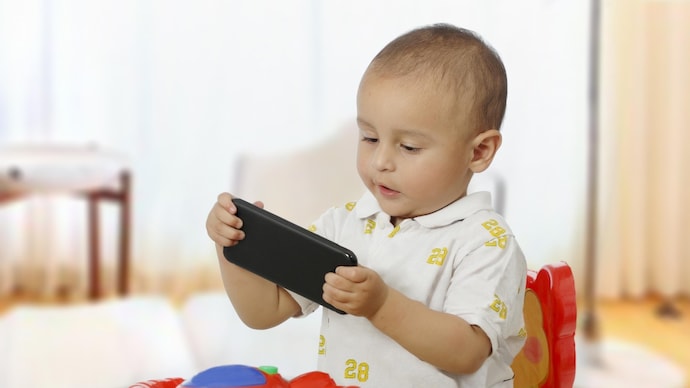
Every parent has faced the same moment at some time in their lives. A toddler starts crying in the middle of a supermarket, restaurant or long car ride, and the quickest way to calm them is by handing over a phone or tablet.
While screens can bring instant peace, a new study suggests that this common parenting habit could shape a child's brain development in ways that depend not just on the child, but also on the parent's own mental health.
Researchers from The Ohio State University found that using screens to calm upset children, a practice known as media emotion regulation, does not affect every child in the same way.
Instead, the impact varies across families, with parents' mental health emerging as an important factor. The findings were published in the Journal of Communication.
"It isn't just that the effects are bigger or smaller for different children," said lead author Jane Shawcroft, assistant professor of communication at The Ohio State University. "The relationship between screen use and child development actually works differently for different kids."
A CYCLE THAT CAN SHAPE DEVELOPMENT
The researchers analysed data from Project M.E.D.I.A., a long-running Brigham Young University study that followed children from the age of 2 to 7 years.
For most families, they found a repeating cycle. Children who found it harder to manage their emotions were more likely to be given a screen to calm down.
Over time, that screen use influenced the development of important thinking skills, which then affected how often parents relied on screens in the future.
The study focused on executive functions, brain skills that help children control their behaviour, manage emotions, solve problems and adapt to new situations.
These include cognitive flexibility, which allows children to adjust to change and think from different perspectives, and inhibitory control, which helps them pause before acting instead of reacting impulsively.
These skills are essential for school performance, emotional well-being and healthy relationships later in life.
PARENTS MATTER TOO
Not every family followed the same pattern.
In about 7% of the children studied, researchers found that parents' mental health had a much stronger influence on screen use than the child's own behaviour.
Parents who reported higher levels of depression were more likely to turn to phones or tablets to help manage their child's distress.
"We found that parent mental health is a strong predictor of the way parents use technology with their young kids because technology is a tool parents can use when they don't have the emotional resources to cope with their own struggles," Shawcroft said.
She stressed that the findings should not be seen as blaming parents.
"Parenting young children is hard," she said, adding that for many families, a screen could simply be the easiest tool available during stressful moments.
THE ANSWER IS NOT SIMPLY BANNING SCREENS
The researchers say the findings highlight that healthy screen habits are about more than limiting screen time.
Parents could benefit from support that helps children regulate emotions in other ways, such as outdoor play, mindfulness activities and opportunities for face-to-face interaction.
At the same time, improving parents' mental health could also reduce the need to rely on screens as a calming tool.
Shawcroft believes supporting children in the digital age should be a shared responsibility rather than one that falls entirely on parents.
"If we want kids to be OK, part of that is helping their parents to be OK," she said.
Every parent has faced the same moment at some time in their lives. A toddler starts crying in the middle of a supermarket, restaurant or long car ride, and the quickest way to calm them is by handing over a phone or tablet.
While screens can bring instant peace, a new study suggests that this common parenting habit could shape a child's brain development in ways that depend not just on the child, but also on the parent's own mental health.
Researchers from The Ohio State University found that using screens to calm upset children, a practice known as media emotion regulation, does not affect every child in the same way.
Instead, the impact varies across families, with parents' mental health emerging as an important factor. The findings were published in the Journal of Communication.
"It isn't just that the effects are bigger or smaller for different children," said lead author Jane Shawcroft, assistant professor of communication at The Ohio State University. "The relationship between screen use and child development actually works differently for different kids."
A CYCLE THAT CAN SHAPE DEVELOPMENT
The researchers analysed data from Project M.E.D.I.A., a long-running Brigham Young University study that followed children from the age of 2 to 7 years.
For most families, they found a repeating cycle. Children who found it harder to manage their emotions were more likely to be given a screen to calm down.
Over time, that screen use influenced the development of important thinking skills, which then affected how often parents relied on screens in the future.
The study focused on executive functions, brain skills that help children control their behaviour, manage emotions, solve problems and adapt to new situations.
These include cognitive flexibility, which allows children to adjust to change and think from different perspectives, and inhibitory control, which helps them pause before acting instead of reacting impulsively.
These skills are essential for school performance, emotional well-being and healthy relationships later in life.
PARENTS MATTER TOO
Not every family followed the same pattern.
In about 7% of the children studied, researchers found that parents' mental health had a much stronger influence on screen use than the child's own behaviour.
Parents who reported higher levels of depression were more likely to turn to phones or tablets to help manage their child's distress.
"We found that parent mental health is a strong predictor of the way parents use technology with their young kids because technology is a tool parents can use when they don't have the emotional resources to cope with their own struggles," Shawcroft said.
She stressed that the findings should not be seen as blaming parents.
"Parenting young children is hard," she said, adding that for many families, a screen could simply be the easiest tool available during stressful moments.
THE ANSWER IS NOT SIMPLY BANNING SCREENS
The researchers say the findings highlight that healthy screen habits are about more than limiting screen time.
Parents could benefit from support that helps children regulate emotions in other ways, such as outdoor play, mindfulness activities and opportunities for face-to-face interaction.
At the same time, improving parents' mental health could also reduce the need to rely on screens as a calming tool.
Shawcroft believes supporting children in the digital age should be a shared responsibility rather than one that falls entirely on parents.
"If we want kids to be OK, part of that is helping their parents to be OK," she said.

