Govt colleges are getting more MBBS seats, but can it solve India's doctor shortage?
The Centre is expanding MBBS seats in government medical colleges, but experts say the next challenge is ensuring enough faculty, infrastructure and specialist training to turn more admissions into better healthcare.
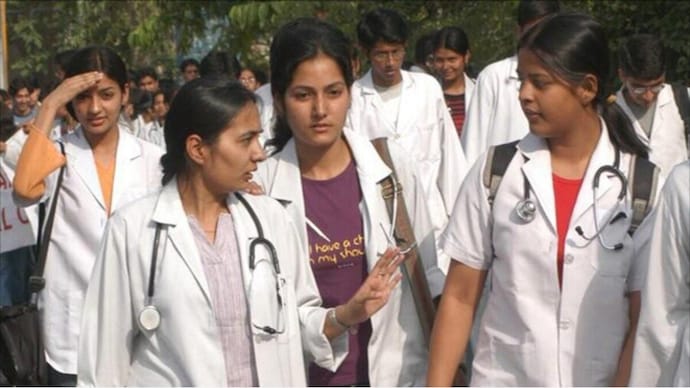
The Centre has approved additional MBBS seats in several government medical colleges for the 2026-27 academic session, expanding access to one of India's most affordable pathways to becoming a doctor. While the move is expected to create opportunities for thousands of aspiring medical students, experts say increasing undergraduate seats alone is unlikely to solve India's healthcare workforce shortage unless the country also addresses gaps in faculty, infrastructure, postgraduate training and rural healthcare.
India has witnessed a rapid expansion in medical education over the past decade. The number of MBBS seats has more than doubled, rising from around 51,000 in 2013-14 to over 1.18 lakh by 2024-25, while the number of medical colleges has also grown significantly. Between 2020-21 and 2024-25 alone, undergraduate medical seats increased by nearly 39%, according to government data.
The latest approvals are part of the Centre's broader push to expand medical education, particularly in government colleges. In February this year, the Centre also approved the addition of 10,023 medical seats under centrally sponsored schemes between 2025-26 and 2028-29, saying the expansion would help improve the doctor-population ratio, especially in underserved regions.
MORE SEATS ARE ONLY THE FIRST STEP
Government medical colleges remain the preferred choice for most aspiring doctors because of their significantly lower fees compared to private institutions.
"The creation of every additional government MBBS seat comes with the promise of an opportunity for a qualified student and, eventually, better healthcare for the community. The significance of government medical education as the cheapest route for budding doctors cannot be overemphasised," said Dr Shubham Anand, National Chairman, Global Association of Indian Medical Students (GAIMS).
However, he cautioned against expecting immediate results. "Creating additional MBBS seats is not going to strengthen healthcare on an immediate basis. It may help in the longer run, provided infrastructure is upgraded simultaneously and the faculty ratio is increased proportionately," he said.
For those closest to the pipeline, the timeline is the point. A newly inducted intern at a government medical college put it plainly: "I just started my internship. By the time doctors from today's newly approved seats graduate, it will be well into the next decade. I don't think most people realise how long this pipeline actually is."
Since an MBBS programme spans five and a half years, including a compulsory internship, the impact of today's seat expansion on the healthcare workforce will only be seen several years down the line.
FACULTY AND INFRASTRUCTURE REMAIN WEAK LINKS
Experts say the success of seat expansion depends not just on admissions but also on whether medical colleges have enough teachers, hospital infrastructure and patient exposure to train larger batches of students.
"Many government medical colleges already lack adequate infrastructure and faculty strength that does not comply with National Medical Commission (NMC) norms. Quality can never be compromised for quantity. Adequate investment in infrastructure, associated hospitals and faculty recruitment must accompany any increase in seats," Anand said.
Echoing similar concerns, Dr V Vignesh, President of the Tamil Nadu Resident Doctors Association (TNRDA) and Chief Advisor of FAIMA, said expanding capacity should not come at the cost of education quality. "While the opening of multiple new medical colleges is a welcome move, the NMC must also ensure that these new medical colleges are fully equipped with all the facilities and have enough teaching faculty," he said. He added that strengthening existing institutions should be as much of a priority as creating new ones. "Rather than opening new medical colleges that lack faculty and facilities, emphasis should be on strengthening existing medical colleges."
Anand also called for stricter enforcement of NMC norms, including regular and random inspections of medical colleges and greater transparency by making inspection reports publicly available.
THE RURAL GAP
Experts argue that India's healthcare challenge is not simply a shortage of doctors but also an imbalance in where they practise and what specialties they choose.
"There is imbalance in both — distribution across specialties as well as across regions. Rural healthcare infrastructure needs to be strengthened, and greater incentives, proper housing and security should be provided to encourage more doctors to take up rural postings," Anand said.
That imbalance is visible on the ground. A doctor posted at a primary health centre in a rural district in Dibrugarh, Assam, described the reality of being the sole physician for a wide catchment area: "There's no diagnostic equipment here, unreliable electricity, and no government housing — I commute a long distance each way. Many doctors from my batch chose to keep attempting NEET PG rather than take up a rural posting like mine."
Many primary and community health centres continue to struggle with vacancies despite the steady increase in MBBS graduates, pointing to persistent challenges in workforce distribution.
THE POSTGRADUATE BOTTLENECK
While undergraduate education has expanded rapidly, postgraduate training has grown at a slower pace in absolute numbers. Between 2020-21 and 2025-26, India added 48,563 MBBS seats compared with 29,080 postgraduate seats, according to National Medical Commission data. Experts say the gap could eventually limit the availability of specialist doctors.
"India now has enough MBBS seats but needs to focus on increasing PG seats that can create more specialist doctors," Anand said.
That gap plays out directly in the lives of recent graduates. One NEET PG aspirant, now several attempts into the exam after completing internship, described the bottleneck: "My batch had far more people competing for the same PG seats that were available for a batch half our size a decade ago. I've been attempting NEET PG for two years now, working in the meantime, still waiting for a seat in my chosen specialty."
The mismatch means many graduates spend years preparing for the National Eligibility cum Entrance Test for Postgraduate (NEET PG), even as public hospitals continue to report shortages of specialists.
WHAT NEEDS TO CHANGE
Anand suggested three immediate priorities: increasing postgraduate seats in proportion to undergraduate admissions, strictly implementing NMC norms through regular inspections, and introducing stronger legal protection against violence against doctors.
He also called for greater emphasis on Family Medicine, a specialty that remains underdeveloped in India despite playing a central role in primary healthcare systems in many countries. In addition, he advocated integrating artificial intelligence and telemedicine into healthcare delivery, strengthening research methodology training at the undergraduate level, and giving greater importance to communication skills alongside clinical education.
As India continues to expand medical education, experts say the real test will not be the number of MBBS seats created, but whether the country can build a system that produces well-trained doctors, creates enough specialists, and ensures they serve the communities that need them most.
The Centre has approved additional MBBS seats in several government medical colleges for the 2026-27 academic session, expanding access to one of India's most affordable pathways to becoming a doctor. While the move is expected to create opportunities for thousands of aspiring medical students, experts say increasing undergraduate seats alone is unlikely to solve India's healthcare workforce shortage unless the country also addresses gaps in faculty, infrastructure, postgraduate training and rural healthcare.
India has witnessed a rapid expansion in medical education over the past decade. The number of MBBS seats has more than doubled, rising from around 51,000 in 2013-14 to over 1.18 lakh by 2024-25, while the number of medical colleges has also grown significantly. Between 2020-21 and 2024-25 alone, undergraduate medical seats increased by nearly 39%, according to government data.
The latest approvals are part of the Centre's broader push to expand medical education, particularly in government colleges. In February this year, the Centre also approved the addition of 10,023 medical seats under centrally sponsored schemes between 2025-26 and 2028-29, saying the expansion would help improve the doctor-population ratio, especially in underserved regions.
MORE SEATS ARE ONLY THE FIRST STEP
Government medical colleges remain the preferred choice for most aspiring doctors because of their significantly lower fees compared to private institutions.
"The creation of every additional government MBBS seat comes with the promise of an opportunity for a qualified student and, eventually, better healthcare for the community. The significance of government medical education as the cheapest route for budding doctors cannot be overemphasised," said Dr Shubham Anand, National Chairman, Global Association of Indian Medical Students (GAIMS).
However, he cautioned against expecting immediate results. "Creating additional MBBS seats is not going to strengthen healthcare on an immediate basis. It may help in the longer run, provided infrastructure is upgraded simultaneously and the faculty ratio is increased proportionately," he said.
For those closest to the pipeline, the timeline is the point. A newly inducted intern at a government medical college put it plainly: "I just started my internship. By the time doctors from today's newly approved seats graduate, it will be well into the next decade. I don't think most people realise how long this pipeline actually is."
Since an MBBS programme spans five and a half years, including a compulsory internship, the impact of today's seat expansion on the healthcare workforce will only be seen several years down the line.
FACULTY AND INFRASTRUCTURE REMAIN WEAK LINKS
Experts say the success of seat expansion depends not just on admissions but also on whether medical colleges have enough teachers, hospital infrastructure and patient exposure to train larger batches of students.
"Many government medical colleges already lack adequate infrastructure and faculty strength that does not comply with National Medical Commission (NMC) norms. Quality can never be compromised for quantity. Adequate investment in infrastructure, associated hospitals and faculty recruitment must accompany any increase in seats," Anand said.
Echoing similar concerns, Dr V Vignesh, President of the Tamil Nadu Resident Doctors Association (TNRDA) and Chief Advisor of FAIMA, said expanding capacity should not come at the cost of education quality. "While the opening of multiple new medical colleges is a welcome move, the NMC must also ensure that these new medical colleges are fully equipped with all the facilities and have enough teaching faculty," he said. He added that strengthening existing institutions should be as much of a priority as creating new ones. "Rather than opening new medical colleges that lack faculty and facilities, emphasis should be on strengthening existing medical colleges."
Anand also called for stricter enforcement of NMC norms, including regular and random inspections of medical colleges and greater transparency by making inspection reports publicly available.
THE RURAL GAP
Experts argue that India's healthcare challenge is not simply a shortage of doctors but also an imbalance in where they practise and what specialties they choose.
"There is imbalance in both — distribution across specialties as well as across regions. Rural healthcare infrastructure needs to be strengthened, and greater incentives, proper housing and security should be provided to encourage more doctors to take up rural postings," Anand said.
That imbalance is visible on the ground. A doctor posted at a primary health centre in a rural district in Dibrugarh, Assam, described the reality of being the sole physician for a wide catchment area: "There's no diagnostic equipment here, unreliable electricity, and no government housing — I commute a long distance each way. Many doctors from my batch chose to keep attempting NEET PG rather than take up a rural posting like mine."
Many primary and community health centres continue to struggle with vacancies despite the steady increase in MBBS graduates, pointing to persistent challenges in workforce distribution.
THE POSTGRADUATE BOTTLENECK
While undergraduate education has expanded rapidly, postgraduate training has grown at a slower pace in absolute numbers. Between 2020-21 and 2025-26, India added 48,563 MBBS seats compared with 29,080 postgraduate seats, according to National Medical Commission data. Experts say the gap could eventually limit the availability of specialist doctors.
"India now has enough MBBS seats but needs to focus on increasing PG seats that can create more specialist doctors," Anand said.
That gap plays out directly in the lives of recent graduates. One NEET PG aspirant, now several attempts into the exam after completing internship, described the bottleneck: "My batch had far more people competing for the same PG seats that were available for a batch half our size a decade ago. I've been attempting NEET PG for two years now, working in the meantime, still waiting for a seat in my chosen specialty."
The mismatch means many graduates spend years preparing for the National Eligibility cum Entrance Test for Postgraduate (NEET PG), even as public hospitals continue to report shortages of specialists.
WHAT NEEDS TO CHANGE
Anand suggested three immediate priorities: increasing postgraduate seats in proportion to undergraduate admissions, strictly implementing NMC norms through regular inspections, and introducing stronger legal protection against violence against doctors.
He also called for greater emphasis on Family Medicine, a specialty that remains underdeveloped in India despite playing a central role in primary healthcare systems in many countries. In addition, he advocated integrating artificial intelligence and telemedicine into healthcare delivery, strengthening research methodology training at the undergraduate level, and giving greater importance to communication skills alongside clinical education.
As India continues to expand medical education, experts say the real test will not be the number of MBBS seats created, but whether the country can build a system that produces well-trained doctors, creates enough specialists, and ensures they serve the communities that need them most.

