Bitterness of a generation: Inside the mind of Gen Z
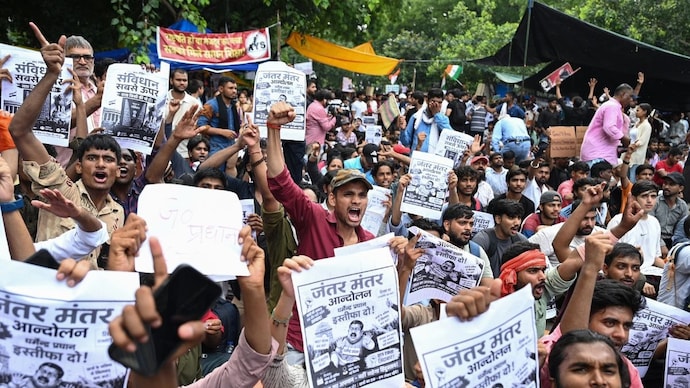
The Jantar Mantar protests that removed education minister Dharmendra Pradhan from office reflect Gen Z's disillusionment with failing institutions, say experts


What Gen Z Indians want is not quite what their parents wanted. “Many don’t dream simply of a ‘secure life’,” says Delhi-based psychologist Upasana Chaddha. “Security is assumed to be the minimum, not the destination.” Where an earlier generation postponed travel, hobbies and self-expression until retirement, today’s young Indians treat these as central to a fulfilling life, not luxuries to be earned later. They have inherited the aspirations of India’s economic rise, but opportunities that increasingly feel narrower than promised.
That gap gets sharpened by whom they compare themselves to. “Success is no longer measured only against one’s classmates or neighbours but also against influencers, startup founders, creators and peers worldwide,” Chaddha says, a shift that has produced extraordinary ambition alongside chronic self-doubt. Psychiatrist Srikanth Srinivasan sees the same oscillation in his patients: “Many Gen Z Indians oscillate between believing anything is possible and fearing they are already falling behind by their mid-20s.”
This is also why, experts argue, fairness sits at the centre of the protest rather than any single ideology. Having grown up in a world of 100 per cent cut-offs, this generation has made an uneasy peace with brutal competition; what it will not accept is the sense that the contest itself is rigged—through a leaked paper, an opaque recruitment process or an arbitrary institutional decision. “I see many students left disillusioned and overwhelmed by exam chaos and competitiveness,” Chaddha says.
Some counterpose this against the student movements of the 1970s or even the anti-corruption protests of the early 2010s. This cohort, goes the reading, is not demanding sweeping revolution. It starts from a personal space but ends up asking the larger question: if I studied, followed the rules and did everything expected of me, why has the system not kept its promise? “A cancelled exam or a delayed recruitment represents another year of life deferred,” Chaddha says. In a generation that measures opportunity in shrinking windows, it is lost time that fuels the anger.
That instinct for control over their own lives shows up off the protest site. The latest Deloitte India Gen Z & Millennial Survey found that 99 per cent of the generation rate job satisfaction as important, and nearly half say they have quit a job that clashed with their personal values; Tinder’s Year in Swipe 2025 found loyalty, emotional honesty and clarity ranking unusually high among what this generation wants from relationships. Ganguly says they no longer wait for politicians, parents or institutions to speak for them—they have built their own platforms and increasingly expect to be present when decisions are made rather than be briefed on them afterwards. Their frustration, she argues, comes from a widening distance between values and reality: limited jobs, nepotism and eroding accountability.
“This generation doesn’t fear authority. They thrive on authenticity and transparency,” says Praneet Kaur, a trauma-informed counselling psychologist. “They are not scared of outcomes; they just know that this is the only way forward.” Their impatience is not reserved solely for the government. Gen Z has turned the same scrutiny on Bollywood, sportspersons and influencers, demanding to know why their role models have stayed silent. For a generation that has decided speaking up is not optional but a right, that silence is a betrayal from the very people they look up to.
Subscribe to India Today Magazine
What Gen Z Indians want is not quite what their parents wanted. “Many don’t dream simply of a ‘secure life’,” says Delhi-based psychologist Upasana Chaddha. “Security is assumed to be the minimum, not the destination.” Where an earlier generation postponed travel, hobbies and self-expression until retirement, today’s young Indians treat these as central to a fulfilling life, not luxuries to be earned later. They have inherited the aspirations of India’s economic rise, but opportunities that increasingly feel narrower than promised.
That gap gets sharpened by whom they compare themselves to. “Success is no longer measured only against one’s classmates or neighbours but also against influencers, startup founders, creators and peers worldwide,” Chaddha says, a shift that has produced extraordinary ambition alongside chronic self-doubt. Psychiatrist Srikanth Srinivasan sees the same oscillation in his patients: “Many Gen Z Indians oscillate between believing anything is possible and fearing they are already falling behind by their mid-20s.”
This is also why, experts argue, fairness sits at the centre of the protest rather than any single ideology. Having grown up in a world of 100 per cent cut-offs, this generation has made an uneasy peace with brutal competition; what it will not accept is the sense that the contest itself is rigged—through a leaked paper, an opaque recruitment process or an arbitrary institutional decision. “I see many students left disillusioned and overwhelmed by exam chaos and competitiveness,” Chaddha says.
Some counterpose this against the student movements of the 1970s or even the anti-corruption protests of the early 2010s. This cohort, goes the reading, is not demanding sweeping revolution. It starts from a personal space but ends up asking the larger question: if I studied, followed the rules and did everything expected of me, why has the system not kept its promise? “A cancelled exam or a delayed recruitment represents another year of life deferred,” Chaddha says. In a generation that measures opportunity in shrinking windows, it is lost time that fuels the anger.
That instinct for control over their own lives shows up off the protest site. The latest Deloitte India Gen Z & Millennial Survey found that 99 per cent of the generation rate job satisfaction as important, and nearly half say they have quit a job that clashed with their personal values; Tinder’s Year in Swipe 2025 found loyalty, emotional honesty and clarity ranking unusually high among what this generation wants from relationships. Ganguly says they no longer wait for politicians, parents or institutions to speak for them—they have built their own platforms and increasingly expect to be present when decisions are made rather than be briefed on them afterwards. Their frustration, she argues, comes from a widening distance between values and reality: limited jobs, nepotism and eroding accountability.
“This generation doesn’t fear authority. They thrive on authenticity and transparency,” says Praneet Kaur, a trauma-informed counselling psychologist. “They are not scared of outcomes; they just know that this is the only way forward.” Their impatience is not reserved solely for the government. Gen Z has turned the same scrutiny on Bollywood, sportspersons and influencers, demanding to know why their role models have stayed silent. For a generation that has decided speaking up is not optional but a right, that silence is a betrayal from the very people they look up to.
Subscribe to India Today Magazine
What Gen Z Indians want is not quite what their parents wanted. “Many don’t dream simply of a ‘secure life’,” says Delhi-based psychologist Upasana Chaddha. “Security is assumed to be the minimum, not the destination.” Where an earlier generation postponed travel, hobbies and self-expression until retirement, today’s young Indians treat these as central to a fulfilling life, not luxuries to be earned later. They have inherited the aspirations of India’s economic rise, but opportunities that increasingly feel narrower than promised.
That gap gets sharpened by whom they compare themselves to. “Success is no longer measured only against one’s classmates or neighbours but also against influencers, startup founders, creators and peers worldwide,” Chaddha says, a shift that has produced extraordinary ambition alongside chronic self-doubt. Psychiatrist Srikanth Srinivasan sees the same oscillation in his patients: “Many Gen Z Indians oscillate between believing anything is possible and fearing they are already falling behind by their mid-20s.”
This is also why, experts argue, fairness sits at the centre of the protest rather than any single ideology. Having grown up in a world of 100 per cent cut-offs, this generation has made an uneasy peace with brutal competition; what it will not accept is the sense that the contest itself is rigged—through a leaked paper, an opaque recruitment process or an arbitrary institutional decision. “I see many students left disillusioned and overwhelmed by exam chaos and competitiveness,” Chaddha says.
Some counterpose this against the student movements of the 1970s or even the anti-corruption protests of the early 2010s. This cohort, goes the reading, is not demanding sweeping revolution. It starts from a personal space but ends up asking the larger question: if I studied, followed the rules and did everything expected of me, why has the system not kept its promise? “A cancelled exam or a delayed recruitment represents another year of life deferred,” Chaddha says. In a generation that measures opportunity in shrinking windows, it is lost time that fuels the anger.
That instinct for control over their own lives shows up off the protest site. The latest Deloitte India Gen Z & Millennial Survey found that 99 per cent of the generation rate job satisfaction as important, and nearly half say they have quit a job that clashed with their personal values; Tinder’s Year in Swipe 2025 found loyalty, emotional honesty and clarity ranking unusually high among what this generation wants from relationships. Ganguly says they no longer wait for politicians, parents or institutions to speak for them—they have built their own platforms and increasingly expect to be present when decisions are made rather than be briefed on them afterwards. Their frustration, she argues, comes from a widening distance between values and reality: limited jobs, nepotism and eroding accountability.
“This generation doesn’t fear authority. They thrive on authenticity and transparency,” says Praneet Kaur, a trauma-informed counselling psychologist. “They are not scared of outcomes; they just know that this is the only way forward.” Their impatience is not reserved solely for the government. Gen Z has turned the same scrutiny on Bollywood, sportspersons and influencers, demanding to know why their role models have stayed silent. For a generation that has decided speaking up is not optional but a right, that silence is a betrayal from the very people they look up to.
Subscribe to India Today Magazine

