Oil tanker explodes after hitting naval mine in Strait of Hormuz: Report
According to Tasnim, the tanker struck the naval mine after leaving the shipping route designated by Iranian authorities in the Strait of Hormuz. It did not identify the vessel or provide details on its cargo, destination or whether there were any casualties.
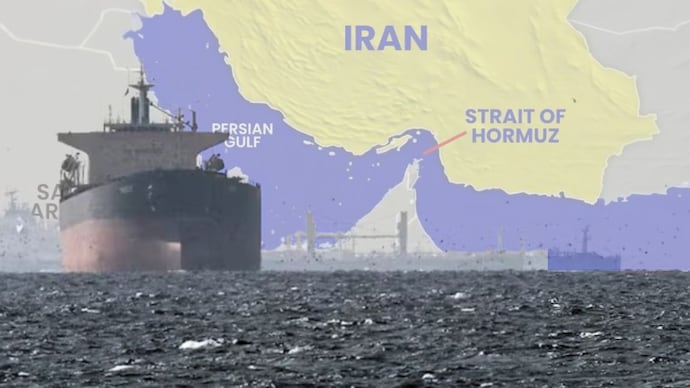
An oil tanker exploded in the Strait of Hormuz on Sunday after colliding with a naval mine, Iran's semi-official Tasnim news agency reported, in the latest incident to hit the strategically important waterway.
According to Tasnim, the tanker struck the naval mine after leaving the shipping route designated by Iranian authorities in the Strait of Hormuz. It did not identify the vessel or provide details on its cargo, destination or whether there were any casualties.
Iranian authorities had not issued an official statement on the reported explosion at the time of writing, and the circumstances surrounding the incident could not be independently verified.
The reported blast comes after months of conflict involving Iran, the US and Israel that has turned the Strait of Hormuz into one of the world's most volatile maritime flashpoints. Iran has effectively restricted shipping through the waterway since the US and Israel launched military operations against the country in February. Commercial vessels have faced growing risks from naval operations, missile attacks and mines, disrupting one of the world's busiest energy corridors.
The Strait of Hormuz connects the Persian Gulf with the Gulf of Oman and serves as the main export route for crude oil from major Gulf producers, including Saudi Arabia, Kuwait, Iraq and the United Arab Emirates. Any disruption in the narrow waterway is closely watched by global energy markets because of its potential impact on oil supplies and prices.
The latest incident follows several attacks on commercial vessels in the Gulf over recent weeks, adding to concerns about the safety of maritime traffic through the region.
IRAN SIGNALS IT WILL HALT ATTACKS IF US MAINTAINS PAUSE
The reported tanker explosion came as Tehran indicated it was prepared to suspend military operations if Washington continues its pause in air strikes. A senior Iranian source told Reuters that Iran would halt its attacks as long as the US maintained its current pause after 13 consecutive nights of bombing.
"Iran's position remains 'attack for attack': if the attacks stop, Iran will also halt its operations. That message has already been conveyed to the United States," the source said.
"There is more scepticism than optimism about the halt in attacks. The prevailing view is that the pause is tactical rather than genuine," the source added.
TRUMP GIVES DIPLOMACY 'A LITTLE BIT OF ROOM,' ENVOY SAYS
The White House has also suggested that the current pause is intended to create an opportunity for diplomacy. US Ambassador to the United Nations Mike Waltz said President Donald Trump was allowing negotiations with Iran to continue despite the recent escalation.
"He's giving talks some space, he's giving it a little bit of room," Waltz told Fox News.
He did not provide details about the discussions, but the remarks came after a relatively quiet weekend in which there were no fresh reports of US strikes on Iran or Iranian attacks on neighbouring countries. A senior Trump administration official also told Reuters the US President had always preferred a diplomatic solution but had demonstrated the consequences if Tehran failed to negotiate seriously.
Whether the current pause leads to renewed negotiations remains uncertain. Sunday's reported tanker explosion underscored how fragile the situation remains.
An oil tanker exploded in the Strait of Hormuz on Sunday after colliding with a naval mine, Iran's semi-official Tasnim news agency reported, in the latest incident to hit the strategically important waterway.
According to Tasnim, the tanker struck the naval mine after leaving the shipping route designated by Iranian authorities in the Strait of Hormuz. It did not identify the vessel or provide details on its cargo, destination or whether there were any casualties.
Iranian authorities had not issued an official statement on the reported explosion at the time of writing, and the circumstances surrounding the incident could not be independently verified.
The reported blast comes after months of conflict involving Iran, the US and Israel that has turned the Strait of Hormuz into one of the world's most volatile maritime flashpoints. Iran has effectively restricted shipping through the waterway since the US and Israel launched military operations against the country in February. Commercial vessels have faced growing risks from naval operations, missile attacks and mines, disrupting one of the world's busiest energy corridors.
The Strait of Hormuz connects the Persian Gulf with the Gulf of Oman and serves as the main export route for crude oil from major Gulf producers, including Saudi Arabia, Kuwait, Iraq and the United Arab Emirates. Any disruption in the narrow waterway is closely watched by global energy markets because of its potential impact on oil supplies and prices.
The latest incident follows several attacks on commercial vessels in the Gulf over recent weeks, adding to concerns about the safety of maritime traffic through the region.
IRAN SIGNALS IT WILL HALT ATTACKS IF US MAINTAINS PAUSE
The reported tanker explosion came as Tehran indicated it was prepared to suspend military operations if Washington continues its pause in air strikes. A senior Iranian source told Reuters that Iran would halt its attacks as long as the US maintained its current pause after 13 consecutive nights of bombing.
"Iran's position remains 'attack for attack': if the attacks stop, Iran will also halt its operations. That message has already been conveyed to the United States," the source said.
"There is more scepticism than optimism about the halt in attacks. The prevailing view is that the pause is tactical rather than genuine," the source added.
TRUMP GIVES DIPLOMACY 'A LITTLE BIT OF ROOM,' ENVOY SAYS
The White House has also suggested that the current pause is intended to create an opportunity for diplomacy. US Ambassador to the United Nations Mike Waltz said President Donald Trump was allowing negotiations with Iran to continue despite the recent escalation.
"He's giving talks some space, he's giving it a little bit of room," Waltz told Fox News.
He did not provide details about the discussions, but the remarks came after a relatively quiet weekend in which there were no fresh reports of US strikes on Iran or Iranian attacks on neighbouring countries. A senior Trump administration official also told Reuters the US President had always preferred a diplomatic solution but had demonstrated the consequences if Tehran failed to negotiate seriously.
Whether the current pause leads to renewed negotiations remains uncertain. Sunday's reported tanker explosion underscored how fragile the situation remains.
An oil tanker exploded in the Strait of Hormuz on Sunday after colliding with a naval mine, Iran's semi-official Tasnim news agency reported, in the latest incident to hit the strategically important waterway.
According to Tasnim, the tanker struck the naval mine after leaving the shipping route designated by Iranian authorities in the Strait of Hormuz. It did not identify the vessel or provide details on its cargo, destination or whether there were any casualties.
Iranian authorities had not issued an official statement on the reported explosion at the time of writing, and the circumstances surrounding the incident could not be independently verified.
The reported blast comes after months of conflict involving Iran, the US and Israel that has turned the Strait of Hormuz into one of the world's most volatile maritime flashpoints. Iran has effectively restricted shipping through the waterway since the US and Israel launched military operations against the country in February. Commercial vessels have faced growing risks from naval operations, missile attacks and mines, disrupting one of the world's busiest energy corridors.
The Strait of Hormuz connects the Persian Gulf with the Gulf of Oman and serves as the main export route for crude oil from major Gulf producers, including Saudi Arabia, Kuwait, Iraq and the United Arab Emirates. Any disruption in the narrow waterway is closely watched by global energy markets because of its potential impact on oil supplies and prices.
The latest incident follows several attacks on commercial vessels in the Gulf over recent weeks, adding to concerns about the safety of maritime traffic through the region.
IRAN SIGNALS IT WILL HALT ATTACKS IF US MAINTAINS PAUSE
The reported tanker explosion came as Tehran indicated it was prepared to suspend military operations if Washington continues its pause in air strikes. A senior Iranian source told Reuters that Iran would halt its attacks as long as the US maintained its current pause after 13 consecutive nights of bombing.
"Iran's position remains 'attack for attack': if the attacks stop, Iran will also halt its operations. That message has already been conveyed to the United States," the source said.
"There is more scepticism than optimism about the halt in attacks. The prevailing view is that the pause is tactical rather than genuine," the source added.
TRUMP GIVES DIPLOMACY 'A LITTLE BIT OF ROOM,' ENVOY SAYS
The White House has also suggested that the current pause is intended to create an opportunity for diplomacy. US Ambassador to the United Nations Mike Waltz said President Donald Trump was allowing negotiations with Iran to continue despite the recent escalation.
"He's giving talks some space, he's giving it a little bit of room," Waltz told Fox News.
He did not provide details about the discussions, but the remarks came after a relatively quiet weekend in which there were no fresh reports of US strikes on Iran or Iranian attacks on neighbouring countries. A senior Trump administration official also told Reuters the US President had always preferred a diplomatic solution but had demonstrated the consequences if Tehran failed to negotiate seriously.
Whether the current pause leads to renewed negotiations remains uncertain. Sunday's reported tanker explosion underscored how fragile the situation remains.

