How Akhilesh Yadav is giving his 2027 UP poll campaign a Sanatan push
By raising accountability issues over the Ram Temple donation row and meeting seer Swami Avimukteshwaranand, he is reorienting the Samajwadi Party's image
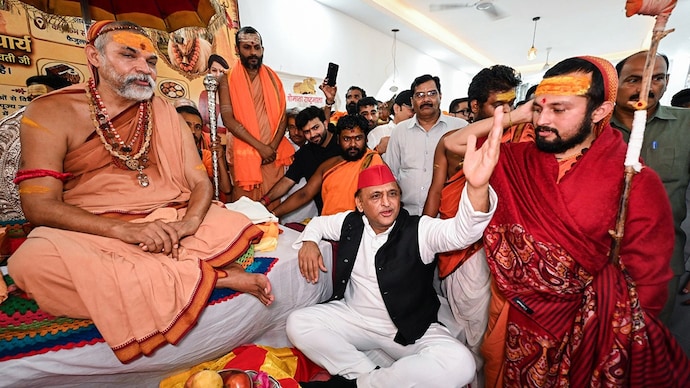
Akhilesh’s recent meeting with Jagadguru Shankaracharya Swami Avimukteshwaranand Saraswati, head of the Jyotirmath of Joshimath in Uttarakhand, is seen as a fresh step in that direction. The meeting came at a time when alleged irregularities in donations to the Ayodhya Ram Temple have become a major political issue in Uttar Pradesh.
After meeting the seer in Lucknow last week, Akhilesh shared photographs on social media and wrote: “It was a fortunate moment to have the darshan and blessings of Pujya Shankaracharya ji and a meaningful discussion to alleviate the crisis facing Sanatan Dharma and liberate Dharma from the clutches of the unrighteous.”
The choice of words was significant—Akhilesh framed his comment around protecting Sanatan Dharma from those allegedly misusing it. Observers believe the SP is trying to ensure that its criticism of the Ram Temple donation fiasco, which is under official probe, is not portrayed as criticism of the temple or Sanatan Dharma itself, but of the BJP.
And this is not an isolated positioning. Over the past several months, Akhilesh has repeatedly adopted religious symbolism that would have been less associated with the SP in the past. Earlier this year, at his ancestral home in Etawah, Akhilesh commissioned the Kedareshwar Mahadev Temple, reportedly built at a cost of over Rs 50 crore.
The temple complex already houses a child-idol of Lord Ram and is expected to be inaugurated on Sawan Shivaratri (in August). On the surface, it is a personal religious project. Politically, however, it helps Akhilesh counter the BJP’s longstanding allegation that the SP is anti-Hindu or indulges in minority politics.
Rather than directly competing with the BJP’s Hindutva narrative, the SP appears to be projecting that Sanatan and Hindu faith are not constrained to any one political party. The alleged irregularities involving Ram Temple donations have given the Opposition a new political opening against the BJP. Akhilesh has repeatedly questioned the handling of donations and demanded greater transparency. He has argued that the issue is not about faith but accountability.
Commenting on the donation controversy, Akhilesh said: “Whoever was responsible and whoever was given the responsibility—this incident has worried Sanatanis all over the world. They have committed a grave sin by distorting the dignity established by Lord Ram.”
This is seen as an attempt to move the debate onto ground where the BJP has traditionally enjoyed an advantage. The Ram Temple in Ayodhya has been one of the party’s biggest political achievements. The donation row, however, has shifted attention from the temple’s construction to questions of transparency and institutional management.
Akhilesh’s meeting with Swami Avimukteshwaranand also carries its own political history. In September 2015, when the SP was in power in Uttar Pradesh and Akhilesh was chief minister, police had baton-charged seers, including Swami Avimukteshwaranand, during a dispute over immersion of Ganesh idols in Varanasi. The seer was injured and also arrested.
Years later, in April 2021, Akhilesh publicly met the Shankaracharya and apologised, describing the police action as a mistake. The latest meeting was the second between them in about four months, indicating that the relationship has steadily improved. Swami Avimukteshwaranand responded after the meeting that he had forgiven Akhilesh.
One of the BJP’s most consistent attacks against the SP has been the 1990 police firing on kar sevaks in Ayodhya during the tenure of the Mulayam Singh Yadav government. Akhilesh recently tried to turn that argument around. He pointed out that Ram Temple Construction Committee chairman Nripendra Misra was serving as a senior bureaucrat in Uttar Pradesh at that time, and argued that people associated with that administration were now overseeing the Ram Temple. Misra has rejected the allegation, saying decisions relating to the 1990 firing were political rather than bureaucratic.
Akhilesh’s Sanatan outreach may have another electoral objective. Observers say sections of the Brahmin community have expressed dissatisfaction with the BJP over the past few years. By engaging with respected religious figures such as Swami Avimukteshwaranand, Akhilesh appears to be attempting to broaden the SP’s social coalition beyond its traditional support base.
The optics become even more significant because Swami Avimukteshwaranand has frequently found himself at odds with the BJP establishment. He had questioned the consecration of the Ayodhya Ram Temple in January 2024 sans the presence of Shankaracharyas. And this January, he alleged that he was stopped from taking a holy dip during the Prayagraj Mahakumbh. Later, authorities questioned his continued use of the title of Shankaracharya, citing legal issues.
Some of Swami Avimukteshwaranand’s supporters have alleged that he has faced official pressure because of his criticism of the BJP—an allegation the government denies.
Whether or not Akhilesh’s strategy translates into votes, his pro-Sanatan stance is becoming increasingly apparent. From building a temple in Etawah to repeatedly raising issues linked to the Ram Temple, meeting influential seers and speaking about protecting Sanatan Dharma, he appears to be carefully reshaping the SP’s image. The objective seems less about abandoning the party’s traditional politics and more about denying the BJP exclusive ownership over Hindu religious issues.
Subscribe to India Today Magazine
Akhilesh’s recent meeting with Jagadguru Shankaracharya Swami Avimukteshwaranand Saraswati, head of the Jyotirmath of Joshimath in Uttarakhand, is seen as a fresh step in that direction. The meeting came at a time when alleged irregularities in donations to the Ayodhya Ram Temple have become a major political issue in Uttar Pradesh.
After meeting the seer in Lucknow last week, Akhilesh shared photographs on social media and wrote: “It was a fortunate moment to have the darshan and blessings of Pujya Shankaracharya ji and a meaningful discussion to alleviate the crisis facing Sanatan Dharma and liberate Dharma from the clutches of the unrighteous.”
The choice of words was significant—Akhilesh framed his comment around protecting Sanatan Dharma from those allegedly misusing it. Observers believe the SP is trying to ensure that its criticism of the Ram Temple donation fiasco, which is under official probe, is not portrayed as criticism of the temple or Sanatan Dharma itself, but of the BJP.
And this is not an isolated positioning. Over the past several months, Akhilesh has repeatedly adopted religious symbolism that would have been less associated with the SP in the past. Earlier this year, at his ancestral home in Etawah, Akhilesh commissioned the Kedareshwar Mahadev Temple, reportedly built at a cost of over Rs 50 crore.
The temple complex already houses a child-idol of Lord Ram and is expected to be inaugurated on Sawan Shivaratri (in August). On the surface, it is a personal religious project. Politically, however, it helps Akhilesh counter the BJP’s longstanding allegation that the SP is anti-Hindu or indulges in minority politics.
Rather than directly competing with the BJP’s Hindutva narrative, the SP appears to be projecting that Sanatan and Hindu faith are not constrained to any one political party. The alleged irregularities involving Ram Temple donations have given the Opposition a new political opening against the BJP. Akhilesh has repeatedly questioned the handling of donations and demanded greater transparency. He has argued that the issue is not about faith but accountability.
Commenting on the donation controversy, Akhilesh said: “Whoever was responsible and whoever was given the responsibility—this incident has worried Sanatanis all over the world. They have committed a grave sin by distorting the dignity established by Lord Ram.”
This is seen as an attempt to move the debate onto ground where the BJP has traditionally enjoyed an advantage. The Ram Temple in Ayodhya has been one of the party’s biggest political achievements. The donation row, however, has shifted attention from the temple’s construction to questions of transparency and institutional management.
Akhilesh’s meeting with Swami Avimukteshwaranand also carries its own political history. In September 2015, when the SP was in power in Uttar Pradesh and Akhilesh was chief minister, police had baton-charged seers, including Swami Avimukteshwaranand, during a dispute over immersion of Ganesh idols in Varanasi. The seer was injured and also arrested.
Years later, in April 2021, Akhilesh publicly met the Shankaracharya and apologised, describing the police action as a mistake. The latest meeting was the second between them in about four months, indicating that the relationship has steadily improved. Swami Avimukteshwaranand responded after the meeting that he had forgiven Akhilesh.
One of the BJP’s most consistent attacks against the SP has been the 1990 police firing on kar sevaks in Ayodhya during the tenure of the Mulayam Singh Yadav government. Akhilesh recently tried to turn that argument around. He pointed out that Ram Temple Construction Committee chairman Nripendra Misra was serving as a senior bureaucrat in Uttar Pradesh at that time, and argued that people associated with that administration were now overseeing the Ram Temple. Misra has rejected the allegation, saying decisions relating to the 1990 firing were political rather than bureaucratic.
Akhilesh’s Sanatan outreach may have another electoral objective. Observers say sections of the Brahmin community have expressed dissatisfaction with the BJP over the past few years. By engaging with respected religious figures such as Swami Avimukteshwaranand, Akhilesh appears to be attempting to broaden the SP’s social coalition beyond its traditional support base.
The optics become even more significant because Swami Avimukteshwaranand has frequently found himself at odds with the BJP establishment. He had questioned the consecration of the Ayodhya Ram Temple in January 2024 sans the presence of Shankaracharyas. And this January, he alleged that he was stopped from taking a holy dip during the Prayagraj Mahakumbh. Later, authorities questioned his continued use of the title of Shankaracharya, citing legal issues.
Some of Swami Avimukteshwaranand’s supporters have alleged that he has faced official pressure because of his criticism of the BJP—an allegation the government denies.
Whether or not Akhilesh’s strategy translates into votes, his pro-Sanatan stance is becoming increasingly apparent. From building a temple in Etawah to repeatedly raising issues linked to the Ram Temple, meeting influential seers and speaking about protecting Sanatan Dharma, he appears to be carefully reshaping the SP’s image. The objective seems less about abandoning the party’s traditional politics and more about denying the BJP exclusive ownership over Hindu religious issues.
Subscribe to India Today Magazine

