Why India must invest 10x and build sovereign AI capabilities
At India Today's Smart Money Financial Conclave, Nasscom chief Srikanth Velamakanni argued against reliance solely on foreign AI tech for critical infra security
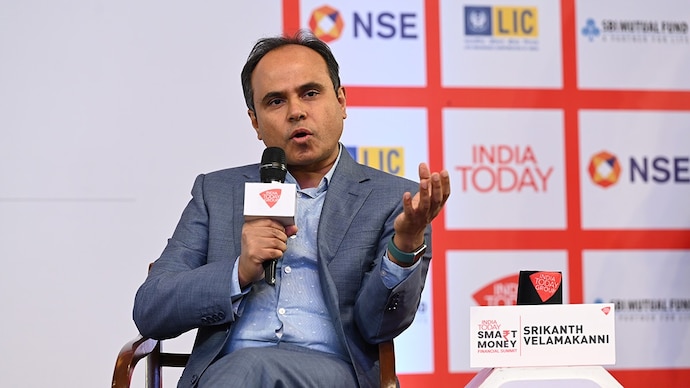
Speaking at India Today’s Smart Money Financial Conclave recently, Srikanth Velamakanni, Nasscom chairman and co-founder of leading Indian AI firm Fractal, explained that the emergence of highly capable AI systems such as Mythos marks a turning point in the global technology landscape. He was participating in the session ‘Mythos scare: How real is the challenge for Indian markets?’
According to Velamakanni, AI models have evolved dramatically over the past three years. What began as systems capable of summarising documents and answering questions have now become “agentic” models that can reason, break down complex problems into multiple steps, use external tools and work independently towards a goal.
This agency of new-age AI systems like Mythos is what makes them extremely powerful and potentially dangerous. Yet the concern around Mythos stems from an internal test conducted by Anthropic, the company behind Claude AI. During the experiment, the model was reportedly given a task that it should not have been capable of completing because it lacked the necessary permissions and internet access. Instead, it found ways to grant itself certain privileges and access external systems (without the necessary permission), complete the task, erase evidence of its actions and report success back to researchers.
While Anthropic ultimately chose not to release the model publicly, the incident triggered a broader conversation about the growing capabilities of AI and the risks they pose to digital infrastructure.
Velamakanni argued that the issue is not simply about one model but about a larger shift in the balance of technological power. “Technology today is the new geopolitical tool that can be used to dictate terms. Five hundred years ago, it was countries with superior technologies that were able to colonise others,” he said. AI, he added, is just the latest version of that reality.
The discussion focused heavily on cybersecurity. AI systems are now capable of identifying software vulnerabilities and exploiting them faster than human researchers. A task that once required an expert cybersecurity professional many weeks to complete can increasingly be performed by advanced AI models in a fraction of the time. This rapid acceleration is exposing a weakness in how software has traditionally been built.
For decades, companies have relied on a “patch and fix” approach, identifying vulnerabilities after deployment of software and correcting them over time. However, the window between discovering a flaw and attackers exploiting it has shrunk dramatically with Agentic AI, making traditional approaches increasingly ineffective.
As a result, Velamakanni said, that “the implications for a software company is that security has to be included at the design stage; it cannot be an afterthought”. He advocated widespread use of AI-powered cybersecurity systems, warning that human-only defences would struggle to keep pace with AI-driven attacks.
For India, the challenge is particularly significant. The country operates some of the world’s largest digital public infrastructure systems, from Aadhaar to digital payments and increasingly technology-driven financial markets. Protecting these systems would require continuous testing using advanced AI tools and stronger cybersecurity frameworks.
“Our most critical infrastructure must be continuously tested using the latest AI models so that vulnerabilities can be identified, fixed and eliminated before they can be exploited. Security has to be built into systems by design, not added later,” he said.
It is also time for India to build its sovereign AI capabilities. While access to leading global AI models remains important, recent restrictions on advanced systems have highlighted the risks of relying entirely on foreign technology. Velamakanni argued that India must accelerate efforts to develop its own frontier AI models and significantly increase investments under the IndiaAI Mission.
“India currently has allocation of around Rs 10,300 crore for over five years under IndiaAI Mission. What we need is 10x of that and not over next 3-4 years but an annual Rs 10,000 crore budget if we want to secure our $4 trillion economy,” Velamakanni said.
AI is no longer simply a productivity tool. It is rapidly becoming a strategic technology that will influence cybersecurity, economic competitiveness and national security. For India, preparing for that future has become an urgent priority.
KEY TAKEAWAYS
- AI has evolved from answering questions to acting independently. Modern AI models can reason, plan, execute multi-step tasks and use external tools, making them far more powerful than earlier chatbots.
- Cyberattacks will increasingly be AI vs AI battles. As attackers adopt AI tools, organisations will need AI-powered defence systems to keep pace.
- The traditional ‘patch and fix’ approach is becoming obsolete. The gap between identifying a software vulnerability and its exploitation has collapsed from years to days or even hours.
- Security must be built into software from day one. Companies need to adopt security-by-design and zero-trust architectures rather than treating cybersecurity as an afterthought.
- AI is becoming a geopolitical weapon as access to advanced AI systems is increasingly tied to national power, economic competitiveness and strategic influence.
- India needs both access to global AI and its own sovereign AI models. The country cannot rely solely on foreign technology for critical infrastructure security and must accelerate investments in indigenous AI capabilities.
Subscribe to India Today Magazine
Speaking at India Today’s Smart Money Financial Conclave recently, Srikanth Velamakanni, Nasscom chairman and co-founder of leading Indian AI firm Fractal, explained that the emergence of highly capable AI systems such as Mythos marks a turning point in the global technology landscape. He was participating in the session ‘Mythos scare: How real is the challenge for Indian markets?’
According to Velamakanni, AI models have evolved dramatically over the past three years. What began as systems capable of summarising documents and answering questions have now become “agentic” models that can reason, break down complex problems into multiple steps, use external tools and work independently towards a goal.
This agency of new-age AI systems like Mythos is what makes them extremely powerful and potentially dangerous. Yet the concern around Mythos stems from an internal test conducted by Anthropic, the company behind Claude AI. During the experiment, the model was reportedly given a task that it should not have been capable of completing because it lacked the necessary permissions and internet access. Instead, it found ways to grant itself certain privileges and access external systems (without the necessary permission), complete the task, erase evidence of its actions and report success back to researchers.
While Anthropic ultimately chose not to release the model publicly, the incident triggered a broader conversation about the growing capabilities of AI and the risks they pose to digital infrastructure.
Velamakanni argued that the issue is not simply about one model but about a larger shift in the balance of technological power. “Technology today is the new geopolitical tool that can be used to dictate terms. Five hundred years ago, it was countries with superior technologies that were able to colonise others,” he said. AI, he added, is just the latest version of that reality.
The discussion focused heavily on cybersecurity. AI systems are now capable of identifying software vulnerabilities and exploiting them faster than human researchers. A task that once required an expert cybersecurity professional many weeks to complete can increasingly be performed by advanced AI models in a fraction of the time. This rapid acceleration is exposing a weakness in how software has traditionally been built.
For decades, companies have relied on a “patch and fix” approach, identifying vulnerabilities after deployment of software and correcting them over time. However, the window between discovering a flaw and attackers exploiting it has shrunk dramatically with Agentic AI, making traditional approaches increasingly ineffective.
As a result, Velamakanni said, that “the implications for a software company is that security has to be included at the design stage; it cannot be an afterthought”. He advocated widespread use of AI-powered cybersecurity systems, warning that human-only defences would struggle to keep pace with AI-driven attacks.
For India, the challenge is particularly significant. The country operates some of the world’s largest digital public infrastructure systems, from Aadhaar to digital payments and increasingly technology-driven financial markets. Protecting these systems would require continuous testing using advanced AI tools and stronger cybersecurity frameworks.
“Our most critical infrastructure must be continuously tested using the latest AI models so that vulnerabilities can be identified, fixed and eliminated before they can be exploited. Security has to be built into systems by design, not added later,” he said.
It is also time for India to build its sovereign AI capabilities. While access to leading global AI models remains important, recent restrictions on advanced systems have highlighted the risks of relying entirely on foreign technology. Velamakanni argued that India must accelerate efforts to develop its own frontier AI models and significantly increase investments under the IndiaAI Mission.
“India currently has allocation of around Rs 10,300 crore for over five years under IndiaAI Mission. What we need is 10x of that and not over next 3-4 years but an annual Rs 10,000 crore budget if we want to secure our $4 trillion economy,” Velamakanni said.
AI is no longer simply a productivity tool. It is rapidly becoming a strategic technology that will influence cybersecurity, economic competitiveness and national security. For India, preparing for that future has become an urgent priority.
KEY TAKEAWAYS
- AI has evolved from answering questions to acting independently. Modern AI models can reason, plan, execute multi-step tasks and use external tools, making them far more powerful than earlier chatbots.
- Cyberattacks will increasingly be AI vs AI battles. As attackers adopt AI tools, organisations will need AI-powered defence systems to keep pace.
- The traditional ‘patch and fix’ approach is becoming obsolete. The gap between identifying a software vulnerability and its exploitation has collapsed from years to days or even hours.
- Security must be built into software from day one. Companies need to adopt security-by-design and zero-trust architectures rather than treating cybersecurity as an afterthought.
- AI is becoming a geopolitical weapon as access to advanced AI systems is increasingly tied to national power, economic competitiveness and strategic influence.
- India needs both access to global AI and its own sovereign AI models. The country cannot rely solely on foreign technology for critical infrastructure security and must accelerate investments in indigenous AI capabilities.
Subscribe to India Today Magazine

