Leopard in Ahmedabad locality: Another urban sprawl clashes with wild cat territory
Across Gujarat, leopard attacks are taking a steady human toll. How and why the big cat forayed this deep into a residential belt on July 20
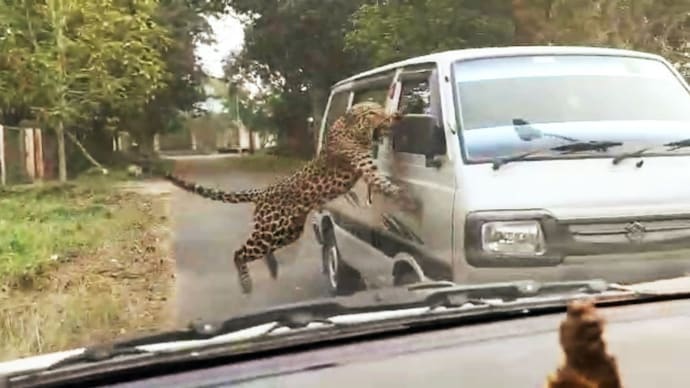
The animal was first spotted around 2 am by a woman driving on the Ghuma-Shela Road past Sharandeep Society, an upmarket locale in the city’s south-western edge. She saw it leap over the society’s boundary wall. CCTV cameras captured the leopard jumping the fence and entering a bungalow. No injuries were reported, though some residents may have crossed the wild cat’s path unaware of its presence.
By morning, the footage had gone viral, and teams from the forest department and Ahmedabad’s Kankaria Zoo, joined by a Gir Wildlife Sanctuary specialist unit trained to handle Asiatic Lions, had moved in with thermal cameras, three baited cages and a drone. Two days later, an unverified sighting was reported at Zundal, some 26 km north, leaving the forest department weighing on whether one animal or two were moving along the SP Ring Road corridor.
Deputy conservator of forests Minal Jani said the animal appeared to have strayed in while hunting stray dogs and had “returned to its natural habitat”, away from the city. Scanning will, however, continue for a week.
Why was a leopard this deep into a residential belt? Is this unusual? The short answer is dogs. Leopards are among the most adaptable big cats, and on Gujarat’s urban fringes stray dogs are easy, abundant prey. Typically, scrub, farmland and sugarcane give the animals cover, but the city keeps eating into that.
“Scavengers like hyena, wolves and leopards throng on human refuse. They have no choice. They can adapt to human presence—and they appear to have. Leopards are adaptive and intelligent. We need to understand this new reality,” says Abi Tamim Vanak, animal ecologist, conservation biologist and director of the Centre for Policy Design at ATREE (Ashoka Trust for Research in Ecology and Environment).
That is what makes the Shela episode more than a viral clip. Across Gujarat, leopard attacks are taking a steady toll. Forest department data recorded 12 human deaths from leopards in 2022, down from 15 the year before, with 84 people injured. In Junagadh’s conflict zones, the picture is sharper—in one year, eight people were killed between April and November, and the department caged 10 leopards in a fortnight. Infants and small children are snatched from doorsteps while workers in fields are among the most frequent victims. Leopards caught after attacking people are usually sent to captivity at the Junagadh zoo.
Ahmedabad is not new to the big cat, even if its western suburbs are. In November 2018, a leopard walked into the Gujarat secretariat in Gandhinagar and evaded more than 200 forest personnel for 12 hours before being tranquilised and relocated to Indroda Nature Park. Officials noted then that leopards were resident across a 40-50 sq km belt around Ahmedabad. A leopard once turned up inside a Chotila courtroom in Surendranagar.
While urban sprawls are eating into habitat and stray dogs are replacing wild prey, the leopard, being an adaptive carnivore, is adding numbers. Gujarat’s 2023 census counted 2,274 leopards, a 63 per cent jump from 1,395 in 2016. For the first time, the census recorded a leopard in Ahmedabad. More than a third of the state’s leopards now live close to human habitation.
The concerns are getting deeper. The Ahmedabad-Gandhinagar sprawl now colliding with wildlife is being remade as India’s sporting showpiece. In close vicinity on the Sanand-Ghuma Road, in Godhavi, the Sanskardham Sports Academy trains athletes across judo, wrestling, shooting and football—a campus chief minister Bhupendra Patel has folded into the state’s 2036 Olympic pitch.
On the same south-western belt, at Manipur and Godhavi, the state is planning a 500 to 1,000 acre sports city and a proposed Olympic Village, served by a new metro rail line, on land the government wants to acquire and build on within a few years, pushing the city’s edge deeper into the scrub the leopard was hunting across.
The Sardar Vallabhbhai Patel Sports Enclave, anchored by the 110,000-seat Narendra Modi Stadium in Motera, is the centrepiece of the country’s bid for the 2036 Olympics and the 2030 Commonwealth Games, a Rs 6,000 crore complex of roughly 10 venues. Naranpura already has the country’s largest indoor sports complex. The Ahmedabad Urban Development Authority’s 20-year masterplan scatters venue clusters across Ahmedabad and Gandhinagar. Every new cluster of stadiums, athlete villages and access roads pushes the built edge further into the scrub the leopard calls home.
Asiatic Lions, so far, have kept their distance from the city, though not entirely from the district. In February 2022, a radio-collared Gir lion was tracked to the Baliyari forest area on the southern edge of Ahmedabad district, roughly 140 km from the city and about 5 km from the Velavadar blackbuck sanctuary on the Bhavnagar boundary. The May 2025 lion census, which put Gujarat’s population at 891 across 11 Saurashtra districts, recorded no resident lions in Ahmedabad.
For now, the animal walking Ahmedabad’s new societies is the leopard. And on current trends, the clip from Shela will not be the last.
Subscribe to India Today Magazine
The animal was first spotted around 2 am by a woman driving on the Ghuma-Shela Road past Sharandeep Society, an upmarket locale in the city’s south-western edge. She saw it leap over the society’s boundary wall. CCTV cameras captured the leopard jumping the fence and entering a bungalow. No injuries were reported, though some residents may have crossed the wild cat’s path unaware of its presence.
By morning, the footage had gone viral, and teams from the forest department and Ahmedabad’s Kankaria Zoo, joined by a Gir Wildlife Sanctuary specialist unit trained to handle Asiatic Lions, had moved in with thermal cameras, three baited cages and a drone. Two days later, an unverified sighting was reported at Zundal, some 26 km north, leaving the forest department weighing on whether one animal or two were moving along the SP Ring Road corridor.
Deputy conservator of forests Minal Jani said the animal appeared to have strayed in while hunting stray dogs and had “returned to its natural habitat”, away from the city. Scanning will, however, continue for a week.
Why was a leopard this deep into a residential belt? Is this unusual? The short answer is dogs. Leopards are among the most adaptable big cats, and on Gujarat’s urban fringes stray dogs are easy, abundant prey. Typically, scrub, farmland and sugarcane give the animals cover, but the city keeps eating into that.
“Scavengers like hyena, wolves and leopards throng on human refuse. They have no choice. They can adapt to human presence—and they appear to have. Leopards are adaptive and intelligent. We need to understand this new reality,” says Abi Tamim Vanak, animal ecologist, conservation biologist and director of the Centre for Policy Design at ATREE (Ashoka Trust for Research in Ecology and Environment).
That is what makes the Shela episode more than a viral clip. Across Gujarat, leopard attacks are taking a steady toll. Forest department data recorded 12 human deaths from leopards in 2022, down from 15 the year before, with 84 people injured. In Junagadh’s conflict zones, the picture is sharper—in one year, eight people were killed between April and November, and the department caged 10 leopards in a fortnight. Infants and small children are snatched from doorsteps while workers in fields are among the most frequent victims. Leopards caught after attacking people are usually sent to captivity at the Junagadh zoo.
Ahmedabad is not new to the big cat, even if its western suburbs are. In November 2018, a leopard walked into the Gujarat secretariat in Gandhinagar and evaded more than 200 forest personnel for 12 hours before being tranquilised and relocated to Indroda Nature Park. Officials noted then that leopards were resident across a 40-50 sq km belt around Ahmedabad. A leopard once turned up inside a Chotila courtroom in Surendranagar.
While urban sprawls are eating into habitat and stray dogs are replacing wild prey, the leopard, being an adaptive carnivore, is adding numbers. Gujarat’s 2023 census counted 2,274 leopards, a 63 per cent jump from 1,395 in 2016. For the first time, the census recorded a leopard in Ahmedabad. More than a third of the state’s leopards now live close to human habitation.
The concerns are getting deeper. The Ahmedabad-Gandhinagar sprawl now colliding with wildlife is being remade as India’s sporting showpiece. In close vicinity on the Sanand-Ghuma Road, in Godhavi, the Sanskardham Sports Academy trains athletes across judo, wrestling, shooting and football—a campus chief minister Bhupendra Patel has folded into the state’s 2036 Olympic pitch.
On the same south-western belt, at Manipur and Godhavi, the state is planning a 500 to 1,000 acre sports city and a proposed Olympic Village, served by a new metro rail line, on land the government wants to acquire and build on within a few years, pushing the city’s edge deeper into the scrub the leopard was hunting across.
The Sardar Vallabhbhai Patel Sports Enclave, anchored by the 110,000-seat Narendra Modi Stadium in Motera, is the centrepiece of the country’s bid for the 2036 Olympics and the 2030 Commonwealth Games, a Rs 6,000 crore complex of roughly 10 venues. Naranpura already has the country’s largest indoor sports complex. The Ahmedabad Urban Development Authority’s 20-year masterplan scatters venue clusters across Ahmedabad and Gandhinagar. Every new cluster of stadiums, athlete villages and access roads pushes the built edge further into the scrub the leopard calls home.
Asiatic Lions, so far, have kept their distance from the city, though not entirely from the district. In February 2022, a radio-collared Gir lion was tracked to the Baliyari forest area on the southern edge of Ahmedabad district, roughly 140 km from the city and about 5 km from the Velavadar blackbuck sanctuary on the Bhavnagar boundary. The May 2025 lion census, which put Gujarat’s population at 891 across 11 Saurashtra districts, recorded no resident lions in Ahmedabad.
For now, the animal walking Ahmedabad’s new societies is the leopard. And on current trends, the clip from Shela will not be the last.
Subscribe to India Today Magazine
The animal was first spotted around 2 am by a woman driving on the Ghuma-Shela Road past Sharandeep Society, an upmarket locale in the city’s south-western edge. She saw it leap over the society’s boundary wall. CCTV cameras captured the leopard jumping the fence and entering a bungalow. No injuries were reported, though some residents may have crossed the wild cat’s path unaware of its presence.
By morning, the footage had gone viral, and teams from the forest department and Ahmedabad’s Kankaria Zoo, joined by a Gir Wildlife Sanctuary specialist unit trained to handle Asiatic Lions, had moved in with thermal cameras, three baited cages and a drone. Two days later, an unverified sighting was reported at Zundal, some 26 km north, leaving the forest department weighing on whether one animal or two were moving along the SP Ring Road corridor.
Deputy conservator of forests Minal Jani said the animal appeared to have strayed in while hunting stray dogs and had “returned to its natural habitat”, away from the city. Scanning will, however, continue for a week.
Why was a leopard this deep into a residential belt? Is this unusual? The short answer is dogs. Leopards are among the most adaptable big cats, and on Gujarat’s urban fringes stray dogs are easy, abundant prey. Typically, scrub, farmland and sugarcane give the animals cover, but the city keeps eating into that.
“Scavengers like hyena, wolves and leopards throng on human refuse. They have no choice. They can adapt to human presence—and they appear to have. Leopards are adaptive and intelligent. We need to understand this new reality,” says Abi Tamim Vanak, animal ecologist, conservation biologist and director of the Centre for Policy Design at ATREE (Ashoka Trust for Research in Ecology and Environment).
That is what makes the Shela episode more than a viral clip. Across Gujarat, leopard attacks are taking a steady toll. Forest department data recorded 12 human deaths from leopards in 2022, down from 15 the year before, with 84 people injured. In Junagadh’s conflict zones, the picture is sharper—in one year, eight people were killed between April and November, and the department caged 10 leopards in a fortnight. Infants and small children are snatched from doorsteps while workers in fields are among the most frequent victims. Leopards caught after attacking people are usually sent to captivity at the Junagadh zoo.
Ahmedabad is not new to the big cat, even if its western suburbs are. In November 2018, a leopard walked into the Gujarat secretariat in Gandhinagar and evaded more than 200 forest personnel for 12 hours before being tranquilised and relocated to Indroda Nature Park. Officials noted then that leopards were resident across a 40-50 sq km belt around Ahmedabad. A leopard once turned up inside a Chotila courtroom in Surendranagar.
While urban sprawls are eating into habitat and stray dogs are replacing wild prey, the leopard, being an adaptive carnivore, is adding numbers. Gujarat’s 2023 census counted 2,274 leopards, a 63 per cent jump from 1,395 in 2016. For the first time, the census recorded a leopard in Ahmedabad. More than a third of the state’s leopards now live close to human habitation.
The concerns are getting deeper. The Ahmedabad-Gandhinagar sprawl now colliding with wildlife is being remade as India’s sporting showpiece. In close vicinity on the Sanand-Ghuma Road, in Godhavi, the Sanskardham Sports Academy trains athletes across judo, wrestling, shooting and football—a campus chief minister Bhupendra Patel has folded into the state’s 2036 Olympic pitch.
On the same south-western belt, at Manipur and Godhavi, the state is planning a 500 to 1,000 acre sports city and a proposed Olympic Village, served by a new metro rail line, on land the government wants to acquire and build on within a few years, pushing the city’s edge deeper into the scrub the leopard was hunting across.
The Sardar Vallabhbhai Patel Sports Enclave, anchored by the 110,000-seat Narendra Modi Stadium in Motera, is the centrepiece of the country’s bid for the 2036 Olympics and the 2030 Commonwealth Games, a Rs 6,000 crore complex of roughly 10 venues. Naranpura already has the country’s largest indoor sports complex. The Ahmedabad Urban Development Authority’s 20-year masterplan scatters venue clusters across Ahmedabad and Gandhinagar. Every new cluster of stadiums, athlete villages and access roads pushes the built edge further into the scrub the leopard calls home.
Asiatic Lions, so far, have kept their distance from the city, though not entirely from the district. In February 2022, a radio-collared Gir lion was tracked to the Baliyari forest area on the southern edge of Ahmedabad district, roughly 140 km from the city and about 5 km from the Velavadar blackbuck sanctuary on the Bhavnagar boundary. The May 2025 lion census, which put Gujarat’s population at 891 across 11 Saurashtra districts, recorded no resident lions in Ahmedabad.
For now, the animal walking Ahmedabad’s new societies is the leopard. And on current trends, the clip from Shela will not be the last.
Subscribe to India Today Magazine

