Why West Asia volatility remains a cautionary tale for India
With crude prices fluctuating, expect no immediate rollback in fuel price hikes. This means a cascading impact on transportation and costlier goods and services
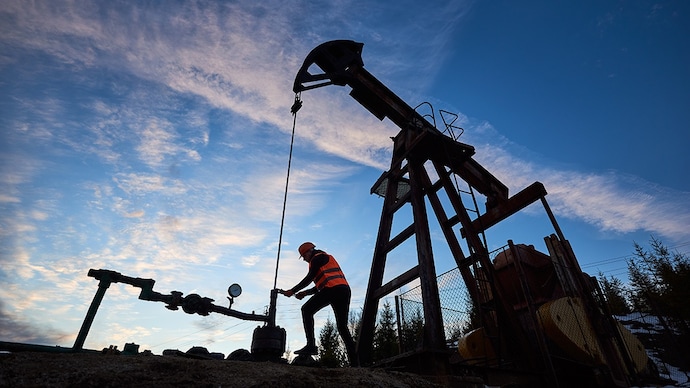
On July 23, Brent crude oil was trading at over $100 a barrel, for the first time since May. The reason: Houthi rebels claimed they had struck two Saudi Arabian oil tankers in the Bab el-Mandeb Strait after declaring a naval blockade of Saudi exports earlier.
This was alarming since the route was being used by Saudi Arabia to bypass the disruptions in the Strait of Hormuz. Media reports said many vessels had altered course or delayed transits through the Bab el-Mandeb Strait. That was really bad news for the oil markets worldwide.
But on July 26, oil prices fell again after reports said Iran would suspend attacks as long as the United States did too. Brent crude fell below $90 a barrel as tensions eased after two weeks of escalating conflict. The Indian bourses rallied on July 27, with the BSE Sensex gaining 776 points to close at 76,835.
However, for India, the environment remains one of high caution. Inflation has been rising. In June, retail inflation rose to 4.38 per cent from 3.93 per cent in May, driven by higher food and fuel prices. This was an 18-month high and the first time since December 2024 that retail inflation had crossed the lower end of the Reserve Bank of India (RBI)’s inflation target range of 4-6 per cent. Food inflation was 5.32 per cent in June compared to 4.78 per cent in May.
India has already increased fuel prices during the war, and there has been no drop despite crude prices cooling after the fragile US-Iran truce. With crude prices volatile, there is no immediate hope of fuel price hikes being rolled back. This will continue to have a cascading impact on transportation, which in turn will make goods and services costlier. There are reports that consumer goods companies will see their first quarter profits squeezed due to a rise in prices of raw material. This is despite these companies hiking their product prices.
There will be a direct impact on other sectors such as textiles too. According to a Crisil report, the volumes of polyester yarn manufacturers are expected to decline 2-3 per cent this fiscal amidst a sharp increase in crude-linked input costs. Average crude prices are expected to range around 15 per cent higher this fiscal at $80-85 per barrel, directly impacting key input prices, the report said.
“West Asia conflict-related disruptions and the consequent weak demand in the downstream textile segment affected polyester demand significantly (around 20 per cent volume dip) in the first quarter of current fiscal,” said Shounak Chakravarty, director, Crisil Ratings, in a research note on July 24. “To recoup lost volumes, players are expected to adopt a measured approach while passing on input cost increases to consumers, thereby limiting volume de-growth to around 2-3 per cent for this fiscal.”
However, as crude-linked raw materials, including purified terephthalic acid and monoethylene glycol, account for around 60-65 per cent of revenues, this strategy will impact operating margins, he added.
Subscribe to India Today Magazine
On July 23, Brent crude oil was trading at over $100 a barrel, for the first time since May. The reason: Houthi rebels claimed they had struck two Saudi Arabian oil tankers in the Bab el-Mandeb Strait after declaring a naval blockade of Saudi exports earlier.
This was alarming since the route was being used by Saudi Arabia to bypass the disruptions in the Strait of Hormuz. Media reports said many vessels had altered course or delayed transits through the Bab el-Mandeb Strait. That was really bad news for the oil markets worldwide.
But on July 26, oil prices fell again after reports said Iran would suspend attacks as long as the United States did too. Brent crude fell below $90 a barrel as tensions eased after two weeks of escalating conflict. The Indian bourses rallied on July 27, with the BSE Sensex gaining 776 points to close at 76,835.
However, for India, the environment remains one of high caution. Inflation has been rising. In June, retail inflation rose to 4.38 per cent from 3.93 per cent in May, driven by higher food and fuel prices. This was an 18-month high and the first time since December 2024 that retail inflation had crossed the lower end of the Reserve Bank of India (RBI)’s inflation target range of 4-6 per cent. Food inflation was 5.32 per cent in June compared to 4.78 per cent in May.
India has already increased fuel prices during the war, and there has been no drop despite crude prices cooling after the fragile US-Iran truce. With crude prices volatile, there is no immediate hope of fuel price hikes being rolled back. This will continue to have a cascading impact on transportation, which in turn will make goods and services costlier. There are reports that consumer goods companies will see their first quarter profits squeezed due to a rise in prices of raw material. This is despite these companies hiking their product prices.
There will be a direct impact on other sectors such as textiles too. According to a Crisil report, the volumes of polyester yarn manufacturers are expected to decline 2-3 per cent this fiscal amidst a sharp increase in crude-linked input costs. Average crude prices are expected to range around 15 per cent higher this fiscal at $80-85 per barrel, directly impacting key input prices, the report said.
“West Asia conflict-related disruptions and the consequent weak demand in the downstream textile segment affected polyester demand significantly (around 20 per cent volume dip) in the first quarter of current fiscal,” said Shounak Chakravarty, director, Crisil Ratings, in a research note on July 24. “To recoup lost volumes, players are expected to adopt a measured approach while passing on input cost increases to consumers, thereby limiting volume de-growth to around 2-3 per cent for this fiscal.”
However, as crude-linked raw materials, including purified terephthalic acid and monoethylene glycol, account for around 60-65 per cent of revenues, this strategy will impact operating margins, he added.
Subscribe to India Today Magazine
On July 23, Brent crude oil was trading at over $100 a barrel, for the first time since May. The reason: Houthi rebels claimed they had struck two Saudi Arabian oil tankers in the Bab el-Mandeb Strait after declaring a naval blockade of Saudi exports earlier.
This was alarming since the route was being used by Saudi Arabia to bypass the disruptions in the Strait of Hormuz. Media reports said many vessels had altered course or delayed transits through the Bab el-Mandeb Strait. That was really bad news for the oil markets worldwide.
But on July 26, oil prices fell again after reports said Iran would suspend attacks as long as the United States did too. Brent crude fell below $90 a barrel as tensions eased after two weeks of escalating conflict. The Indian bourses rallied on July 27, with the BSE Sensex gaining 776 points to close at 76,835.
However, for India, the environment remains one of high caution. Inflation has been rising. In June, retail inflation rose to 4.38 per cent from 3.93 per cent in May, driven by higher food and fuel prices. This was an 18-month high and the first time since December 2024 that retail inflation had crossed the lower end of the Reserve Bank of India (RBI)’s inflation target range of 4-6 per cent. Food inflation was 5.32 per cent in June compared to 4.78 per cent in May.
India has already increased fuel prices during the war, and there has been no drop despite crude prices cooling after the fragile US-Iran truce. With crude prices volatile, there is no immediate hope of fuel price hikes being rolled back. This will continue to have a cascading impact on transportation, which in turn will make goods and services costlier. There are reports that consumer goods companies will see their first quarter profits squeezed due to a rise in prices of raw material. This is despite these companies hiking their product prices.
There will be a direct impact on other sectors such as textiles too. According to a Crisil report, the volumes of polyester yarn manufacturers are expected to decline 2-3 per cent this fiscal amidst a sharp increase in crude-linked input costs. Average crude prices are expected to range around 15 per cent higher this fiscal at $80-85 per barrel, directly impacting key input prices, the report said.
“West Asia conflict-related disruptions and the consequent weak demand in the downstream textile segment affected polyester demand significantly (around 20 per cent volume dip) in the first quarter of current fiscal,” said Shounak Chakravarty, director, Crisil Ratings, in a research note on July 24. “To recoup lost volumes, players are expected to adopt a measured approach while passing on input cost increases to consumers, thereby limiting volume de-growth to around 2-3 per cent for this fiscal.”
However, as crude-linked raw materials, including purified terephthalic acid and monoethylene glycol, account for around 60-65 per cent of revenues, this strategy will impact operating margins, he added.
Subscribe to India Today Magazine

