Dipke skips thanking Wangchuk, activist whose fast turned protest into movement
Dharmendra Pradhan has resigned and an elated CJP founder Abhijeet Dipke announced victory from the protest stage at Jantar Mantar. However, there was no mention of activist Sonam Wangchuk, whose 26-day fast turned the protest into a movement.
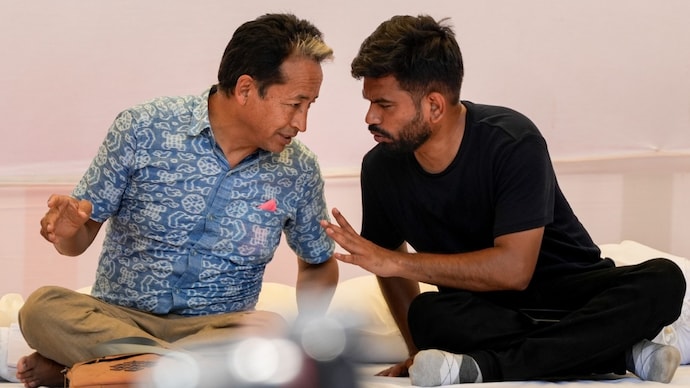
Dharmendra Pradhan has resigned and an elated CJP founder Abhijeet Dipke announced victory from the protest stage at Jantar Mantar. However, there was no mention of activist Sonam Wangchuk, whose 26-day fast turned the protest into a movement.
The announcement of victory on Saturday was made by CJP founder Abhijeet Dipke from the protest stage at New Delhi Jantar Mantar. Education Minister Dharmendra Pradhan announced his resignation just minutes ahead. But missing from Dipke's speech, as he addressed the protesters, was the mention of activist Sonam Wangchuk.
Dipke emphasised that people should resist turning one person into a hero. He said he himself shouldn't be made a hero.
"I want to say something very important. Don't make me a hero because Dharmendra Pradhan resigned today. Don't make that mistake. The country has been ruined because we keep making one person a hero," said Dipke.
In his brief speech, Dipke said that Pradhan's resignation was "proof that if you people are not afraid, if you do not bow before this government, then we can make anyone resign. There's no need to be afraid. This is democracy."
Why the skipping of any mention of Sonam Wangchuk was deafening was because the activist from Ladakh had fasted for 26 days and had given the momentum to the protest.
Wangchuk is admitted in the ICU of Medanta hospital in Gurgaon, and he broke his fast just on Thursday night on the assurances and requests of Union ministers JP Nadda and Jitendra Singh.
After Wangchuk ended his 26-day hunger strike, the decision became the subject of political debate and criticism from a section of people. As questions mounted over the circumstances in which he broke his fast, his wife, Gitanjali Angmo, defended him, urging critics to remember the personal cost of his sacrifice.
HOW SOMAN WANGCHUK TURNED THE CJP PROTEST INTO A MOVEMENT
The protests at Jantar Mantar began on June 6 as Dipke landed in India from Boston, the US. Other than a few aides like Saurabh Das, Ashutosh Ranka and the now-fired Vijeta Dahiya, there were no big names associated with it. Only Wangchuk, an eminent educationist, who had lent support to the youngsters.
India Today Digital reported from the ground from the very beginning and witnessed that the crowd was sparse initially. Seeing that the government was in no mood to relent, Wangchuk started an indefinite hunger strike on June 28.
As his fast continued into weeks, and he turned visibly weak, people grew concerned and interested in the protest. India Today Digital saw a remarkably higher footfall.
The government, worried over the repercussions, shifted Wangchuk to a hospital by force on July 18. He then shifted to Gurgaon's Medanta hospital.
The removal of Wangchuk became a focal point of the protest. His continued hunger strike from the hospital became the rallying point with people associated with the protest and lakhs of supporters changing their WhatsApp DP to "I support Sonam", with the activist's photo and tricolour in the background.
Though Wangchuk wasn't on the ground, his messages kept inspiring the protesters. Dipke and others spoke about him reverentially. It was Wangchuk who made a fervent appeal to people to make the CJP's march to Parliament on July 20 a success. He said he would "return as ghost" if the march didn't get enough participation.
However, the sentiment shifted entirely after July 20. As the protesters marched in large numbers, there was large-scale confrontation. Under attack from lumpen elements, the Delhi Police and Rapid Action Force (RAF) personnel resorted to the use of force.
What even Wangchuk couldn't achieve had been achieved by the Delhi Police and the RAF. Tens of thousands poured into Jantar Mantar seeing the videos of alleged brutality by the security personnel. The protest reached its peak.
On July 22, Wangchuk declared that he would end his hunger strike. That came after ministers Nadda and Singh met him in hospital and gave him assurances. Wangchuk also scaled down his demand for Pradhan's resignation. Wangchuk, the centre of the agitation, had been won over.
THE BACKLASH AFTER WANGCHUK ENDED HIS FAST
After Wangchuk ended his 26-day hunger strike, the manner in which he did so triggered debates. Critics questioned his decision to break the fast after assurances from Union ministers JP Nadda and Jitendra Singh. Many said he diluted his conditions as they didn't include Pradhan's resignation. Wangchuk's wife, Gitanjali Angmo, hit out sharply at the critics and appealed for compassion. She said people should remember the personal cost of his sacrifice.
But by then, no one was actually the centre of the protest now. Even the CJP leadership wasn't in full control. It was a mass of protesters with one single point of demand, which was the resignation of Dharmendra Pradhan.
On Friday evening, CJP spokesperson Ashutosh Ranka was asked his opinion on Wangchuk resigning without demanding Pradhan's resignation by India Today journalist Rajdeep Sardesai.
"This is not just about the CJP or the protesting people at Jantar Mantar any more," Ranka told India Today TV. "There are protests happening all across the country... The people of this country want Pradhan gone." Ranka also said the agitation "has become bigger than CJP."
"We are so happy that Sir ended his fast... We have been requesting him to end his fast for a few days now because we are really, really concerned about his health." Ranka added, "He has ignited the entire country... People have really woken up because Sonam Wangchuk Sir was with this movement."
But by then, no one was actually the centre of the protest now. Even the CJP leadership wasn't in full control. It was a mass of protesters with one single point of demand – Dharmendra Pradhan must resign.
In multiple interviews, Dipke, Das and Ranka made that clear. The movement had become bigger than the CJP and Pradhan's issue had become non-negotiable.
The evident happened on Saturday, as Pradhan announced his resignation.
While the movement had become bigger than an individual and an outfit, Dipke's skipping of Wangchuk's mention in the victory speech was jarring. For, it was Wangchuk who gave credence and spirit of fighting to the youth movement.
Dharmendra Pradhan has resigned and an elated CJP founder Abhijeet Dipke announced victory from the protest stage at Jantar Mantar. However, there was no mention of activist Sonam Wangchuk, whose 26-day fast turned the protest into a movement.
The announcement of victory on Saturday was made by CJP founder Abhijeet Dipke from the protest stage at New Delhi Jantar Mantar. Education Minister Dharmendra Pradhan announced his resignation just minutes ahead. But missing from Dipke's speech, as he addressed the protesters, was the mention of activist Sonam Wangchuk.
Dipke emphasised that people should resist turning one person into a hero. He said he himself shouldn't be made a hero.
"I want to say something very important. Don't make me a hero because Dharmendra Pradhan resigned today. Don't make that mistake. The country has been ruined because we keep making one person a hero," said Dipke.
In his brief speech, Dipke said that Pradhan's resignation was "proof that if you people are not afraid, if you do not bow before this government, then we can make anyone resign. There's no need to be afraid. This is democracy."
Why the skipping of any mention of Sonam Wangchuk was deafening was because the activist from Ladakh had fasted for 26 days and had given the momentum to the protest.
Wangchuk is admitted in the ICU of Medanta hospital in Gurgaon, and he broke his fast just on Thursday night on the assurances and requests of Union ministers JP Nadda and Jitendra Singh.
After Wangchuk ended his 26-day hunger strike, the decision became the subject of political debate and criticism from a section of people. As questions mounted over the circumstances in which he broke his fast, his wife, Gitanjali Angmo, defended him, urging critics to remember the personal cost of his sacrifice.
HOW SOMAN WANGCHUK TURNED THE CJP PROTEST INTO A MOVEMENT
The protests at Jantar Mantar began on June 6 as Dipke landed in India from Boston, the US. Other than a few aides like Saurabh Das, Ashutosh Ranka and the now-fired Vijeta Dahiya, there were no big names associated with it. Only Wangchuk, an eminent educationist, who had lent support to the youngsters.
India Today Digital reported from the ground from the very beginning and witnessed that the crowd was sparse initially. Seeing that the government was in no mood to relent, Wangchuk started an indefinite hunger strike on June 28.
As his fast continued into weeks, and he turned visibly weak, people grew concerned and interested in the protest. India Today Digital saw a remarkably higher footfall.
The government, worried over the repercussions, shifted Wangchuk to a hospital by force on July 18. He then shifted to Gurgaon's Medanta hospital.
The removal of Wangchuk became a focal point of the protest. His continued hunger strike from the hospital became the rallying point with people associated with the protest and lakhs of supporters changing their WhatsApp DP to "I support Sonam", with the activist's photo and tricolour in the background.
Though Wangchuk wasn't on the ground, his messages kept inspiring the protesters. Dipke and others spoke about him reverentially. It was Wangchuk who made a fervent appeal to people to make the CJP's march to Parliament on July 20 a success. He said he would "return as ghost" if the march didn't get enough participation.
However, the sentiment shifted entirely after July 20. As the protesters marched in large numbers, there was large-scale confrontation. Under attack from lumpen elements, the Delhi Police and Rapid Action Force (RAF) personnel resorted to the use of force.
What even Wangchuk couldn't achieve had been achieved by the Delhi Police and the RAF. Tens of thousands poured into Jantar Mantar seeing the videos of alleged brutality by the security personnel. The protest reached its peak.
On July 22, Wangchuk declared that he would end his hunger strike. That came after ministers Nadda and Singh met him in hospital and gave him assurances. Wangchuk also scaled down his demand for Pradhan's resignation. Wangchuk, the centre of the agitation, had been won over.
THE BACKLASH AFTER WANGCHUK ENDED HIS FAST
After Wangchuk ended his 26-day hunger strike, the manner in which he did so triggered debates. Critics questioned his decision to break the fast after assurances from Union ministers JP Nadda and Jitendra Singh. Many said he diluted his conditions as they didn't include Pradhan's resignation. Wangchuk's wife, Gitanjali Angmo, hit out sharply at the critics and appealed for compassion. She said people should remember the personal cost of his sacrifice.
But by then, no one was actually the centre of the protest now. Even the CJP leadership wasn't in full control. It was a mass of protesters with one single point of demand, which was the resignation of Dharmendra Pradhan.
On Friday evening, CJP spokesperson Ashutosh Ranka was asked his opinion on Wangchuk resigning without demanding Pradhan's resignation by India Today journalist Rajdeep Sardesai.
"This is not just about the CJP or the protesting people at Jantar Mantar any more," Ranka told India Today TV. "There are protests happening all across the country... The people of this country want Pradhan gone." Ranka also said the agitation "has become bigger than CJP."
"We are so happy that Sir ended his fast... We have been requesting him to end his fast for a few days now because we are really, really concerned about his health." Ranka added, "He has ignited the entire country... People have really woken up because Sonam Wangchuk Sir was with this movement."
But by then, no one was actually the centre of the protest now. Even the CJP leadership wasn't in full control. It was a mass of protesters with one single point of demand – Dharmendra Pradhan must resign.
In multiple interviews, Dipke, Das and Ranka made that clear. The movement had become bigger than the CJP and Pradhan's issue had become non-negotiable.
The evident happened on Saturday, as Pradhan announced his resignation.
While the movement had become bigger than an individual and an outfit, Dipke's skipping of Wangchuk's mention in the victory speech was jarring. For, it was Wangchuk who gave credence and spirit of fighting to the youth movement.
Dharmendra Pradhan has resigned and an elated CJP founder Abhijeet Dipke announced victory from the protest stage at Jantar Mantar. However, there was no mention of activist Sonam Wangchuk, whose 26-day fast turned the protest into a movement.
The announcement of victory on Saturday was made by CJP founder Abhijeet Dipke from the protest stage at New Delhi Jantar Mantar. Education Minister Dharmendra Pradhan announced his resignation just minutes ahead. But missing from Dipke's speech, as he addressed the protesters, was the mention of activist Sonam Wangchuk.
Dipke emphasised that people should resist turning one person into a hero. He said he himself shouldn't be made a hero.
"I want to say something very important. Don't make me a hero because Dharmendra Pradhan resigned today. Don't make that mistake. The country has been ruined because we keep making one person a hero," said Dipke.
In his brief speech, Dipke said that Pradhan's resignation was "proof that if you people are not afraid, if you do not bow before this government, then we can make anyone resign. There's no need to be afraid. This is democracy."
Why the skipping of any mention of Sonam Wangchuk was deafening was because the activist from Ladakh had fasted for 26 days and had given the momentum to the protest.
Wangchuk is admitted in the ICU of Medanta hospital in Gurgaon, and he broke his fast just on Thursday night on the assurances and requests of Union ministers JP Nadda and Jitendra Singh.
After Wangchuk ended his 26-day hunger strike, the decision became the subject of political debate and criticism from a section of people. As questions mounted over the circumstances in which he broke his fast, his wife, Gitanjali Angmo, defended him, urging critics to remember the personal cost of his sacrifice.
HOW SOMAN WANGCHUK TURNED THE CJP PROTEST INTO A MOVEMENT
The protests at Jantar Mantar began on June 6 as Dipke landed in India from Boston, the US. Other than a few aides like Saurabh Das, Ashutosh Ranka and the now-fired Vijeta Dahiya, there were no big names associated with it. Only Wangchuk, an eminent educationist, who had lent support to the youngsters.
India Today Digital reported from the ground from the very beginning and witnessed that the crowd was sparse initially. Seeing that the government was in no mood to relent, Wangchuk started an indefinite hunger strike on June 28.
As his fast continued into weeks, and he turned visibly weak, people grew concerned and interested in the protest. India Today Digital saw a remarkably higher footfall.
The government, worried over the repercussions, shifted Wangchuk to a hospital by force on July 18. He then shifted to Gurgaon's Medanta hospital.
The removal of Wangchuk became a focal point of the protest. His continued hunger strike from the hospital became the rallying point with people associated with the protest and lakhs of supporters changing their WhatsApp DP to "I support Sonam", with the activist's photo and tricolour in the background.
Though Wangchuk wasn't on the ground, his messages kept inspiring the protesters. Dipke and others spoke about him reverentially. It was Wangchuk who made a fervent appeal to people to make the CJP's march to Parliament on July 20 a success. He said he would "return as ghost" if the march didn't get enough participation.
However, the sentiment shifted entirely after July 20. As the protesters marched in large numbers, there was large-scale confrontation. Under attack from lumpen elements, the Delhi Police and Rapid Action Force (RAF) personnel resorted to the use of force.
What even Wangchuk couldn't achieve had been achieved by the Delhi Police and the RAF. Tens of thousands poured into Jantar Mantar seeing the videos of alleged brutality by the security personnel. The protest reached its peak.
On July 22, Wangchuk declared that he would end his hunger strike. That came after ministers Nadda and Singh met him in hospital and gave him assurances. Wangchuk also scaled down his demand for Pradhan's resignation. Wangchuk, the centre of the agitation, had been won over.
THE BACKLASH AFTER WANGCHUK ENDED HIS FAST
After Wangchuk ended his 26-day hunger strike, the manner in which he did so triggered debates. Critics questioned his decision to break the fast after assurances from Union ministers JP Nadda and Jitendra Singh. Many said he diluted his conditions as they didn't include Pradhan's resignation. Wangchuk's wife, Gitanjali Angmo, hit out sharply at the critics and appealed for compassion. She said people should remember the personal cost of his sacrifice.
But by then, no one was actually the centre of the protest now. Even the CJP leadership wasn't in full control. It was a mass of protesters with one single point of demand, which was the resignation of Dharmendra Pradhan.
On Friday evening, CJP spokesperson Ashutosh Ranka was asked his opinion on Wangchuk resigning without demanding Pradhan's resignation by India Today journalist Rajdeep Sardesai.
"This is not just about the CJP or the protesting people at Jantar Mantar any more," Ranka told India Today TV. "There are protests happening all across the country... The people of this country want Pradhan gone." Ranka also said the agitation "has become bigger than CJP."
"We are so happy that Sir ended his fast... We have been requesting him to end his fast for a few days now because we are really, really concerned about his health." Ranka added, "He has ignited the entire country... People have really woken up because Sonam Wangchuk Sir was with this movement."
But by then, no one was actually the centre of the protest now. Even the CJP leadership wasn't in full control. It was a mass of protesters with one single point of demand – Dharmendra Pradhan must resign.
In multiple interviews, Dipke, Das and Ranka made that clear. The movement had become bigger than the CJP and Pradhan's issue had become non-negotiable.
The evident happened on Saturday, as Pradhan announced his resignation.
While the movement had become bigger than an individual and an outfit, Dipke's skipping of Wangchuk's mention in the victory speech was jarring. For, it was Wangchuk who gave credence and spirit of fighting to the youth movement.

