Rahul Gandhi targets Amit Shah over crackdown on student protesters in Lok Sabha
Rahul Gandhi targeted Home Minister Amit Shah in the Lok Sabha over the alleged crackdown on student protesters, triggering protests from NDA MPs, disruptions in the House and a sharp exchange with the Treasury benches.
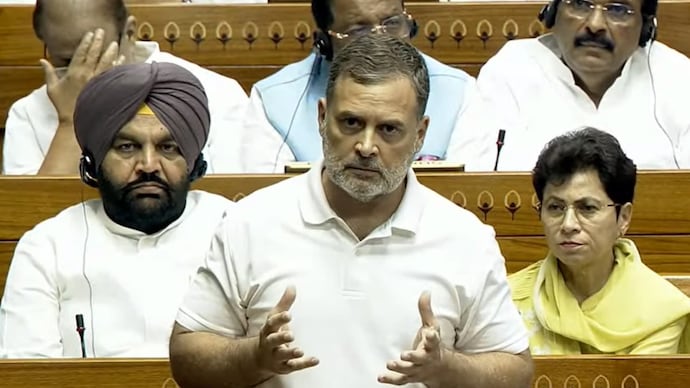
The Lok Sabha witnessed noisy scenes on Wednesday after Leader of the Opposition Rahul Gandhi targeted Union Home Minister Amit Shah during a debate on the Anti-Paper Leak Bill, prompting strong protests from the Treasury benches and the subsequent expunction of parts of his speech from the House proceedings.
Participating in the debate on the Anti-Paper Leak Bill, the Congress leader made allegations linking the Home Minister to the police action against students during the Cockroach Janta Party's (CJP) protest at Delhi's Jantar Mantar. However, those remarks were later expunged from the official Lok Sabha records by the Chair.
The Congress leader also referred to seeing the Home Minister's convoy during the developments outside Parliament. That portion of his speech, too, was removed from the official proceedings. Gandhi added that “the use of force can only be authorised by the Home Minister or the Prime Minister.
His remarks triggered immediate protests from the Treasury benches, with Rijiju demanding that Gandhi substantiate the allegation. BJP and NDA members accused the Leader of the Opposition of making baseless claims against the Home Minister, leading to sloganeering and brief disruptions in the House.
NDA MPs also demanded an apology from Gandhi and asked him to provide evidence to support his allegations, while Lok Sabha Speaker Om Birla intervened to remind the Leader of the Opposition that allegations cannot be made in the House without substantiating them with evidence.
“How can you say this? This is a breach of the privilege accorded to the Leader of the Opposition. How can he make such serious allegations against the Home Minister? On what basis have you made the charge that the Home Minister ordered firing? This is a baseless allegation," Kiren Rijiju said.
The controversy stems from the July 20 Cockroach Janta Party (CJP) protest at Delhi's Jantar Mantar, where demonstrators clashed with security personnel as they attempted to march towards Parliament under the "Sansad Chalo" call.
Police used pellet gun, lathi charges, tear gas shells and other crowd-control measures to disperse the protesters, leaving several students injured.
The protests, led by CJP and supported by activist Sonam Wangchuk, were organised over irregularities in the NEET examination and demands for a more transparent and accountable education system.
Speaking to reporters outside Parliament after his speech, Gandhi maintained that responsibility for the police action ultimately rested with Shah, arguing that he had either authorised it or failed to prevent it.
"There can be two possible scenarios. One is that the Home Minister issued the order. The second is that the Home Minister was unaware that firing would take place. In the first case, he is culpable; in the second, he is incompetent. It has to be one of the two; there is no third possibility. If the Home Minister didn't even know that shots were being fired, it means he is incompetent; otherwise, if he ordered it, he is culpable," he said.
Stepping up his attack, Gandhi alleged that the RSS was influencing the education system and determining what students should learn.
"The soul of the system has been captured by the RSS. Dharmendra Pradhan never ran the education ministry. The man and organisation that run the ministry is called the RSS," Gandhi said.
"They (students) have to buy this nonsensical history that RSS fantasises about. Pradhan is the symbol. Your real enemy is the RSS. They are the people who want you to be andhbhakts,” he added.
At the start of his speech, Rahul Gandhi recalled a conversation with a group of students that, he said, offered him a fresh perspective on how young people perceive education and knowledge.
"The question I asked the girl was that you said you were a student -- what does that mean? Does it mean you study in a college, in a school, you read books? She said a student is someone who has an open mind (and) an open heart.
"A student is someone who accepts that he does not know everything. Whatever he knows will be superseded by new knowledge. He knows the universe is dynamic. He also understands that knowledge is constantly changing. The most important quality, she said, that a student has is humility," he said.
Gandhi said the student went on to describe another group of people who believed they already knew everything.
"They are absolutely convinced that they know everything. They believe that the universe is static and they believe that knowledge emerges from inside them. They are arrogant. They don't listen, they don't respect other people's truth," the leader of opposition (LoP) said and used a word, which was objected to as "unparliamentary" by the Chair.
The remark triggered an uproar in the House, prompting Speaker Om Birla to ask Gandhi to confine his speech to the subject under discussion. Parliamentary Affairs Minister Kiren Rijiju also objected to the use of what he termed an "unparliamentary" expression.
Gandhi clarified that he was merely quoting a student and not referring to any member of the House. Birla subsequently directed that the unparliamentary remarks be expunged from the proceedings.
Gandhi went on to recount another part of his interaction with the student, saying the teenager told him that the defining quality of a student was that they "wear the truth on their chest", while another category of people felt the need to construct an image.
"As that image is not true because ... is trying to pretend he is God, he has to create this image," Gandhi said. He added that when he asked the student about a third category, the reply was: "Andhbhakt - someone who is absolutely convinced that ... is God."
Gandhi said the framework was offered by an 18-year-old student and argued that the ongoing protests, though centred on examinations, reflected deeper concerns about the country's education system.
The Lok Sabha witnessed noisy scenes on Wednesday after Leader of the Opposition Rahul Gandhi targeted Union Home Minister Amit Shah during a debate on the Anti-Paper Leak Bill, prompting strong protests from the Treasury benches and the subsequent expunction of parts of his speech from the House proceedings.
Participating in the debate on the Anti-Paper Leak Bill, the Congress leader made allegations linking the Home Minister to the police action against students during the Cockroach Janta Party's (CJP) protest at Delhi's Jantar Mantar. However, those remarks were later expunged from the official Lok Sabha records by the Chair.
The Congress leader also referred to seeing the Home Minister's convoy during the developments outside Parliament. That portion of his speech, too, was removed from the official proceedings. Gandhi added that “the use of force can only be authorised by the Home Minister or the Prime Minister.
His remarks triggered immediate protests from the Treasury benches, with Rijiju demanding that Gandhi substantiate the allegation. BJP and NDA members accused the Leader of the Opposition of making baseless claims against the Home Minister, leading to sloganeering and brief disruptions in the House.
NDA MPs also demanded an apology from Gandhi and asked him to provide evidence to support his allegations, while Lok Sabha Speaker Om Birla intervened to remind the Leader of the Opposition that allegations cannot be made in the House without substantiating them with evidence.
“How can you say this? This is a breach of the privilege accorded to the Leader of the Opposition. How can he make such serious allegations against the Home Minister? On what basis have you made the charge that the Home Minister ordered firing? This is a baseless allegation," Kiren Rijiju said.
The controversy stems from the July 20 Cockroach Janta Party (CJP) protest at Delhi's Jantar Mantar, where demonstrators clashed with security personnel as they attempted to march towards Parliament under the "Sansad Chalo" call.
Police used pellet gun, lathi charges, tear gas shells and other crowd-control measures to disperse the protesters, leaving several students injured.
The protests, led by CJP and supported by activist Sonam Wangchuk, were organised over irregularities in the NEET examination and demands for a more transparent and accountable education system.
Speaking to reporters outside Parliament after his speech, Gandhi maintained that responsibility for the police action ultimately rested with Shah, arguing that he had either authorised it or failed to prevent it.
"There can be two possible scenarios. One is that the Home Minister issued the order. The second is that the Home Minister was unaware that firing would take place. In the first case, he is culpable; in the second, he is incompetent. It has to be one of the two; there is no third possibility. If the Home Minister didn't even know that shots were being fired, it means he is incompetent; otherwise, if he ordered it, he is culpable," he said.
Stepping up his attack, Gandhi alleged that the RSS was influencing the education system and determining what students should learn.
"The soul of the system has been captured by the RSS. Dharmendra Pradhan never ran the education ministry. The man and organisation that run the ministry is called the RSS," Gandhi said.
"They (students) have to buy this nonsensical history that RSS fantasises about. Pradhan is the symbol. Your real enemy is the RSS. They are the people who want you to be andhbhakts,” he added.
At the start of his speech, Rahul Gandhi recalled a conversation with a group of students that, he said, offered him a fresh perspective on how young people perceive education and knowledge.
"The question I asked the girl was that you said you were a student -- what does that mean? Does it mean you study in a college, in a school, you read books? She said a student is someone who has an open mind (and) an open heart.
"A student is someone who accepts that he does not know everything. Whatever he knows will be superseded by new knowledge. He knows the universe is dynamic. He also understands that knowledge is constantly changing. The most important quality, she said, that a student has is humility," he said.
Gandhi said the student went on to describe another group of people who believed they already knew everything.
"They are absolutely convinced that they know everything. They believe that the universe is static and they believe that knowledge emerges from inside them. They are arrogant. They don't listen, they don't respect other people's truth," the leader of opposition (LoP) said and used a word, which was objected to as "unparliamentary" by the Chair.
The remark triggered an uproar in the House, prompting Speaker Om Birla to ask Gandhi to confine his speech to the subject under discussion. Parliamentary Affairs Minister Kiren Rijiju also objected to the use of what he termed an "unparliamentary" expression.
Gandhi clarified that he was merely quoting a student and not referring to any member of the House. Birla subsequently directed that the unparliamentary remarks be expunged from the proceedings.
Gandhi went on to recount another part of his interaction with the student, saying the teenager told him that the defining quality of a student was that they "wear the truth on their chest", while another category of people felt the need to construct an image.
"As that image is not true because ... is trying to pretend he is God, he has to create this image," Gandhi said. He added that when he asked the student about a third category, the reply was: "Andhbhakt - someone who is absolutely convinced that ... is God."
Gandhi said the framework was offered by an 18-year-old student and argued that the ongoing protests, though centred on examinations, reflected deeper concerns about the country's education system.
The Lok Sabha witnessed noisy scenes on Wednesday after Leader of the Opposition Rahul Gandhi targeted Union Home Minister Amit Shah during a debate on the Anti-Paper Leak Bill, prompting strong protests from the Treasury benches and the subsequent expunction of parts of his speech from the House proceedings.
Participating in the debate on the Anti-Paper Leak Bill, the Congress leader made allegations linking the Home Minister to the police action against students during the Cockroach Janta Party's (CJP) protest at Delhi's Jantar Mantar. However, those remarks were later expunged from the official Lok Sabha records by the Chair.
The Congress leader also referred to seeing the Home Minister's convoy during the developments outside Parliament. That portion of his speech, too, was removed from the official proceedings. Gandhi added that “the use of force can only be authorised by the Home Minister or the Prime Minister.
His remarks triggered immediate protests from the Treasury benches, with Rijiju demanding that Gandhi substantiate the allegation. BJP and NDA members accused the Leader of the Opposition of making baseless claims against the Home Minister, leading to sloganeering and brief disruptions in the House.
NDA MPs also demanded an apology from Gandhi and asked him to provide evidence to support his allegations, while Lok Sabha Speaker Om Birla intervened to remind the Leader of the Opposition that allegations cannot be made in the House without substantiating them with evidence.
“How can you say this? This is a breach of the privilege accorded to the Leader of the Opposition. How can he make such serious allegations against the Home Minister? On what basis have you made the charge that the Home Minister ordered firing? This is a baseless allegation," Kiren Rijiju said.
The controversy stems from the July 20 Cockroach Janta Party (CJP) protest at Delhi's Jantar Mantar, where demonstrators clashed with security personnel as they attempted to march towards Parliament under the "Sansad Chalo" call.
Police used pellet gun, lathi charges, tear gas shells and other crowd-control measures to disperse the protesters, leaving several students injured.
The protests, led by CJP and supported by activist Sonam Wangchuk, were organised over irregularities in the NEET examination and demands for a more transparent and accountable education system.
Speaking to reporters outside Parliament after his speech, Gandhi maintained that responsibility for the police action ultimately rested with Shah, arguing that he had either authorised it or failed to prevent it.
"There can be two possible scenarios. One is that the Home Minister issued the order. The second is that the Home Minister was unaware that firing would take place. In the first case, he is culpable; in the second, he is incompetent. It has to be one of the two; there is no third possibility. If the Home Minister didn't even know that shots were being fired, it means he is incompetent; otherwise, if he ordered it, he is culpable," he said.
Stepping up his attack, Gandhi alleged that the RSS was influencing the education system and determining what students should learn.
"The soul of the system has been captured by the RSS. Dharmendra Pradhan never ran the education ministry. The man and organisation that run the ministry is called the RSS," Gandhi said.
"They (students) have to buy this nonsensical history that RSS fantasises about. Pradhan is the symbol. Your real enemy is the RSS. They are the people who want you to be andhbhakts,” he added.
At the start of his speech, Rahul Gandhi recalled a conversation with a group of students that, he said, offered him a fresh perspective on how young people perceive education and knowledge.
"The question I asked the girl was that you said you were a student -- what does that mean? Does it mean you study in a college, in a school, you read books? She said a student is someone who has an open mind (and) an open heart.
"A student is someone who accepts that he does not know everything. Whatever he knows will be superseded by new knowledge. He knows the universe is dynamic. He also understands that knowledge is constantly changing. The most important quality, she said, that a student has is humility," he said.
Gandhi said the student went on to describe another group of people who believed they already knew everything.
"They are absolutely convinced that they know everything. They believe that the universe is static and they believe that knowledge emerges from inside them. They are arrogant. They don't listen, they don't respect other people's truth," the leader of opposition (LoP) said and used a word, which was objected to as "unparliamentary" by the Chair.
The remark triggered an uproar in the House, prompting Speaker Om Birla to ask Gandhi to confine his speech to the subject under discussion. Parliamentary Affairs Minister Kiren Rijiju also objected to the use of what he termed an "unparliamentary" expression.
Gandhi clarified that he was merely quoting a student and not referring to any member of the House. Birla subsequently directed that the unparliamentary remarks be expunged from the proceedings.
Gandhi went on to recount another part of his interaction with the student, saying the teenager told him that the defining quality of a student was that they "wear the truth on their chest", while another category of people felt the need to construct an image.
"As that image is not true because ... is trying to pretend he is God, he has to create this image," Gandhi said. He added that when he asked the student about a third category, the reply was: "Andhbhakt - someone who is absolutely convinced that ... is God."
Gandhi said the framework was offered by an 18-year-old student and argued that the ongoing protests, though centred on examinations, reflected deeper concerns about the country's education system.

