Plea in SC seeks ban on pellet guns for crowd control, compensation for victims
A petition in the Supreme Court has sought the decommissioning of pellet guns for civilian crowd dispersal. The plea says their continued use violates constitutional protections and causes disproportionate harm.
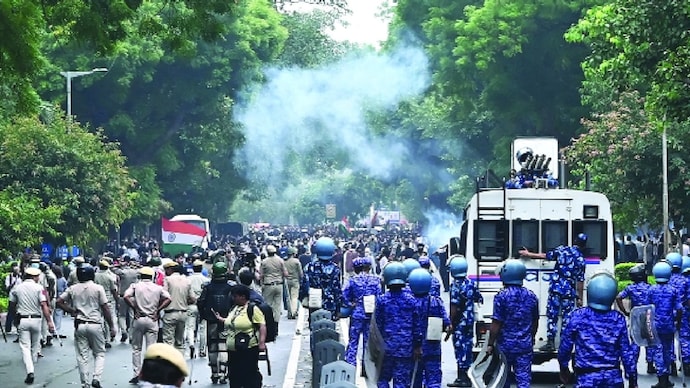
A petition has been filed in the Supreme Court seeking directions to decommission the use of pellet guns by law enforcement agencies for civilian crowd dispersal, arguing that the weapon is unconstitutional and causes disproportionate harm.
The plea has been filed by two persons claiming to have been victims of pellet firing by the Rapid Action Force (RAF), along with a former IPS officer.
The petition also seeks compensation for victims who have suffered injuries due to the use of pellet guns during crowd-control operations.
According to the plea, the use of pellet guns is "per se unfit" for dispersing peaceful assemblies as it fails the constitutional tests of proportionality, necessity and reasonableness.
The petition contends that the continued use of pellet guns by law enforcement agencies violates constitutional protections and has urged the Supreme Court to issue appropriate directions to discontinue their use for civilian crowd management.
PETITION STEMS FROM NEET PROTEST CLASHES
The petition comes in the backdrop of allegations that pellet guns were used during the Cockroach Janta Party (CJP)-led protests over alleged irregularities in the NEET examination in Delhi.
During clashes between protesters and security personnel, several demonstrators claimed they sustained pellet injuries and required hospital treatment, with some alleging serious eye injuries and potential vision loss.
While Delhi Police and official fact-checking agencies denied that pellet guns were used, an India Today Digital exclusive report accounted that protesters cited medical records, eyewitness accounts and testimonies to support their claims.
The alleged use of pellet guns also triggered a political row, with Leader of the Opposition Rahul Gandhi accusing security forces of using excessive force against peaceful protesters.
He demanded accountability for those responsible for the alleged violence, action against officials involved, and the resignation of then Union Education Minister Dharmendra Pradhan over the NEET controversy.
The issue became one of the key flashpoints during the nationwide agitation, with opposition parties repeatedly raising concerns over the alleged use of excessive force against students and demanding an independent inquiry into the incidents.
WHAT ARE PELLET GUNS?
A pellet gun fires cartridges loaded with up to 600 metal or rubber pellets that disperse at speeds of around 1,000 feet per second. According to the standard operating procedure, the weapon should be fired from a minimum distance of 500 feet, with the muzzle aimed below the waist to minimise the risk of fatal injuries.
Despite these guidelines, pellet guns have remained controversial because they can cause severe injuries, particularly to the eyes, often resulting in permanent vision loss or other life-altering disabilities.
HISTORY OF PELLET GUN USE IN INDIA
Pellet guns were first deployed in Jammu and Kashmir to control violent protests in 2010 but were later discontinued by the then state government.
They were reintroduced in July 2016 following widespread unrest after the killing of Hizbul Mujahideen militant Burhan Wani. Their use during the protests drew widespread criticism from human rights organisations and civil society groups because of the large number of eye injuries reported.
The latest petition before the Supreme Court seeks to end the use of pellet guns for civilian crowd management altogether, arguing that safer and less harmful alternatives should be adopted for maintaining public order.
A petition has been filed in the Supreme Court seeking directions to decommission the use of pellet guns by law enforcement agencies for civilian crowd dispersal, arguing that the weapon is unconstitutional and causes disproportionate harm.
The plea has been filed by two persons claiming to have been victims of pellet firing by the Rapid Action Force (RAF), along with a former IPS officer.
The petition also seeks compensation for victims who have suffered injuries due to the use of pellet guns during crowd-control operations.
According to the plea, the use of pellet guns is "per se unfit" for dispersing peaceful assemblies as it fails the constitutional tests of proportionality, necessity and reasonableness.
The petition contends that the continued use of pellet guns by law enforcement agencies violates constitutional protections and has urged the Supreme Court to issue appropriate directions to discontinue their use for civilian crowd management.
PETITION STEMS FROM NEET PROTEST CLASHES
The petition comes in the backdrop of allegations that pellet guns were used during the Cockroach Janta Party (CJP)-led protests over alleged irregularities in the NEET examination in Delhi.
During clashes between protesters and security personnel, several demonstrators claimed they sustained pellet injuries and required hospital treatment, with some alleging serious eye injuries and potential vision loss.
While Delhi Police and official fact-checking agencies denied that pellet guns were used, an India Today Digital exclusive report accounted that protesters cited medical records, eyewitness accounts and testimonies to support their claims.
The alleged use of pellet guns also triggered a political row, with Leader of the Opposition Rahul Gandhi accusing security forces of using excessive force against peaceful protesters.
He demanded accountability for those responsible for the alleged violence, action against officials involved, and the resignation of then Union Education Minister Dharmendra Pradhan over the NEET controversy.
The issue became one of the key flashpoints during the nationwide agitation, with opposition parties repeatedly raising concerns over the alleged use of excessive force against students and demanding an independent inquiry into the incidents.
WHAT ARE PELLET GUNS?
A pellet gun fires cartridges loaded with up to 600 metal or rubber pellets that disperse at speeds of around 1,000 feet per second. According to the standard operating procedure, the weapon should be fired from a minimum distance of 500 feet, with the muzzle aimed below the waist to minimise the risk of fatal injuries.
Despite these guidelines, pellet guns have remained controversial because they can cause severe injuries, particularly to the eyes, often resulting in permanent vision loss or other life-altering disabilities.
HISTORY OF PELLET GUN USE IN INDIA
Pellet guns were first deployed in Jammu and Kashmir to control violent protests in 2010 but were later discontinued by the then state government.
They were reintroduced in July 2016 following widespread unrest after the killing of Hizbul Mujahideen militant Burhan Wani. Their use during the protests drew widespread criticism from human rights organisations and civil society groups because of the large number of eye injuries reported.
The latest petition before the Supreme Court seeks to end the use of pellet guns for civilian crowd management altogether, arguing that safer and less harmful alternatives should be adopted for maintaining public order.
A petition has been filed in the Supreme Court seeking directions to decommission the use of pellet guns by law enforcement agencies for civilian crowd dispersal, arguing that the weapon is unconstitutional and causes disproportionate harm.
The plea has been filed by two persons claiming to have been victims of pellet firing by the Rapid Action Force (RAF), along with a former IPS officer.
The petition also seeks compensation for victims who have suffered injuries due to the use of pellet guns during crowd-control operations.
According to the plea, the use of pellet guns is "per se unfit" for dispersing peaceful assemblies as it fails the constitutional tests of proportionality, necessity and reasonableness.
The petition contends that the continued use of pellet guns by law enforcement agencies violates constitutional protections and has urged the Supreme Court to issue appropriate directions to discontinue their use for civilian crowd management.
PETITION STEMS FROM NEET PROTEST CLASHES
The petition comes in the backdrop of allegations that pellet guns were used during the Cockroach Janta Party (CJP)-led protests over alleged irregularities in the NEET examination in Delhi.
During clashes between protesters and security personnel, several demonstrators claimed they sustained pellet injuries and required hospital treatment, with some alleging serious eye injuries and potential vision loss.
While Delhi Police and official fact-checking agencies denied that pellet guns were used, an India Today Digital exclusive report accounted that protesters cited medical records, eyewitness accounts and testimonies to support their claims.
The alleged use of pellet guns also triggered a political row, with Leader of the Opposition Rahul Gandhi accusing security forces of using excessive force against peaceful protesters.
He demanded accountability for those responsible for the alleged violence, action against officials involved, and the resignation of then Union Education Minister Dharmendra Pradhan over the NEET controversy.
The issue became one of the key flashpoints during the nationwide agitation, with opposition parties repeatedly raising concerns over the alleged use of excessive force against students and demanding an independent inquiry into the incidents.
WHAT ARE PELLET GUNS?
A pellet gun fires cartridges loaded with up to 600 metal or rubber pellets that disperse at speeds of around 1,000 feet per second. According to the standard operating procedure, the weapon should be fired from a minimum distance of 500 feet, with the muzzle aimed below the waist to minimise the risk of fatal injuries.
Despite these guidelines, pellet guns have remained controversial because they can cause severe injuries, particularly to the eyes, often resulting in permanent vision loss or other life-altering disabilities.
HISTORY OF PELLET GUN USE IN INDIA
Pellet guns were first deployed in Jammu and Kashmir to control violent protests in 2010 but were later discontinued by the then state government.
They were reintroduced in July 2016 following widespread unrest after the killing of Hizbul Mujahideen militant Burhan Wani. Their use during the protests drew widespread criticism from human rights organisations and civil society groups because of the large number of eye injuries reported.
The latest petition before the Supreme Court seeks to end the use of pellet guns for civilian crowd management altogether, arguing that safer and less harmful alternatives should be adopted for maintaining public order.

