N-plants, rare earths, gas exploration: PM Modi's big pitch for energy security
PM Modi outlined an energy-security roadmap focused on expanding nuclear power, boosting offshore oil exploration, developing alternative and hydrogen fuels and reducing India's dependence on global supplies.
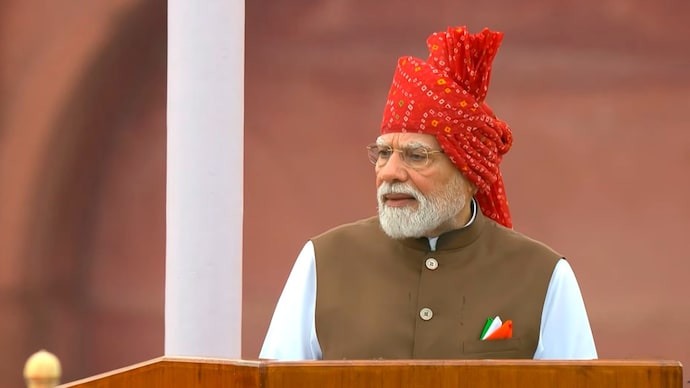
Prime Minister Narendra Modi on Saturday made a strong pitch for energy security through diversification of India’s energy mix, unveiling an expansive roadmap centred on nuclear power, offshore oil exploration, alternative fuels and critical minerals as key pillars of the drive for greater self-reliance.
Addressing the nation from the Red Fort on the 80th Independence Day, PM Modi said energy security had become critical as emerging technologies such as artificial intelligence, semiconductors and data centres require enormous amounts of electricity.
"Today, it is difficult to run the new world without energy. Whether it is chips, AI or data centres, we need enormous amounts of electricity. Energy security is the need of the hour," the Prime Minister said.
NUCLEAR POWER AT CENTRE OF ENERGY PUSH
Emphasising the need to reduce dependence on conventional energy sources, the Prime Minister noted India was moving towards greater self-reliance in nuclear power and that his government had taken a series of steps to strengthen the country’s energy security.
"One major means of ensuring energy security is nuclear energy. By 2047, we will have 100 gigawatts of nuclear power capacity. We are working towards this goal," he said.
He added that the government had set a target of operationalising five new nuclear reactors within the current decade.
"In this very decade, we will have five new nuclear reactors starting operations. We have set a target to get them operational," he said.
The announcement comes as India seeks to rapidly expand nuclear power as a source of reliable, low-carbon electricity. The government has set a target of taking the country’s nuclear power capacity to 100 GW by 2047.
PM Modi also highlighted a major milestone in breeder nuclear technology achieved by India this year.
"This year, India has achieved a significant milestone in breeder nuclear technology. And because of that, we have taken a very big step towards achieving self-reliance in nuclear fuel," he said.
BIG BOOST FOR OFFSHORE OIL EXPLORATION
Citing India’s dependence on crude oil as partly a consequence of limitations in its approach to exploring domestic energy resources, the Prime Minister said nearly 99 per cent of offshore areas that were earlier designated as “no-go” zones had now been opened for exploration.
"Today, India has to depend on crude oil, and this is also a result of the limitations in our thinking," PM said.
He said India had effectively decided against exploring resources beneath the sea, with nearly 99 per cent of its offshore areas classified as "no-go" zones.
"We had effectively decided not to undertake exploration beneath the sea. This was a poverty of thinking. We decided that this could not continue," the Prime Minister said.
He said the government had opened up the areas earlier classified as "no-go" zones and converted them into areas available for exploration.
"We are now actively pursuing exploration beneath the sea and making efforts to discover new reserves," he said.
The Prime Minister also said the government had recently allocated Rs 25,000 crore to accelerate offshore exploration.
FOCUS ON ALTERNATIVE ENERGY
He also stressed the need to accelerate the development and adoption of alternative energy sources, saying India must pursue them with "full force" to strengthen its energy security.
"As I said, we need alternative sources of energy as well. It is very necessary to pursue them with full force," PM Modi said.
He said India was moving rapidly in this direction by increasing the use of appropriate energy sources and stepping up work to expand their adoption.
EXPLORING HYDROGEN POWER
The Prime Minister further highlighted India’s entry into the hydrogen-powered transport sector.
"For the first time, the country has started a hydrogen-powered train," he said, referring to India's first indigenous hydrogen-powered train launched on July 17, named the 'NaMo Green Rail'.
CRITICAL MINERALS KEY TO STRATEGIC SECURITY
Linking critical minerals to India’s technology and energy security, the Prime Minister stressed access to these strategic resources had become increasingly important.
"The entire technology ecosystem depends on critical minerals. India is also working to make itself secure in this regard," he said.
The Prime Minister said the government had launched the National Critical Mineral Mission and announced a critical mineral corridor as part of efforts to secure supplies.
"Many countries around the world are now partnering with India in the critical minerals sector. They are placing their trust in us," PM Modi said.
FUEL SECURITY AMID GLOBAL CRISES
Highlighting India’s ability to maintain supplies of essential fuels and fertilisers amid global crises, PM Modi said the country was increasingly relying on its own strength.
"Today, there is gas in the country, there is petrol, there is urea. We are standing on our own strength," the Prime Minister said, acknowledging that global crises had affected countries across the world, including India.
According to him, "The world is facing these crises. Everyone has been affected; we have not remained untouched". However, he said the preparations and policies undertaken over the past decade had helped India withstand such crises.
The PM said India could not afford to remain dependent on other countries for critical needs, even when global supplies were available cheaply and quickly.
"There are many things available in the world that are cheap and can be obtained quickly. But along with that, we need to build our own strength. We cannot simply depend on others, nor can we leave our capabilities untested," he added.
He said strengthening domestic capabilities was also essential for the country’s security.
Prime Minister Narendra Modi on Saturday made a strong pitch for energy security through diversification of India’s energy mix, unveiling an expansive roadmap centred on nuclear power, offshore oil exploration, alternative fuels and critical minerals as key pillars of the drive for greater self-reliance.
Addressing the nation from the Red Fort on the 80th Independence Day, PM Modi said energy security had become critical as emerging technologies such as artificial intelligence, semiconductors and data centres require enormous amounts of electricity.
"Today, it is difficult to run the new world without energy. Whether it is chips, AI or data centres, we need enormous amounts of electricity. Energy security is the need of the hour," the Prime Minister said.
NUCLEAR POWER AT CENTRE OF ENERGY PUSH
Emphasising the need to reduce dependence on conventional energy sources, the Prime Minister noted India was moving towards greater self-reliance in nuclear power and that his government had taken a series of steps to strengthen the country’s energy security.
"One major means of ensuring energy security is nuclear energy. By 2047, we will have 100 gigawatts of nuclear power capacity. We are working towards this goal," he said.
He added that the government had set a target of operationalising five new nuclear reactors within the current decade.
"In this very decade, we will have five new nuclear reactors starting operations. We have set a target to get them operational," he said.
The announcement comes as India seeks to rapidly expand nuclear power as a source of reliable, low-carbon electricity. The government has set a target of taking the country’s nuclear power capacity to 100 GW by 2047.
PM Modi also highlighted a major milestone in breeder nuclear technology achieved by India this year.
"This year, India has achieved a significant milestone in breeder nuclear technology. And because of that, we have taken a very big step towards achieving self-reliance in nuclear fuel," he said.
BIG BOOST FOR OFFSHORE OIL EXPLORATION
Citing India’s dependence on crude oil as partly a consequence of limitations in its approach to exploring domestic energy resources, the Prime Minister said nearly 99 per cent of offshore areas that were earlier designated as “no-go” zones had now been opened for exploration.
"Today, India has to depend on crude oil, and this is also a result of the limitations in our thinking," PM said.
He said India had effectively decided against exploring resources beneath the sea, with nearly 99 per cent of its offshore areas classified as "no-go" zones.
"We had effectively decided not to undertake exploration beneath the sea. This was a poverty of thinking. We decided that this could not continue," the Prime Minister said.
He said the government had opened up the areas earlier classified as "no-go" zones and converted them into areas available for exploration.
"We are now actively pursuing exploration beneath the sea and making efforts to discover new reserves," he said.
The Prime Minister also said the government had recently allocated Rs 25,000 crore to accelerate offshore exploration.
FOCUS ON ALTERNATIVE ENERGY
He also stressed the need to accelerate the development and adoption of alternative energy sources, saying India must pursue them with "full force" to strengthen its energy security.
"As I said, we need alternative sources of energy as well. It is very necessary to pursue them with full force," PM Modi said.
He said India was moving rapidly in this direction by increasing the use of appropriate energy sources and stepping up work to expand their adoption.
EXPLORING HYDROGEN POWER
The Prime Minister further highlighted India’s entry into the hydrogen-powered transport sector.
"For the first time, the country has started a hydrogen-powered train," he said, referring to India's first indigenous hydrogen-powered train launched on July 17, named the 'NaMo Green Rail'.
CRITICAL MINERALS KEY TO STRATEGIC SECURITY
Linking critical minerals to India’s technology and energy security, the Prime Minister stressed access to these strategic resources had become increasingly important.
"The entire technology ecosystem depends on critical minerals. India is also working to make itself secure in this regard," he said.
The Prime Minister said the government had launched the National Critical Mineral Mission and announced a critical mineral corridor as part of efforts to secure supplies.
"Many countries around the world are now partnering with India in the critical minerals sector. They are placing their trust in us," PM Modi said.
FUEL SECURITY AMID GLOBAL CRISES
Highlighting India’s ability to maintain supplies of essential fuels and fertilisers amid global crises, PM Modi said the country was increasingly relying on its own strength.
"Today, there is gas in the country, there is petrol, there is urea. We are standing on our own strength," the Prime Minister said, acknowledging that global crises had affected countries across the world, including India.
According to him, "The world is facing these crises. Everyone has been affected; we have not remained untouched". However, he said the preparations and policies undertaken over the past decade had helped India withstand such crises.
The PM said India could not afford to remain dependent on other countries for critical needs, even when global supplies were available cheaply and quickly.
"There are many things available in the world that are cheap and can be obtained quickly. But along with that, we need to build our own strength. We cannot simply depend on others, nor can we leave our capabilities untested," he added.
He said strengthening domestic capabilities was also essential for the country’s security.
Prime Minister Narendra Modi on Saturday made a strong pitch for energy security through diversification of India’s energy mix, unveiling an expansive roadmap centred on nuclear power, offshore oil exploration, alternative fuels and critical minerals as key pillars of the drive for greater self-reliance.
Addressing the nation from the Red Fort on the 80th Independence Day, PM Modi said energy security had become critical as emerging technologies such as artificial intelligence, semiconductors and data centres require enormous amounts of electricity.
"Today, it is difficult to run the new world without energy. Whether it is chips, AI or data centres, we need enormous amounts of electricity. Energy security is the need of the hour," the Prime Minister said.
NUCLEAR POWER AT CENTRE OF ENERGY PUSH
Emphasising the need to reduce dependence on conventional energy sources, the Prime Minister noted India was moving towards greater self-reliance in nuclear power and that his government had taken a series of steps to strengthen the country’s energy security.
"One major means of ensuring energy security is nuclear energy. By 2047, we will have 100 gigawatts of nuclear power capacity. We are working towards this goal," he said.
He added that the government had set a target of operationalising five new nuclear reactors within the current decade.
"In this very decade, we will have five new nuclear reactors starting operations. We have set a target to get them operational," he said.
The announcement comes as India seeks to rapidly expand nuclear power as a source of reliable, low-carbon electricity. The government has set a target of taking the country’s nuclear power capacity to 100 GW by 2047.
PM Modi also highlighted a major milestone in breeder nuclear technology achieved by India this year.
"This year, India has achieved a significant milestone in breeder nuclear technology. And because of that, we have taken a very big step towards achieving self-reliance in nuclear fuel," he said.
BIG BOOST FOR OFFSHORE OIL EXPLORATION
Citing India’s dependence on crude oil as partly a consequence of limitations in its approach to exploring domestic energy resources, the Prime Minister said nearly 99 per cent of offshore areas that were earlier designated as “no-go” zones had now been opened for exploration.
"Today, India has to depend on crude oil, and this is also a result of the limitations in our thinking," PM said.
He said India had effectively decided against exploring resources beneath the sea, with nearly 99 per cent of its offshore areas classified as "no-go" zones.
"We had effectively decided not to undertake exploration beneath the sea. This was a poverty of thinking. We decided that this could not continue," the Prime Minister said.
He said the government had opened up the areas earlier classified as "no-go" zones and converted them into areas available for exploration.
"We are now actively pursuing exploration beneath the sea and making efforts to discover new reserves," he said.
The Prime Minister also said the government had recently allocated Rs 25,000 crore to accelerate offshore exploration.
FOCUS ON ALTERNATIVE ENERGY
He also stressed the need to accelerate the development and adoption of alternative energy sources, saying India must pursue them with "full force" to strengthen its energy security.
"As I said, we need alternative sources of energy as well. It is very necessary to pursue them with full force," PM Modi said.
He said India was moving rapidly in this direction by increasing the use of appropriate energy sources and stepping up work to expand their adoption.
EXPLORING HYDROGEN POWER
The Prime Minister further highlighted India’s entry into the hydrogen-powered transport sector.
"For the first time, the country has started a hydrogen-powered train," he said, referring to India's first indigenous hydrogen-powered train launched on July 17, named the 'NaMo Green Rail'.
CRITICAL MINERALS KEY TO STRATEGIC SECURITY
Linking critical minerals to India’s technology and energy security, the Prime Minister stressed access to these strategic resources had become increasingly important.
"The entire technology ecosystem depends on critical minerals. India is also working to make itself secure in this regard," he said.
The Prime Minister said the government had launched the National Critical Mineral Mission and announced a critical mineral corridor as part of efforts to secure supplies.
"Many countries around the world are now partnering with India in the critical minerals sector. They are placing their trust in us," PM Modi said.
FUEL SECURITY AMID GLOBAL CRISES
Highlighting India’s ability to maintain supplies of essential fuels and fertilisers amid global crises, PM Modi said the country was increasingly relying on its own strength.
"Today, there is gas in the country, there is petrol, there is urea. We are standing on our own strength," the Prime Minister said, acknowledging that global crises had affected countries across the world, including India.
According to him, "The world is facing these crises. Everyone has been affected; we have not remained untouched". However, he said the preparations and policies undertaken over the past decade had helped India withstand such crises.
The PM said India could not afford to remain dependent on other countries for critical needs, even when global supplies were available cheaply and quickly.
"There are many things available in the world that are cheap and can be obtained quickly. But along with that, we need to build our own strength. We cannot simply depend on others, nor can we leave our capabilities untested," he added.
He said strengthening domestic capabilities was also essential for the country’s security.

