What changed in 8 months that BJP lost Bankipur to Prashant Kishor? 5 big factors
The BJP won the Bankipur seat in the Assembly election in November 2025 by a margin of 52,000 votes. On Monday, Prashant Kishor of Jan Suraaj snatched the seat in a bypoll from the BJP by a margin of 19,000 votes. Here are the five big factors that swung fortunes completely in a span of eight months.
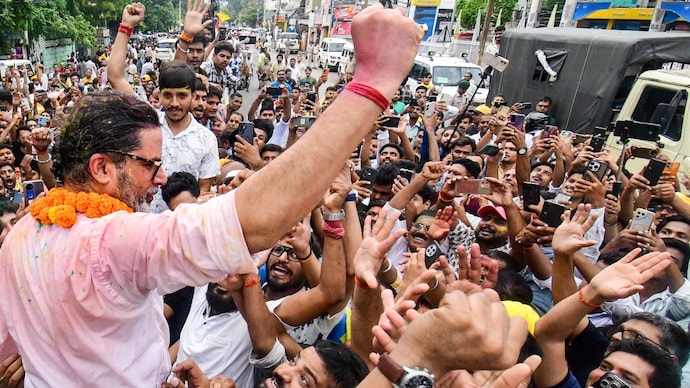
Of the three Assembly seats whose bypoll results were declared on Monday, Bihar's Bankipur emerged as the biggest setback for the BJP. Prashant Kishor, the chief of Jan Suraaj Party, emerged victorious, defeating the BJP candidate by a margin of over 19,000 votes.
There are three reasons why the result is particularly stinging for the BJP. One, this was a seat that was vacated by Nitin Nabin, who was promoted as the BJP national President. Two, this seat has been with the BJP since 1995. Three, the party in power in a state, which is the BJP in Bihar, is generally at an advantage of winning a bypoll in the state.
This is the debut election that Prashant Kishor, or PK as he is better known as, has contested. His victory also marks the first win for the Jan Suraaj Party, which made its debut during the Bihar Assembly election in November 2025.
What has really changed in eight months between November 2025 and July 30, 2026, when voting was held for the seat in Bankipur that led to the defeat of BJP's Neeraj Kumar by PK? In November Assembly elections, Nabin won the seat by a margin of nearly 52,000 votes.
Here are the five big factors that led to the BJP's defeat in the bypoll in Bankipur, a seat for which the party had assigned 40 star campaigners, including Chief Minister Samrat Choudhary and Union Ministers like Nityanand Rai and Giriraj Singh.
1. REFERENDUM ON NITISH KUMAR'S SUCCESSOR SAMRAT CHOUDHARY
The Bankipur bypoll effectively became a referendum on Chief Minister Samrat Choudhary's leadership. This was the first electoral test for the BJP after it assumed the chief minister's office in Bihar.
Choudhary took over as the state's first BJP chief minister in April, succeeding JD(U) stalwart Nitish Kumar, who had dominated Bihar politics for nearly two decades.
Prashant Kishor sought to frame the contest as a direct battle between himself and Samrat Choudhary. Throughout the campaign, the Jan Suraaj founder repeatedly targeted Choudhary over alleged criminal cases and education qualifications, turning what was expected to be a routine bypoll into a high-stakes political showdown for the BJP's new face in Bihar.
This line of messaging was reflected in what PK said after he was declared a winner at Bankipur. "The people of Bankipur have sent a clear message to the BJP leadership: 'Please appoint a good person as the Chief Minister of Bihar.' If the BJP wants to replace Samrat Chaudhary with another leader from the Kushwaha community, that is entirely their decision. We have no objection. But whoever is chosen should be a capable and upright person from the Kushwaha community," news agency ANI quoted PK as saying.
2. ANTI-INCUMBENCY OF 30 YEARS AND LACK OF DEVELOPMENT
The Bankipur Assembly seat was with Nitin Nabin for 20 years. Before that, it was with his father, Nabin Kishore Prasad Sinha, for two terms. The seat has been with the Sinha family since 1995 and was prone to strong anti-incumbency sentiments.
Prabhu Chawla, Editorial Director of The New Indian Express, said Bankipur "wasn’t an ideological safe seat for the BJP. It was a family fiefdom of the Sinha's [Nitin Nabin family]."
"Bankipur saw a clash between two personalities. It was a giant Prashant Kishor vs an unknown pigmy, some Sinha. And a non-performing chief minister made it easier for Jan Suraaj to walk away with a trophy. No big lessons emerge from this non-battle," Chawla wrote on X.
Prashant Kishor has campaigned on the planks of local development. He said that there would be visible changes in the next few months.
"We will do everything we can to improve Bankipur. You will begin to see those changes over the next two to three months. I don't want to make grand promises. My becoming an MLA will not transform Bankipur into Bengaluru overnight. But you will certainly see some improvements here in the next two to three months," PK said on Monday while he was leading his BJP rival.
3. FRAGMENTATION OF RJD'S M-Y VOTEBANK HELPED PK
Another factor that appears to have worked in PK's favour was the apparent fragmentation of the Rashtriya Janata Dal's (RJD) traditional Muslim-Yadav (M-Y) support base, long regarded as the party's electoral backbone.
Political analyst and VoteVibe founder Amitabh Tiwari, speaking to India Today Digital, said he believed a section of Muslim voters, whose primary objective has historically been to defeat the BJP, might have recalibrated their strategy in Bankipur.
"Its traditional Muslim-Yadav support base appeared to fragment. Many Muslim voters, who have historically opposed the BJP, might have viewed Prashant Kishor as the strongest challenger capable of defeating the BJP and shifted towards Jan Suraaj instead of backing the RJD. That appears to have pushed the RJD into third place," Tiwari told India Today Digital.
The result lent some weight to that argument. Instead of emerging as the principal challenger, the RJD was relegated to a distant third. Its candidate, Rekha Kumari, got just 14,000 votes.
Tiwari argued the verdict also adds to broader concerns over the RJD's political trajectory. "The party today stands at a crossroads," he said, pointing to disappointing electoral performances, internal family turmoil, and persistent questions over Tejashwi Yadav's leadership and organisational connect. If that trend continues, he said, Jan Suraaj could gradually occupy the opposition space that was once held by the RJD.
4. UPPER CASTE VOTES MOVED AWAY FROM BJP TO JAN SURAAJ
Political analyst Amitabh Tiwari said that a factor behind PK's victory was a possible erosion of the BJP's traditional upper-caste support base in Bankipur.
"There were signs that sections of upper-caste voters, particularly Brahmins and Kayasthas, did not vote as cohesively as in previous elections. With Prashant Kishor himself being a Brahmin, Jan Suraaj appears to have attracted a section of these voters, leading to a split in the BJP's traditional upper-caste vote," Tiwari told India Today Digital.
The observation carries weight in Bankipur. Over a quarter of the electorate belongs to the Kayastha community, while Bhumihars also form an influential bloc. A shift, even if limited, could have significantly altered the outcome when combined with anti-BJP tactical voting.
India Today journalist Marya Shakil said that the verdict carries a larger political message. "Prashant Kishor's Bankipur win is more than a bypoll result," she wrote on X. "For BJP, losing Nitin Nabin's stronghold after a candidate's mess and low turnout (34%) shows that captive upper-caste votes are no longer permanent."
Delhi-based journalist Shankar Animesh said the result may point to a broader shift in voter behaviour. "Bihar's politics has long revolved around caste. Prashant Kishor's victory suggests voters are willing to back a leader based on aspirations rather than social equations. It's a challenge for every traditional party," he said.
5. PK's CLEAN POLITICS VS BJP's PERCEIVED ARROGANCE
Beyond the caste arithmetic and anti-incumbency, the campaign narrative might also have influenced voters. Kishor's bypoll campaign, coming just months after he led a high-voltage statewide campaign during the 2025 Assembly election, centred on Bihar's local issues, might also have influenced voters. The bypoll also came amid some discontent over the student protests over paper leak controversies.
Prashant Kishor projected Jan Suraaj as an alternative focused on governance, accountability and clean politics, while some BJP leaders' confidence about retaining Bankipur became a talking point.
Political analyst Amitabh Tiwari argued that Bihar's electorate has historically reacted against perceived political arrogance.
"Bihar has historically rejected political arrogance. Just as voters eventually punished Lalu Prasad Yadav's perceived arrogance, remarks suggesting that 'even a dog could win from Bankipur on a BJP ticket' might have hurt younger voters who had recently seen or participated in protests and were looking for an alternative," Tiwari told India Today Digital.
The remark, made by some BJP leaders before the election to underline the party's dominance in Bankipur, resurfaced during the campaign and after the result, with Jan Suraaj supporters portraying it as a symbol of overconfidence.
The campaign in Bankipur was an opportunity for Kishor to present himself as a politician able to fight and seeking to build a new political culture in Bihar. Combined with the mood created by student protests and anti-incumbency sentiments, that messaging appeared to have resonated with at least a section of voters.
Bankipur hasn't changed Bihar's government, but it might have changed the political conversation that we would hear ahead of the next election. Was this a one-off bypoll upset or the first sign of a broader political realignment? Only the next Assembly election can answer that. For Prashant Kishor, however, the victory at Bankipur could well mark a major milestone in his journey from farsh to arsh.
Of the three Assembly seats whose bypoll results were declared on Monday, Bihar's Bankipur emerged as the biggest setback for the BJP. Prashant Kishor, the chief of Jan Suraaj Party, emerged victorious, defeating the BJP candidate by a margin of over 19,000 votes.
There are three reasons why the result is particularly stinging for the BJP. One, this was a seat that was vacated by Nitin Nabin, who was promoted as the BJP national President. Two, this seat has been with the BJP since 1995. Three, the party in power in a state, which is the BJP in Bihar, is generally at an advantage of winning a bypoll in the state.
This is the debut election that Prashant Kishor, or PK as he is better known as, has contested. His victory also marks the first win for the Jan Suraaj Party, which made its debut during the Bihar Assembly election in November 2025.
What has really changed in eight months between November 2025 and July 30, 2026, when voting was held for the seat in Bankipur that led to the defeat of BJP's Neeraj Kumar by PK? In November Assembly elections, Nabin won the seat by a margin of nearly 52,000 votes.
Here are the five big factors that led to the BJP's defeat in the bypoll in Bankipur, a seat for which the party had assigned 40 star campaigners, including Chief Minister Samrat Choudhary and Union Ministers like Nityanand Rai and Giriraj Singh.
1. REFERENDUM ON NITISH KUMAR'S SUCCESSOR SAMRAT CHOUDHARY
The Bankipur bypoll effectively became a referendum on Chief Minister Samrat Choudhary's leadership. This was the first electoral test for the BJP after it assumed the chief minister's office in Bihar.
Choudhary took over as the state's first BJP chief minister in April, succeeding JD(U) stalwart Nitish Kumar, who had dominated Bihar politics for nearly two decades.
Prashant Kishor sought to frame the contest as a direct battle between himself and Samrat Choudhary. Throughout the campaign, the Jan Suraaj founder repeatedly targeted Choudhary over alleged criminal cases and education qualifications, turning what was expected to be a routine bypoll into a high-stakes political showdown for the BJP's new face in Bihar.
This line of messaging was reflected in what PK said after he was declared a winner at Bankipur. "The people of Bankipur have sent a clear message to the BJP leadership: 'Please appoint a good person as the Chief Minister of Bihar.' If the BJP wants to replace Samrat Chaudhary with another leader from the Kushwaha community, that is entirely their decision. We have no objection. But whoever is chosen should be a capable and upright person from the Kushwaha community," news agency ANI quoted PK as saying.
2. ANTI-INCUMBENCY OF 30 YEARS AND LACK OF DEVELOPMENT
The Bankipur Assembly seat was with Nitin Nabin for 20 years. Before that, it was with his father, Nabin Kishore Prasad Sinha, for two terms. The seat has been with the Sinha family since 1995 and was prone to strong anti-incumbency sentiments.
Prabhu Chawla, Editorial Director of The New Indian Express, said Bankipur "wasn’t an ideological safe seat for the BJP. It was a family fiefdom of the Sinha's [Nitin Nabin family]."
"Bankipur saw a clash between two personalities. It was a giant Prashant Kishor vs an unknown pigmy, some Sinha. And a non-performing chief minister made it easier for Jan Suraaj to walk away with a trophy. No big lessons emerge from this non-battle," Chawla wrote on X.
Prashant Kishor has campaigned on the planks of local development. He said that there would be visible changes in the next few months.
"We will do everything we can to improve Bankipur. You will begin to see those changes over the next two to three months. I don't want to make grand promises. My becoming an MLA will not transform Bankipur into Bengaluru overnight. But you will certainly see some improvements here in the next two to three months," PK said on Monday while he was leading his BJP rival.
3. FRAGMENTATION OF RJD'S M-Y VOTEBANK HELPED PK
Another factor that appears to have worked in PK's favour was the apparent fragmentation of the Rashtriya Janata Dal's (RJD) traditional Muslim-Yadav (M-Y) support base, long regarded as the party's electoral backbone.
Political analyst and VoteVibe founder Amitabh Tiwari, speaking to India Today Digital, said he believed a section of Muslim voters, whose primary objective has historically been to defeat the BJP, might have recalibrated their strategy in Bankipur.
"Its traditional Muslim-Yadav support base appeared to fragment. Many Muslim voters, who have historically opposed the BJP, might have viewed Prashant Kishor as the strongest challenger capable of defeating the BJP and shifted towards Jan Suraaj instead of backing the RJD. That appears to have pushed the RJD into third place," Tiwari told India Today Digital.
The result lent some weight to that argument. Instead of emerging as the principal challenger, the RJD was relegated to a distant third. Its candidate, Rekha Kumari, got just 14,000 votes.
Tiwari argued the verdict also adds to broader concerns over the RJD's political trajectory. "The party today stands at a crossroads," he said, pointing to disappointing electoral performances, internal family turmoil, and persistent questions over Tejashwi Yadav's leadership and organisational connect. If that trend continues, he said, Jan Suraaj could gradually occupy the opposition space that was once held by the RJD.
4. UPPER CASTE VOTES MOVED AWAY FROM BJP TO JAN SURAAJ
Political analyst Amitabh Tiwari said that a factor behind PK's victory was a possible erosion of the BJP's traditional upper-caste support base in Bankipur.
"There were signs that sections of upper-caste voters, particularly Brahmins and Kayasthas, did not vote as cohesively as in previous elections. With Prashant Kishor himself being a Brahmin, Jan Suraaj appears to have attracted a section of these voters, leading to a split in the BJP's traditional upper-caste vote," Tiwari told India Today Digital.
The observation carries weight in Bankipur. Over a quarter of the electorate belongs to the Kayastha community, while Bhumihars also form an influential bloc. A shift, even if limited, could have significantly altered the outcome when combined with anti-BJP tactical voting.
India Today journalist Marya Shakil said that the verdict carries a larger political message. "Prashant Kishor's Bankipur win is more than a bypoll result," she wrote on X. "For BJP, losing Nitin Nabin's stronghold after a candidate's mess and low turnout (34%) shows that captive upper-caste votes are no longer permanent."
Delhi-based journalist Shankar Animesh said the result may point to a broader shift in voter behaviour. "Bihar's politics has long revolved around caste. Prashant Kishor's victory suggests voters are willing to back a leader based on aspirations rather than social equations. It's a challenge for every traditional party," he said.
5. PK's CLEAN POLITICS VS BJP's PERCEIVED ARROGANCE
Beyond the caste arithmetic and anti-incumbency, the campaign narrative might also have influenced voters. Kishor's bypoll campaign, coming just months after he led a high-voltage statewide campaign during the 2025 Assembly election, centred on Bihar's local issues, might also have influenced voters. The bypoll also came amid some discontent over the student protests over paper leak controversies.
Prashant Kishor projected Jan Suraaj as an alternative focused on governance, accountability and clean politics, while some BJP leaders' confidence about retaining Bankipur became a talking point.
Political analyst Amitabh Tiwari argued that Bihar's electorate has historically reacted against perceived political arrogance.
"Bihar has historically rejected political arrogance. Just as voters eventually punished Lalu Prasad Yadav's perceived arrogance, remarks suggesting that 'even a dog could win from Bankipur on a BJP ticket' might have hurt younger voters who had recently seen or participated in protests and were looking for an alternative," Tiwari told India Today Digital.
The remark, made by some BJP leaders before the election to underline the party's dominance in Bankipur, resurfaced during the campaign and after the result, with Jan Suraaj supporters portraying it as a symbol of overconfidence.
The campaign in Bankipur was an opportunity for Kishor to present himself as a politician able to fight and seeking to build a new political culture in Bihar. Combined with the mood created by student protests and anti-incumbency sentiments, that messaging appeared to have resonated with at least a section of voters.
Bankipur hasn't changed Bihar's government, but it might have changed the political conversation that we would hear ahead of the next election. Was this a one-off bypoll upset or the first sign of a broader political realignment? Only the next Assembly election can answer that. For Prashant Kishor, however, the victory at Bankipur could well mark a major milestone in his journey from farsh to arsh.
Of the three Assembly seats whose bypoll results were declared on Monday, Bihar's Bankipur emerged as the biggest setback for the BJP. Prashant Kishor, the chief of Jan Suraaj Party, emerged victorious, defeating the BJP candidate by a margin of over 19,000 votes.
There are three reasons why the result is particularly stinging for the BJP. One, this was a seat that was vacated by Nitin Nabin, who was promoted as the BJP national President. Two, this seat has been with the BJP since 1995. Three, the party in power in a state, which is the BJP in Bihar, is generally at an advantage of winning a bypoll in the state.
This is the debut election that Prashant Kishor, or PK as he is better known as, has contested. His victory also marks the first win for the Jan Suraaj Party, which made its debut during the Bihar Assembly election in November 2025.
What has really changed in eight months between November 2025 and July 30, 2026, when voting was held for the seat in Bankipur that led to the defeat of BJP's Neeraj Kumar by PK? In November Assembly elections, Nabin won the seat by a margin of nearly 52,000 votes.
Here are the five big factors that led to the BJP's defeat in the bypoll in Bankipur, a seat for which the party had assigned 40 star campaigners, including Chief Minister Samrat Choudhary and Union Ministers like Nityanand Rai and Giriraj Singh.
1. REFERENDUM ON NITISH KUMAR'S SUCCESSOR SAMRAT CHOUDHARY
The Bankipur bypoll effectively became a referendum on Chief Minister Samrat Choudhary's leadership. This was the first electoral test for the BJP after it assumed the chief minister's office in Bihar.
Choudhary took over as the state's first BJP chief minister in April, succeeding JD(U) stalwart Nitish Kumar, who had dominated Bihar politics for nearly two decades.
Prashant Kishor sought to frame the contest as a direct battle between himself and Samrat Choudhary. Throughout the campaign, the Jan Suraaj founder repeatedly targeted Choudhary over alleged criminal cases and education qualifications, turning what was expected to be a routine bypoll into a high-stakes political showdown for the BJP's new face in Bihar.
This line of messaging was reflected in what PK said after he was declared a winner at Bankipur. "The people of Bankipur have sent a clear message to the BJP leadership: 'Please appoint a good person as the Chief Minister of Bihar.' If the BJP wants to replace Samrat Chaudhary with another leader from the Kushwaha community, that is entirely their decision. We have no objection. But whoever is chosen should be a capable and upright person from the Kushwaha community," news agency ANI quoted PK as saying.
2. ANTI-INCUMBENCY OF 30 YEARS AND LACK OF DEVELOPMENT
The Bankipur Assembly seat was with Nitin Nabin for 20 years. Before that, it was with his father, Nabin Kishore Prasad Sinha, for two terms. The seat has been with the Sinha family since 1995 and was prone to strong anti-incumbency sentiments.
Prabhu Chawla, Editorial Director of The New Indian Express, said Bankipur "wasn’t an ideological safe seat for the BJP. It was a family fiefdom of the Sinha's [Nitin Nabin family]."
"Bankipur saw a clash between two personalities. It was a giant Prashant Kishor vs an unknown pigmy, some Sinha. And a non-performing chief minister made it easier for Jan Suraaj to walk away with a trophy. No big lessons emerge from this non-battle," Chawla wrote on X.
Prashant Kishor has campaigned on the planks of local development. He said that there would be visible changes in the next few months.
"We will do everything we can to improve Bankipur. You will begin to see those changes over the next two to three months. I don't want to make grand promises. My becoming an MLA will not transform Bankipur into Bengaluru overnight. But you will certainly see some improvements here in the next two to three months," PK said on Monday while he was leading his BJP rival.
3. FRAGMENTATION OF RJD'S M-Y VOTEBANK HELPED PK
Another factor that appears to have worked in PK's favour was the apparent fragmentation of the Rashtriya Janata Dal's (RJD) traditional Muslim-Yadav (M-Y) support base, long regarded as the party's electoral backbone.
Political analyst and VoteVibe founder Amitabh Tiwari, speaking to India Today Digital, said he believed a section of Muslim voters, whose primary objective has historically been to defeat the BJP, might have recalibrated their strategy in Bankipur.
"Its traditional Muslim-Yadav support base appeared to fragment. Many Muslim voters, who have historically opposed the BJP, might have viewed Prashant Kishor as the strongest challenger capable of defeating the BJP and shifted towards Jan Suraaj instead of backing the RJD. That appears to have pushed the RJD into third place," Tiwari told India Today Digital.
The result lent some weight to that argument. Instead of emerging as the principal challenger, the RJD was relegated to a distant third. Its candidate, Rekha Kumari, got just 14,000 votes.
Tiwari argued the verdict also adds to broader concerns over the RJD's political trajectory. "The party today stands at a crossroads," he said, pointing to disappointing electoral performances, internal family turmoil, and persistent questions over Tejashwi Yadav's leadership and organisational connect. If that trend continues, he said, Jan Suraaj could gradually occupy the opposition space that was once held by the RJD.
4. UPPER CASTE VOTES MOVED AWAY FROM BJP TO JAN SURAAJ
Political analyst Amitabh Tiwari said that a factor behind PK's victory was a possible erosion of the BJP's traditional upper-caste support base in Bankipur.
"There were signs that sections of upper-caste voters, particularly Brahmins and Kayasthas, did not vote as cohesively as in previous elections. With Prashant Kishor himself being a Brahmin, Jan Suraaj appears to have attracted a section of these voters, leading to a split in the BJP's traditional upper-caste vote," Tiwari told India Today Digital.
The observation carries weight in Bankipur. Over a quarter of the electorate belongs to the Kayastha community, while Bhumihars also form an influential bloc. A shift, even if limited, could have significantly altered the outcome when combined with anti-BJP tactical voting.
India Today journalist Marya Shakil said that the verdict carries a larger political message. "Prashant Kishor's Bankipur win is more than a bypoll result," she wrote on X. "For BJP, losing Nitin Nabin's stronghold after a candidate's mess and low turnout (34%) shows that captive upper-caste votes are no longer permanent."
Delhi-based journalist Shankar Animesh said the result may point to a broader shift in voter behaviour. "Bihar's politics has long revolved around caste. Prashant Kishor's victory suggests voters are willing to back a leader based on aspirations rather than social equations. It's a challenge for every traditional party," he said.
5. PK's CLEAN POLITICS VS BJP's PERCEIVED ARROGANCE
Beyond the caste arithmetic and anti-incumbency, the campaign narrative might also have influenced voters. Kishor's bypoll campaign, coming just months after he led a high-voltage statewide campaign during the 2025 Assembly election, centred on Bihar's local issues, might also have influenced voters. The bypoll also came amid some discontent over the student protests over paper leak controversies.
Prashant Kishor projected Jan Suraaj as an alternative focused on governance, accountability and clean politics, while some BJP leaders' confidence about retaining Bankipur became a talking point.
Political analyst Amitabh Tiwari argued that Bihar's electorate has historically reacted against perceived political arrogance.
"Bihar has historically rejected political arrogance. Just as voters eventually punished Lalu Prasad Yadav's perceived arrogance, remarks suggesting that 'even a dog could win from Bankipur on a BJP ticket' might have hurt younger voters who had recently seen or participated in protests and were looking for an alternative," Tiwari told India Today Digital.
The remark, made by some BJP leaders before the election to underline the party's dominance in Bankipur, resurfaced during the campaign and after the result, with Jan Suraaj supporters portraying it as a symbol of overconfidence.
The campaign in Bankipur was an opportunity for Kishor to present himself as a politician able to fight and seeking to build a new political culture in Bihar. Combined with the mood created by student protests and anti-incumbency sentiments, that messaging appeared to have resonated with at least a section of voters.
Bankipur hasn't changed Bihar's government, but it might have changed the political conversation that we would hear ahead of the next election. Was this a one-off bypoll upset or the first sign of a broader political realignment? Only the next Assembly election can answer that. For Prashant Kishor, however, the victory at Bankipur could well mark a major milestone in his journey from farsh to arsh.

