SC rejects Centre's plea, allows temporary visa service arrangements at 4 missions
The Supreme Court dismissed the Centre's plea over the quashed visa services tender for four Indian missions. It allowed temporary arrangements to keep consular, passport and visa work running until a fresh bid process ends.
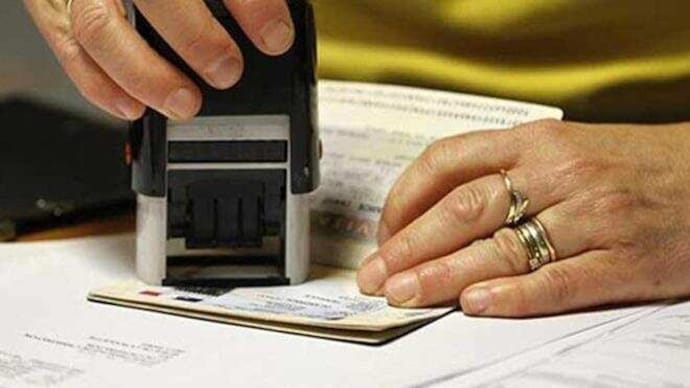
The Supreme Court on Monday dismissed the Centre's plea against a Delhi High Court order that had quashed the tender process for outsourcing consular, passport and visa services at Indian missions in Abu Dhabi, Kuwait, Singapore and Canberra. At the same time, the court allowed temporary arrangements so that services continue without disruption until a fresh tender process is completed.
The court said the Ministry of External Affairs and Engineers India Limited could put interim measures in place, including engaging successful L-1 bidders whose performance was found satisfactory or any other agency they considered appropriate. It said the arrangement would be purely temporary, would not create any special equities in favour of any party, and would remain subject to the outcome of the fresh Request for Proposal process, which should be completed as quickly as possible, preferably within three months.
In its order, the bench said, "The SLP (special leave petition of the Centre) is dismissed." It added, "However, having heard learned counsel for the parties and taking note of the submissions made before us, we are of the view that no impediment should be caused to the day-to-day functioning of the concerned establishments pending the completion of the fresh tender process."
To ensure continuity of services and compliance with the High Court's directions, the top court modified the impugned order. It said, "It shall be open to EIL and the MEA to make suitable interim arrangements for continuation of the subject services. Such interim arrangements may include engagement of the successful L-1 bidders whose performance has been found satisfactory, or any other agency, in such a manner as EIL and the MEA may consider appropriate." The bench also clarified that the interim arrangement was being made without prejudice to the rights and contentions of all parties and that no party could claim any equity on that basis.
The bench was hearing the Centre's petition against the Delhi High Court's July 17 verdict directing the government to issue a fresh RFP after finding serious deficiencies in the technical evaluation process. The High Court had said the Centre relied on undisclosed comparative standards, made unexplained deductions under objective evaluation criteria and adopted inconsistent marking. It held that these deficiencies struck at the heart of transparency, fairness and equality in public procurement.
Quoting its findings, the High Court said, "The use of undisclosed comparative standards, unexplained deductions under objective criteria, inconsistent marking and complete absence of recorded reasons strikes at the heart of transparency, fairness and equality in public procurement. Therefore, exclusion of a lower bidder on the basis of an arbitrary evaluation process is not merely an individual grievance but also raises concerns of public interest under Article 14 of the Constitution." It set aside the technical evaluation processes and said, "Consequently, the award of tender in favour of the private respondents shall also stand nullified."
Appearing for the Centre, Solicitor General Tushar Mehta said the High Court order had hit the functioning of Indian missions abroad, forcing embassy staff to move away from their regular work to handle visa-related services. "Our embassy staff has been diverted. The tender holder always engaged in some litigation. But this time we decided to let them participate in the open tender process," Mehta said. He also argued that bidders could not be given the same comparative scores across different missions, saying, "We are dealing with four different embassies. Abhishek Singhvi's client may get two marks in Abu Dhabi but five in Singapore. If the same marking is given, then something is fishy." The bench orally observed that the government had "invited" the High Court's adverse findings by failing to record reasons for its evaluation.
Earlier, the Chief Justice of India-led bench had agreed on July 17 to hear the Centre's plea on July 20 against the High Court verdict. The petitions before the High Court were filed by two unsuccessful bidders, E Trav Tech Limited and Verasys Limited, which had been disqualified at the technical evaluation stage after failing to secure the minimum 70 per cent marks needed for opening of financial bids. With the Supreme Court now dismissing the Centre's plea but allowing temporary arrangements, the fresh tender process will go ahead while the government ensures that services at the four missions continue without interruption.
The Supreme Court on Monday dismissed the Centre's plea against a Delhi High Court order that had quashed the tender process for outsourcing consular, passport and visa services at Indian missions in Abu Dhabi, Kuwait, Singapore and Canberra. At the same time, the court allowed temporary arrangements so that services continue without disruption until a fresh tender process is completed.
The court said the Ministry of External Affairs and Engineers India Limited could put interim measures in place, including engaging successful L-1 bidders whose performance was found satisfactory or any other agency they considered appropriate. It said the arrangement would be purely temporary, would not create any special equities in favour of any party, and would remain subject to the outcome of the fresh Request for Proposal process, which should be completed as quickly as possible, preferably within three months.
In its order, the bench said, "The SLP (special leave petition of the Centre) is dismissed." It added, "However, having heard learned counsel for the parties and taking note of the submissions made before us, we are of the view that no impediment should be caused to the day-to-day functioning of the concerned establishments pending the completion of the fresh tender process."
To ensure continuity of services and compliance with the High Court's directions, the top court modified the impugned order. It said, "It shall be open to EIL and the MEA to make suitable interim arrangements for continuation of the subject services. Such interim arrangements may include engagement of the successful L-1 bidders whose performance has been found satisfactory, or any other agency, in such a manner as EIL and the MEA may consider appropriate." The bench also clarified that the interim arrangement was being made without prejudice to the rights and contentions of all parties and that no party could claim any equity on that basis.
The bench was hearing the Centre's petition against the Delhi High Court's July 17 verdict directing the government to issue a fresh RFP after finding serious deficiencies in the technical evaluation process. The High Court had said the Centre relied on undisclosed comparative standards, made unexplained deductions under objective evaluation criteria and adopted inconsistent marking. It held that these deficiencies struck at the heart of transparency, fairness and equality in public procurement.
Quoting its findings, the High Court said, "The use of undisclosed comparative standards, unexplained deductions under objective criteria, inconsistent marking and complete absence of recorded reasons strikes at the heart of transparency, fairness and equality in public procurement. Therefore, exclusion of a lower bidder on the basis of an arbitrary evaluation process is not merely an individual grievance but also raises concerns of public interest under Article 14 of the Constitution." It set aside the technical evaluation processes and said, "Consequently, the award of tender in favour of the private respondents shall also stand nullified."
Appearing for the Centre, Solicitor General Tushar Mehta said the High Court order had hit the functioning of Indian missions abroad, forcing embassy staff to move away from their regular work to handle visa-related services. "Our embassy staff has been diverted. The tender holder always engaged in some litigation. But this time we decided to let them participate in the open tender process," Mehta said. He also argued that bidders could not be given the same comparative scores across different missions, saying, "We are dealing with four different embassies. Abhishek Singhvi's client may get two marks in Abu Dhabi but five in Singapore. If the same marking is given, then something is fishy." The bench orally observed that the government had "invited" the High Court's adverse findings by failing to record reasons for its evaluation.
Earlier, the Chief Justice of India-led bench had agreed on July 17 to hear the Centre's plea on July 20 against the High Court verdict. The petitions before the High Court were filed by two unsuccessful bidders, E Trav Tech Limited and Verasys Limited, which had been disqualified at the technical evaluation stage after failing to secure the minimum 70 per cent marks needed for opening of financial bids. With the Supreme Court now dismissing the Centre's plea but allowing temporary arrangements, the fresh tender process will go ahead while the government ensures that services at the four missions continue without interruption.
The Supreme Court on Monday dismissed the Centre's plea against a Delhi High Court order that had quashed the tender process for outsourcing consular, passport and visa services at Indian missions in Abu Dhabi, Kuwait, Singapore and Canberra. At the same time, the court allowed temporary arrangements so that services continue without disruption until a fresh tender process is completed.
The court said the Ministry of External Affairs and Engineers India Limited could put interim measures in place, including engaging successful L-1 bidders whose performance was found satisfactory or any other agency they considered appropriate. It said the arrangement would be purely temporary, would not create any special equities in favour of any party, and would remain subject to the outcome of the fresh Request for Proposal process, which should be completed as quickly as possible, preferably within three months.
In its order, the bench said, "The SLP (special leave petition of the Centre) is dismissed." It added, "However, having heard learned counsel for the parties and taking note of the submissions made before us, we are of the view that no impediment should be caused to the day-to-day functioning of the concerned establishments pending the completion of the fresh tender process."
To ensure continuity of services and compliance with the High Court's directions, the top court modified the impugned order. It said, "It shall be open to EIL and the MEA to make suitable interim arrangements for continuation of the subject services. Such interim arrangements may include engagement of the successful L-1 bidders whose performance has been found satisfactory, or any other agency, in such a manner as EIL and the MEA may consider appropriate." The bench also clarified that the interim arrangement was being made without prejudice to the rights and contentions of all parties and that no party could claim any equity on that basis.
The bench was hearing the Centre's petition against the Delhi High Court's July 17 verdict directing the government to issue a fresh RFP after finding serious deficiencies in the technical evaluation process. The High Court had said the Centre relied on undisclosed comparative standards, made unexplained deductions under objective evaluation criteria and adopted inconsistent marking. It held that these deficiencies struck at the heart of transparency, fairness and equality in public procurement.
Quoting its findings, the High Court said, "The use of undisclosed comparative standards, unexplained deductions under objective criteria, inconsistent marking and complete absence of recorded reasons strikes at the heart of transparency, fairness and equality in public procurement. Therefore, exclusion of a lower bidder on the basis of an arbitrary evaluation process is not merely an individual grievance but also raises concerns of public interest under Article 14 of the Constitution." It set aside the technical evaluation processes and said, "Consequently, the award of tender in favour of the private respondents shall also stand nullified."
Appearing for the Centre, Solicitor General Tushar Mehta said the High Court order had hit the functioning of Indian missions abroad, forcing embassy staff to move away from their regular work to handle visa-related services. "Our embassy staff has been diverted. The tender holder always engaged in some litigation. But this time we decided to let them participate in the open tender process," Mehta said. He also argued that bidders could not be given the same comparative scores across different missions, saying, "We are dealing with four different embassies. Abhishek Singhvi's client may get two marks in Abu Dhabi but five in Singapore. If the same marking is given, then something is fishy." The bench orally observed that the government had "invited" the High Court's adverse findings by failing to record reasons for its evaluation.
Earlier, the Chief Justice of India-led bench had agreed on July 17 to hear the Centre's plea on July 20 against the High Court verdict. The petitions before the High Court were filed by two unsuccessful bidders, E Trav Tech Limited and Verasys Limited, which had been disqualified at the technical evaluation stage after failing to secure the minimum 70 per cent marks needed for opening of financial bids. With the Supreme Court now dismissing the Centre's plea but allowing temporary arrangements, the fresh tender process will go ahead while the government ensures that services at the four missions continue without interruption.

