How Modi govt kept tabs on CJP protests on Day 1 of Monsoon Session
CJP Parliament March: While security agencies tracked developments on the ground in real time, senior ministers held a series of high-level meetings to assess the evolving situation, review the protesters' demands and formulate the Centre's response.
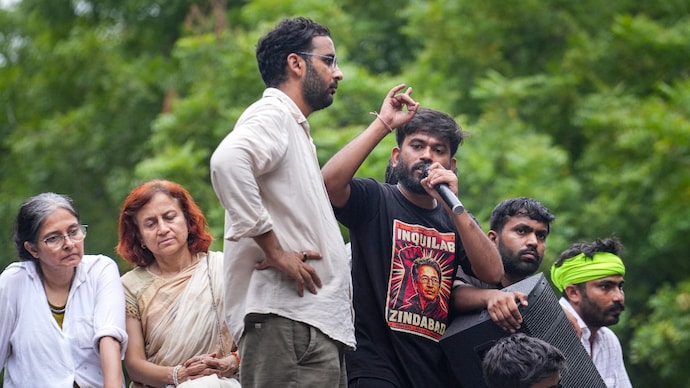
As the Cockroach Janta Party's 'Chalo Sansad' march gathered momentum and thousands of protesters converged on central Delhi on Monday, security agencies tracked developments on the ground in real time, while senior ministers held a series of high-level meetings inside Parliament to assess the evolving situation, review the protesters' demands and formulate the Centre's response.
Even as police worked to contain the march, the government opened a channel of communication with the protesters. A delegation of CJP leaders met Union Minister JP Nadda and submitted a memorandum outlining their demands.
Inside Parliament, however, the focus extended beyond handling the day's protests. According to sources, the discussions also reviewed the Centre's response to the NEET paper leak controversy, the reforms implemented over the past year and the government's broader strategy to defend its handling of the issue as the Monsoon Session got underway.
PROTEST REACHES PARLIAMENT VICINITY
The protest began around 9 am from Jantar Mantar, with the government closely monitoring developments. Several senior ministers had already reached Parliament when reports started coming in that large groups of protesters had reached areas surrounding the Parliament complex.
According to sources, security agencies later assessed that the crowd could have been contained earlier had key Metro stations around Parliament been shut before protesters reached the area, an admission pointing to a gap in the initial response.
Around 9.30 am, directions were issued to immediately close Central Secretariat, Janpath and some other Metro stations leading towards Rail Bhawan to prevent further movement into the high-security zone.
Following the closures, many protesters diverted towards Rajiv Chowk. However, by then, thousands had already gathered around Parliament, prompting authorities to shut all entry gates to the Parliament complex as a precautionary measure.
CJP DELEGATION MEETS JP NADDA
Around noon, Nadda left Parliament after meeting Home Minister Amit Shah. At roughly the same time, CJP leaders claimed they had been invited to meet Nadda.
Shortly afterwards, the meeting took place, during which the delegation submitted a memorandum listing its demands.
Among the key demands were the resignation of Pradhan, the immediate release of activist Sonam Wangchuk from Safdarjung Hospital, and Rs 1 crore compensation for the families of NEET aspirants who allegedly died by suicide following the paper leak controversy.
AMIT SHAH HOLDS DISCUSSIONS WITH PRADHAN
While the protest continued outside Parliament, Home Minister Amit Shah held a series of meetings with senior ministers.
Education Minister Dharmendra Pradhan met Shah at around 1.08 pm, with the initial discussion running for nearly 45 to 50 minutes. Parliamentary Affairs Minister Kiren Rijiju later joined the meeting, followed by Union Minister Piyush Goyal at around 2.12 pm.
In total, the meeting between Shah and Pradhan, spanning the initial talks and the subsequent rounds with Rijiju and Goyal, lasted nearly four hours, beginning around 1 pm and concluding around 5 pm.
Sources said the discussions centred on the government's response to the NEET controversy, the reforms introduced over the past year and the concerns raised by the protesters.
According to sources, the government's position was that while a section of students was protesting, lakhs of candidates had moved ahead with their education and careers after appearing for competitive examinations.
GOVT'S RESPONSE SO FAR
The government has maintained that it acted swiftly after allegations of irregularities in the NEET examination surfaced.
Pradhan had publicly acknowledged lapses in the examination process and assured strict action against those responsible. The Centre subsequently conducted a re-examination for affected candidates and declared the results within the stipulated timeline.
The government also adopted what it described as a "Whole-of-Government" approach, taking action against those accused and implementing the recommendations of the Radhakrishnan Committee to strengthen the examination system and restore public confidence.
Pradhan has repeatedly maintained that while shortcomings were acknowledged, the government's priority was to reform the system and prevent similar incidents in the future.
According to the Centre, additional safeguards were introduced during subsequent examinations, including transporting question papers from secure bank lockers to examination centres under enhanced security.
Amid the day's developments, the government also sought to signal that it remained open to dialogue, with the meeting between the CJP delegation and JP Nadda being presented as evidence that channels of communication remained open despite the protests.
As the Cockroach Janta Party's 'Chalo Sansad' march gathered momentum and thousands of protesters converged on central Delhi on Monday, security agencies tracked developments on the ground in real time, while senior ministers held a series of high-level meetings inside Parliament to assess the evolving situation, review the protesters' demands and formulate the Centre's response.
Even as police worked to contain the march, the government opened a channel of communication with the protesters. A delegation of CJP leaders met Union Minister JP Nadda and submitted a memorandum outlining their demands.
Inside Parliament, however, the focus extended beyond handling the day's protests. According to sources, the discussions also reviewed the Centre's response to the NEET paper leak controversy, the reforms implemented over the past year and the government's broader strategy to defend its handling of the issue as the Monsoon Session got underway.
PROTEST REACHES PARLIAMENT VICINITY
The protest began around 9 am from Jantar Mantar, with the government closely monitoring developments. Several senior ministers had already reached Parliament when reports started coming in that large groups of protesters had reached areas surrounding the Parliament complex.
According to sources, security agencies later assessed that the crowd could have been contained earlier had key Metro stations around Parliament been shut before protesters reached the area, an admission pointing to a gap in the initial response.
Around 9.30 am, directions were issued to immediately close Central Secretariat, Janpath and some other Metro stations leading towards Rail Bhawan to prevent further movement into the high-security zone.
Following the closures, many protesters diverted towards Rajiv Chowk. However, by then, thousands had already gathered around Parliament, prompting authorities to shut all entry gates to the Parliament complex as a precautionary measure.
CJP DELEGATION MEETS JP NADDA
Around noon, Nadda left Parliament after meeting Home Minister Amit Shah. At roughly the same time, CJP leaders claimed they had been invited to meet Nadda.
Shortly afterwards, the meeting took place, during which the delegation submitted a memorandum listing its demands.
Among the key demands were the resignation of Pradhan, the immediate release of activist Sonam Wangchuk from Safdarjung Hospital, and Rs 1 crore compensation for the families of NEET aspirants who allegedly died by suicide following the paper leak controversy.
AMIT SHAH HOLDS DISCUSSIONS WITH PRADHAN
While the protest continued outside Parliament, Home Minister Amit Shah held a series of meetings with senior ministers.
Education Minister Dharmendra Pradhan met Shah at around 1.08 pm, with the initial discussion running for nearly 45 to 50 minutes. Parliamentary Affairs Minister Kiren Rijiju later joined the meeting, followed by Union Minister Piyush Goyal at around 2.12 pm.
In total, the meeting between Shah and Pradhan, spanning the initial talks and the subsequent rounds with Rijiju and Goyal, lasted nearly four hours, beginning around 1 pm and concluding around 5 pm.
Sources said the discussions centred on the government's response to the NEET controversy, the reforms introduced over the past year and the concerns raised by the protesters.
According to sources, the government's position was that while a section of students was protesting, lakhs of candidates had moved ahead with their education and careers after appearing for competitive examinations.
GOVT'S RESPONSE SO FAR
The government has maintained that it acted swiftly after allegations of irregularities in the NEET examination surfaced.
Pradhan had publicly acknowledged lapses in the examination process and assured strict action against those responsible. The Centre subsequently conducted a re-examination for affected candidates and declared the results within the stipulated timeline.
The government also adopted what it described as a "Whole-of-Government" approach, taking action against those accused and implementing the recommendations of the Radhakrishnan Committee to strengthen the examination system and restore public confidence.
Pradhan has repeatedly maintained that while shortcomings were acknowledged, the government's priority was to reform the system and prevent similar incidents in the future.
According to the Centre, additional safeguards were introduced during subsequent examinations, including transporting question papers from secure bank lockers to examination centres under enhanced security.
Amid the day's developments, the government also sought to signal that it remained open to dialogue, with the meeting between the CJP delegation and JP Nadda being presented as evidence that channels of communication remained open despite the protests.
As the Cockroach Janta Party's 'Chalo Sansad' march gathered momentum and thousands of protesters converged on central Delhi on Monday, security agencies tracked developments on the ground in real time, while senior ministers held a series of high-level meetings inside Parliament to assess the evolving situation, review the protesters' demands and formulate the Centre's response.
Even as police worked to contain the march, the government opened a channel of communication with the protesters. A delegation of CJP leaders met Union Minister JP Nadda and submitted a memorandum outlining their demands.
Inside Parliament, however, the focus extended beyond handling the day's protests. According to sources, the discussions also reviewed the Centre's response to the NEET paper leak controversy, the reforms implemented over the past year and the government's broader strategy to defend its handling of the issue as the Monsoon Session got underway.
PROTEST REACHES PARLIAMENT VICINITY
The protest began around 9 am from Jantar Mantar, with the government closely monitoring developments. Several senior ministers had already reached Parliament when reports started coming in that large groups of protesters had reached areas surrounding the Parliament complex.
According to sources, security agencies later assessed that the crowd could have been contained earlier had key Metro stations around Parliament been shut before protesters reached the area, an admission pointing to a gap in the initial response.
Around 9.30 am, directions were issued to immediately close Central Secretariat, Janpath and some other Metro stations leading towards Rail Bhawan to prevent further movement into the high-security zone.
Following the closures, many protesters diverted towards Rajiv Chowk. However, by then, thousands had already gathered around Parliament, prompting authorities to shut all entry gates to the Parliament complex as a precautionary measure.
CJP DELEGATION MEETS JP NADDA
Around noon, Nadda left Parliament after meeting Home Minister Amit Shah. At roughly the same time, CJP leaders claimed they had been invited to meet Nadda.
Shortly afterwards, the meeting took place, during which the delegation submitted a memorandum listing its demands.
Among the key demands were the resignation of Pradhan, the immediate release of activist Sonam Wangchuk from Safdarjung Hospital, and Rs 1 crore compensation for the families of NEET aspirants who allegedly died by suicide following the paper leak controversy.
AMIT SHAH HOLDS DISCUSSIONS WITH PRADHAN
While the protest continued outside Parliament, Home Minister Amit Shah held a series of meetings with senior ministers.
Education Minister Dharmendra Pradhan met Shah at around 1.08 pm, with the initial discussion running for nearly 45 to 50 minutes. Parliamentary Affairs Minister Kiren Rijiju later joined the meeting, followed by Union Minister Piyush Goyal at around 2.12 pm.
In total, the meeting between Shah and Pradhan, spanning the initial talks and the subsequent rounds with Rijiju and Goyal, lasted nearly four hours, beginning around 1 pm and concluding around 5 pm.
Sources said the discussions centred on the government's response to the NEET controversy, the reforms introduced over the past year and the concerns raised by the protesters.
According to sources, the government's position was that while a section of students was protesting, lakhs of candidates had moved ahead with their education and careers after appearing for competitive examinations.
GOVT'S RESPONSE SO FAR
The government has maintained that it acted swiftly after allegations of irregularities in the NEET examination surfaced.
Pradhan had publicly acknowledged lapses in the examination process and assured strict action against those responsible. The Centre subsequently conducted a re-examination for affected candidates and declared the results within the stipulated timeline.
The government also adopted what it described as a "Whole-of-Government" approach, taking action against those accused and implementing the recommendations of the Radhakrishnan Committee to strengthen the examination system and restore public confidence.
Pradhan has repeatedly maintained that while shortcomings were acknowledged, the government's priority was to reform the system and prevent similar incidents in the future.
According to the Centre, additional safeguards were introduced during subsequent examinations, including transporting question papers from secure bank lockers to examination centres under enhanced security.
Amid the day's developments, the government also sought to signal that it remained open to dialogue, with the meeting between the CJP delegation and JP Nadda being presented as evidence that channels of communication remained open despite the protests.

