Shot in the face, Delhi protest victim moves Supreme Court seeking pellet ban
A public interest litigation (PIL) has urged the Supreme Court to ban metallic pellets for crowd control after protesters suffered pellet injuries during the CJP's July 20 'Sansad Chalo' march. The plea also seeks compensation for victims and could trigger scrutiny of crowd-control weapons used by security personnel.
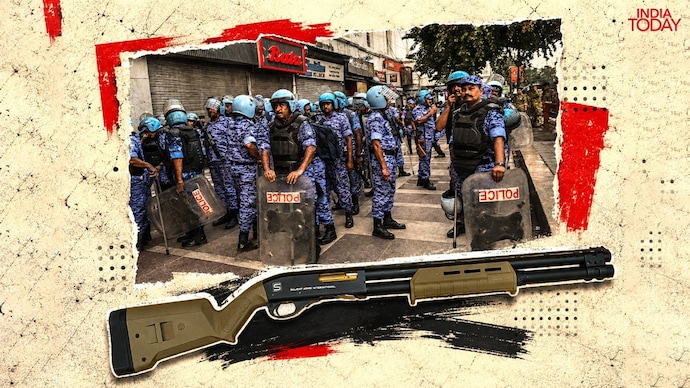
Days after protesters suffered pellet injuries during the July 20 "Sansad Chalo" march in New Delhi, the issue has landed before the Supreme Court. A public interest litigation (PIL) seeks directions to ban the use of wholly or partly metallic pellets fired from pump action rifles or projectile action guns by law enforcement agencies for dispersing civilian assemblies.
The petition, dated July 27, 2026, also seeks compensation, medical treatment and rehabilitation for those who were injured during the July 20 "Sansad Chalo" march in New Delhi organised by the Cockroach Janta Party (CJP).
The petition, under Article 32 of the Constitution, has been filed by former IPS officer and former Special Director of the Intelligence Bureau Yashovardhan Azad, along with two reportedly injured victims of pellet gun injuries, Prashant Kumar Singh and Sheikh Irshad Mansoori. The petition is against the Union of India through the Ministry of Home Affairs (MHA), the Director General of the Central Reserve Police Force (CRPF), and the Inspector General of Police, Rapid Action Force (RAF).
The PIL states that Azad is a recipient of the President's Medal and Police Medal, while Singh and Mansoori are among those who reportedly have sustained pellet injuries during the July 20 protest.
According to the petition, the Delhi Police had sought the assistance of the CRPF's Rapid Action Force during the "Sansad Chalo" march organised by the CJP over NEET paper leaks. The PIL alleges that around 4–4.30 pm, police and RAF personnel fired tear gas shells, resorted to a lathi charge and pushed protesters towards Connaught Place's inner circle. It further claims that no water cannons were used, and no announcements were made before the force was escalated.
The petition alleges that while protesters were retreating, with many raising their hands in what it describes as a "surrender" posture, RAF personnel fired pump action guns that discharged a wide spray of "splinter-like pellets", injuring Petitioners No. 2 and 3.
The PIL says the two petitioners were taken to Lady Hardinge Medical College, where they underwent treatment, including surgical procedures to remove pellets lodged "deep inside their bodies". It claims that at least one other person with pellet injuries was also brought to the hospital and that both petitioners continue to undergo treatment, with some pellets still embedded in their bodies despite being discharged.
The petition further states that between July 21 and July 25, photographs, videos and media reports documented at least four people suffering injuries allegedly caused by metallic pellets fired during the protest. It says medical records are consistent with pellet injuries and cites the case of a 19-year-old who, according to the PIL, has effectively lost vision in his right eye.
The petition also mentions India Today's report on the pellet guns being fired on July 20. India Today Digital had exclusively spoken to one pellet gun victim.
The petition also refers to The Indian Express newspaper's report stating that RAF logbooks recorded seven rounds being fired from a pellet gun during the operation near Connaught Place on July 20.
The PIL contends that projectile action guns are typically 12-bore pump action guns loaded with cartridges containing between 250 and 400 pellets, usually made of lead or other metals, though rubber variants also exist. It argues that these pellets disperse unpredictably after being fired, creating a high risk of serious injuries to the eyes and other vital organs even when aimed at non-vital parts of the body.
The petition also refers to a 2011 Standard Operating Procedure (SOP) prepared by a Ministry of Home Affairs task force and circulated by the Bureau of Police Research and Development (BPRD). It says the SOP did not examine the use of 12-bore pump action rifles fitted with metallic pellets for crowd control, and further claims that no publicly available BPRD study has since evaluated the efficacy or suitability of such weapons for dispersing civilian assemblies.
Relying on Article 19(1)(b) of the Constitution, the doctrines of necessity and proportionality, provisions of the Bharatiya Nagarika Suraksha Sanhita, 2023, the 2011 SOP, and the 2020 United Nations Guidance on Less Lethal Weapons in Law Enforcement, the petition argues that the use of metallic pellets for crowd dispersal violates constitutional protections.
It notes that the UN guidance advises that metal pellets should never be used.
The petition seeks a direction banning the use of wholly or partly metallic pellets for crowd control, and exemplary compensation for all those allegedly injured in the July 20 incident near New Delhi's Connaught Place.
While the petition stems from the events of July 20 in New Delhi, it seeks a ruling with far wider implications. If the Supreme Court entertains the plea, it could examine not only the injuries allegedly suffered by protesters that day but also whether metallic pellet-firing weapons should remain part of the crowd-control arsenal available to law enforcement agencies.
Days after protesters suffered pellet injuries during the July 20 "Sansad Chalo" march in New Delhi, the issue has landed before the Supreme Court. A public interest litigation (PIL) seeks directions to ban the use of wholly or partly metallic pellets fired from pump action rifles or projectile action guns by law enforcement agencies for dispersing civilian assemblies.
The petition, dated July 27, 2026, also seeks compensation, medical treatment and rehabilitation for those who were injured during the July 20 "Sansad Chalo" march in New Delhi organised by the Cockroach Janta Party (CJP).
The petition, under Article 32 of the Constitution, has been filed by former IPS officer and former Special Director of the Intelligence Bureau Yashovardhan Azad, along with two reportedly injured victims of pellet gun injuries, Prashant Kumar Singh and Sheikh Irshad Mansoori. The petition is against the Union of India through the Ministry of Home Affairs (MHA), the Director General of the Central Reserve Police Force (CRPF), and the Inspector General of Police, Rapid Action Force (RAF).
The PIL states that Azad is a recipient of the President's Medal and Police Medal, while Singh and Mansoori are among those who reportedly have sustained pellet injuries during the July 20 protest.
According to the petition, the Delhi Police had sought the assistance of the CRPF's Rapid Action Force during the "Sansad Chalo" march organised by the CJP over NEET paper leaks. The PIL alleges that around 4–4.30 pm, police and RAF personnel fired tear gas shells, resorted to a lathi charge and pushed protesters towards Connaught Place's inner circle. It further claims that no water cannons were used, and no announcements were made before the force was escalated.
The petition alleges that while protesters were retreating, with many raising their hands in what it describes as a "surrender" posture, RAF personnel fired pump action guns that discharged a wide spray of "splinter-like pellets", injuring Petitioners No. 2 and 3.
The PIL says the two petitioners were taken to Lady Hardinge Medical College, where they underwent treatment, including surgical procedures to remove pellets lodged "deep inside their bodies". It claims that at least one other person with pellet injuries was also brought to the hospital and that both petitioners continue to undergo treatment, with some pellets still embedded in their bodies despite being discharged.
The petition further states that between July 21 and July 25, photographs, videos and media reports documented at least four people suffering injuries allegedly caused by metallic pellets fired during the protest. It says medical records are consistent with pellet injuries and cites the case of a 19-year-old who, according to the PIL, has effectively lost vision in his right eye.
The petition also mentions India Today's report on the pellet guns being fired on July 20. India Today Digital had exclusively spoken to one pellet gun victim.
The petition also refers to The Indian Express newspaper's report stating that RAF logbooks recorded seven rounds being fired from a pellet gun during the operation near Connaught Place on July 20.
The PIL contends that projectile action guns are typically 12-bore pump action guns loaded with cartridges containing between 250 and 400 pellets, usually made of lead or other metals, though rubber variants also exist. It argues that these pellets disperse unpredictably after being fired, creating a high risk of serious injuries to the eyes and other vital organs even when aimed at non-vital parts of the body.
The petition also refers to a 2011 Standard Operating Procedure (SOP) prepared by a Ministry of Home Affairs task force and circulated by the Bureau of Police Research and Development (BPRD). It says the SOP did not examine the use of 12-bore pump action rifles fitted with metallic pellets for crowd control, and further claims that no publicly available BPRD study has since evaluated the efficacy or suitability of such weapons for dispersing civilian assemblies.
Relying on Article 19(1)(b) of the Constitution, the doctrines of necessity and proportionality, provisions of the Bharatiya Nagarika Suraksha Sanhita, 2023, the 2011 SOP, and the 2020 United Nations Guidance on Less Lethal Weapons in Law Enforcement, the petition argues that the use of metallic pellets for crowd dispersal violates constitutional protections.
It notes that the UN guidance advises that metal pellets should never be used.
The petition seeks a direction banning the use of wholly or partly metallic pellets for crowd control, and exemplary compensation for all those allegedly injured in the July 20 incident near New Delhi's Connaught Place.
While the petition stems from the events of July 20 in New Delhi, it seeks a ruling with far wider implications. If the Supreme Court entertains the plea, it could examine not only the injuries allegedly suffered by protesters that day but also whether metallic pellet-firing weapons should remain part of the crowd-control arsenal available to law enforcement agencies.
Days after protesters suffered pellet injuries during the July 20 "Sansad Chalo" march in New Delhi, the issue has landed before the Supreme Court. A public interest litigation (PIL) seeks directions to ban the use of wholly or partly metallic pellets fired from pump action rifles or projectile action guns by law enforcement agencies for dispersing civilian assemblies.
The petition, dated July 27, 2026, also seeks compensation, medical treatment and rehabilitation for those who were injured during the July 20 "Sansad Chalo" march in New Delhi organised by the Cockroach Janta Party (CJP).
The petition, under Article 32 of the Constitution, has been filed by former IPS officer and former Special Director of the Intelligence Bureau Yashovardhan Azad, along with two reportedly injured victims of pellet gun injuries, Prashant Kumar Singh and Sheikh Irshad Mansoori. The petition is against the Union of India through the Ministry of Home Affairs (MHA), the Director General of the Central Reserve Police Force (CRPF), and the Inspector General of Police, Rapid Action Force (RAF).
The PIL states that Azad is a recipient of the President's Medal and Police Medal, while Singh and Mansoori are among those who reportedly have sustained pellet injuries during the July 20 protest.
According to the petition, the Delhi Police had sought the assistance of the CRPF's Rapid Action Force during the "Sansad Chalo" march organised by the CJP over NEET paper leaks. The PIL alleges that around 4–4.30 pm, police and RAF personnel fired tear gas shells, resorted to a lathi charge and pushed protesters towards Connaught Place's inner circle. It further claims that no water cannons were used, and no announcements were made before the force was escalated.
The petition alleges that while protesters were retreating, with many raising their hands in what it describes as a "surrender" posture, RAF personnel fired pump action guns that discharged a wide spray of "splinter-like pellets", injuring Petitioners No. 2 and 3.
The PIL says the two petitioners were taken to Lady Hardinge Medical College, where they underwent treatment, including surgical procedures to remove pellets lodged "deep inside their bodies". It claims that at least one other person with pellet injuries was also brought to the hospital and that both petitioners continue to undergo treatment, with some pellets still embedded in their bodies despite being discharged.
The petition further states that between July 21 and July 25, photographs, videos and media reports documented at least four people suffering injuries allegedly caused by metallic pellets fired during the protest. It says medical records are consistent with pellet injuries and cites the case of a 19-year-old who, according to the PIL, has effectively lost vision in his right eye.
The petition also mentions India Today's report on the pellet guns being fired on July 20. India Today Digital had exclusively spoken to one pellet gun victim.
The petition also refers to The Indian Express newspaper's report stating that RAF logbooks recorded seven rounds being fired from a pellet gun during the operation near Connaught Place on July 20.
The PIL contends that projectile action guns are typically 12-bore pump action guns loaded with cartridges containing between 250 and 400 pellets, usually made of lead or other metals, though rubber variants also exist. It argues that these pellets disperse unpredictably after being fired, creating a high risk of serious injuries to the eyes and other vital organs even when aimed at non-vital parts of the body.
The petition also refers to a 2011 Standard Operating Procedure (SOP) prepared by a Ministry of Home Affairs task force and circulated by the Bureau of Police Research and Development (BPRD). It says the SOP did not examine the use of 12-bore pump action rifles fitted with metallic pellets for crowd control, and further claims that no publicly available BPRD study has since evaluated the efficacy or suitability of such weapons for dispersing civilian assemblies.
Relying on Article 19(1)(b) of the Constitution, the doctrines of necessity and proportionality, provisions of the Bharatiya Nagarika Suraksha Sanhita, 2023, the 2011 SOP, and the 2020 United Nations Guidance on Less Lethal Weapons in Law Enforcement, the petition argues that the use of metallic pellets for crowd dispersal violates constitutional protections.
It notes that the UN guidance advises that metal pellets should never be used.
The petition seeks a direction banning the use of wholly or partly metallic pellets for crowd control, and exemplary compensation for all those allegedly injured in the July 20 incident near New Delhi's Connaught Place.
While the petition stems from the events of July 20 in New Delhi, it seeks a ruling with far wider implications. If the Supreme Court entertains the plea, it could examine not only the injuries allegedly suffered by protesters that day but also whether metallic pellet-firing weapons should remain part of the crowd-control arsenal available to law enforcement agencies.

