India withholds approval for Chinese-owned firm's herbicide over cancer scare
Syngenta has suffered a major setback in obtaining regulatory approval in India for its new herbicide, S-metolachlor Technical 96% (S-metolachlor). Taking serious note of the EU's restrictions and tumours detected in lab rats, the application has been put on hold.
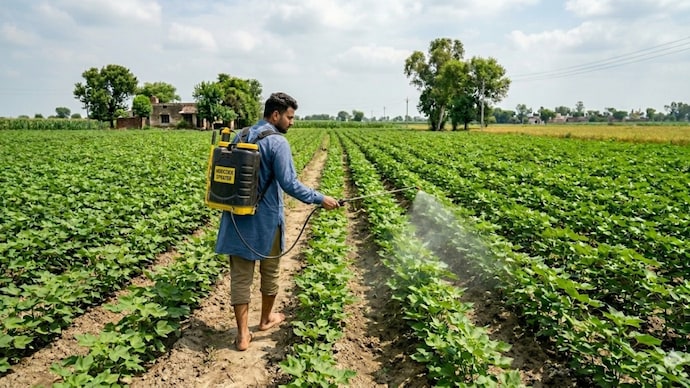
Foreign agrochemical companies seem to believe that they can easily introduce any herbicide into the Indian market simply by waving around approvals obtained in other countries. However, the Modi government’s tough stance appears to have dispelled that misconception.
Syngenta, owned by a state-owned Chinese company called Sinochem Holdings through a subsidiary, has suffered a major setback in obtaining regulatory approval in India for its new herbicide, S-metolachlor Technical 96% (S-metolachlor). Taking serious note of the European Union's restrictions and tumours detected in laboratory rats, the company’s application has been put on hold.
The Centre has made it clear that unless the company proves that the chemical will not contaminate groundwater and is safe for humans, it will not be allowed into the Indian market.
The decision was taken at a meeting of the Registration Committee (RC) functioning under the Union Ministry of Agriculture and Farmers Welfare. The panel issues certificates for the import, manufacture, or sale of any new pesticide or herbicide in the country.
It is headed by the Agriculture Commissioner of the Government of India. When a company seeks approval for a new chemical, the committee thoroughly examines its claims. It assesses how safe the chemical is for humans, animals, and the environment. Only after it meets the required safety standards will permission be granted for its use in India.
WHAT'S THE ISSUE: OVERVIEW
Syngenta, which has a multinational presence, seeks to sell S-metolachlor in India. The company claims that the product is a more advanced herbicide, requiring only 40% of the application volume used for older alternatives. According to Syngenta, this could help reduce farmers’ costs while also lowering the overall chemical load on agricultural fields.
To strengthen its case, Syngenta purportedly cited the examples of the United States, Japan, and Canada, arguing that if such major countries have given the chemical the green light, why should India object?
However, when the Indian government’s scientific committee examined the chemical in detail, two major concerns emerged, undermining the company’s claims.
LIVER TUMOURS IN LAB RATS
It has been reported that rats exposed to S-metolachlor during laboratory tests developed liver tumours. Syngenta's experts allegedly argued that the effect was specific to rats and was unlikely to pose a similar risk to humans.
The scientific panel rejected the argument outright and reportedly said that the company must provide solid scientific data demonstrating that the chemical would not have even the slightest harmful effect on humans.
Though India Today Group sought an official statement from Syngenta's Indian management, there was no response by the time the article was published.
However, if the account is indeed true, the BJP-led government’s decision to put Syngenta’s application on hold could be interpreted as a quiet indication that concerns over S-metolachlor's potential to cause cancer remain significant.
Therefore, to obtain the approval, the company will need to provide robust scientific evidence demonstrating that the tumours observed in rats do not indicate a comparable risk to farmers, agricultural workers, or the wider population.
In rural India, where many communities still rely on hand pumps for drinking water, the company will also be required to submit a comprehensive safety plan and reliable scientific evidence demonstrating that S-metolachlor will not contaminate groundwater. Only after addressing these concerns and satisfying the requisite safety standards will the chemical be considered for use in Indian fields.
BAD FOR EUROPE, GOOD FOR INDIA?
The Registration Committee dismissed Syngenta's global credentials with a pointed question: If S-metolachlor is actually safe and effective, why has the EU banned it?
Studies conducted by European laboratories suggest that the herbicide has the potential to seep into the soil and contaminate drinking water.
Besides the usual risk of cancer, it may also affect the DNA of humans and other living organisms. Therefore, unless Syngenta provides robust scientific evidence addressing the aforementioned concerns, the product is unlikely to be approved for sale and use in India.
The Centre’s position is clear: If a chemical is deemed harmful to the health of European citizens, on what grounds should India allow its use?
HEALTH FIRST, PROFITS LATER
The Central government's hardened stance suggests that India will no longer become a "dumping ground" for foreign manufacturers. Before making profits, companies will have to meet India's standards for environmental protection and public health.
However, this also raises a question: Why does the government not take similarly strict action against glyphosate and other chemicals?
Foreign agrochemical companies seem to believe that they can easily introduce any herbicide into the Indian market simply by waving around approvals obtained in other countries. However, the Modi government’s tough stance appears to have dispelled that misconception.
Syngenta, owned by a state-owned Chinese company called Sinochem Holdings through a subsidiary, has suffered a major setback in obtaining regulatory approval in India for its new herbicide, S-metolachlor Technical 96% (S-metolachlor). Taking serious note of the European Union's restrictions and tumours detected in laboratory rats, the company’s application has been put on hold.
The Centre has made it clear that unless the company proves that the chemical will not contaminate groundwater and is safe for humans, it will not be allowed into the Indian market.
The decision was taken at a meeting of the Registration Committee (RC) functioning under the Union Ministry of Agriculture and Farmers Welfare. The panel issues certificates for the import, manufacture, or sale of any new pesticide or herbicide in the country.
It is headed by the Agriculture Commissioner of the Government of India. When a company seeks approval for a new chemical, the committee thoroughly examines its claims. It assesses how safe the chemical is for humans, animals, and the environment. Only after it meets the required safety standards will permission be granted for its use in India.
WHAT'S THE ISSUE: OVERVIEW
Syngenta, which has a multinational presence, seeks to sell S-metolachlor in India. The company claims that the product is a more advanced herbicide, requiring only 40% of the application volume used for older alternatives. According to Syngenta, this could help reduce farmers’ costs while also lowering the overall chemical load on agricultural fields.
To strengthen its case, Syngenta purportedly cited the examples of the United States, Japan, and Canada, arguing that if such major countries have given the chemical the green light, why should India object?
However, when the Indian government’s scientific committee examined the chemical in detail, two major concerns emerged, undermining the company’s claims.
LIVER TUMOURS IN LAB RATS
It has been reported that rats exposed to S-metolachlor during laboratory tests developed liver tumours. Syngenta's experts allegedly argued that the effect was specific to rats and was unlikely to pose a similar risk to humans.
The scientific panel rejected the argument outright and reportedly said that the company must provide solid scientific data demonstrating that the chemical would not have even the slightest harmful effect on humans.
Though India Today Group sought an official statement from Syngenta's Indian management, there was no response by the time the article was published.
However, if the account is indeed true, the BJP-led government’s decision to put Syngenta’s application on hold could be interpreted as a quiet indication that concerns over S-metolachlor's potential to cause cancer remain significant.
Therefore, to obtain the approval, the company will need to provide robust scientific evidence demonstrating that the tumours observed in rats do not indicate a comparable risk to farmers, agricultural workers, or the wider population.
In rural India, where many communities still rely on hand pumps for drinking water, the company will also be required to submit a comprehensive safety plan and reliable scientific evidence demonstrating that S-metolachlor will not contaminate groundwater. Only after addressing these concerns and satisfying the requisite safety standards will the chemical be considered for use in Indian fields.
BAD FOR EUROPE, GOOD FOR INDIA?
The Registration Committee dismissed Syngenta's global credentials with a pointed question: If S-metolachlor is actually safe and effective, why has the EU banned it?
Studies conducted by European laboratories suggest that the herbicide has the potential to seep into the soil and contaminate drinking water.
Besides the usual risk of cancer, it may also affect the DNA of humans and other living organisms. Therefore, unless Syngenta provides robust scientific evidence addressing the aforementioned concerns, the product is unlikely to be approved for sale and use in India.
The Centre’s position is clear: If a chemical is deemed harmful to the health of European citizens, on what grounds should India allow its use?
HEALTH FIRST, PROFITS LATER
The Central government's hardened stance suggests that India will no longer become a "dumping ground" for foreign manufacturers. Before making profits, companies will have to meet India's standards for environmental protection and public health.
However, this also raises a question: Why does the government not take similarly strict action against glyphosate and other chemicals?
Foreign agrochemical companies seem to believe that they can easily introduce any herbicide into the Indian market simply by waving around approvals obtained in other countries. However, the Modi government’s tough stance appears to have dispelled that misconception.
Syngenta, owned by a state-owned Chinese company called Sinochem Holdings through a subsidiary, has suffered a major setback in obtaining regulatory approval in India for its new herbicide, S-metolachlor Technical 96% (S-metolachlor). Taking serious note of the European Union's restrictions and tumours detected in laboratory rats, the company’s application has been put on hold.
The Centre has made it clear that unless the company proves that the chemical will not contaminate groundwater and is safe for humans, it will not be allowed into the Indian market.
The decision was taken at a meeting of the Registration Committee (RC) functioning under the Union Ministry of Agriculture and Farmers Welfare. The panel issues certificates for the import, manufacture, or sale of any new pesticide or herbicide in the country.
It is headed by the Agriculture Commissioner of the Government of India. When a company seeks approval for a new chemical, the committee thoroughly examines its claims. It assesses how safe the chemical is for humans, animals, and the environment. Only after it meets the required safety standards will permission be granted for its use in India.
WHAT'S THE ISSUE: OVERVIEW
Syngenta, which has a multinational presence, seeks to sell S-metolachlor in India. The company claims that the product is a more advanced herbicide, requiring only 40% of the application volume used for older alternatives. According to Syngenta, this could help reduce farmers’ costs while also lowering the overall chemical load on agricultural fields.
To strengthen its case, Syngenta purportedly cited the examples of the United States, Japan, and Canada, arguing that if such major countries have given the chemical the green light, why should India object?
However, when the Indian government’s scientific committee examined the chemical in detail, two major concerns emerged, undermining the company’s claims.
LIVER TUMOURS IN LAB RATS
It has been reported that rats exposed to S-metolachlor during laboratory tests developed liver tumours. Syngenta's experts allegedly argued that the effect was specific to rats and was unlikely to pose a similar risk to humans.
The scientific panel rejected the argument outright and reportedly said that the company must provide solid scientific data demonstrating that the chemical would not have even the slightest harmful effect on humans.
Though India Today Group sought an official statement from Syngenta's Indian management, there was no response by the time the article was published.
However, if the account is indeed true, the BJP-led government’s decision to put Syngenta’s application on hold could be interpreted as a quiet indication that concerns over S-metolachlor's potential to cause cancer remain significant.
Therefore, to obtain the approval, the company will need to provide robust scientific evidence demonstrating that the tumours observed in rats do not indicate a comparable risk to farmers, agricultural workers, or the wider population.
In rural India, where many communities still rely on hand pumps for drinking water, the company will also be required to submit a comprehensive safety plan and reliable scientific evidence demonstrating that S-metolachlor will not contaminate groundwater. Only after addressing these concerns and satisfying the requisite safety standards will the chemical be considered for use in Indian fields.
BAD FOR EUROPE, GOOD FOR INDIA?
The Registration Committee dismissed Syngenta's global credentials with a pointed question: If S-metolachlor is actually safe and effective, why has the EU banned it?
Studies conducted by European laboratories suggest that the herbicide has the potential to seep into the soil and contaminate drinking water.
Besides the usual risk of cancer, it may also affect the DNA of humans and other living organisms. Therefore, unless Syngenta provides robust scientific evidence addressing the aforementioned concerns, the product is unlikely to be approved for sale and use in India.
The Centre’s position is clear: If a chemical is deemed harmful to the health of European citizens, on what grounds should India allow its use?
HEALTH FIRST, PROFITS LATER
The Central government's hardened stance suggests that India will no longer become a "dumping ground" for foreign manufacturers. Before making profits, companies will have to meet India's standards for environmental protection and public health.
However, this also raises a question: Why does the government not take similarly strict action against glyphosate and other chemicals?

