No aid, performed CPR ourselves: Survivors on Vietnam boat capsize horror
Twenty survivors from Andhra Pradesh and Telangana returned to Hyderabad late Sunday after being repatriated from Vietnam, where the tourist speedboat carrying 32 Indian tourists, three crew members and an attendant capsized near Hon May Rut Ngoai off Phu Quoc Island on Saturday.
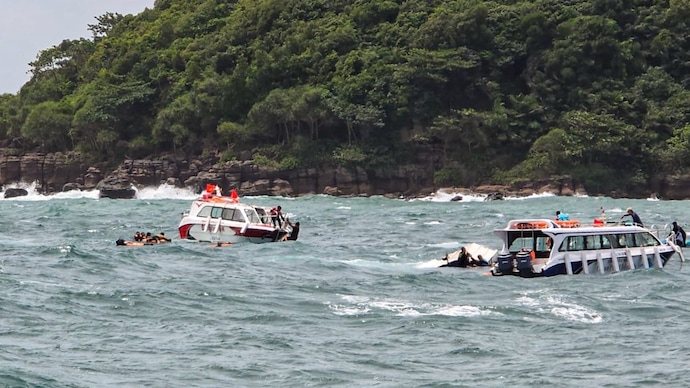
Survivors of the Vietnam tourist boat tragedy that led to the deaths of 15 people associated with Lava Mobiles, have raised serious questions over the emergency response, saying that the absence of trained medical personnel, oxygen support and timely critical care after the accident may have cost several passengers their lives.
Twenty survivors from Andhra Pradesh and Telangana returned to Hyderabad late Sunday after being repatriated from Vietnam, where the tourist speedboat carrying 32 Indian tourists, three crew members and an attendant capsized near Hon May Rut Ngoai off Phu Quoc Island on Saturday.
The vessel overturned while returning to An Thoi Port, killing 15 Indian tourists. Twenty-one others were rescued, though two survivors remain in critical condition.
Recounting the harrowing moments after the accident, Govinda, a Rajahmundry resident and an employee of the company that organised the trip, said survivors themselves had to perform CPR on passengers pulled from the sea because trained medical personnel were unavailable.
"There was no proper medical team on the island. We did whatever we could with the little knowledge we had. We performed CPR and tried to keep people alive, but many slipped away before our eyes. Had trained doctors, oxygen support and even basic emergency facilities been available, some of them could have survived," he told news agency PTI.
Govinda said around 35 people were on board when the accident occurred and many were rescued from the water, but professional medical assistance arrived much later.
"Everyone tried to help. We managed to save some people, but official medical help arrived much later. We requested an air ambulance, but were told one was not available. Ambulance boats came only after some time and the critically injured were shifted later," he said.
According to him, the rescue initially depended on the boat's crew, jet ski operators and fellow tourists, who jumped into action immediately after the vessel capsized.
Of the 29 tourists from Andhra Pradesh on the trip, 26 survived while three died.
Govinda said he was travelling in a second boat about 400 metres away when the tragedy unfolded.
"The first boat had already left while we were preparing to start. Suddenly, we saw it tilt before capsizing. We heard people screaming for help and rushed towards them immediately," he recalled.
Quoting survivors who were on the capsized boat, he said strong waves forced the captain to slow down, triggering panic among passengers.
"As frightened passengers moved to one side, the boat became unstable, tilted further and overturned," he said.
He believes that several more lives could have been saved had qualified emergency responders been available.
"We ourselves tried to revive those who had stopped breathing. We saved one or two people, but many were in a critical condition. If qualified medical personnel had been there, at least five or six more lives might have been saved," he said.
The tragedy was especially devastating for Govinda because several victims were his close friends.
Among those who died were businessman Sudheer, whom he had known for a decade, and Jayalakshmi, wife of his longtime friend Gelle Kishore.
"Watching people you have known for years die in front of you, while feeling completely helpless, is something I can never forget," he said.
Another survivor, Harihar Srinivas from Andhra Pradesh's West Godavari district, narrowly escaped because he was waiting to board another boat nearby when the accident occurred.
He said the first boat had travelled barely 100 metres after leaving the island when powerful currents caused it to lose balance and overturn.
"It all happened within moments. We could only watch in horror as the boat suddenly overturned," Srinivas said.
While praising the speed of the rescue effort, he echoed concerns over the lack of emergency medical preparedness.
"The rescue operation was quick, but there should have been better planning to handle medical emergencies. Timely medical intervention could have made a difference," he said.
Srinivas said the company-sponsored trip included employees from Andhra Pradesh, Telangana, Karnataka and Tamil Nadu, all of whom had arrived in Vietnam on July 8.
He added that the bodies of three victims from Andhra Pradesh were being flown back home, while another critically injured tourist had been shifted to a hospital in Ho Chi Minh City and was responding well to treatment.
Govinda said it was his first company-organised international tour and that no such incident had occurred during previous trips.
Survivors of the Vietnam tourist boat tragedy that led to the deaths of 15 people associated with Lava Mobiles, have raised serious questions over the emergency response, saying that the absence of trained medical personnel, oxygen support and timely critical care after the accident may have cost several passengers their lives.
Twenty survivors from Andhra Pradesh and Telangana returned to Hyderabad late Sunday after being repatriated from Vietnam, where the tourist speedboat carrying 32 Indian tourists, three crew members and an attendant capsized near Hon May Rut Ngoai off Phu Quoc Island on Saturday.
The vessel overturned while returning to An Thoi Port, killing 15 Indian tourists. Twenty-one others were rescued, though two survivors remain in critical condition.
Recounting the harrowing moments after the accident, Govinda, a Rajahmundry resident and an employee of the company that organised the trip, said survivors themselves had to perform CPR on passengers pulled from the sea because trained medical personnel were unavailable.
"There was no proper medical team on the island. We did whatever we could with the little knowledge we had. We performed CPR and tried to keep people alive, but many slipped away before our eyes. Had trained doctors, oxygen support and even basic emergency facilities been available, some of them could have survived," he told news agency PTI.
Govinda said around 35 people were on board when the accident occurred and many were rescued from the water, but professional medical assistance arrived much later.
"Everyone tried to help. We managed to save some people, but official medical help arrived much later. We requested an air ambulance, but were told one was not available. Ambulance boats came only after some time and the critically injured were shifted later," he said.
According to him, the rescue initially depended on the boat's crew, jet ski operators and fellow tourists, who jumped into action immediately after the vessel capsized.
Of the 29 tourists from Andhra Pradesh on the trip, 26 survived while three died.
Govinda said he was travelling in a second boat about 400 metres away when the tragedy unfolded.
"The first boat had already left while we were preparing to start. Suddenly, we saw it tilt before capsizing. We heard people screaming for help and rushed towards them immediately," he recalled.
Quoting survivors who were on the capsized boat, he said strong waves forced the captain to slow down, triggering panic among passengers.
"As frightened passengers moved to one side, the boat became unstable, tilted further and overturned," he said.
He believes that several more lives could have been saved had qualified emergency responders been available.
"We ourselves tried to revive those who had stopped breathing. We saved one or two people, but many were in a critical condition. If qualified medical personnel had been there, at least five or six more lives might have been saved," he said.
The tragedy was especially devastating for Govinda because several victims were his close friends.
Among those who died were businessman Sudheer, whom he had known for a decade, and Jayalakshmi, wife of his longtime friend Gelle Kishore.
"Watching people you have known for years die in front of you, while feeling completely helpless, is something I can never forget," he said.
Another survivor, Harihar Srinivas from Andhra Pradesh's West Godavari district, narrowly escaped because he was waiting to board another boat nearby when the accident occurred.
He said the first boat had travelled barely 100 metres after leaving the island when powerful currents caused it to lose balance and overturn.
"It all happened within moments. We could only watch in horror as the boat suddenly overturned," Srinivas said.
While praising the speed of the rescue effort, he echoed concerns over the lack of emergency medical preparedness.
"The rescue operation was quick, but there should have been better planning to handle medical emergencies. Timely medical intervention could have made a difference," he said.
Srinivas said the company-sponsored trip included employees from Andhra Pradesh, Telangana, Karnataka and Tamil Nadu, all of whom had arrived in Vietnam on July 8.
He added that the bodies of three victims from Andhra Pradesh were being flown back home, while another critically injured tourist had been shifted to a hospital in Ho Chi Minh City and was responding well to treatment.
Govinda said it was his first company-organised international tour and that no such incident had occurred during previous trips.

