Career myth: You need a five-year plan to succeed
Before, career success was often measured by a fixed five-year plan. Today, Gen Z is redefining that approach by prioritising adaptability, continuous learning, and work-life balance. In an AI-driven workplace, flexibility, transferable skills, and the ability to embrace change matter more than rigid career roadmaps.
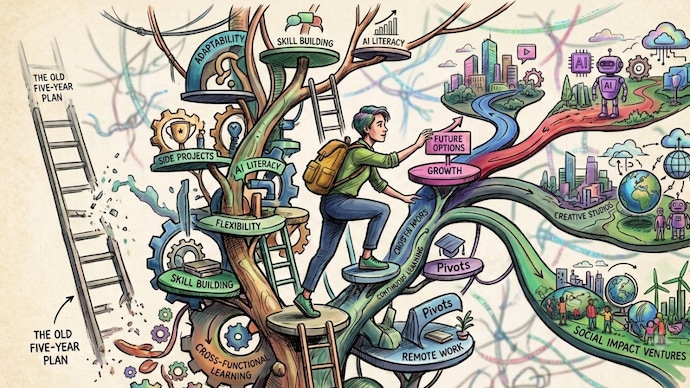
For years, the five-year career plan was treated as the ultimate blueprint for success. Parents encouraged it, teachers reinforced it, career counsellors recommended it, and recruiters routinely asked candidates where they saw themselves in five years.
But in today's fast-changing workplace, that once-standard question is beginning to lose relevance.
For many professionals, especially Gen Z, the traditional five-year career plan isn't necessarily dead; it has simply evolved. Instead of mapping out a fixed path towards a single destination, young workers are choosing careers that allow them to adapt, experiment, and pivot as industries transform.
The shift reflects a broader change in workplace priorities. Across organisations, many Millennials and Gen Z professionals are thinking less about climbing the corporate ladder and more about building careers that offer flexibility, purpose, and sustainable growth.
The numbers back this up. According to the Deloitte 2026 Gen Z and Millennial Survey, only around 6% of Gen Z professionals say reaching a leadership position is their primary career goal. Among those who are not aiming for leadership roles, the biggest reasons include stress and burnout, excessive responsibility, and concerns about maintaining a healthy work-life balance.
The survey also found that only 25% of Gen Z and 21% of Millennials want rapid promotions and frequent title changes. Instead, many are open to lateral moves, career pivots, or even stepping back if it helps them build new skills, gain diverse experiences, and make better long-term career decisions.
This mindset is also changing how young professionals prepare for the future. Rather than relying on a rigid long-term roadmap, many are investing in continuous learning, upskilling, and emerging technologies such as artificial intelligence to stay competitive.
In an era where industries, technologies, and job roles are changing faster than ever, adaptability is becoming more valuable than predictability. The new career superpower is no longer having every step planned; it is having the flexibility to navigate whatever comes next.
FROM CAREER LADDERS TO CAREER JUNGLE GYMS
The biggest shift isn't that young professionals have stopped planning; it is that they are planning differently.
Instead of chasing a straight line from entry-level employee to manager, many now see careers as a series of experiments. Side projects, cross-functional roles, freelancing, certifications, international opportunities, and AI-driven skills are all becoming part of the journey.
According to Anil Agarwal, Co-founder and CEO of InCruiter, the pace of technological change has made long-term predictions increasingly difficult.
"Because the world changes too fast to plan for five years. Your parents mastered one technology for a decade. Today, that same skill is obsolete in 18 months. AI reshapes job categories overnight."
He says young professionals are asking a different question today. Instead of wondering where they'll be in five years, they are focused on what they can learn this year to keep their future options open.
WHY GEN Z IS CHOOSING FLEXIBILITY OVER FIXED GOALS
For Gen Z, flexibility isn't a lack of ambition; it's a different definition of ambition.
Many entered the workforce during economic uncertainty, rapid AI adoption, layoffs, and constant business transformation. They have also witnessed burnout becoming a workplace reality rather than just a buzzword.
Agarwal believes this generation has learned an important lesson from previous ones.
"They saw workaholics burn out and prioritise mental health over climbing ladders. They want companies that respect their time and don't waste it."
He adds that careers today are increasingly global. Professionals can work remotely for companies across countries, freelance for international clients, or switch industries without following traditional career paths. In such an environment, flexibility often creates more opportunities than rigid planning.
A similar trend is visible across industries, says Amit Goyal, Managing Director, Project Management Institute – South Asia.
According to him, flexibility reflects a broader shift in how careers are being built. As technology, AI, and business priorities continue to evolve, professionals are recognising that continuous learning and transferable skills matter more than following a fixed roadmap.
He notes that capabilities such as collaboration, leadership, problem-solving, and project management are becoming valuable across functions and industries, allowing professionals to contribute in multiple roles rather than being confined to one career track.
THE SKILL THAT MATTERS MOST
If there is one skill emerging above all others, it is adaptability. Agarwal believes technical expertise alone is no longer enough.
"The only skill that survives disruption is adaptability itself. The real superpower is becoming someone who thrives in uncertainty, someone valuable not for knowing everything, but for figuring things out faster than others."
His observation reflects a growing hiring trend where employers increasingly value curiosity, resilience, and learning agility alongside technical knowledge.
Goyal echoes this view, saying career success is now being measured not only by expertise but also by how effectively professionals can learn, collaborate, solve problems, embrace emerging technologies, and lead through change.
"Career success today is increasingly defined by the ability to learn, adapt, and apply skills in dynamic environments,"
He points out that as organisations increasingly operate through projects and transformation initiatives, professionals who can manage change, align stakeholders, and deliver outcomes will be better positioned for long-term success.
Building project management capabilities early in one's career, he says, is becoming an important advantage in the evolving project economy.
THE NEW CAREER QUESTION
Perhaps the famous interview question itself needs an update.
Instead of asking, "Where do you see yourself in five years?" employers and professionals may find more value in asking:
"What new skill are you learning right now?"
Because in a world where AI evolves every few months, industries transform overnight, and entirely new job roles emerge every year, the ability to keep learning may matter far more than predicting the future.
MAYBE THE PLAN ISN’T DEAD, IT JUST ISN’T WRITTEN IN INK ANY MORE
The five-year career plan hasn't disappeared; it has become more flexible, more personal, and far less linear. Today's professionals are replacing rigid roadmaps with adaptable mindsets, choosing skills over titles, growth over predictability, and resilience over certainty.
Success in 2026 is no longer about perfectly forecasting where your career will be five years from now. It's about being curious enough to learn, confident enough to pivot, and prepared enough to make the most of the opportunities that don't even exist yet.
After all, in a world that's constantly changing, the smartest career plan may simply be staying ready for whatever comes next.
For years, the five-year career plan was treated as the ultimate blueprint for success. Parents encouraged it, teachers reinforced it, career counsellors recommended it, and recruiters routinely asked candidates where they saw themselves in five years.
But in today's fast-changing workplace, that once-standard question is beginning to lose relevance.
For many professionals, especially Gen Z, the traditional five-year career plan isn't necessarily dead; it has simply evolved. Instead of mapping out a fixed path towards a single destination, young workers are choosing careers that allow them to adapt, experiment, and pivot as industries transform.
The shift reflects a broader change in workplace priorities. Across organisations, many Millennials and Gen Z professionals are thinking less about climbing the corporate ladder and more about building careers that offer flexibility, purpose, and sustainable growth.
The numbers back this up. According to the Deloitte 2026 Gen Z and Millennial Survey, only around 6% of Gen Z professionals say reaching a leadership position is their primary career goal. Among those who are not aiming for leadership roles, the biggest reasons include stress and burnout, excessive responsibility, and concerns about maintaining a healthy work-life balance.
The survey also found that only 25% of Gen Z and 21% of Millennials want rapid promotions and frequent title changes. Instead, many are open to lateral moves, career pivots, or even stepping back if it helps them build new skills, gain diverse experiences, and make better long-term career decisions.
This mindset is also changing how young professionals prepare for the future. Rather than relying on a rigid long-term roadmap, many are investing in continuous learning, upskilling, and emerging technologies such as artificial intelligence to stay competitive.
In an era where industries, technologies, and job roles are changing faster than ever, adaptability is becoming more valuable than predictability. The new career superpower is no longer having every step planned; it is having the flexibility to navigate whatever comes next.
FROM CAREER LADDERS TO CAREER JUNGLE GYMS
The biggest shift isn't that young professionals have stopped planning; it is that they are planning differently.
Instead of chasing a straight line from entry-level employee to manager, many now see careers as a series of experiments. Side projects, cross-functional roles, freelancing, certifications, international opportunities, and AI-driven skills are all becoming part of the journey.
According to Anil Agarwal, Co-founder and CEO of InCruiter, the pace of technological change has made long-term predictions increasingly difficult.
"Because the world changes too fast to plan for five years. Your parents mastered one technology for a decade. Today, that same skill is obsolete in 18 months. AI reshapes job categories overnight."
He says young professionals are asking a different question today. Instead of wondering where they'll be in five years, they are focused on what they can learn this year to keep their future options open.
WHY GEN Z IS CHOOSING FLEXIBILITY OVER FIXED GOALS
For Gen Z, flexibility isn't a lack of ambition; it's a different definition of ambition.
Many entered the workforce during economic uncertainty, rapid AI adoption, layoffs, and constant business transformation. They have also witnessed burnout becoming a workplace reality rather than just a buzzword.
Agarwal believes this generation has learned an important lesson from previous ones.
"They saw workaholics burn out and prioritise mental health over climbing ladders. They want companies that respect their time and don't waste it."
He adds that careers today are increasingly global. Professionals can work remotely for companies across countries, freelance for international clients, or switch industries without following traditional career paths. In such an environment, flexibility often creates more opportunities than rigid planning.
A similar trend is visible across industries, says Amit Goyal, Managing Director, Project Management Institute – South Asia.
According to him, flexibility reflects a broader shift in how careers are being built. As technology, AI, and business priorities continue to evolve, professionals are recognising that continuous learning and transferable skills matter more than following a fixed roadmap.
He notes that capabilities such as collaboration, leadership, problem-solving, and project management are becoming valuable across functions and industries, allowing professionals to contribute in multiple roles rather than being confined to one career track.
THE SKILL THAT MATTERS MOST
If there is one skill emerging above all others, it is adaptability. Agarwal believes technical expertise alone is no longer enough.
"The only skill that survives disruption is adaptability itself. The real superpower is becoming someone who thrives in uncertainty, someone valuable not for knowing everything, but for figuring things out faster than others."
His observation reflects a growing hiring trend where employers increasingly value curiosity, resilience, and learning agility alongside technical knowledge.
Goyal echoes this view, saying career success is now being measured not only by expertise but also by how effectively professionals can learn, collaborate, solve problems, embrace emerging technologies, and lead through change.
"Career success today is increasingly defined by the ability to learn, adapt, and apply skills in dynamic environments,"
He points out that as organisations increasingly operate through projects and transformation initiatives, professionals who can manage change, align stakeholders, and deliver outcomes will be better positioned for long-term success.
Building project management capabilities early in one's career, he says, is becoming an important advantage in the evolving project economy.
THE NEW CAREER QUESTION
Perhaps the famous interview question itself needs an update.
Instead of asking, "Where do you see yourself in five years?" employers and professionals may find more value in asking:
"What new skill are you learning right now?"
Because in a world where AI evolves every few months, industries transform overnight, and entirely new job roles emerge every year, the ability to keep learning may matter far more than predicting the future.
MAYBE THE PLAN ISN’T DEAD, IT JUST ISN’T WRITTEN IN INK ANY MORE
The five-year career plan hasn't disappeared; it has become more flexible, more personal, and far less linear. Today's professionals are replacing rigid roadmaps with adaptable mindsets, choosing skills over titles, growth over predictability, and resilience over certainty.
Success in 2026 is no longer about perfectly forecasting where your career will be five years from now. It's about being curious enough to learn, confident enough to pivot, and prepared enough to make the most of the opportunities that don't even exist yet.
After all, in a world that's constantly changing, the smartest career plan may simply be staying ready for whatever comes next.

