WhatsApp replies to Centre's notice on username feature, govt reviewing: Report
WhatsApp has submitted its reply to the Centre's notice on its proposed username feature. The government is examining the response after warning that the rollout could raise fraud and impersonation risks.
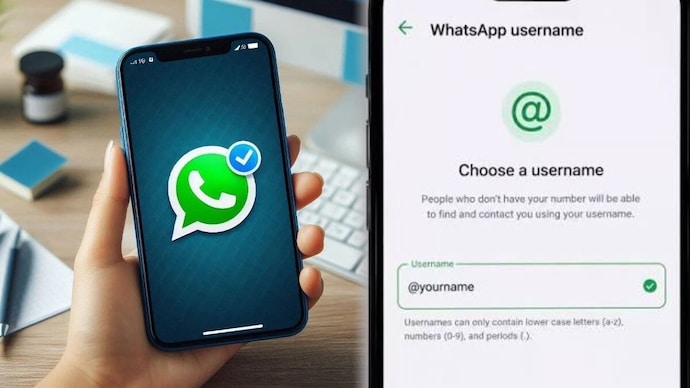
Meta-owned WhatsApp has submitted its reply to the Centre's notice over its proposed "username" feature, and the government is examining the response, news agency PTI reported citing sources said on Thursday.
The Centre had issued a notice to Meta last Wednesday, raising concerns that the proposed username feature on WhatsApp could materially increase incidents of online fraud, phishing, digital-arrest scams and impersonation attacks.
The feature would allow users to communicate on WhatsApp without sharing their phone numbers. The government had directed the platform not to roll out the feature until consultations on the issue were completed "to the satisfaction of the government."
After receiving the notice, WhatsApp sought additional time to submit its response and assured the government that it would not launch the feature in India until discussions were complete.
Sources told PTI that the Ministry of Electronics and Information Technology (MeitY) has now received WhatsApp's reply and is examining it. There has been no official statement from WhatsApp on the submission made to the IT ministry on Thursday.
Earlier in the day, IT Secretary S Krishnan, speaking on the sidelines of the CII GCC Business Summit, said WhatsApp's reply to the notice was due on Thursday.
Responding to a question on whether Telegram and Signal had replied to similar notices regarding their username features, Krishnan said, "There is still a little more time, so the replies have not yet been received.... We will examine this issue."
A Meta team met IT ministry officials last Friday after the government summoned the company over the matter.
In its notice, the government asked Meta to explain why action should not be initiated under the Information Technology Act and the relevant rules over WhatsApp's proposed feature, which it said could increase cybercrime. The Centre also reminded Meta that WhatsApp, as a significant social media intermediary, must comply with due diligence obligations under the IT Act and its rules.
Last week, a WhatsApp spokesperson said the username feature is not yet live and will be rolled out gradually later this year.
The spokesperson said WhatsApp has reserved high-profile usernames, including those of public figures, government entities, celebrities and verified Meta accounts, so that only legitimate owners can claim them. The company also said it has blocked lookalike variations of well-known names to reduce impersonation risks.
WhatsApp said users will still need a phone number to create and use an account. The company added that it has built multiple layers of protection against scams involving usernames.
According to WhatsApp, users will need to know a person's exact username before they can send a message. The platform said it will limit how many new people an account can contact, block repeated attempts to guess usernames and use systems to detect and remove impersonation and abuse patterns.
The company also said it will provide additional context when someone receives a first message through a username. Users will be able to see whether the sender is a new account, an existing contact, a member of a mutual group or based in another country before deciding whether to respond.
After issuing the notice to WhatsApp, the IT ministry also sent notices to Telegram and Signal, seeking details on how their existing username features address risks related to fraud and impersonation. While WhatsApp has around 50 crore users in India, Telegram's user base in the country is significantly smaller.
Meta and Telegram have also come under separate regulatory scrutiny in recent days.
On Saturday, the government issued a notice to Meta over child sexual abuse material appearing in Instagram advertisements. Telegram, meanwhile, received a notice directing it to curb the widespread dissemination of pirated films, OTT content and other audio-visual material on its platform.
Meta-owned WhatsApp has submitted its reply to the Centre's notice over its proposed "username" feature, and the government is examining the response, news agency PTI reported citing sources said on Thursday.
The Centre had issued a notice to Meta last Wednesday, raising concerns that the proposed username feature on WhatsApp could materially increase incidents of online fraud, phishing, digital-arrest scams and impersonation attacks.
The feature would allow users to communicate on WhatsApp without sharing their phone numbers. The government had directed the platform not to roll out the feature until consultations on the issue were completed "to the satisfaction of the government."
After receiving the notice, WhatsApp sought additional time to submit its response and assured the government that it would not launch the feature in India until discussions were complete.
Sources told PTI that the Ministry of Electronics and Information Technology (MeitY) has now received WhatsApp's reply and is examining it. There has been no official statement from WhatsApp on the submission made to the IT ministry on Thursday.
Earlier in the day, IT Secretary S Krishnan, speaking on the sidelines of the CII GCC Business Summit, said WhatsApp's reply to the notice was due on Thursday.
Responding to a question on whether Telegram and Signal had replied to similar notices regarding their username features, Krishnan said, "There is still a little more time, so the replies have not yet been received.... We will examine this issue."
A Meta team met IT ministry officials last Friday after the government summoned the company over the matter.
In its notice, the government asked Meta to explain why action should not be initiated under the Information Technology Act and the relevant rules over WhatsApp's proposed feature, which it said could increase cybercrime. The Centre also reminded Meta that WhatsApp, as a significant social media intermediary, must comply with due diligence obligations under the IT Act and its rules.
Last week, a WhatsApp spokesperson said the username feature is not yet live and will be rolled out gradually later this year.
The spokesperson said WhatsApp has reserved high-profile usernames, including those of public figures, government entities, celebrities and verified Meta accounts, so that only legitimate owners can claim them. The company also said it has blocked lookalike variations of well-known names to reduce impersonation risks.
WhatsApp said users will still need a phone number to create and use an account. The company added that it has built multiple layers of protection against scams involving usernames.
According to WhatsApp, users will need to know a person's exact username before they can send a message. The platform said it will limit how many new people an account can contact, block repeated attempts to guess usernames and use systems to detect and remove impersonation and abuse patterns.
The company also said it will provide additional context when someone receives a first message through a username. Users will be able to see whether the sender is a new account, an existing contact, a member of a mutual group or based in another country before deciding whether to respond.
After issuing the notice to WhatsApp, the IT ministry also sent notices to Telegram and Signal, seeking details on how their existing username features address risks related to fraud and impersonation. While WhatsApp has around 50 crore users in India, Telegram's user base in the country is significantly smaller.
Meta and Telegram have also come under separate regulatory scrutiny in recent days.
On Saturday, the government issued a notice to Meta over child sexual abuse material appearing in Instagram advertisements. Telegram, meanwhile, received a notice directing it to curb the widespread dissemination of pirated films, OTT content and other audio-visual material on its platform.

